
Australia
Dividing Fences in Tasmania: Notice and Arbitration, Not Court
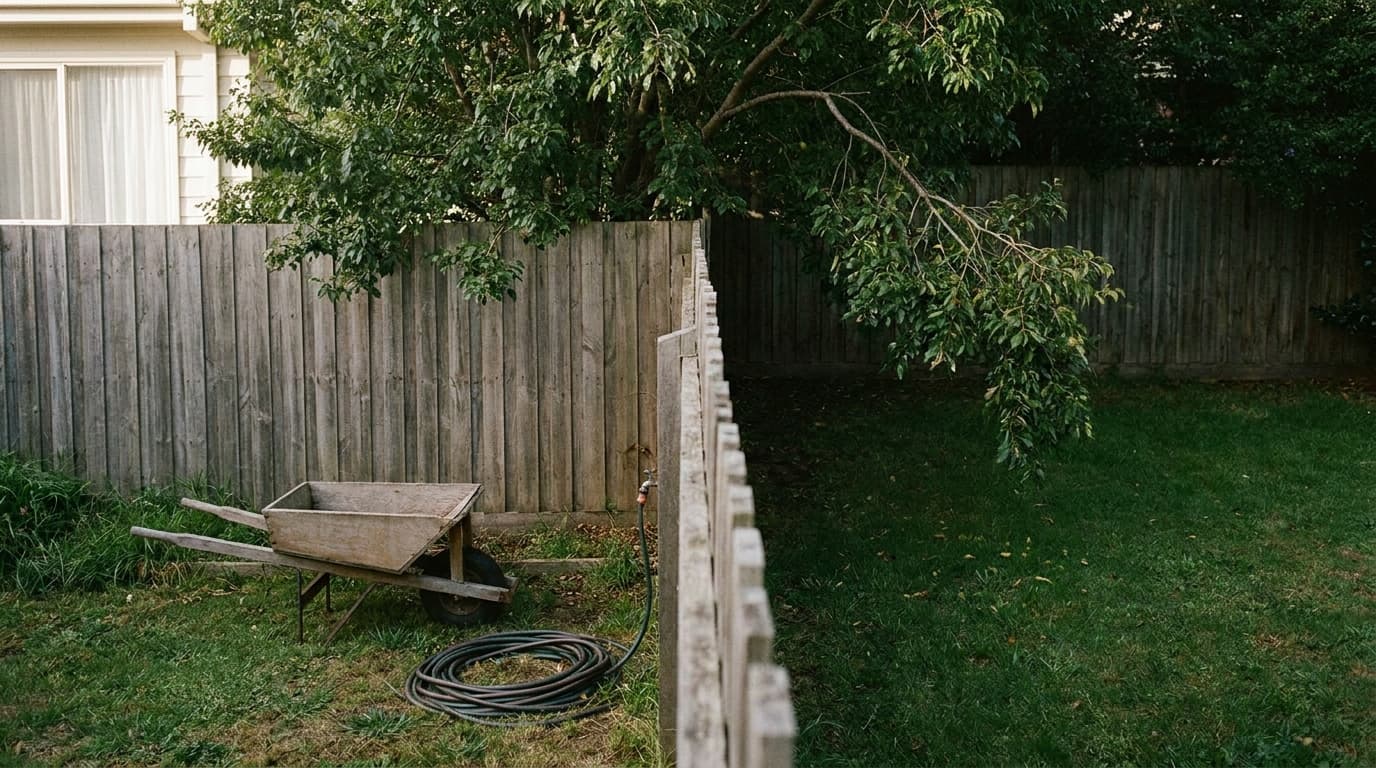
Tasmania is the only Australian jurisdiction where a dividing fence dispute is not decided by a court or tribunal. Under the Boundary Fences Act 1908 (Tas), an unresolved dispute goes to arbitration under the Commercial Arbitration Act 2011.
Information last verified on 21 July 2026 against the primary legislation. This page presents general legal information, not legal advice.
Jurisdiction scope: This page covers dividing fences law in Tasmania only, under the Boundary Fences Act 1908 (Tas), verified 21 July 2026 directly against the current AustLII text of sections 8, 9, 10 and 26. It does not cover Tasmania’s separate tree-dispute statute; see the linked tree disputes page for that.
Governing law and arbitration, not a court
Dividing fences in Tasmania are governed by the Boundary Fences Act 1908 (Tas). Part IV of the Act, headed "Arbitration", sets Tasmania apart from every other Australian jurisdiction. Section 26 provides that "if any matter, dispute, question, or difference arises between any adjoining owners... the same shall, unless otherwise specially provided for, be referred to and decided by arbitration in accordance with the Commercial Arbitration Act 2011." Tasmania does not send fencing disputes to a court or to TASCAT, the state’s general civil tribunal; it sends them to a private arbitrator operating under the Commercial Arbitration Act.
Notice and the 21-day objection period
An owner wanting to compel a neighbour to contribute to a fence serves a notice to fence under section 9, in the prescribed form. If the person served objects to any proposal in that notice, section 10 gives them 21 days from service to signify their objection in writing, stating the grounds. Once an objection is raised and the owners cannot come to an agreement, section 10 directs that "all disputes, questions, and differences shall be determined by arbitration in the manner provided by Part IV," pointing straight back to the arbitration process in section 26.
Cost sharing: no fixed default, agreed or awarded
Unlike New South Wales, Victoria, Queensland and the Northern Territory, Tasmania’s Act does not state a fixed equal-contribution default. Section 8 provides that adjoining owners are liable to contribute to the erection of a sufficient fence "in such proportion as may be (a) agreed upon; or (b) awarded under the provisions of this Act." In practice, this means the proportion is either something the neighbours settle themselves, or a figure the arbitrator determines under Part IV where they cannot. Section 9(2) also protects an owner from having to contribute to a fence built without the required notice, unless they separately agreed to it.
What an arbitrator can decide
Section 35 spells out exactly what an arbitrator can decide, in addition to the general powers arbitral tribunals already have under the Commercial Arbitration Act 2011: whether a fence should be erected at all, whether an existing fence should be converted to a rabbit-proof fence, the description or kind of fence, the necessity for the work, the time, manner and person responsible for carrying it out, and the cost and how that cost should be split between the parties. This is a comprehensive list, covering essentially every practical question a Tasmanian fencing dispute could raise, decided by the arbitrator rather than a court. Section 36 requires the arbitrator to consider the benefit likely to accrue to each owner from the fence, a factor that can affect the proportion awarded beyond a simple even split. Section 37 addresses contribution where a tenant, rather than the owner, is involved. Because this is arbitration rather than litigation, the process and its formality can differ from what a Magistrates Court or tribunal hearing in another state would involve; a person facing this process for the first time may want to understand how arbitration under the Commercial Arbitration Act 2011 actually works before it begins.
Repairs are treated separately from new fences
Part III of the Act, sections 22 to 25, deals specifically with repairing an existing fence rather than building a new one. Owners are generally liable to repair fences under section 22, with its own procedure for compelling a contribution to repair costs under section 23, and section 24 addresses the situation where a fence is destroyed by accident. This separate Part means a Tasmanian dispute about a fence that has fallen into disrepair follows a related but distinct path from a dispute about erecting a fence where none currently exists, though both ultimately funnel into the same Part IV arbitration process if they cannot be resolved by agreement.
How Tasmania compares
Tasmania is the only Australian jurisdiction that uses arbitration rather than a court or tribunal for fencing disputes, and one of the few without a fixed statutory cost-sharing default. See dividing fences in Australia for the full comparison, and tree disputes in Tasmania for how the state’s separate, TASCAT-based process handles trees instead.
This page is general legal information about neighbour disputes in Australia, verified on 21 July 2026. It is not legal advice, and it does not cover every situation. For advice about your own dispute, consult a legal practitioner admitted in the relevant Australian state or territory.
Frequently Asked Questions
Does a fencing dispute in Tasmania go to court?
No. Under section 26 of the Boundary Fences Act 1908 (Tas), disputes are referred to arbitration under the Commercial Arbitration Act 2011, not to a court or to TASCAT.
How long do I have to object to a fencing notice in Tasmania?
21 days from service of the notice, under section 10. The objection must be in writing and state the grounds.
Who decides how much I have to pay towards a Tasmanian dividing fence?
The proportion is either agreed between the owners or, if they cannot agree, awarded by the arbitrator under Part IV of the Act, per section 8. There is no fixed statutory default split.
Is arbitration the same as going to a tribunal in Tasmania?
No. Arbitration under the Commercial Arbitration Act 2011 is a separate process from the Tasmanian Civil and Administrative Tribunal (TASCAT). Tasmania’s own tree-dispute statute, by contrast, is heard by the Appeal Tribunal within TASCAT, not by arbitration.
Do I have to pay for a fence my neighbour built without telling me in Tasmania?
Generally not. Section 9(2) provides that an owner is not liable to pay towards a fence built without the required notice, unless they separately agreed to contribute.
The Law Behind This Article
This article rests on the statutory provisions below, held in our own legal record and retrieved from the official source. Tap a section to read the operative text.
Boundary Fences Act 1908 (Tas)
s 10Objection to proposed fenceIn force
If any person upon whom any notice as aforesaid is served shall object to any proposal contained in the notice in relation to fencing, he may, within 21 days after the notice has been served, signify such objection, in writing, to the person giving the notice, stating the grounds of the objection; and thereupon (unless the parties can come to an agreement upon the matters in dispute) all disputes, questions, and differences shall be determined by arbitration in the manner provided by Part IV .
Official text (excerpt) · last checked 2026-09-28 · Read the full text in our law library · Verify at legislation.tas.gov.au
s 26All disputes to be decided by arbitrationIn forcecited in 3 of our articles
[Section 26 Amended by No. 9 of 2011, Sched. 1, Applied:01 Oct 2012] [Section 26 Amended by No. 91 of 1986, s. 3 and Sched. 1 ][Section 26 Amended by No. 46 of 1991, s. 4 and Sched. 3 ]If any matter, dispute, question, or difference arises between any – (a) adjoining owners; or (b) between any owner and occupier of the same property – the same shall, unless otherwise specially provided for, be referred to and decided by arbitration in accordance with the Commercial Arbitration Act 2011 .
Official text (excerpt) · last checked 2026-09-28 · Read the full text in our law library · Verify at legislation.tas.gov.au
Also relied on in: Dividing Fences Law in Australia: State by State Comparison, Neighbour Disputes in Australia: Fences, Trees and Noise Law
s 35Powers of arbitratorsIn force
[Section 35 Amended by No. 9 of 2011, Sched. 1, Applied:01 Oct 2012] [Section 35 Amended by No. 36 of 1958, s. 4 and Sched. 3 ][Section 35 Amended by 25 Geo. V No. 78 ][Section 35 Amended by No. 91 of 1986, s. 3 and Sched. 1 ]In addition to any powers conferred upon arbitral tribunals by the Commercial Arbitration Act 2011 , they shall have power to decide and determine upon the following matters:(a) The erection of any fence; (b) The conversion of any fence into a rabbit-proof fence; (c) The description or kind of fence; (d) The necessity or otherwise for the erection of any fence, or for the conversion of any existing fence into a rabbit-proof fence; (e) The time and manner in which any fence should be erected or converted, and by whom it should be erected or converted; and (f) The cost of erecting or converting any fence, and the proportion of such cost to be borne and paid by any party.
Official text (excerpt) · last checked 2026-09-28 · Read the full text in our law library · Verify at legislation.tas.gov.au
s 8Adjoining owners to share cost of fencingIn force
(1) Subject to the provisions of this Act, the owners of adjoining lands not divided by a sufficient fence or a rabbit-proof fence shall be liable to join in or contribute to the erection of a sufficient fence or a rabbit-proof fence, as the case may be, between such lands in such proportion as may be – (a) agreed upon; or (b) awarded under the provisions of this Act. (2) The owners of adjoining lands divided by a fence which is not a rabbit-proof fence shall be liable to join in or contribute to the erection of a rabbit-proof fence between such lands, or the conversion of any existing fence into a rabbit-proof fence, in such proportions as may be – (a) agreed upon; or (b) awarded under the provisions of this Act.
Official text (excerpt) · last checked 2026-09-28 · Read the full text in our law library · Verify at legislation.tas.gov.au
Search our full record of US law — 2.1 million sections, every state + federal →
Sources and References
- Boundary Fences Act 1908 (Tas) s 26, all disputes to be decided by arbitration(classic.austlii.edu.au).gov
- Boundary Fences Act 1908 (Tas) s 10, objection to proposed fence(classic.austlii.edu.au).gov
- Boundary Fences Act 1908 (Tas) s 8, adjoining owners to share cost of fencing(classic.austlii.edu.au).gov
- Boundary Fences Act 1908 (Tas) s 35, powers of arbitrators(classic.austlii.edu.au).gov
- Commercial Arbitration Act 2011 (Tas)(classic.austlii.edu.au).gov