
Australia
Recording Phone Calls in Queensland
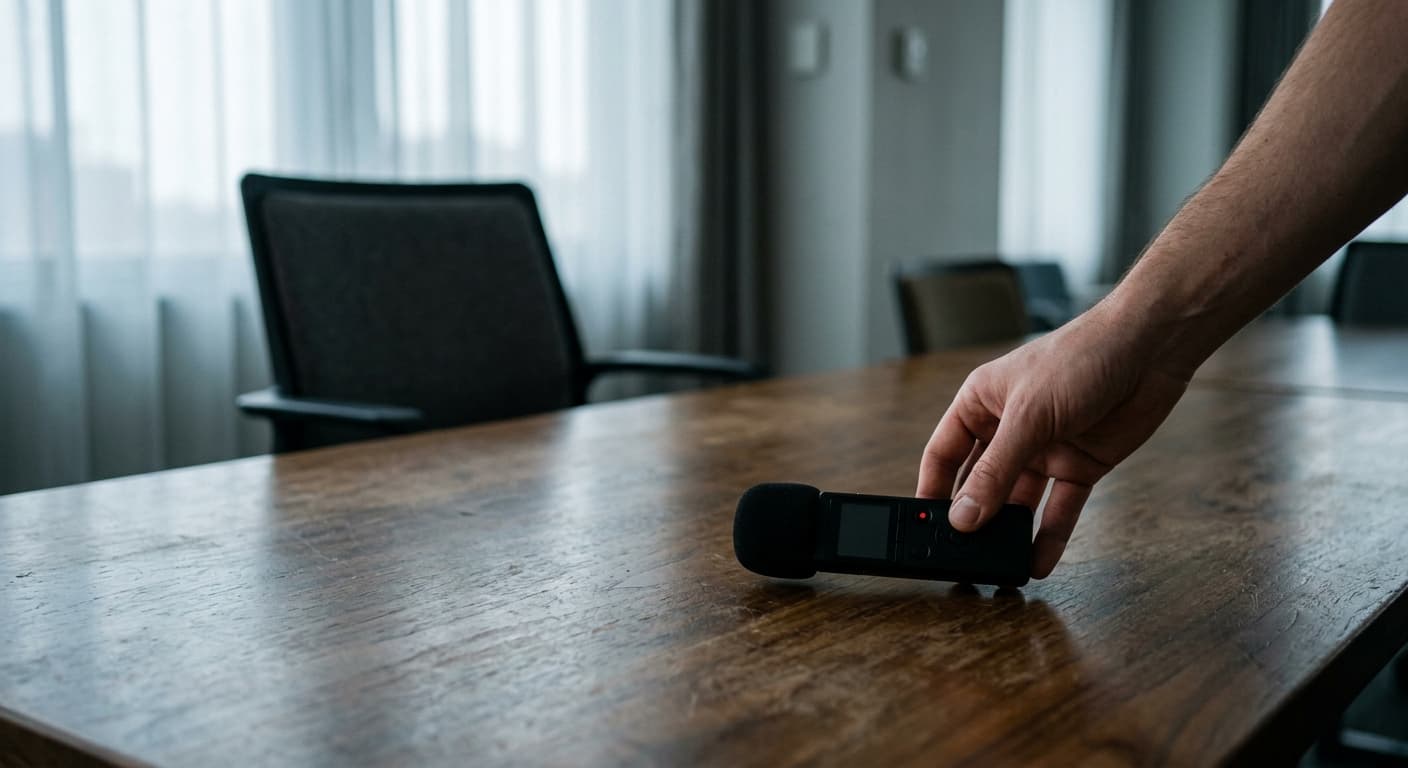
In Queensland, recording your own phone call is outside the state listening-device offence entirely, not merely excused by an exception. As in Victoria, the bigger practical risk sits in what happens to the recording afterward.
Information last verified on 22 July 2026 against the consolidated Invasion of Privacy Act 1971 (Qld) and Telecommunications (Interception and Access) Act 1979 (Cth) text. This article has not yet been reviewed by a licensed lawyer.
Jurisdiction scope: This article addresses recording a phone call under the Invasion of Privacy Act 1971 (Qld) and the federal Telecommunications (Interception and Access) Act 1979 (Cth). It does not address the phone-call recording rules of other Australian states or territories; for a national comparison, see can you record a phone call in Australia.
The Federal Law Question First
Before reaching state law, it is worth ruling out the federal wiretap offence. The Telecommunications (Interception and Access) Act 1979 (Cth) prohibits intercepting a communication passing over a telecommunications system (s 7(1)). Interception is defined as listening to or recording a communication "in its passage over that telecommunications system without the knowledge of the person making the communication" (s 6(1)). A participant recording their own call has knowledge of it, and the recording happens at the point of receipt rather than in transit across the network, so this federal offence generally targets a third party tapping the line, not a person recording their own conversation.
Recording Your Own Call in Queensland
Section 43(1) of the Invasion of Privacy Act 1971 (Qld) makes it an offence to use a listening device to overhear, record, monitor or listen to a private conversation, but s 43(2) exempts a person who is a party to that conversation. A phone call is a private conversation for these purposes, so recording your own call places you squarely within the s 43(2) exemption, the same mechanism that applies to an in-person conversation you take part in. This is a similar structural position to Victoria, and different from New South Wales, where recording your own call is prohibited by default and then excused by a separate exception.
Recording a Call You're Not Part Of
Where you record a call between other people without being a party to it, s 43(1) applies without the benefit of the s 43(2) exemption. The Act's definition of "private conversation" does carve out circumstances where a party ought reasonably expect the conversation might be overheard, recorded, monitored or listened to by someone else, but that exclusion is fact-specific and does not turn an ordinary private phone call into something outside the definition just because a recording device happens to be nearby.
Sharing a Recorded Call Is a Separate Offence
Section 44 makes it an offence to publish a conversation obtained in contravention of s 43. Section 45 is a further, separate offence that applies specifically to a party who lawfully recorded the conversation and then communicates or publishes it, unless an exception applies: consent of the other parties, use in legal proceedings, or a disclosure reasonably necessary in the public interest, in the course of duty, or to protect the discloser's own interests. This is the most useful practical point on Queensland phone-call recording: being exempt from the recording offence under s 43(2) does not make sharing the call afterward automatically lawful.
Could a Recorded Call Be Used in Court?
Queensland has not adopted the uniform Evidence Act framework used in New South Wales, Victoria, Tasmania, the ACT and the Northern Territory. Admissibility of improperly or unlawfully obtained evidence in Queensland is instead assessed under the common-law discretion associated with Bunning v Cross (1978) 141 CLR 54, which weighs similar considerations to the statutory discretion elsewhere, including the seriousness of any impropriety and the cogency of the evidence. No recording can be described in advance as admissible; courts weigh admissibility under this discretion on the specific facts of each case.
The Federal Civil Tort
Publishing a recorded call can also engage the federal statutory tort for serious invasions of privacy, part of Schedule 2 to the Privacy Act 1988 (Cth) and in force since 10 June 2025. It provides a civil action, without proof of damage, for a serious, intentional or reckless invasion of privacy, applying nationwide alongside the state rules above.
This article provides general legal information about phone-call recording law in Queensland. It is not legal advice and does not take into account your specific circumstances. For advice about a particular recording, consult a legal practitioner admitted in the relevant Australian state or territory.
Frequently Asked Questions
Is it legal to record my own phone call in Queensland?
Recording a call you are a party to falls within the exemption in s 43(2) of the Invasion of Privacy Act 1971 (Qld). This is general information about the statute, not an assessment of any specific recording.
Does federal law stop me recording my own phone call in Queensland?
Generally no. The federal interception offence in the Telecommunications (Interception and Access) Act 1979 (Cth) s 7 targets recording a call in transit over the network without the knowledge of the person making it, not a participant recording at the handset.
Can I record a call between two other people in Queensland if I'm not on it?
That is caught by s 43(1) of the Invasion of Privacy Act 1971 (Qld) without the benefit of the s 43(2) exemption, which only applies to a party to the conversation.
Can I share a phone call recording I lawfully made in Queensland?
Not automatically. Publishing a recorded call is a separate offence under ss 44 and 45 of the Invasion of Privacy Act 1971 (Qld), with its own limited exceptions, regardless of whether making the recording was lawful.
Will a secretly recorded phone call be allowed as evidence in a Queensland court?
No recording can be guaranteed admissible. Queensland has not adopted the uniform Evidence Act, so admissibility of improperly obtained evidence is assessed under the common-law discretion from Bunning v Cross (1978) 141 CLR 54, on the specific facts of each case.
The Law Behind This Article
This article rests on the statutory provisions below, held in our own legal record and retrieved from the official source. Tap a section to read the operative text.
Invasion of Privacy Act 1971 (Qld)
s 43Prohibition on use of listening devicesIn forcecited in 10 of our articles
(1) A person is guilty of an offence against this Act if the person uses a listening device to overhear, record, monitor or listen to a private conversation and is liable on conviction on indictment to a maximum penalty of 40 penalty units or imprisonment for 2 years. Note— If a corporation commits an offence against this provision, an executive officer of the corporation may be taken, under section 49A , to have also committed the offence. (2) Subsection (1) does not apply— (a) where the person using the listening device is a party to the private conversation; or (b) to the unintentional hearing of a private conversation by means of a telephone; or (c) to or in relation to the use of any listening device by— (i) an officer employed in the service of the Commonwealth in relation to customs authorised by a warrant under the hand of the Comptroller-General of Customs under the Customs Act 1901 (Cwlth) to use a listening device in the performance of the officer’s duty; or (ii) a person employed in connection with the security of the Commonwealth when acting in the performance of the person’s duty under an Act passed by the Parliament of the Commonwealth relating to the security of the
Official text (excerpt) · last checked 2026-09-28 · Read the full text in our law library · Verify at legislation.qld.gov.au
Also relied on in: CCTV and Home Security Camera Laws in Australia (2026), Dash Cam Laws in Australia: What's Legal to Record, Is It Illegal to Record Someone Without Consent in Australia?
Telecommunications (Interception and Access) Act 1979
s 6Interception of a communicationIn forcecited in 6 of our articles
(1) For the purposes of this Act (other than Schedule 1), but subject to this section, interception of a communication passing over a telecommunications system consists of listening to or recording, by any means, such a communication in its passage over that telecommunications system without the knowledge of the person making the communication. Communications to or from emergency service facilities (2A) An emergency service facility is premises that are declared by the Minister, by written instrument, to be an emergency service facility. (2B) The Minister may declare premises to be an emergency service facility if the Minister is satisfied that the premises are operated by: (a) a police force or service of the Commonwealth, of a State or of the Australian Capital Territory; or (b) a fire service of a State or of the Australian Capital Territory; or (c) an ambulance service of a State or of the Australian Capital Territory; or (d) a service for despatching, or referring matters for the attention of, a force or service referred to in paragraph (a), (b) or (c); to enable that force or service, or another force or service, to deal with a request for assistance in an emergency.
Official text (excerpt) · last checked 2026-09-28 · Read the full text in our law library · Verify at legislation.gov.au
Cited in 3 court opinions in our collectionLatest citing opinion in our collection: 2024
Opinions citing this section in our collection:
- [2017] NSWSC 1483 (Supreme Court of New South Wales 2017, [2017] NSWSC 1483)
- [2024] NSWSC 975 (Supreme Court of New South Wales 2024, [2024] NSWSC 975)
- Voxson Pty Ltd v Telstra Corporation Limited (No 10) (Federal Court of Australia 2018, [2018] FCA 376)
Identified automatically from the court opinions citing this section — not a ranking of which case controls.
Also relied on in: Recording Phone Calls in Victoria, Can You Record a Phone Call in Australia? State-by-State Rules, Is It Legal to Record a Conversation in Australia?
s 7Telecommunications not to be interceptedIn forcecited in 4 of our articles
(1) A person shall not: (a) intercept; (b) authorize, suffer or permit another person to intercept; or (c) do any act or thing that will enable him or her or another person to intercept; a communication passing over a telecommunications system. (2) Subsection (1) does not apply to or in relation to: (a) an act or thing done by an employee of a carrier in the course of his or her duties for or in connection with: (i) the installation of any line, or the installation of any equipment, used or intended for use in connection with a telecommunications service; or (ii) the operation or maintenance of a telecommunications system; or (iii) the identifying or tracing of any person who has contravened, or is suspected of having contravened or being likely to contravene, a provision of Part 10.6 of the Criminal Code; where it is reasonably necessary for the employee to do that act or thing in order to perform those duties effectively; or (aa) the interception of a communication by another person lawfully engaged in duties relating to the installation, connection or maintenance of equipment or a line, where it is reasonably necessary for the person to intercept the communication in order to pe
Official text (excerpt) · last checked 2026-09-28 · Read the full text in our law library · Verify at legislation.gov.au
Cited in 16 court opinions in our collectionLatest citing opinion in our collection: 2024
Opinions citing this section in our collection:
- [2019] NSWCCA 79 (NSW Court of Criminal Appeal 2019, [2019] NSWCCA 79)
- [2018] NSWCCA 109 (NSW Court of Criminal Appeal 2018, [2018] NSWCCA 109)
- [2016] NSWCCA 25 (NSW Court of Criminal Appeal 2016, [2016] NSWCCA 25)
Identified automatically from the court opinions citing this section — not a ranking of which case controls.
Also relied on in: Recording Phone Calls in New South Wales, Australia Recording Laws: State-by-State Rules and Penalties (2026)
Search our full record of US law — 2.1 million sections, every state + federal →
Sources and References
- Invasion of Privacy Act 1971 (Qld), ss 43, 44, 45(legislation.qld.gov.au).gov
- Telecommunications (Interception and Access) Act 1979 (Cth) s 6(1), definition of interception(austlii.edu.au)
- Telecommunications (Interception and Access) Act 1979 (Cth) s 7, telecommunications not to be intercepted(austlii.edu.au)
- Penalties and Sentences Regulation 2025 (Qld), penalty unit $166.90 from 1 July 2025(legislation.qld.gov.au).gov
- OAIC: statutory tort for serious invasions of privacy, Privacy Act 1988 (Cth) sch 2(oaic.gov.au).gov