
Australia
Workplace Recording and Surveillance in Queensland
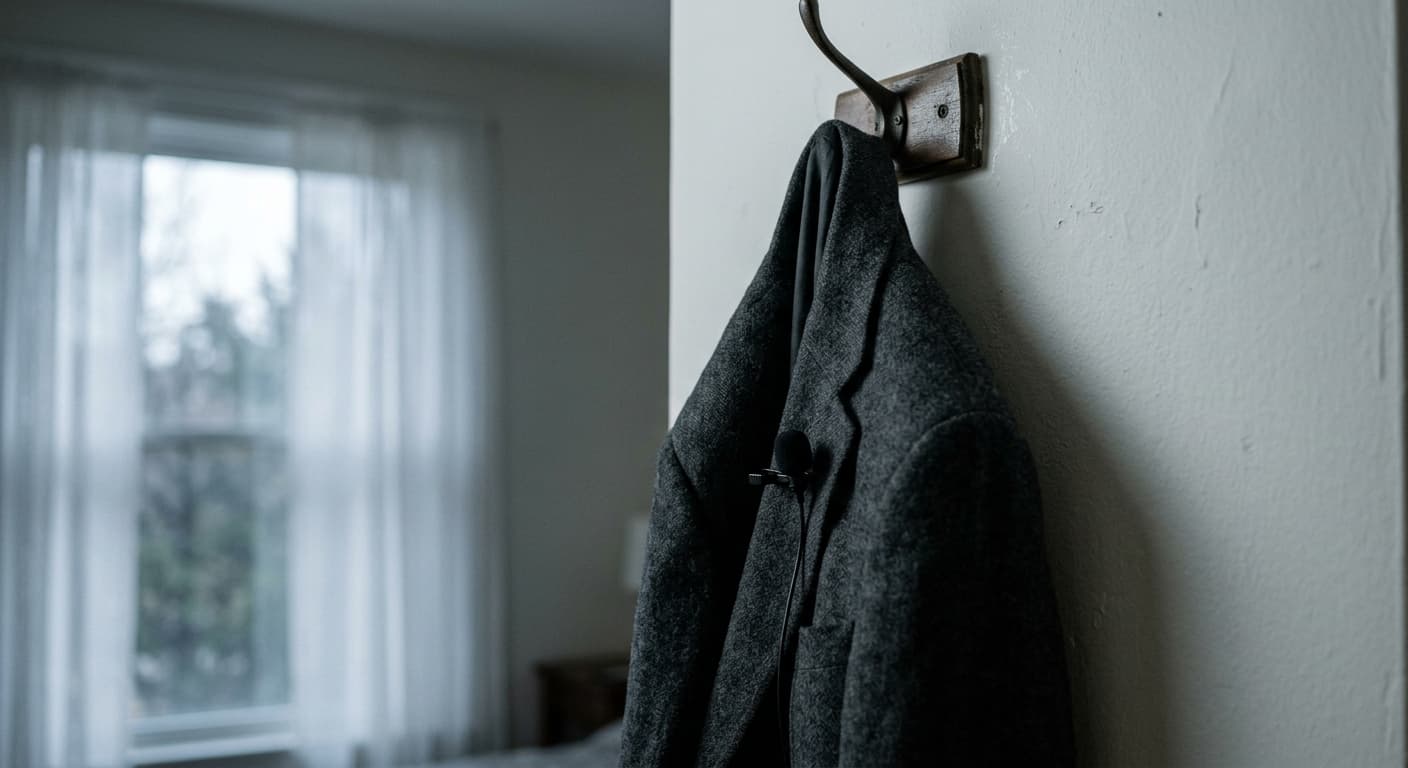
Queensland has no dedicated workplace surveillance Act, and its general recording law has no video provision at all. An employer's cameras at work are barely regulated by state surveillance law; an employee recording their own conversation is comfortably outside it.
Information last verified on 22 July 2026 against the consolidated Invasion of Privacy Act 1971 (Qld) text on legislation.qld.gov.au. This article has not yet been reviewed by a licensed lawyer.
Jurisdiction scope: This article addresses workplace recording and surveillance under the Invasion of Privacy Act 1971 (Qld), the Criminal Code 1899 (Qld), the federal Fair Work Act 2009 (Cth) and the federal Privacy Act 1988 (Cth). It does not address workplace surveillance law in other Australian states or territories; for a national comparison, see workplace surveillance and monitoring in Australia.
No Dedicated Workplace Law, and No Optical Provision Either
Queensland stacks two gaps on top of each other. First, only New South Wales and the ACT have legislation written specifically for workplace surveillance, so Queensland workplace recording and monitoring falls to the general Invasion of Privacy Act 1971 (Qld). Second, that general Act itself has no optical or video surveillance provision at all; it regulates listening devices only. Combined, this means Queensland has neither a workplace-specific statute nor a general video-surveillance law, a materially thinner statutory picture than New South Wales or Victoria.
Can You Record a Work Conversation in Queensland?
Yes, if you are a party to it. Section 43(1) of the Invasion of Privacy Act 1971 (Qld) prohibits using a listening device to overhear, record, monitor or listen to a private conversation, but s 43(2) exempts a person who is a party to that conversation. An employee recording their own meeting or a conversation with a colleague is a party to it, so the exemption applies and there is nothing to excuse, because the offence was never drafted to reach that scenario.
Can Your Employer's Cameras Watch You at Work?
Not under a general surveillance-devices offence, because none exists in Queensland for video. The Invasion of Privacy Act 1971 (Qld) has no provision addressing optical or visual surveillance at all. That leaves two narrower tools that can, in specific circumstances, apply to video at work: the Criminal Code 1899 (Qld) voyeurism-type provisions at s 227A, which target observing or recording a person in circumstances such as a state of undress or engaging in a private act, and the new federal statutory tort for serious invasions of privacy, which requires a serious, intentional or reckless invasion of privacy. Neither is a general answer to "can my employer install a CCTV camera in the workplace," and ordinary work-area camera monitoring for security or operational purposes is not addressed by a dedicated surveillance offence in Queensland the way it would be in New South Wales.
Sharing a Workplace Recording
Publishing or disclosing a recording is treated separately from making it. Section 44 addresses publication of a conversation obtained in contravention of s 43, while s 45 is a further, separate offence covering a party who lawfully recorded a conversation and then communicates or publishes it, subject to exceptions including consent of the other parties, use in legal proceedings, or a disclosure reasonably necessary in the public interest, in the course of duty, or to protect the discloser's own interests.
Where Does Queensland's Public Sector Privacy Law Fit In?
The Information Privacy Act 2009 (Qld) regulates how Queensland government agencies handle personal information, but it applies to the public sector, not to private employers generally. Most Queensland private-sector workers instead rely on the federal Privacy Act 1988 (Cth) framework, which applies to employers that are APP entities, subject to the employee-records exemption that limits its reach for records directly tied to the employment relationship, and does not cover job applicants, contractors handling another employer's records, or volunteers.
A Lawful Recording Can Still Cost You Your Job
Being outside the state offence does not make a recording risk-free. The Fair Work Commission is not bound by the strict rules of evidence and procedure that apply in court, so a workplace recording, whether or not it breached any statute, can still be put before it in an unfair dismissal case, and secretly recording a workplace conversation has been treated as a valid reason for dismissal in reported Fair Work Commission decisions.
This article provides general legal information about workplace surveillance and recording law in Queensland. It is not legal advice and does not take into account your specific circumstances. For advice about a particular workplace surveillance or recording situation, consult a legal practitioner admitted in the relevant Australian state or territory.
Frequently Asked Questions
Does Queensland have a workplace surveillance law like NSW?
No. Queensland has no dedicated workplace-surveillance statute, unlike New South Wales and the ACT, and falls to the general Invasion of Privacy Act 1971 (Qld) instead.
Can I record a meeting with my manager without telling them in Queensland?
Section 43(2) of the Invasion of Privacy Act 1971 (Qld) exempts a person who is a party to the conversation, so recording your own meeting is generally outside the offence entirely. This is general information, not an assessment of any specific recording.
Can my employer install CCTV cameras at my workplace in Queensland?
Queensland's Invasion of Privacy Act 1971 has no video surveillance provision at all, so ordinary workplace camera monitoring is not addressed by a dedicated surveillance offence there, unlike states with an optical-surveillance law.
Can I be filmed getting changed at work in Queensland?
That kind of filming can fall within the narrow voyeurism-type offences in the Criminal Code 1899 (Qld) s 227A, and potentially the new federal statutory tort, even though there is no general optical-surveillance statute in Queensland.
Can I share a workplace recording I lawfully made in Queensland?
Not automatically. Publishing or disclosing a recording is a separate offence under ss 44 and 45 of the Invasion of Privacy Act 1971 (Qld), with its own limited exceptions.
Can I get fired for secretly recording a workplace conversation in Queensland even if it wasn't a crime?
Yes, potentially. The Fair Work Commission is not bound by the rules of evidence and has treated secret workplace recording as a valid reason for dismissal in reported decisions, independently of whether any surveillance law was broken.
The Law Behind This Article
This article rests on the statutory provisions below, held in our own legal record and retrieved from the official source. Tap a section to read the operative text.
Invasion of Privacy Act 1971 (Qld)
s 43Prohibition on use of listening devicesIn forcecited in 10 of our articles
(1) A person is guilty of an offence against this Act if the person uses a listening device to overhear, record, monitor or listen to a private conversation and is liable on conviction on indictment to a maximum penalty of 40 penalty units or imprisonment for 2 years. Note— If a corporation commits an offence against this provision, an executive officer of the corporation may be taken, under section 49A , to have also committed the offence. (2) Subsection (1) does not apply— (a) where the person using the listening device is a party to the private conversation; or (b) to the unintentional hearing of a private conversation by means of a telephone; or (c) to or in relation to the use of any listening device by— (i) an officer employed in the service of the Commonwealth in relation to customs authorised by a warrant under the hand of the Comptroller-General of Customs under the Customs Act 1901 (Cwlth) to use a listening device in the performance of the officer’s duty; or (ii) a person employed in connection with the security of the Commonwealth when acting in the performance of the person’s duty under an Act passed by the Parliament of the Commonwealth relating to the security of the
Official text (excerpt) · last checked 2026-09-28 · Read the full text in our law library · Verify at legislation.qld.gov.au
Also relied on in: CCTV and Home Security Camera Laws in Australia (2026), Dash Cam Laws in Australia: What's Legal to Record, Is It Illegal to Record Someone Without Consent in Australia?
Fair Work Act 2009
s 591FWC not bound by rules of evidence and procedureIn forcecited in 4 of our articles
The FWC is not bound by the rules of evidence and procedure in relation to a matter before it (whether or not the FWC holds a hearing in relation to the matter).
Official text (excerpt) · last checked 2026-09-28 · Read the full text in our law library · Verify at legislation.gov.au
Cited in 6 court opinions in our collectionLatest citing opinion in our collection: 2020
Opinions citing this section in our collection:
- Bianco Walling Pty Ltd v Construction, Forestry, Maritime, Mining and Energy Union (Full Court of the Federal Court of Australia 2020, [2020] FCAFC 50)
- Australian Postal Corporation v D'Rozario (Full Court of the Federal Court of Australia 2014, [2014] FCAFC 89)
- Coal & Allied Mining Services Pty Ltd v Lawler (Full Court of the Federal Court of Australia 2011, [2011] FCAFC 54)
Identified automatically from the court opinions citing this section — not a ranking of which case controls.
Also relied on in: Workplace Recording and Surveillance in New South Wales, Can You Use a Secret Recording as Evidence in an Australian Court?, Workplace Surveillance and Monitoring in Australia
Privacy Act 1988
s 7BExempt acts and exempt practices of organisationsIn forcecited in 5 of our articles
Individuals in non‑business capacity (1) An act done, or practice engaged in, by an organisation that is an individual is exempt for the purposes of paragraph 7(1)(ee) if the act is done, or the practice is engaged in, other than in the course of a business carried on by the individual. Note: See also section 16 which provides that the Australian Privacy Principles do not apply for the purposes of, or in connection with, an individual’s personal, family or household affairs. Organisation acting under Commonwealth contract (2) An act done, or practice engaged in, by an organisation is exempt for the purposes of paragraph 7(1)(ee) if: (a) the organisation is a contracted service provider for a Commonwealth contract (whether or not the organisation is a party to the contract); and (b) the organisation would be a small business operator if it were not a contracted service provider for a Commonwealth contract; and (c) the act is done, or the practice is engaged in, otherwise than for the purposes of meeting (directly or indirectly) an obligation under a Commonwealth contract for which the organisation is the contracted service provider.
Official text (excerpt) · last checked 2026-09-28 · Read the full text in our law library · Verify at legislation.gov.au
Cited in 3 court opinions in our collectionLatest citing opinion in our collection: 2023
Opinions citing this section in our collection:
- Madzikanda v Australian Information Commissioner (Federal Court of Australia 2023, [2023] FCA 1445)
- Matthews v Clifton (Federal Court of Australia 2014, [2014] FCA 415)
- Rivera v Australian Broadcasting Corporation (Federal Court of Australia 2005, [2005] FCA 661)
Identified automatically from the court opinions citing this section — not a ranking of which case controls.
Also relied on in: Employee Records and Privacy in Australia: What the Exemption Covers, Workplace Recording and Surveillance in Victoria
Search our full record of US law — 2.1 million sections, every state + federal →
Sources and References
- Invasion of Privacy Act 1971 (Qld), ss 43, 44, 45(legislation.qld.gov.au).gov
- Criminal Code 1899 (Qld), s 227A voyeurism-type offence(legislation.qld.gov.au).gov
- Information Privacy Act 2009 (Qld), applies to Queensland public sector agencies(legislation.qld.gov.au).gov
- Fair Work Act 2009 (Cth) s 591, the Fair Work Commission is not bound by the rules of evidence(austlii.edu.au)
- Altham-Wooding v PKDKAdventures Pty Ltd [2024] FWC 2753, Fair Work Commission decision(fwc.gov.au).gov
- OAIC guidance on the employee records exemption, Privacy Act 1988 (Cth) s 7B(3)(oaic.gov.au).gov
- OAIC: statutory tort for serious invasions of privacy, Privacy Act 1988 (Cth) sch 2(oaic.gov.au).gov