
Switzerland
Video Surveillance and Private Cameras in Switzerland: Art. 179quater StGB
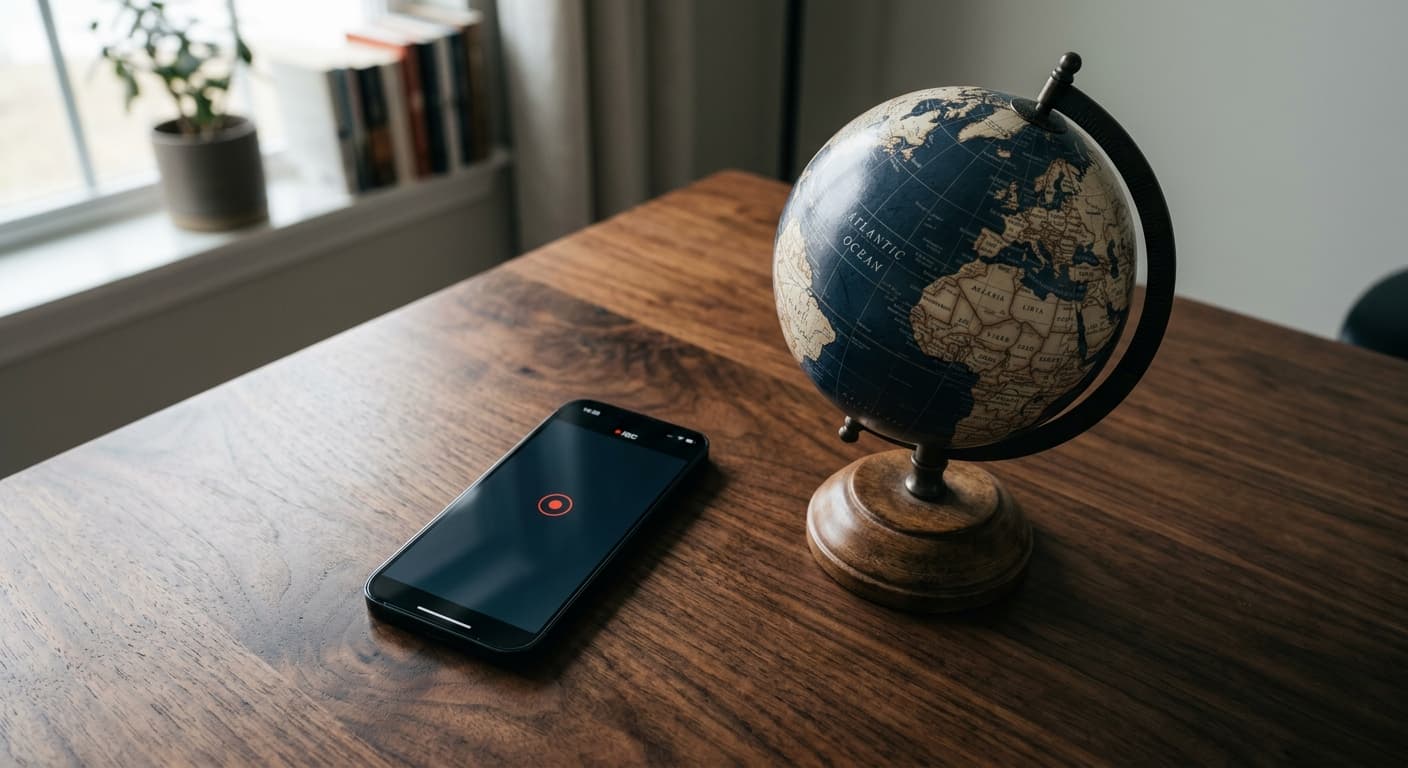
A camera on a Swiss house rarely stays pointed at just the house. It catches the pavement, a slice of the street, or the corner of a neighbour's garden, and that is where a purely practical security decision runs into a specific criminal statute most people installing a camera have never read.
The statute is Art. 179quater StGB, and Switzerland treats an unauthorised image or video capture of someone's private facts as a criminal offence, not just a data protection question. This page works through what the law actually covers, where the nDSG fits alongside it, and what a person on either side of a camera, the owner or the neighbour being filmed, can actually do.
Information last verified on 21 July 2026. This page provides general legal information about Swiss law and does not constitute legal advice in an individual case.
The provision that actually governs a camera: Art. 179quater StGB
Swiss criminal law separates audio and image capture into different articles. Art. 179ter StGB covers a participant secretly recording a conversation, and Art. 179bis StGB covers a non-participant doing the same, both audio offences with their own penalty ranges. Video and still images sit in a third, separate provision.
Art. 179quater StGB punishes anyone who, without consent, observes with a recording device or captures on an image carrier a fact from another person's Geheimbereich, their secret domain, or a fact from their Privatbereich, their private domain, that is not freely accessible to everyone. The maximum penalty is a custodial sentence of up to three years or a monetary penalty, the same ceiling as Art. 179bis and higher than the one-year ceiling that applies to Art. 179ter alone.
The test has two parts, and both matter. First, the fact captured must belong to a secret or private domain, not something the person has already made visible to the world. Second, if it is a private-domain fact rather than a secret one, it must not already be freely accessible to everyone, since a fact anyone could already see loses the protection.
The trap: the exceptions in Art. 179quinquies do not reach video
Art. 179quinquies StGB sets out two narrow situations where recording a telecommunications conversation is not a crime: calls to aid, rescue or security services, and business calls limited to orders, contracts, reservations and similar routine transactions. Both exceptions exist to let a business or a caller keep evidence of what was actually said or agreed.
The text of Art. 179quinquies names only Art. 179bis Abs. 1 and Art. 179ter Abs. 1. Art. 179quater is not listed. A business that records video of an order-taking call, rather than audio only, gets no statutory exception for the image portion of that recording, even though the audio track of the same call would be protected. Our recording conversations page covers the audio provisions and those exceptions in full.
This is a genuine gap in the statute, not an oversight this page is filling in. A person relying on the order-call or emergency-call exception to justify filming, rather than just recording sound, is relying on a shelter that does not exist for the video half of what they captured.
The camera that also catches the street or the neighbour's garden
The single most common situation searchers bring to this topic is a home security camera that was only ever meant to watch a driveway or a front door, but whose field of view also sweeps the pavement, the road, or a strip of the neighbouring property. This is exactly the fact pattern Art. 179quater and the EDÖB's guidance both address, from two different angles.
The EDÖB, the federal data protection and transparency commissioner, recommends that a private camera's recording area stay limited to the owner's own property, and that neither the neighbouring property nor public space such as the pavement be captured. It also recommends a clearly visible sign disclosing the surveillance, and retention of footage only as long as actually necessary, typically around 24 hours.
That EDÖB guidance is a compliance recommendation, not itself the criminal law. Whether a specific camera also crosses the line into an Art. 179quater offence depends on the separate criminal test: whether the footage captures a secret-domain fact, or a private-domain fact not otherwise freely accessible, about an identifiable person, without their consent. A camera can fall short of the EDÖB's own-property-only recommendation without automatically satisfying that stricter criminal threshold, and the two questions should not be treated as the same one.
Where the nDSG fits, and where it does not
Switzerland's data protection statute, the nDSG, in force since 1 September 2023, generally does not apply to personal data a natural person processes exclusively for personal use. A homeowner's camera aimed strictly at their own property, for their own household security, can fall outside the nDSG's scope on that basis alone.
That exemption has real limits. The moment footage regularly captures identifiable third parties beyond a narrowly personal use, a public street, a neighbour's yard, or passers-by, the personal-use exemption is generally understood not to hold, and the nDSG's ordinary duties can apply alongside, not instead of, Art. 179quater.
The nDSG does carry its own criminal penalties, up to CHF 250,000, under Art. 60 to Art. 62 nDSG. Those articles attach to specific listed failures, among them violating a person's information or access rights, unlawfully disclosing data abroad, or failing minimum data security duties. The figure does not attach generally to any mishandling of footage, so a camera dispute is more often an Art. 179quater question than an nDSG-fine question.
Dashcams and doorbell cameras
A dashcam recording the road ahead while driving is capturing a public space, traffic, other cars, pedestrians on a public street, which is the kind of footage the Art. 179quater test is least likely to reach, since a public roadway is not a person's secret or private domain. The closer question arises if dashcam footage is later shared or posted in a way that singles out an identifiable person in a way connected to a private matter.
A doorbell camera raises the same field-of-view issue as any other home camera. Aimed narrowly at a doorstep, it is unlikely to raise concerns. Aimed so it also records deep into a neighbour's window, garden or door, it raises the same Art. 179quater question a wider security camera would.
Shared stairwells and building entrances
A landlord or a fellow tenant who installs a camera in a shared stairwell or a building entrance faces the same legal test as a private homeowner. Art. 179quater does not carve out a separate, looser rule for rented buildings, and a camera capturing residents' comings and goings, or the entrance to an individual unit, raises the identical secret-domain or private-domain question.
The EDÖB's signage and retention guidance applies with equal force here, arguably more so, since a shared entrance is used by multiple households who did not individually choose to install the camera. A landlord considering building-wide surveillance should treat consent, notice and a narrow field of view as the baseline, not an afterthought.
Cameras at work
An employer's camera is governed by two separate rules, neither of which is Art. 179quater directly, though the criminal provision can still apply to genuinely private facts an employer's camera happens to capture. Art. 328b OR limits an employer to processing employee data that concerns suitability for the role or is necessary to carry out the employment contract, with everything else falling back to the general nDSG.
Art. 26 ArGV 3 goes further for surveillance specifically. Its first paragraph flatly prohibits monitoring and control systems whose purpose is to monitor employee behaviour at the workplace. Its second paragraph permits systems installed for other legitimate reasons, security or quality control among them, but only if they are designed and positioned so they do not impair employee health or freedom of movement.
The practical distinction is purpose. A security camera at a till or an entrance, installed for theft prevention or safety, sits in the permitted category even though it incidentally records employees. A camera installed specifically to watch how closely staff work, or how often they take breaks, falls into the prohibited category regardless of what it is called internally.
A worked example
A homeowner installs a camera above the front door to deter parcel theft. The camera's field of view includes the doorstep, a metre of the front path, and, because of the angle, a corner of the next-door neighbour's garden where the neighbour sunbathes.
The doorstep and path portion of the footage raises little concern, since it covers only the homeowner's own property and a public approach to it. The corner capturing the neighbour's garden is a different matter: it is footage of a private-domain fact, the neighbour's use of their own garden, that is not freely accessible to everyone from the street, and it is captured without the neighbour's consent. That portion of the camera's coverage is the part that engages Art. 179quater, not the whole installation, and narrowing the camera's angle to exclude the neighbour's garden would remove the problem without requiring the camera to come down entirely.
This example illustrates how the test applies to a field of view; it does not predict how an actual prosecutor, court or the EDÖB would assess any particular camera, since the precise angle, distance and what is actually visible in real footage all affect the answer.
What a filmed neighbour can actually do
Someone who believes a neighbour's camera is capturing their private domain has three separate, non-exclusive routes, and they should not assume pursuing one closes off the others.
The criminal route is a Strafantrag, a formal criminal complaint, under Art. 179quater StGB. It must be filed within three months of learning who is responsible for the camera, under Art. 31 StGB, and the underlying offence itself can still be prosecuted for up to ten years under Art. 97 StGB, a separate deadline from the three-month complaint window.
The EDÖB route is a complaint to the federal data protection regulator about a camera that does not meet its own-property, signage or retention guidance, which can prompt EDÖB engagement even where the criminal threshold is unclear or contested. A civil route, raising the intrusion as a violation of personality rights, also exists in Swiss law generally, though the specific mechanics of that civil claim were not independently verified for this page and a person considering it should get case-specific advice.
None of these three routes requires exhausting the others first, and a neighbour dispute over a camera often moves faster through a direct conversation, or a formal notice, than through any of them. The legal routes exist for when that conversation does not resolve the problem.
What this page does not predict
Nothing here should be read as an assessment of any specific camera, installation or neighbour dispute. Whether footage crosses into someone's secret or private domain depends on the actual angle, distance, what the footage shows, and the surrounding facts, none of which a general page can evaluate.
Someone facing an actual dispute over a camera, whether they own it or are filmed by it, should treat the structure above as background for understanding the law, not as a substitute for advice on their specific situation. It is part of our wider Swiss recording law coverage, itself part of the broader guide to Swiss law.
Frequently Asked Questions
Is it illegal to have a security camera pointed at the street in Switzerland?
A camera that also captures a public street or a neighbour's property beyond the owner's own land risks breaching both the EDÖB's own-property guidance and, if it captures a genuinely private fact about an identifiable person, Art. 179quater StGB. A camera aimed narrowly at one's own doorstep or driveway raises far less concern.
Can I record a business call about placing an order in Switzerland?
Yes, audio recording of that call can fall under the Art. 179quinquies exception for business calls limited to orders, contracts and reservations. That exception names only the audio provisions, Art. 179bis and Art. 179ter, so it does not extend to video capture of the same call.
What can I do if my neighbour's camera is filming into my garden?
Three routes exist and none forecloses the others: a criminal complaint under Art. 179quater StGB, filed within three months of learning who installed the camera, a complaint to the EDÖB about the camera's field of view or signage, and a civil claim for a personality rights violation.
How long do I have to file a criminal complaint over a camera in Switzerland?
Three months from the day you learn who is responsible for the camera, under Art. 31 StGB. The underlying Art. 179quater offence itself remains open to prosecution for up to ten years under Art. 97 StGB, a separate and longer deadline.
Can my employer install cameras to watch how I work?
Art. 26 ArGV 3 prohibits a monitoring system whose purpose is to monitor employee behaviour. A camera installed for a different legitimate reason, such as till security, is permitted provided it does not impair employee health or freedom of movement, and Art. 328b OR separately limits what employee data an employer may process.
Does Swiss data protection law apply to a home security camera?
The nDSG generally does not apply to personal data processed exclusively for personal use, which can cover a camera aimed strictly at one's own property. That exemption does not extend to footage that regularly captures identifiable third parties, and it does not affect the separate Art. 179quater criminal question.
Is a doorbell camera legal in Switzerland?
A doorbell camera aimed narrowly at a doorstep is unlikely to raise concerns. One angled so it also records deep into a neighbour's window, garden, or door raises the same Art. 179quater question as any other camera capturing a neighbour's private domain.
What is the maximum penalty for illegal video surveillance under Swiss law?
Art. 179quater StGB carries a custodial sentence of up to three years or a monetary penalty. This is the same ceiling as Art. 179bis, the non-participant audio offence, and higher than the one-year maximum that applies to Art. 179ter, the participant audio offence, alone.
Sources and References
- Art. 179quater StGB, Verletzung des Geheim- oder Privatbereichs durch Aufnahmegeräte(fedlex.admin.ch).gov
- Art. 179ter StGB, Unbefugtes Aufnehmen von Gesprächen(fedlex.admin.ch).gov
- Art. 179quinquies StGB, Nicht strafbares Aufnehmen(fedlex.admin.ch).gov
- Art. 31 StGB, Antragsfrist(fedlex.admin.ch).gov
- Art. 97 StGB, Verjährungsfristen(fedlex.admin.ch).gov
- Art. 2 nDSG, Persönlicher und sachlicher Geltungsbereich(fedlex.admin.ch).gov
- Art. 60 bis 62 nDSG, Strafbestimmungen(fedlex.admin.ch).gov
- Art. 328b OR, Bearbeitung von Personendaten(fedlex.admin.ch).gov
- Art. 26 ArGV 3, Überwachung der Arbeitnehmer(fedlex.admin.ch).gov
- EDÖB, Videoüberwachung durch Private(edoeb.admin.ch).gov
- BGE 146 IV 126, Auslegung des Begriffs nichtöffentlich(bger.ch).gov