
Spain
Renting and Housing Law in Spain: Eviction, Okupas and the Burofax (2026)
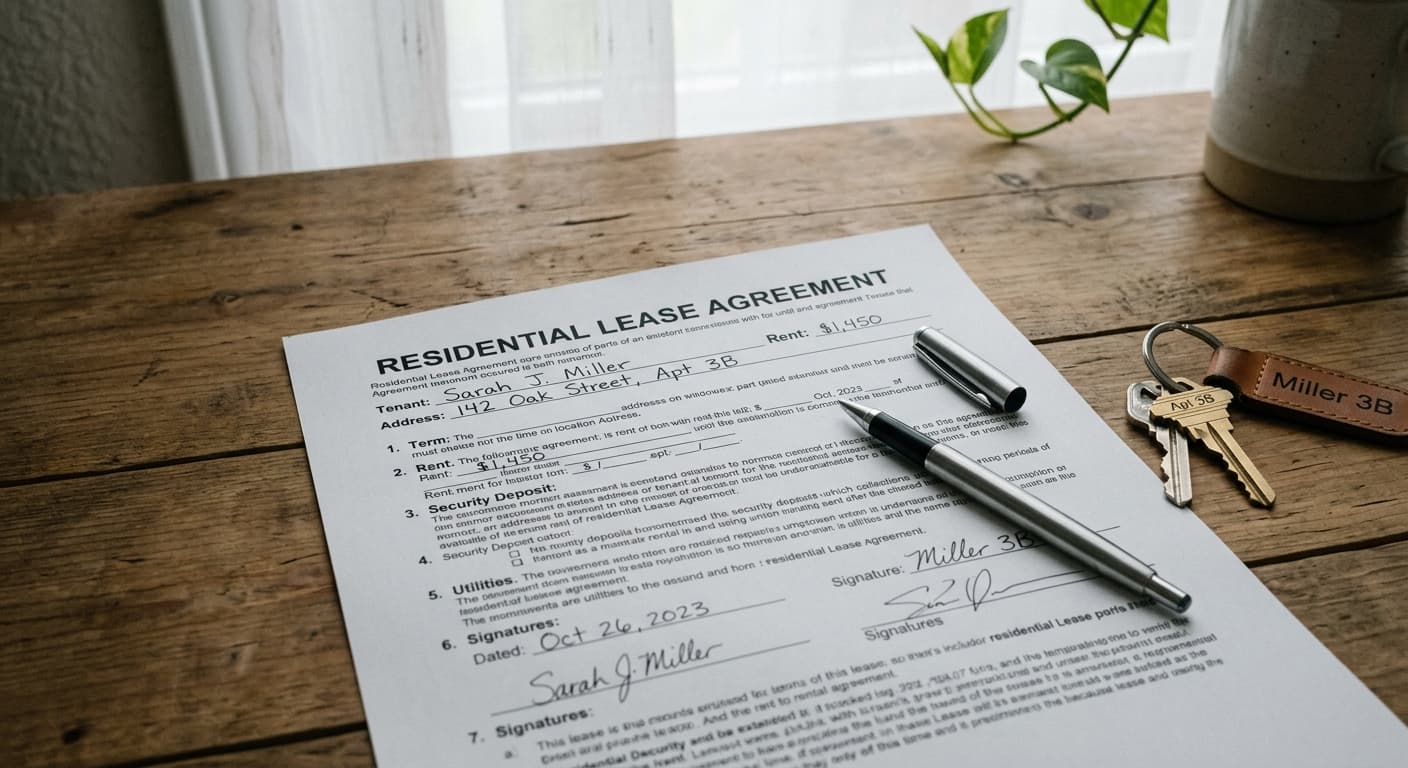
Spanish housing law gives residential tenants long statutory protection, gives landlords a specific court track to recover a flat, and gives both sides a paper weapon, the burofax, whose legal weight surprises people. This section maps the pieces and links the deep pages on each.
Information last verified on 23 July 2026. This page provides general legal information about Spanish law and does not constitute legal advice in an individual case.
The tenancy frame: the LAU
Residential renting is governed by the Ley de Arrendamientos Urbanos (LAU). Its central protection is duration: whatever term the contract states, the tenant may stay until the tenancy reaches five years (seven when the landlord is a persona jurídica), through compulsory annual extensions, unless the tenant gives 30 days' notice that he or she is leaving (art. 9). When that period ends without notice from either side, the contract rolls on for up to three more years (art. 10).
Money is framed too. The fianza is one month's rent for a dwelling and two for other uses, with any extra guarantee on an ordinary contract capped at two additional months (art. 36). And the rent is only updated annually if a clause provides for it, with the increase capped by reference to an index (art. 18); the Ley de Vivienda of 2023 instructed the INE to define a specific rental-update reference index for this purpose. The rental contract page covers the contract in practice, the rent increase page the update mechanics, and the Ley de Vivienda page the 2023 reform itself.
When it breaks down: the eviction track
Non-payment sends the landlord to a specific fast civil procedure, the juicio verbal de desahucio, with a court requerimiento that gives the tenant ten days to pay, leave or oppose, and a pre-fixed eviction date if nothing happens. The tenant holds one powerful card, usable once: paying everything owed stops the case (enervación). The desahucio page walks the whole timeline, including the vulnerability check that can suspend an eviction for up to two or four months.
Okupas: two crimes, not one
Public debate says «okupas»; the Código Penal says two very different things. Occupying somebody's dwelling is allanamiento de morada (art. 202 CP), punished with prison. Occupying an empty property that is nobody's dwelling is usurpación (art. 245.2 CP), punished with a fine.
Since 3 April 2025 both offences are on the juicio rápido fast-track list, a real change that popular coverage routinely overstates. The okupas page separates the offences, the procedures and the myths.
The burofax: paper that changes outcomes
Spanish law repeatedly attaches consequences to communications that can be proved fehacientemente, with certified content and delivery. The everyday vehicle is the Correos burofax. One verified example of its power: a landlord's fehaciente payment demand sent at least 30 days before filing removes the tenant's right to stop the eviction by paying late (art. 22.4 LEC). The burofax page explains when to send one, what it certifies and what it costs, and it serves far beyond tenancy, from debt claims to community disputes.
This page is general legal information about Spanish law and does not constitute legal advice in an individual case. The controlling texts are the current versions in the BOE.
Frequently Asked Questions
How long can a tenant stay in a rented flat in Spain?
Whatever the signed term says, the tenant can extend a standard residential tenancy year by year up to five years, or seven when the landlord is a company (art. 9 LAU). If neither side gives notice at the end of that period, the contract extends for up to three further years (art. 10 LAU).
What deposit can a landlord ask for in Spain?
The statutory fianza is one month's rent for a dwelling and two months for non-residential use (art. 36 LAU). On ordinary residential contracts of up to five years (seven with a corporate landlord), any additional guarantee the parties agree is capped at the equivalent of two more months.
Can my landlord raise the rent every year in Spain?
Only if the contract contains an update clause: without an express agreement, no annual update applies at all (art. 18 LAU). When there is a clause, the annual increase is capped by reference to an index under the same article.
Is squatting legal in Spain?
No. Occupying someone's dwelling is the crime of allanamiento de morada (art. 202 CP), punishable with prison, and occupying an empty property that is nobody's dwelling is usurpación (art. 245.2 CP), punishable with a fine. Since April 2025 both offences are on the criminal fast-track (juicio rápido) list, although that is a faster criminal procedure, not an automatic 48-hour eviction.