
Spain
Spain's Blood Alcohol Limit for Driving: Administrative Fine vs. Criminal Offence (2026)
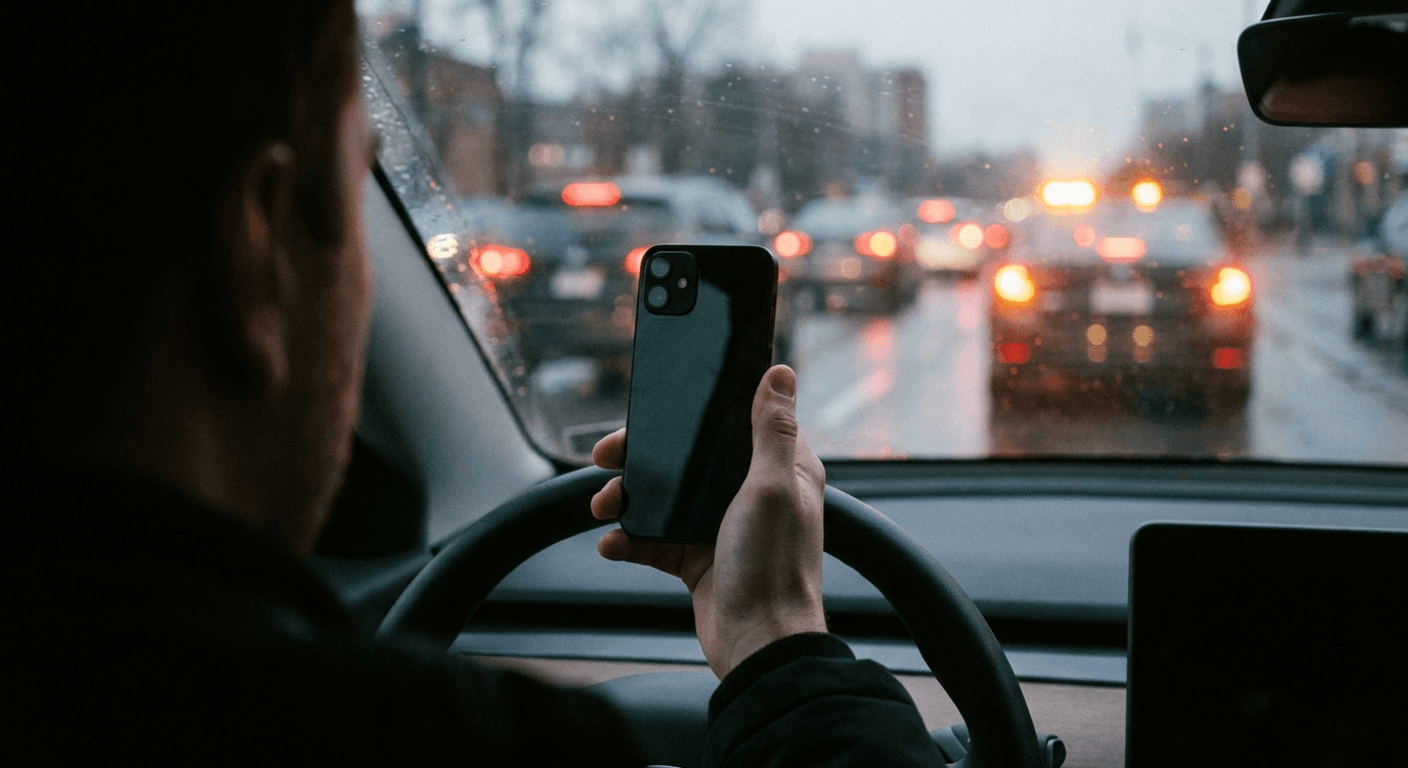
Spain regulates alcohol and driving on two entirely separate tracks. Below a certain point, an excess is a DGT fine, decided administratively, appealable through the usual ladder. Above it, the same conduct is a crime, decided by a judge, with prison on the table. This page draws that line precisely and shows what sits on each side of it.
Information last verified on 23 July 2026. This page provides general legal information about Spanish law and does not constitute legal advice in an individual case.
The administrative limits
Art. 20 of the Reglamento General de Circulación (RD 1428/2003) sets three tiers. The general limit is 0,5 g/l in blood, or 0,25 mg/l in exhaled air. A lower limit, 0,3 g/l in blood or 0,15 mg/l in air, applies to drivers of heavy goods vehicles over 3.500 kg, buses with more than nine seats, public-service and school transport, dangerous-goods transport, and emergency or special transport. The same lower limit, 0,3 g/l or 0,15 mg/l, also applies to every driver during the first two years after obtaining a licence, regardless of what they are driving.
The administrative fine
An excess above the applicable limit is a muy grave infraction fined at 500 € (art. 77.c TRLTSV). It escalates to 1.000 € only in two situations: the driver was already sanctioned for an alcohol infraction within the previous year, or the reading is above double the permitted limit (art. 80 TRLTSV). Like most infractions, this fine still carries the 20-day, 50 percent pronto pago option, and the same appeal ladder covered on the appeals page.
Where it becomes a crime
Art. 379.2 of the Código Penal draws a hard line that has nothing to do with the DGT's administrative bands. Two routes into the crime exist. The first is a fixed, per-se threshold: driving with a reading above 0,60 mg/l in exhaled air, or 1,2 g/l in blood, is automatically a crime, regardless of how carefully or recklessly the person was actually driving. The second route does not depend on a number at all: driving under the influence of alcohol, toxic drugs, narcotics or psychotropic substances is independently criminal if impairment can be shown, even at a reading below the numeric threshold.
The penalties are the same for either route: prison of three to six months, or a fine of six to twelve months, or thirty-one to ninety days of community service, and in every case, loss of the right to drive for more than one and up to four years. There is a further consequence built into the Código Penal itself: a driving-ban sentence of more than two years does not just suspend the licence for its length, it ends the licence's validity outright (art. 47 CP), so a driver convicted at the higher end of the range comes out the other side needing a new licence, not a reinstated one.
The same administrative-versus-criminal split governs speed as well, at 60 km/h and 80 km/h over the limit, covered on the speeding fines page.
Points, separately from either fine
An administrative alcohol excess is one of the graves and muy graves that carries a point deduction on top of the money fine, the same parallel system that applies to most licence-affecting infractions. A criminal conviction does not use the points system at all; its consequence is the driving ban set by the sentence, not a deduction from the 12-point balance. The mechanics of how points are earned, lost and recovered are covered in full on the points page.
Refusing the test
Refusing a legally required alcohol or drug test is not a way to avoid the numbers, it is its own separate crime. Art. 383 CP punishes refusal with prison of six months to a year and a driving ban of one to four years, independent of what a reading would have shown had the driver taken the test.
Why the split matters
A DGT sanction is a fine plus, where applicable, lost points, decided administratively and challengeable through alegaciones, reposición and the contencioso-administrativo. A criminal case is a court proceeding that can end in a prison sentence or a criminal record, decided by a judge rather than the DGT, with driving bans that run far longer than any administrative suspension. The two systems track different things: the DGT tracks the reading and the licence, the criminal courts track the reading against a per-se threshold or actual impairment. Understanding which side of that line a case sits on is the difference between a fine and a defence lawyer.
The full amount table and pronto pago mechanics live on the multas page, and the wider map of Spanish traffic law is on the driving section.
This page is general legal information about Spanish law and does not constitute legal advice in an individual case. The controlling texts are the current versions in the BOE and the DGT's official pages.
Frequently Asked Questions
What is the legal blood alcohol limit for driving in Spain?
0,5 grams per litre in blood, or 0,25 milligrams per litre in exhaled air, for most drivers. Professional, public-transport and dangerous-goods drivers, and anyone in their first two years with a licence, must stay under 0,3 g/l in blood or 0,15 mg/l in air.
When does drink-driving become a crime in Spain rather than a fine?
Automatically above 0,60 mg/l in exhaled air or 1,2 g/l in blood (art. 379.2 Código Penal). Below that threshold, driving under the influence of alcohol or drugs can still be prosecuted as a crime if actual impairment is shown, independent of the exact reading.
Is the alcohol limit different for new drivers?
Yes. Drivers in their first two years with a licence must stay under 0,3 g/l in blood or 0,15 mg/l in air, the same lower limit that applies to professional and public-transport drivers.
What happens if I refuse to take a breathalyzer test in Spain?
Refusal is a separate crime under art. 383 of the Código Penal, punished with six months to a year in prison and a driving ban of one to four years, regardless of what the test result would have shown.
Sources and References
- RD 1428/2003, Reglamento General de Circulación, art. 20 (tasas de alcohol en sangre y aire espirado)(boe.es).gov
- RDL 6/2015 (TRLTSV), art. 80 (cuantía de las sanciones)(boe.es).gov
- Ley Orgánica 10/1995, Código Penal, arts. 379 (conducción bajo la influencia del alcohol) y 383 (negativa a las pruebas)(boe.es).gov