
Spain
Spain E-Scooter Laws: Patinete Eléctrico (VMP) Rules Explained (2026)
Independently fact-checked against primary sources (last audited July 23, 2026). · 9 primary sources cited on this page. How we verify our legal content
This article is general information about e-scooter laws in Spain and is not legal advice. If you have been fined, had a VMP seized, or need to register or insure a device, consult a Spanish abogado or the DGT directly for guidance specific to your situation. Information last verified on 23 July 2026.
Quick answer
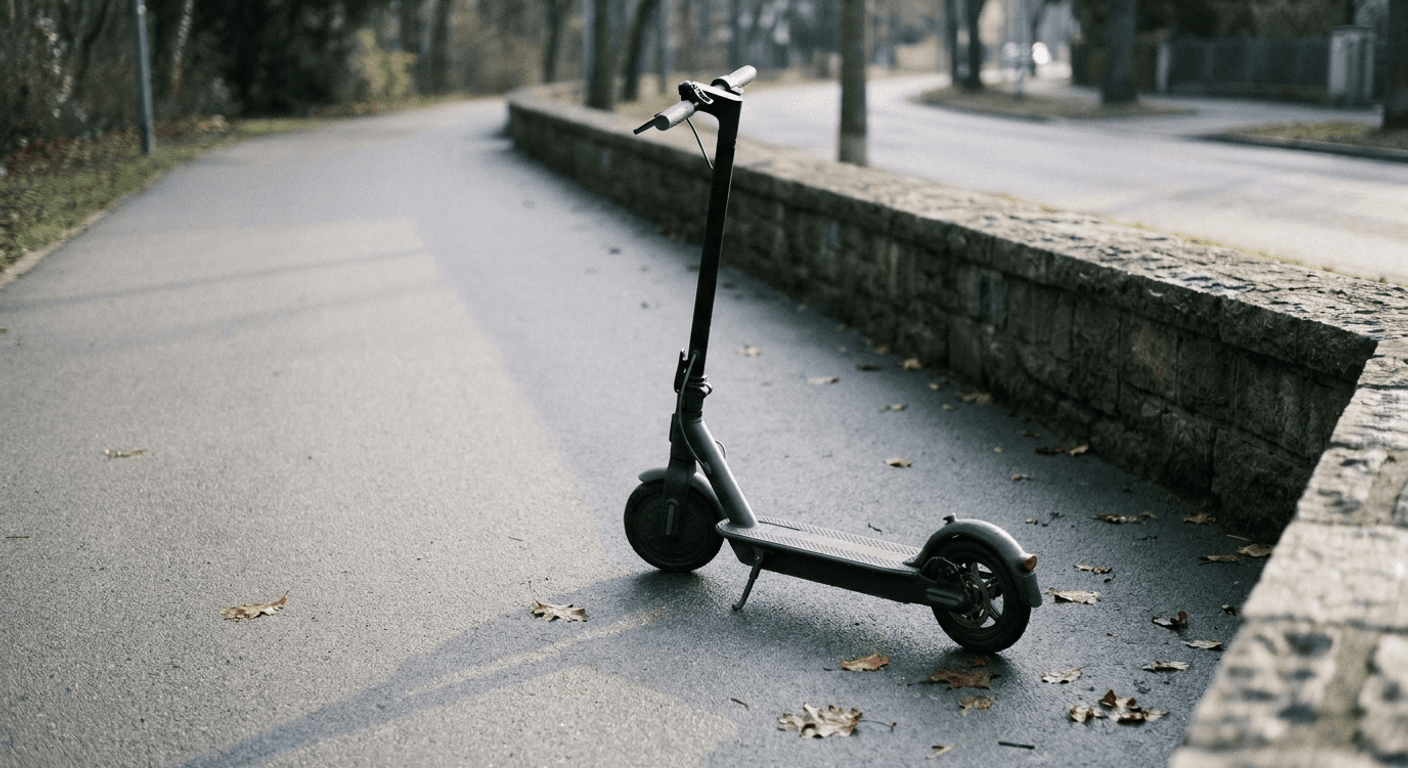
Riding your own e-scooter, legally a Vehículo de Movilidad Personal or VMP, is legal in Spain on bike lanes and on streets within the speed limit your city sets for them. It is banned nationwide on sidewalks, pedestrian areas, motorways and interurban roads. Since 1 October 2026 a national minimum age of 15 and a helmet rule for every rider apply under Real Decreto 518/2026; before that, age and helmet rules came only from each city's own ordinance, and Madrid and Barcelona set different numbers, covered in detail below. Rental e-scooters follow the same VMP rules as private ones; Spain has no separate national legal category for shared fleets.
The legal position
What counts as a VMP
Real Decreto 970/2020 (10 November 2020, in force since 2 January 2021) created the VMP category by amending both the Reglamento General de Circulación (RD 1428/2003) and the Reglamento General de Vehículos (RD 2822/1998). Its own definition, art. segundo, apartado seis, reads:
"Vehículo de una o más ruedas dotado de una única plaza y propulsado exclusivamente por motores eléctricos que pueden proporcionar al vehículo una velocidad máxima por diseño comprendida entre 6 y 25 km/h. Sólo pueden estar equipados con un asiento o sillín si están dotados de sistema de autoequilibrado."
In practice: a single-rider, electric-only device with a design speed of 6 to 25 km/h, and a seat only if it self-balances. A device outside those limits, or one that falls under EU Regulation 168/2013 (a true moped or motorcycle), is not a VMP at all and instead falls under the ordinary moped or motorcycle regime, with its own licence, plate and insurance requirements.
Where you can and cannot ride
RD 970/2020 added art. 38.4 to the Reglamento General de Circulación, which bans VMPs outright from travesías, interurban roads, motorways and dual carriageways, including the stretches of those roads that run through a town, and from urban tunnels. The decree's own preamble also confirms sidewalks and pedestrian zones are off limits, applying the same rule as for any other vehicle under RGC art. 121.5.
In practice, according to the Ayuntamiento de Madrid's own guidance, riding is confined to bike lanes (carril bici), streets within the local speed threshold, and park routes where bicycles are already permitted. There is no "going slowly or carefully" exception to the sidewalk ban.
Private and rental e-scooters follow the same rules
RD 970/2020 does not distinguish between a privately owned VMP and one rented from a shared-fleet operator; both are governed by the same national definition, speed limits and circulation bans. Municipal authorization of shared-fleet operators is the norm in Spanish cities, following the general pattern of local-ordinance control described throughout this article, though a specific national or Madrid or Barcelona rental-licensing statute distinct from the general VMP rules was not identified for this article.
Minimum age and helmet rules: national since 1 October 2026, plus city ordinances
DGT's own VMP page states the technical and registration requirements for a VMP but does not set a minimum age or a helmet requirement. Until 1 October 2026 that was a genuine absence, not an oversight: age and helmet rules in Spain were municipal-ordinance territory, and the two largest cities set different numbers.
Madrid
Madrid's Ordenanza de Movilidad Sostenible (5 October 2018) sets 15 as the minimum age to ride a VMP unsupervised in public space. Below that age, a VMP may only be used in a space closed to traffic, sized and weighted appropriately for the child, and under a parent's or guardian's responsibility. The ordinance requires a helmet only for riders under 18, for anyone using a VMP for paid delivery work, and for anyone riding in a multimodal lane, regardless of age; since 1 October 2026, Real Decreto 518/2026 requires a helmet for every VMP rider nationwide.
Barcelona
Barcelona's ordinance sets the minimum age at 16 and, since its Ordenança de circulació, vianants i vehicles took effect on 1 February 2025, requires a helmet for every rider regardless of age. The same ordinance limits VMPs to one rider at a time, requires front and rear lights, and confines circulation to bike lanes and streets at 30 km/h or below. The Ajuntament's own announcement of the change puts the penalty for non-compliance at up to 500 €.
| Madrid | Barcelona | |
|---|---|---|
| Minimum age (unsupervised) | 15 | 16 |
| Helmet | Ordinance: under 18, delivery riders, or multimodal lanes only (national rule since 1 October 2026: every rider) | Every rider, any age |
| Where you can ride | Bike lanes, park routes, streets at the local speed limit | Bike lanes and streets at 30 km/h or below |
| Sidewalks | Banned | Banned |
| Riders per device | Not separately specified | One only |
| Fine range (municipal) | Set by the Ordenanza de Movilidad Sostenible | Up to 500 € |
The national reform: in force since 1 October 2026
Real Decreto 518/2026, of 24 June 2026, was approved by the Consejo de Ministros and published in the BOE on 26 June 2026. It sets a national minimum age of 15 to ride a VMP, extends the existing helmet mandate to cover VMP riders, and requires reflective or luminous elements at night or in low visibility, with professional riders required to wear a high-visibility vest at all times. The decree classes non-compliance as an "infracción grave," carrying a 200 € fine.
The decree's own final provision fixed its entry into force at 1 October 2026, so the national age and helmet rules have applied since that date. Before then, Madrid's and Barcelona's municipal rules described above were the only age and helmet rules.
Certification and registration
VMP registration has developed in two stages, both run from Madrid rather than each city individually.
| Date | What happened |
|---|---|
| 12 January 2022 | DGT's "Manual de características de los vehículos de movilidad personal" published in the BOE (BOE-A-2022-987), setting the technical standard a VMP must meet |
| 22 January 2024 | The certificado de circulación requirement took effect for new devices, 24 months after the manual's publication |
| 30 January 2026 | Real Decreto 52/2026 entered into force, creating the Registro de Vehículos Personales Ligeros and the etiqueta identificativa (a non-removable label in the format letter M plus four digits and three letters, minimum 52.8 by 65 mm) |
| 22 January 2027 | Hard circulation cutoff: a VMP sold before 22 January 2024 without a certificate may no longer circulate at all, even under the temporary brand/model/serial arrangement RD 52/2026 currently allows |
RD 52/2026's disposición transitoria primera is explicit that the temporary arrangement for older, uncertified devices is just that, temporary, and that it ends completely on 22 January 2027 rather than continuing indefinitely.
Insurance: the Ley 5/2025 mandate
Ley 5/2025 (24 July 2025) transposes EU Directive 2021/2118 and creates a compulsory third-party liability insurance requirement for a subset of VMPs it calls "vehículos personales ligeros" (VPL): single-seat, electric-only devices with a design speed of 6 to 25 km/h if under 25 kg, or 6 to 14 km/h if 25 kg or heavier (seated only if self-balancing).
Minimum cover is 6,450,000 € per incident for personal injury, regardless of how many victims are involved, and 1,300,000 € per incident for property damage. The insurance duty only applies once a VMP already holds its certificate, registration and identification label, so it layers on top of the RD 970/2020 and RD 52/2026 registration regime rather than standing alone. Coverage is limited to Spain; the cross-border rules that apply to ordinary motor insurance do not extend to VPLs.
The penalty for riding an uninsured VPL is set at one third of the fine under art. 3.1.c) of the recast Ley sobre responsabilidad civil y seguro (Real Decreto Legislativo 8/2004). The exact resulting euro figure was not independently confirmed for this article; press reporting places it reported at anywhere from a few hundred euros to around a thousand, and immediate immobilisation of the vehicle has also been reported as a consequence.
Alcohol and other operating rules
Because RD 970/2020 formally defines a VMP as a vehicle under the Reglamento General de Circulación, a VMP rider is subject to the same alcohol and drug testing framework (RGC arts. 20 to 28) as the driver of a car or motorcycle. For the current blood alcohol limits that apply to drivers generally in Spain, see recordinglaw.com's Spain blood alcohol limit guide. DGT guidance also confirms a VMP rider may not use headphones while riding and must keep both hands free to operate the device.
Enforcement in practice
Enforcement activity documents that the rules above are actively applied; it does not change what is legal, and a quiet week of policing is not permission to ride somewhere the rule already bans. Barcelona's Guàrdia Urbana ran a control campaign in May 2026 that produced 381 citations for cyclists and 1,239 denunciations for e-scooter riders, most concerning non-compliance with the conditions VMPs are permitted to circulate under. A follow-up campaign was reported for early July 2026 targeting the same population. These figures come from police-affairs press reporting rather than a police-published statistic, so treat them as a reported operational total rather than an official national count; no equivalent official compliance figure for VMPs nationwide has surfaced yet, unlike the certification counts some other European countries now publish.
How Spain compares
Spain's municipal-first approach to age and helmet rules, which lasted until the national rules took effect on 1 October 2026, was not unique in Europe; several countries leave core rider requirements to city ordinance while national law handles registration, insurance and where a device may circulate at all. For a broader look at how other countries draw these lines, including places that set age and helmet rules nationally rather than locally, see recordinglaw.com's world e-scooter law guide and the German e-scooter rules page.
E-scooter law sits within recordinglaw.com's wider Spain driving laws section and the Spain hub.
Frequently Asked Questions
Are electric scooters (patinetes eléctricos) legal in Spain?
Yes, subject to national and municipal rules. A VMP may not be ridden on sidewalks, pedestrian zones, motorways or interurban roads anywhere in Spain, but bike lanes and streets within the local speed limit are allowed. This applies equally to privately owned and rental e-scooters.
What is the minimum age to ride an e-scooter in Spain?
Since 1 October 2026 the national minimum age is 15, under Real Decreto 518/2026. City ordinances set their own ages too: Madrid sets 15 as the age to ride unsupervised in public; Barcelona sets 16.
Do you need a helmet to ride a patinete eléctrico in Spain?
Yes. Since 1 October 2026 Real Decreto 518/2026 requires every e-scooter rider to wear an approved or certified helmet. Before that date it depended on the city: Madrid required a helmet only for riders under 18, delivery riders, and multimodal lanes, while Barcelona requires a helmet for every rider regardless of age.
Do e-scooters need insurance in Spain?
Yes, if the device qualifies as a "vehículo personal ligero" (VPL) under Ley 5/2025. Minimum cover is 6,450,000 € for personal injury and 1,300,000 € for property damage per incident, and the duty applies once the device already holds its certificate, registration and identification label.
What happens to my e-scooter on 22 January 2027?
If it was sold before 22 January 2024 and was never issued a certificado de circulación, it may currently keep circulating under a temporary registration using only brand, model and serial number. Real Decreto 52/2026 fixes 22 January 2027 as the date that temporary arrangement ends completely; after that date, an uncertified device may not circulate at all.
Is Barcelona's e-scooter rule different from Madrid's?
Yes. Madrid's ordinance sets the minimum age at 15 and requires a helmet only for under-18s, delivery riders and multimodal lanes, though since 1 October 2026 the national rule requires a helmet for every rider. Barcelona sets the age at 16 and requires a helmet for every rider. Both cities ban sidewalk riding and limit circulation to bike lanes and streets within a set speed limit.
Can you ride an e-scooter after drinking in Spain?
No. Because Real Decreto 970/2020 classes a VMP as a vehicle under the Reglamento General de Circulación, a rider is subject to the same alcohol and drug testing rules that apply to any other driver.
Has a new national law changed e-scooter rules in Spain?
Yes. Real Decreto 518/2026 was approved by the Consejo de Ministros and published in the BOE on 26 June 2026, setting a national minimum age of 15 and a universal helmet mandate. It entered into force on 1 October 2026; before then, municipal rules like Madrid's and Barcelona's were the only age and helmet rules.
Updates
Updated 1 October 2026: Real Decreto 518/2026 is now in force, so Spain has a national minimum age of 15 and a helmet requirement for every e-scooter rider; wording updated.
Independently fact-checked against the cited primary sources
Sources and References
- Real Decreto 970/2020, de 10 de noviembre, por el que se modifican el Reglamento General de Vehículos y el Reglamento General de Circulación (creación de la categoría VMP)(boe.es).gov
- Real Decreto 52/2026, de 28 de enero, por el que se crea el Registro de Vehículos Personales Ligeros y la etiqueta identificativa(boe.es).gov
- Ley 5/2025, de 24 de julio, de transposición de la Directiva (UE) 2021/2118 (seguro obligatorio de los vehículos personales ligeros)(boe.es).gov
- Real Decreto 518/2026, de 24 de junio, por el que se modifica el Reglamento General de Circulación en materia de protección a usuarios vulnerables de la vía (BOE-A-2026-13889)(boe.es).gov
- DGT, "Vehículos de Movilidad Personal (VMP)"(dgt.es).gov
- DGT, "VMP: nuevas reglas, nueva formación"(dgt.es).gov
- Ayuntamiento de Madrid, "Preguntas frecuentes sobre patinetes eléctricos y otros vehículos de movilidad personal"(madrid.es).gov
- Ajuntament de Barcelona, "La nova ordenança de circulació entra en vigor l'1 de febrer"(barcelona.cat).gov
- La Moncloa, Referencia del Consejo de Ministros, 23 de junio de 2026(lamoncloa.gob.es).gov
- Periódico Policial, "La Guardia Urbana impulsará una campaña especial para reforzar la seguridad de ciclistas y usuarios de VMP"(periodicopolicial.es)