
Montana
Montana Smart Glasses Recording Laws (MCA 45-8-213)
Independently fact-checked against primary sources (last audited August 24, 2026). · Reviewed by the RecordingLaw editorial team. · Law checked current as of August 24, 2026. How we verify our legal content
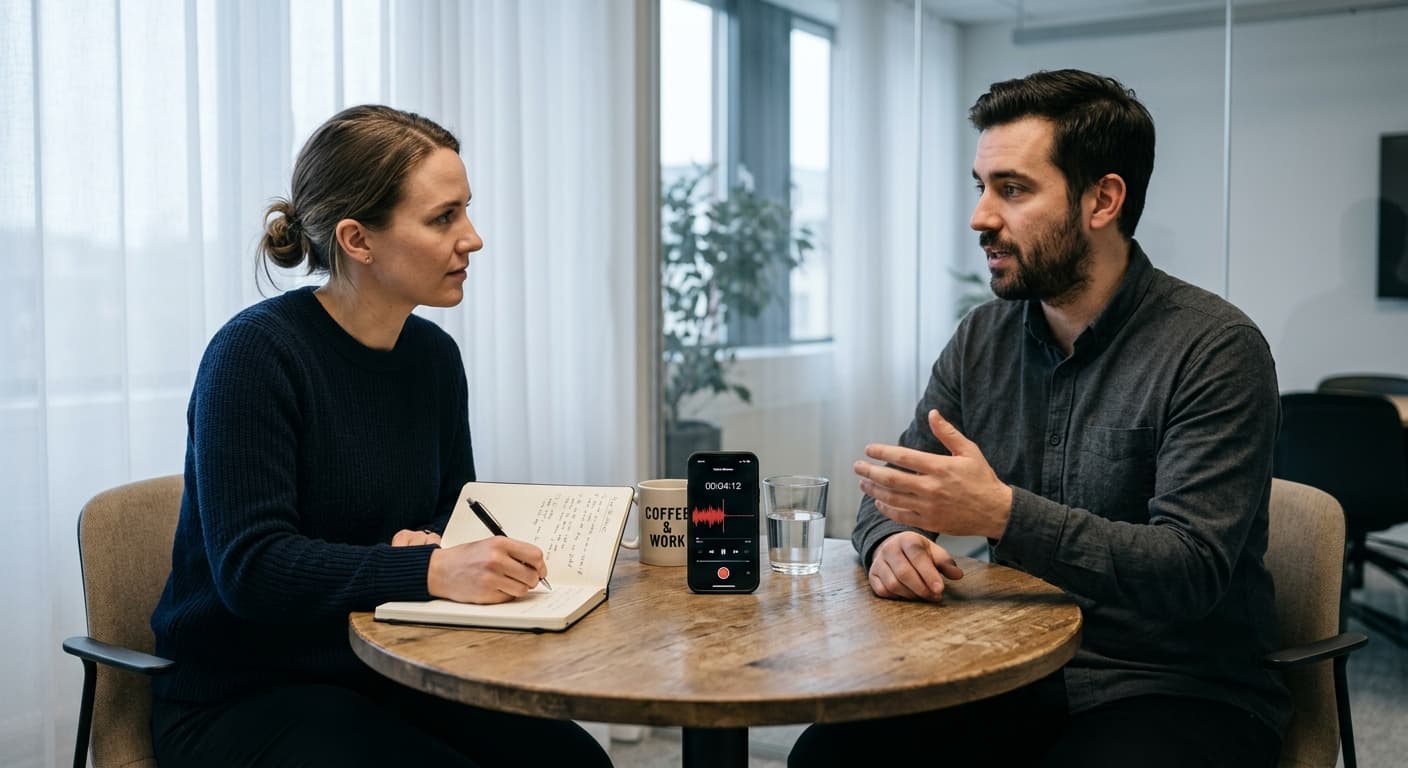
Smart glasses are legal to own and wear in Montana. You can record video in public spaces without restriction. However, recording audio with your glasses is governed by Montana Code Annotated (MCA) 45-8-213, which requires that all parties to a conversation have knowledge that a recording is taking place. Montana's rule is notice-based: an audible announcement before or at the start of recording is sufficient to satisfy the law, but secretly recording a conversation with a hidden device is a criminal offense. Understanding where that line falls matters before you press record.
Are Smart Glasses Legal to Own and Wear in Montana?
Yes. Smart glasses are consumer electronics. Montana has no law restricting ownership, possession, or wearing of smart glasses, augmented reality eyewear, or similar wearable technology. The Meta Ray-Ban AI glasses and comparable devices are sold and used throughout the state without restriction.
The legal complexity arises entirely from what you do with your glasses, not from possessing them. Two layers of law govern that: the audio consent rule (MCA 45-8-213) for capturing spoken conversations, and the voyeurism statute (MCA 45-5-223) for visual recording in locations where people have a reasonable expectation of bodily privacy.
Recording Video in Public vs. Private Spaces
Video-only recording in a public space is generally lawful in Montana. When you walk down a street, enter a retail store, or attend an outdoor event, the people around you have a reduced expectation of privacy from being observed or filmed. This principle traces to Katz v. United States, 389 U.S. 347 (1967), where the Court held that the Fourth Amendment "protects people, not places," and Justice Harlan's concurrence framed the test as requiring both an actual (subjective) expectation of privacy and one that society is prepared to recognize as reasonable. In open public spaces, neither prong is typically satisfied for mere visual observation.
Smart glasses used to capture video footage of public spaces, events, or street scenes therefore do not violate Montana law simply by recording what is visible to anyone standing there.
The analysis changes when you move into private or semi-private spaces. A private home, medical office, hotel room, or even a secluded corner of a restaurant booth can give rise to a reasonable expectation of privacy that video recording could violate. The key question is not whether a space is technically accessible to the public, but whether persons within it have a reasonable expectation that their activities are not being captured on video.
Montana does not have a statute that broadly restricts video recording in private spaces the way some states do, but two independent legal constraints apply: the voyeurism statute (addressed below) and civil tort liability for intrusion upon seclusion.
Recording Audio: Montana's All-Party Knowledge Rule
Montana's rule on audio recording is found in MCA 45-8-213. The statute makes it a criminal offense to "record or cause to be recorded a conversation by use of a hidden electronic or mechanical device that reproduces a human conversation without the knowledge of all parties to the conversation."
The operative phrase is "without the knowledge of all parties." Montana does not require that all parties actively consent to or agree with the recording. The statute requires only that they be aware it is happening. An audible announcement made before or at the start of recording is sufficient to satisfy the law. A statement such as "I am recording this conversation" puts all parties on notice. Their response, whether they object or say nothing, does not determine whether the recording is lawful.
This distinguishes Montana from true all-party consent states like California or Illinois, where active consent from every party is required. Montana is better understood as an all-party knowledge or notice-based state: notice satisfies the requirement, consent is not the standard.
For smart glasses wearers, this framework has a practical implication. If you are recording a conversation with your glasses and you verbally announce the recording at the start, you are within the law regardless of whether the other party agrees. If you are recording the same conversation silently, relying on the assumption that the other party knows, you are in legally uncertain territory. The statute's language refers to a "hidden" device, which raises the question of whether glasses worn visibly in a face-to-face interaction constitute a hidden device. That question has not been definitively resolved by Montana courts as of 2026. Prudent practice is to announce the recording rather than rely on the argument that your glasses are not "hidden."
Exceptions to the Knowledge Requirement
MCA 45-8-213 provides several exceptions where the knowledge-of-all-parties requirement does not apply:
Public officials and employees performing official duty. Under MCA 45-8-213(2)(a)(i), the knowledge requirement does not apply to elected or appointed public officials or public employees "when the transcription or recording is done in the performance of official duty." That language most naturally covers recordings officials make in their own official work. It does not expressly exempt a member of the public who records an official, so the safer course when recording a police officer or other official is to record openly rather than rely on this exception.
Speakers at public meetings. A person who voluntarily addresses an audience at a public meeting, town hall, or similar gathering has no reasonable expectation that their public remarks are private. Recording is lawful without announcement.
Persons given warning. Under MCA 45-8-213(2)(a)(iii), the rule does not apply to persons given warning of the transcription or recording, and if one person provides the warning, either party may record. The statute does not say that a posted policy or other general notice counts as a warning, so a direct warning to the people in the conversation is the safer practice.
Health care emergency calls. Under MCA 45-8-213(2)(a)(iv), a health care facility, or a government agency that deals with health care, may record a health care emergency telephone communication made to it. This exception does not reach an individual smart glasses wearer.
For most smart glasses users, the exceptions that matter are the public-meeting exception and the warning exception. Outside them, the practical rule is to make sure everyone in the conversation knows you are recording.
What "Private Conversation" Means
The text of MCA 45-8-213(1)(c) does not contain a privacy-expectation element. It reaches any conversation recorded with a hidden device without the knowledge of all parties, not only conversations the participants expect to be private. A quiet work discussion between two colleagues, a conversation in someone's home, a medical appointment, or a business meeting in a conference room are common settings where covert recording with a wearable device is most likely to be noticed and challenged.
Smart glasses worn in ordinary social, professional, or domestic settings create exactly the kind of covert-recording risk the statute targets. The glasses look like ordinary eyewear. No one watching you can tell the device is recording. That is precisely why the knowledge-of-all-parties rule exists: the invisibility of the recording method does not excuse the failure to give notice.
Where You Cannot Record: Voyeurism and Surreptitious Visual Observation
MCA 45-5-223 prohibits surreptitious visual observation or recording under two specific prongs, not a general ban on recording in any room where someone expects privacy.
The statute covers two categories of conduct. First, it prohibits hiding, waiting, or loitering in or near a private dwelling house, apartment, or other place of residence to observe or record occupants without their knowledge. Second, it prohibits purposely or knowingly observing or recording a visual image of another person's sexual or intimate parts in a public place without their knowledge when they have a reasonable expectation of privacy.
How those two prongs reach a specific venue depends on the facts. A retail fitting room, a gym locker room, or a restroom inside a business open to the public can fall within the public-place prong if the recording captures someone's sexual or intimate body parts there, because the surrounding venue is a public place even though the fitting room itself is enclosed. A private residence and an occupied hotel room fall more clearly within the private-dwelling prong. A medical examination room fits neither prong cleanly under this statute's text: it is not a private dwelling and is not ordinarily treated as a public place, so MCA 45-5-223 does not clearly reach covert recording there, though recording anyone's intimate or sexual body parts without consent in a clinical setting still carries civil exposure under Montana's intrusion-upon-seclusion tort and can raise separate liability under facility policy or federal law where it applies.
Smart glasses are treated identically to any other recording device under this statute, and the notice-or-consent framework of MCA 45-8-213 does not create an exception to it. Smart glasses' resemblance to ordinary eyewear does not create a legal exception; using a device that conceals its recording function in a location the statute reaches would support a finding of purposeful or knowing violation.
Penalties under MCA 45-5-223 scale with repeat offenses. A first conviction carries up to $500 fine or up to 6 months in county jail, or both. A second conviction brings up to $1,000 fine or up to 1 year of incarceration, or both. A third or subsequent conviction is punishable by up to $10,000 fine or up to 5 years of incarceration, or both.
Facial Recognition and Biometric Data in Montana
As of June 2026, Montana does not have a dedicated biometric privacy statute comparable to Illinois BIPA, Texas CUBI, or Washington RCW Chapter 19.375. Montana has not enacted a law requiring notice and consent before collecting face geometry, voiceprints, or other biometric identifiers.
Smart glasses wearers in Montana who use third-party facial recognition applications to identify strangers are not subject to Montana-specific statutory biometric liability. However, several other legal constraints remain relevant.
The federal Wiretap Act (18 U.S.C. §§ 2510-2522) does not reach video capture, but the audio component of any conversation captured alongside facial scanning is subject to MCA 45-8-213 and the federal consent framework.
Civil liability under common law intrusion upon seclusion, recognized in Montana and grounded in Restatement (Second) of Torts § 652B, can apply whenever a person intentionally intrudes upon the seclusion of another in a way that is highly offensive to a reasonable person. Using a facial recognition application attached to smart glasses to identify strangers without their knowledge could satisfy both elements of the intrusion tort: the intentional intrusion, and the objective offensiveness standard.
The 2024 I-XRAY demonstration by Harvard students, which paired Meta Ray-Ban glasses with facial recognition software to identify strangers in real time and retrieve their home addresses, illustrated precisely the kind of conduct that intrusion-upon-seclusion doctrine reaches, even in the absence of a specific biometric statute. Montana residents have no statutory floor below which such conduct is automatically lawful.
Residents and visitors should also be aware that if smart glasses are used with facial recognition in states with biometric laws, for example while traveling to Illinois or Texas, those states' laws apply based on where the data collection occurs.
Criminal Penalties Under MCA 45-8-213
A first violation of MCA 45-8-213(1)(c) for recording a conversation without the knowledge of all parties carries a fine of up to $500, imprisonment in county jail for up to 6 months, or both. This is a misdemeanor-level penalty under Montana's sentencing framework.
For repeat violations involving harassment or extortion under MCA 45-8-213(1)(a) and (1)(b), penalties escalate significantly. A second offense carries up to 1 year in jail or a $1,000 fine. A third or subsequent offense carries up to 5 years in state prison or a $10,000 fine.
MCA 45-8-213 also carries a separate, higher felony tier for publishing, distributing, or threatening to disclose real or digitally-fabricated intimate images without consent under (1)(d) and (1)(e), which is directly relevant to smart-glasses misuse if captured footage is later published or used to threaten someone. A second or subsequent conviction under those provisions is a felony carrying up to 5 years imprisonment, a fine of up to $25,000, or both -- a higher ceiling than the $10,000 maximum that applies to repeat (1)(a)/(1)(b) harassment and extortion offenses.
Separate from criminal liability, a person who makes an unauthorized recording may face civil claims. Intrusion upon seclusion under Restatement (Second) of Torts § 652B imposes liability for the act of recording itself, even if the footage is never shared. If the recording is subsequently published or distributed, public disclosure of private facts under Restatement (Second) of Torts § 652D provides an additional theory of recovery. Montana courts have recognized the privacy torts as a matter of state common law.
Practical Tips for Smart Glasses Users in Montana
Announce before recording conversations. Montana's notice-based framework is satisfied by a brief, audible statement that you are recording. This does not require permission; it requires awareness. "I'm recording this" said clearly before a conversation begins puts you on solid legal ground.
Let the capture LED be visible. Meta Ray-Ban glasses include a white LED indicator that illuminates whenever the camera is active. Meta's official guidance instructs users to let the LED shine rather than cover or obscure it. In Montana, where the statute targets "hidden" devices, a visible LED contributes to the argument that your device is not hidden. Covering or disabling the LED would undercut that argument and could support an inference of intent to record covertly.
Do not record in private spaces without consent. MCA 45-5-223 bars recording anyone's sexual or intimate body parts in a public place, which reaches restrooms, locker rooms, and fitting rooms inside businesses open to the public, and separately bars surreptitiously observing or recording an occupant of a private dwelling. Neither prong depends on the notice framework under MCA 45-8-213.
Public meetings are exempt; police encounters are less clear. MCA 45-8-213(2)(a)(ii) exempts persons speaking at public meetings, so recording a speaker at a public meeting does not require an announcement. The official-duty exception in (2)(a)(i) is written for recordings made by officials and employees in their duties, not recordings made of them, so when recording a police encounter or other official, keep the device visible and say that you are recording.
Be cautious in workplace and domestic settings. A business meeting, a conversation with a healthcare provider, or a discussion in a private home are contexts where participants have a reasonable expectation of privacy in their spoken words. Applying the notice rule in these settings is both legally prudent and practically simple.
Do not attach facial recognition software for identifying strangers. While Montana lacks a biometric statute, civil tort liability and the chilling effect of federal law make this a high-risk use. The I-XRAY demonstration proved the technology works at scale; Montana courts are capable of applying intrusion-upon-seclusion doctrine to conduct that is highly offensive to a reasonable person even without a specific statute.
More Montana Laws
Frequently Asked Questions
Is it legal to record someone with smart glasses in Montana?
Smart glasses recording is legal in Montana with proper notice. For video in public spaces, no announcement is needed because people in public have a reduced expectation of privacy from being seen. For audio recording of a conversation, MCA 45-8-213 requires that all parties have knowledge of the recording. An audible announcement before or at the start of recording satisfies this requirement. Secret audio recording without notifying any party is a misdemeanor.
Do I need everyone's consent to record with smart glasses in Montana?
Montana does not require consent. It requires knowledge. Under MCA 45-8-213, all parties to a conversation must be aware that a recording is happening. An audible statement that you are recording satisfies this notice requirement. The other party does not need to agree or respond affirmatively. This is different from states like California or Illinois that require active all-party consent.
What happens if I record a conversation secretly with my glasses in Montana?
Secretly recording a conversation with a hidden device without the knowledge of all parties violates MCA 45-8-213(1)(c). A first offense is punishable by up to $500 fine and up to 6 months in county jail, or both. The escalating ladder, up to $1,000 and 1 year for a second offense and up to $10,000 and 5 years for a third or subsequent offense, applies specifically to harassment or extortion by electronic communication under MCA 45-8-213(1)(a) and (1)(b), not to repeat hidden-recording offenses under (1)(c) as such. A separate felony tier of up to $25,000 and 5 years applies to a second or subsequent conviction for publishing or threatening to disclose intimate images without consent under (1)(d) and (1)(e).
Can I record police with smart glasses in Montana?
Recording police openly is the safer course. MCA 45-8-213(1)(c) applies to recording with a hidden device without the knowledge of all parties. The exception in MCA 45-8-213(2)(a)(i) covers public officials and employees when the recording is done in the performance of official duty, which most naturally describes recordings officials make in their work, not recordings a member of the public makes of them. Telling the officer you are recording, and keeping the glasses visible with the recording LED unobstructed, avoids relying on that exception.
Are there places where I can never use smart glasses to record in Montana?
Yes, within two specific prongs. MCA 45-5-223 prohibits purposely or knowingly recording anyone's sexual or intimate body parts in a public place without their knowledge, which reaches a restroom, locker room, or fitting room inside a business open to the public, and separately prohibits surreptitiously observing or recording an occupant of a private dwelling. Neither prong is subject to the notice-or-consent framework of MCA 45-8-213. A medical examination room is not clearly covered by either prong of this specific statute, though recording someone's intimate body parts there without consent still carries civil exposure.
Does the Meta Ray-Ban recording LED help with Montana's notice requirement?
The LED contributes to notice but is not a guaranteed legal substitute for a verbal announcement. Montana's statute targets recording with a 'hidden' device. A visible, illuminated LED is evidence that the device is not hidden. However, not everyone knows what the LED means, and courts have not ruled on whether an LED satisfies Montana's all-parties-knowledge requirement. Combining a visible LED with a verbal announcement is the safest approach.
Does Montana have a biometric privacy law covering facial recognition on smart glasses?
No. As of June 2026, Montana has not enacted a dedicated biometric privacy statute. Smart glasses used with facial-recognition software in Montana are not subject to Montana-specific statutory biometric liability. However, civil tort claims for intrusion upon seclusion can apply, and if the facial recognition software collects data subject to Illinois BIPA or Texas CUBI rules while you are in those states, those laws apply.
Can I wear smart glasses while driving in Montana?
Montana's distracted driving law targets conduct that interferes with safe vehicle operation. Using smart glasses for navigation is likely analogous to a mounted GPS device, which is generally permissible. Using glasses to stream video, conduct social media interactions, or engage in non-driving activities while operating a vehicle creates greater legal and safety risk. Montana law does not specifically address wearable display glasses as of June 2026.
Updates
Corrected the description of Katz v. United States to separate the Court's holding from the two-part privacy test stated in Justice Harlan's concurrence.
Corrected our description of the exceptions to Montana's hidden-recording law (official-duty, warning, and health care emergency call exceptions), removed an unsupported privacy-expectation element, and corrected the incarceration wording for repeat voyeurism convictions.
Rewrote this page's voyeurism section to state MCA 45-5-223's actual two prongs (surreptitious observation of a resident in a private dwelling, and recording intimate body parts in a public place) instead of listing five location categories as though the statute enumerates them; corrected a FAQ answer that misattributed MCA 45-8-213's second/third-offense escalating penalties to repeat hidden-recording violations when they apply only to the statute's harassment and extortion provisions; and added the statute's separate $25,000/5-year felony tier for publishing or threatening to disclose intimate images without consent.
Independently fact-checked against the cited primary sources; governing law re-checked for recent changes
Reviewed and approved by an editor
The Law Behind This Article
This article rests on the statutory provisions below, held in our own legal record and retrieved from the official source. Tap a section to read the operative text.
Montana Code Annotated, Title 45
§ 45-8-213Privacy In CommunicationsIn forcecited in 51 of our articles
45-8-213. Privacy in communications. (1) Except as provided in 69-6-104, a person commits the offense of violating privacy in communications if the person knowingly or purposely: (a) with the purpose to terrify, intimidate, threaten, harass, or injure, communicates with a person by electronic communication and threatens to inflict injury or physical harm to the person or property of the person or makes repeated use of obscene, lewd, or profane language or repeated lewd or lascivious suggestions; (b) uses an electronic communication to attempt to extort money or any other thing of value from a person or to disturb by repeated communications the peace, quiet, or right of privacy of a person at the place where the communications are received; (c) records or causes to be recorded a conversation by use of a hidden electronic or mechanical device that reproduces a human conversation without the knowledge of all parties to the conversation; (d) with the purpose to terrify, intimidate, threaten, harass, or injure or to obtain money or other valuable consideration, publishes, distributes, or discloses real or digitally fabricated printed or electronic photographs, pictures, images, or…
Official text (excerpt) · last checked 2026-09-24 · Read the full text in our law library · Verify at mca.legmt.gov
Cited in 23 court opinions in our collectionLatest citing opinion in our collection: 2025
In the courts (editorial summary, independently checked):State v. Dugan (2013) struck the statute's prima facie intent clause as overbroad. State v. Brown (1988) noted the statute still bars recording without all participants' permission and rejected an overbreadth attack on its public-official exception. State v. DuBray (2003) found no violation where the defendant knew of the recording.
Opinions citing this section in our collection:
- State v. Smith (Montana Supreme Court 2004, 322 Mont. 206)✓A man who phoned threats to kill his estranged wife's boyfriend argued he should have been charged under section 45-8-213(1)(a) instead of assault with a weapon. The court held the two statutes punish different conduct, so the charge was within prosecutorial discretion.
- State v. Dugan (Montana Supreme Court 2013, 369 Mont. 39)“…rbroad, the Court today strikes the prima facie language in § 45-8-213, MCA. However, a narrow application would be…”
- In re C.S. (Montana Supreme Court 1984, 210 Mont. 144)“…n of privacy in communication, a misdemeanor as provided in Section 45-8-213, MCA. The facts underlying the offense were…”
Identified automatically from the court opinions citing this section — not a ranking of which case controls.
Also relied on in: Montana Recording Laws (2026): Announcement Exception and Penalties, Montana Landlord-Tenant Recording Laws: Camera Rules, Privacy Rights, and Disputes (2026), Montana Security Camera Laws: Home, Business, and Surveillance Rules (2026)
§ 45-5-223Surreptitious Visual Observation Or Recordation -- Place Of Residence -- Public Place -- ExceptionsIn forcecited in 12 of our articles
45-5-223. Surreptitious visual observation or recordation -- place of residence -- public place -- exceptions. (1) A person commits the offense of surreptitious visual observation or recordation in a place of residence if the person purposely or knowingly hides, waits, or otherwise loiters in person or by means of a remote electronic device within or in the vicinity of a private dwelling house, apartment, or other place of residence for the purpose of: (a) watching, gazing at, or looking upon any occupant in the residence in a surreptitious manner without the occupant's knowledge; or (b) by means of an electronic device, surreptitiously observing or recording the visual image of any occupant in the residence without the occupant's knowledge. (2) A person commits the offense of surreptitious visual observation or recordation in public if the person purposely or knowingly observes or records a visual image of the sexual or intimate parts of another person in a public place without the other person's knowledge when the victim has a reasonable expectation of privacy.
Official text (excerpt) · last checked 2026-08-31 · Read the full text in our law library · Verify at mca.legmt.gov
Cited in 1 court opinions in our collectionLatest citing opinion in our collection: 2026
Opinions citing this section in our collection:
- United States v. Watkins (Court of Appeals for the Tenth Circuit 2026)“…nn. § 609.746;1 Miss. Code Ann. § 97-29-61;2 MPC § 250.12;1 Mont. Code Ann. 45-5-223;3 Neb. Rev. Stat. § 28-311.08; Nev. Rev…”
Identified automatically from the court opinions citing this section — not a ranking of which case controls.
Also relied on in: Montana Video Recording Laws: Consent Rules, Surveillance, and Penalties (2026), Montana Laws on Recording in Public: First Amendment Rights and Limitations (2026), Montana Workplace Recording Laws: Employee Rights, Employer Monitoring, and the WDEA (2026)
United States Code Title 18
§ 2511Interception and disclosure of wire, oral, or electronic communications prohibitedIn forcecited in 441 of our articles
Except as otherwise specifically provided in this chapter any person who— intentionally intercepts, endeavors to intercept, or procures any other person to intercept or endeavor to intercept, any wire, oral, or electronic communication; intentionally uses, endeavors to use, or procures any other person to use or endeavor to use any electronic, mechanical, or other device to intercept any oral communication when— such device is affixed to, or otherwise transmits a signal through, a wire, cable, or other like connection used in wire communication; or such device transmits communications by radio, or interferes with the transmission of such communication; or such person knows, or has reason to know, that such device or any component thereof has been sent through the mail or transported in interstate or foreign commerce; or such use or endeavor to use (A) takes place on the premises of any business or other commercial establishment the operations of which affect interstate or foreign commerce; or (B) obtains or is for the purpose of obtaining information relating to the operations of any business or other commercial establishment the operations of which affect interstate or foreign…
Official text (excerpt) · last checked 2026-09-17 · Read the full text in our law library · Verify at uscode.house.gov
Cited in 2,045 court opinions in our collectionLatest citing opinion in our collection: 2026
In the courts (editorial summary, independently checked):Griggs-Ryan v. Smith (1990) applied the Section 2511(2)(d) prior-consent exception, treating a tenant repeatedly told that all incoming calls were taped as having impliedly consented. United States v. United States District Court (1972) read the then-current Section 2511(3) as conferring no presidential surveillance power.
Opinions citing this section in our collection:
- Mitchell v. Forsyth (Supreme Court of the United States 1985, 472 U.S. 511)✓The Attorney General authorized a warrantless 1970 national security wiretap that caught the plaintiff's calls; the Court held the since-repealed Section 2511(3) disclaimer left the tap lawful under Title III, and that Mitchell had qualified immunity.
- United States v. United States District Court for the Eastern District of Michigan (Supreme Court of the United States 1972, 407 U.S. 297)✓The Attorney General approved warrantless wiretaps on members of a domestic group accused of bombing a CIA office; the Court read Section 2511(3) as a congressional disclaimer conferring no surveillance power, then held the Fourth Amendment required prior judicial approval.
- Forsyth v. Barr (Court of Appeals for the Fifth Circuit 1994, 19 F.3d 1527)✓Dallas police used, in an internal affairs probe of an officer, calls private parties allegedly intercepted illegally; assuming that was unlawful, the Fifth Circuit held Section 2517(1) and (2) allowed the disclosure and use, defeating the Section 2511(1)(c) and (d) claims.
Identified automatically from the court opinions citing this section — not a ranking of which case controls.
Also relied on in: Connecticut Recording Laws (2026): Hybrid Consent Rules Explained, Oregon Recording Laws (2026): Hybrid One-Party and All-Party Rules, US Recording Laws by State (2026): All 50 States Explained
§ 2510DefinitionsIn forcecited in 137 of our articles
As used in this chapter— “wire communication” means any aural transfer made in whole or in part through the use of facilities for the transmission of communications by the aid of wire, cable, or other like connection between the point of origin and the point of reception (including the use of such connection in a switching station) furnished or operated by any person engaged in providing or operating such facilities for the transmission of interstate or foreign communications or communications affecting interstate or foreign commerce; “oral communication” means any oral communication uttered by a person exhibiting an expectation that such communication is not subject to interception under circumstances justifying such expectation, but such term does not include any electronic communication; “State” means any State of the United States, the District of Columbia, the Commonwealth of Puerto Rico, and any territory or possession of the United States; “intercept” means the aural or other acquisition of the contents of any wire, electronic, or oral communication through the use of any electronic, mechanical, or other device.1 So in original. The period probably should be a semicolon.
Official text (excerpt) · last checked 2026-07-28 · Read the full text in our law library · Verify at uscode.house.gov
Cited in 2,382 court opinions in our collectionLatest citing opinion in our collection: 2026
In the courts (editorial summary, independently checked):United States v. New York Telephone Co. (1977) held that pen registers fall outside Title III because they do not acquire the contents of a communication as Section 2510(4) and (8) define interception. Forsyth v. Barr (1994) applied the same definitions, treating the defendant officers as law enforcement officers under Section 2510(7).
Opinions citing this section in our collection:
- Forsyth v. Barr (Court of Appeals for the Fifth Circuit 1994, 19 F.3d 1527)✓Neighbors tapped an informant's home line and the overheard charges reached Dallas internal affairs; the Fifth Circuit saw no evidence the police defendants intercepted anything and held they were 2510(7) law enforcement officers, so 2517(1) and (2) allowed their use of it.
- Nixon v. Administrator of General Services (Supreme Court of the United States 1977, 433 U.S. 425)“…of the Omnibus Crime Control and Safe Streets Act of 1968, 18 U. S. C. §§ 2510 et seq. 408 F. Supp., at 363 . We…”
- Gannett Co. v. DePasquale (Supreme Court of the United States 1979, 443 U.S. 368)“…of the Omnibus Crime Control and Safe Streets Act of 1968, 18 U. S. C. § 2510 et seq., be preserved prior to the d…”
Identified automatically from the court opinions citing this section — not a ranking of which case controls.
Also relied on in: Surveillance Camera Laws by State (2026 Guide), Georgia Recording Laws (2026): One-Party Audio, All-Party Video, District of Columbia Recording Laws (2026): One-Party Consent Rules
§ 1801Video voyeurismIn forcecited in 81 of our articles
Whoever, in the special maritime and territorial jurisdiction of the United States, has the intent to capture an image of a private area of an individual without their consent, and knowingly does so under circumstances in which the individual has a reasonable expectation of privacy, shall be fined under this title or imprisoned not more than one year, or both. In this section— the term “capture”, with respect to an image, means to videotape, photograph, film, record by any means, or broadcast; the term “broadcast” means to electronically transmit a visual image with the intent that it be viewed by a person or persons; the term “a private area of the individual” means the naked or undergarment clad genitals, pubic area, buttocks, or female breast of that individual; the term “female breast” means any portion of the female breast below the top of the areola; and the term “under circumstances in which that individual has a reasonable expectation of privacy” means— circumstances in which a reasonable person would believe that he or she could disrobe in privacy, without being concerned that an image of a private area of the individual was being captured; or circumstances in which a…
Official text (excerpt) · last checked 2026-07-28 · Read the full text in our law library · Verify at uscode.house.gov
Cited in 53 court opinions in our collectionLatest citing opinion in our collection: 2026
In the courts (editorial summary, independently checked):Courts have applied 18 U.S.C. 1801 mainly at its edges. United States v. Johnson (2010) read it as Congress's answer to secretly filming nudity on federal property, acquitting on a child exploitation charge instead. EPIC v. Department of Homeland Security (2011) applied the Section 1801(c) law enforcement exception to a TSA scanner claim.
Opinions citing this section in our collection:
- United States v. Anthony Helton (Court of Appeals for the Fourth Circuit 2019, 944 F.3d 198)“…from this list of federal offenses is video voyeurism under 18 U.S.C. § 1801. Rather than list this statute as an enu…”
- United States v. Johnson (District Court, W.D. Missouri 2010, 719 F. Supp. 2d 1059)✓A weightlifting coach hid a camera to film minors weighing in nude; acquitting him under the child exploitation statute, the court called that conduct plain video voyeurism under section 1801, but noted the section reaches only federal maritime and territorial jurisdiction.
- Electronic Privacy Information Center v. United States Department of Homeland Security (Court of Appeals for the D.C. Circuit 2011, 653 F.3d 1)✓Privacy groups challenged TSA body scanners under the Video Voyeurism Prevention Act; the D.C. Circuit held the statute's exception for lawful law enforcement, correctional, or intelligence activity applied to airport screening, so the section 1801 claim failed.
Identified automatically from the court opinions citing this section — not a ranking of which case controls.
Also relied on in: South Dakota Voyeurism Laws, Utah Voyeurism Laws, Is It Illegal to Video Record Someone Without Their Consent? (2026)
Search our full record of US law — 2.1 million sections, every state + federal →
Sources and References
- MCA 45-8-213: Privacy in communications. Prohibits recording a conversation by use of a hidden electronic or mechanical device without the knowledge of all parties. Penalty: up to $500 fine and 6 months county jail for a first offense.(mca.legmt.gov)
- MCA 45-5-223: Surreptitious visual observation or recordation. Prohibits observing or recording intimate body parts in public without knowledge, and prohibits recording occupants of private dwellings without consent. Penalty scales from $500/6 months (first) to $10,000/5 years (third or subsequent).(mca.legmt.gov)
- 18 U.S.C. § 2511: Federal Wiretap Act. One-party consent exception at § 2511(2)(d). Federal baseline; more restrictive state laws (including Montana) override. Penalty: up to 5 years imprisonment.(law.cornell.edu)
- 18 U.S.C. § 2510: Definitions under the federal Wiretap Act. Section 2510(2) defines 'oral communication'; § 2510(18) defines 'aural transfer.' These definitions establish that video-only recording without audio capture does not constitute a federal wiretap.(law.cornell.edu)
- 18 U.S.C. § 1801: Federal Video Voyeurism Prevention Act. Prohibits recording private areas of individuals on federal property without consent where a reasonable expectation of privacy exists.(law.cornell.edu)
- Meta Ray-Ban AI Glasses official privacy page. Documents the capture LED notification system, Meta's guidance that users should let the LED shine, and Meta's instruction to stop recording if asked. Source for device-fact claims only.(meta.com)
- Meta help article: Notification LED on AI glasses. Official source for LED location (near right frame), white color when recording, and brightness adjustment settings.(meta.com)