Texas App Store Age-Verification Law (SB 2420) Takes Effect
Independently fact-checked against primary sources (last audited June 7, 2026). · 3 primary sources cited on this page. How we verify our legal content
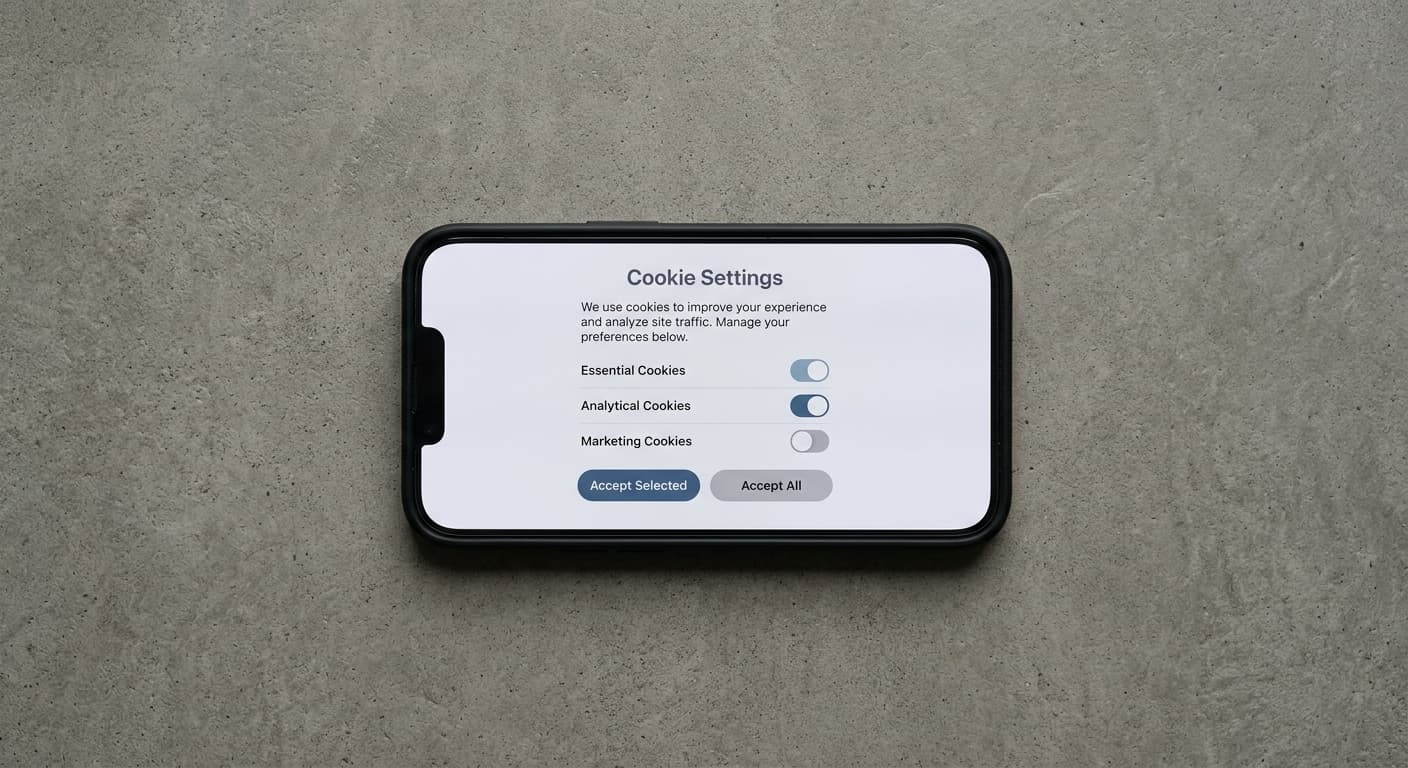
Texas Senate Bill 2420, the App Store Accountability Act, took effect on June 4, 2026, after the U.S. Court of Appeals for the Fifth Circuit granted Texas a stay pending appeal in Computer & Communications Industry Association v. Paxton, No. 25-51073. Apple and Google must now verify the age of new Texas account holders and obtain verified parental consent before minors download apps.
Information last verified on June 7, 2026. This is a developing story; we update it as the record changes.
Jurisdiction scope: This article addresses Texas Senate Bill 2420 and the federal litigation over it in the Fifth Circuit. It does not state the age-verification or app-store law of any other state. For a related state measure aimed at websites rather than app stores, see Iowa's age-verification law.
What Happened
The Fifth Circuit on June 4, 2026 granted Texas a stay pending appeal in Computer & Communications Industry Association v. Paxton, No. 25-51073, which lifted the injunction that had kept the App Store Accountability Act from operating. The order superseded an earlier administrative stay the court entered on May 28, 2026, and it allows SB 2420 to remain in force while the constitutional appeal proceeds. The same day, Apple told developers that new Apple Accounts created in Texas are now subject to the law's age-assurance and parental-consent requirements.
The dispute began in the Western District of Texas. On December 23, 2025, Judge Robert Pitman granted a preliminary injunction in CCIA v. Paxton, No. 1:25-cv-01660, finding the challengers likely to succeed on their First Amendment claim and barring Attorney General Ken Paxton from enforcing the Act. A companion suit, Students Engaged in Advancing Texas v. Paxton, raised parallel claims. Pitman reasoned that the law reaches a wide range of protected expression, including consuming news, social media, and entertainment, rather than only commercial transactions.
Texas appealed. In granting the stay, the Fifth Circuit concluded that the state had made a strong showing that the district court likely committed reversible errors, including by treating the law as subject to the most demanding level of First Amendment review. A stay pending appeal is a preliminary determination about likelihood of success and the balance of harms; it is not a final judgment that SB 2420 is constitutional, and the challengers can still seek review from the full Fifth Circuit or the Supreme Court.
What the Law Actually Says
SB 2420 places duties on app store operators rather than on individual app developers or websites. When a user creates an account, the operator must use a commercially reasonable method to verify the user's age and assign the user to one of four categories: under 13, 13 to 15, 16 to 17, or 18 and older. The age category, not a precise birthdate, is what the store then shares with developers so apps can apply age-appropriate settings.
For any user the system identifies as a minor under 18, the Act layers on parental controls. The minor's account must be affiliated with the account of a verified parent or legal guardian, and the store must obtain that parent's consent before the minor downloads an app or makes an in-app purchase. If a parent later revokes consent, the store must notify the affected developer. App stores must also display and justify each app's age rating and content descriptors, and give developers the age and consent signals they need to comply.
The law is codified at Texas Business and Commerce Code Sections 121.021 and following. Governor Greg Abbott signed it on May 27, 2025, with an original effective date of January 1, 2026. Enforcement runs through the Texas Attorney General, who can treat a violation as a deceptive trade practice under the Texas Business and Commerce Code. The Act does not create its own standalone private right of action. It instead designates a violation as a deceptive trade practice that the Attorney General enforces, and whether the Deceptive Trade Practices Act's own private-suit mechanism reaches these violations is unsettled. For the broader state privacy framework that sits alongside it, see our guide to Texas data privacy laws.

The First Amendment Question
The constitutional fight turns on how much First Amendment scrutiny an age-verification mandate must survive. The challengers argue that requiring every user to prove their age before reaching app stores, which are gateways to news apps, messaging, social media, and other expression, burdens protected speech and should face strict scrutiny. Texas argues the law mainly regulates commercial conduct and the terms of transactions with minors, which would draw a more forgiving standard.
That debate sits in the shadow of the Supreme Court's 2025 decision in Free Speech Coalition, Inc. v. Paxton, No. 23-1122 (U.S. June 27, 2025). There, the Court held that a different Texas statute, which requires age verification to access websites that publish material harmful to minors, is subject to intermediate scrutiny and upheld it. The Free Speech Coalition ruling did not address app stores, but it reframed how courts evaluate online age-verification rules, and the Fifth Circuit's stay leans on that shift. The app-store model raises its own questions, because the verification gate sits at the platform level and covers far more than a single category of content.
Analysis: Why This Matters
The following is analysis from the Recording Law Editorial Team.
SB 2420 represents a structurally different approach to protecting minors online. Most age-verification laws to date, including the wave that followed Free Speech Coalition, target specific categories of content at the website level. Texas instead places the obligation on the two dominant app stores and ties it to account creation, which is why the practical effect reached ordinary users the moment the stay issued. That design is what makes the case a bellwether: if app-store-level verification survives, it offers states a single chokepoint to regulate minors' access across thousands of apps at once.
The June 4 stay also illustrates how much the legal terrain moved in a single year. A federal judge enjoined the law in December 2025 on First Amendment grounds, and roughly five months later an appellate panel let it operate by reading the same speech interests more narrowly. That divergence reflects genuine uncertainty about which tier of scrutiny applies to platform-level age checks after Free Speech Coalition. The appeal will test whether the reasoning the Supreme Court used for adult-content websites extends to general-purpose app stores, a question with national stakes because several states have modeled bills on the Texas approach.
How This Affects You
For Texans creating a new Apple or Google account, the immediate change is procedural. New accounts are being routed through age-assurance steps, and accounts identified as belonging to minors require a linked parent or guardian and parental consent before app downloads or in-app purchases proceed. How the requirement applies to existing accounts, and exactly which verification methods each store uses, are implementation details the companies continue to roll out.
If your state has proposed or enacted a similar app-store bill, the Texas litigation is the case to watch, because its outcome will shape whether those laws can be enforced. Nothing here is specific legal guidance for a particular business or family. App developers, platforms, and parents with compliance questions should consult a lawyer licensed in their jurisdiction. For how Texas treats recording and surveillance more generally, see our overview of Texas recording laws, and for the broader debate over data and minors, see AI and data privacy.
This is general legal information, not legal advice. It addresses Texas Senate Bill 2420 and the federal litigation over it, and reflects sources verified on June 7, 2026. Laws change and this story is developing; consult a lawyer licensed in your jurisdiction about your specific situation.
Sources
The sources for this article are listed in the citations panel and include the Fifth Circuit and district court records in CCIA v. Paxton, the enrolled text of SB 2420, and the Supreme Court's decision in Free Speech Coalition, Inc. v. Paxton.
Related articles
- Iowa's age-verification law (HF 864)
- Texas data privacy laws
- AI and data privacy
- Texas recording laws
Last updated: 2026-06-07. This is a developing story; details verified as of 2026-06-07.
Frequently Asked Questions
Is the Texas app store age-verification law in effect?
Yes. SB 2420 took effect on June 4, 2026, after the Fifth Circuit granted Texas a stay pending appeal in CCIA v. Paxton, No. 25-51073. The stay lifted a December 2025 federal injunction, and the law remains in force while the appeal continues.
What does SB 2420 require Apple and Google to do?
App store operators must verify a user's age at account creation and assign the user to one of four categories (under 13, 13 to 15, 16 to 17, or 18 and older). For minors, the store must link the account to a verified parent and obtain parental consent before app downloads or in-app purchases.
Who enforces SB 2420?
The Texas Attorney General enforces the Act, and a violation can be treated as a deceptive trade practice under the Texas Business and Commerce Code. The Act does not create its own standalone private right of action; it designates violations as deceptive trade practices the Attorney General enforces, and whether the Deceptive Trade Practices Act's private-suit mechanism reaches these violations is unsettled.
Does the stay mean the law is constitutional?
No. A stay pending appeal is a preliminary ruling about likelihood of success and the balance of harms. The First Amendment challenge brought by CCIA and Students Engaged in Advancing Texas is still being litigated, and the law could be enjoined again.
How is SB 2420 different from website age-verification laws?
Website laws, like the one the Supreme Court upheld in Free Speech Coalition v. Paxton (2025), require age checks to reach specific content such as material harmful to minors. SB 2420 instead places the verification duty on app stores at the account level, covering access to apps generally.
Does SB 2420 apply outside Texas?
The statute governs Texas. Its enforceability is being decided in the Fifth Circuit, and several other states have introduced similar app-store bills, so the appeal's outcome is likely to influence whether comparable laws elsewhere can take effect.
Updates
Independently fact-checked against the cited primary sources
Sources and References
- Computer & Communications Industry Association v. Paxton, No. 25-51073 (5th Cir. June 4, 2026), order granting stay pending appeal of SB 2420 injunction(ca5.uscourts.gov).gov
- CCIA v. Paxton, No. 1:25-cv-01660 (W.D. Tex.), district court docket (preliminary injunction entered Dec. 23, 2025 by Judge Robert Pitman)(courtlistener.com)
- Texas S.B. 2420 (89th Leg., 2025), App Store Accountability Act, enrolled text codified at Tex. Bus. & Com. Code ch. 121(capitol.texas.gov).gov
- Free Speech Coalition, Inc. v. Paxton, No. 23-1122 (U.S. June 27, 2025), upholding Texas adult-content age-verification under intermediate scrutiny(supremecourt.gov).gov
- The Texas Tribune, coverage of the Fifth Circuit allowing SB 2420 to take effect (corroborating)(texastribune.org)