
France
Video Surveillance Laws in France: Cameras at Home, Between Neighbours, and at Work
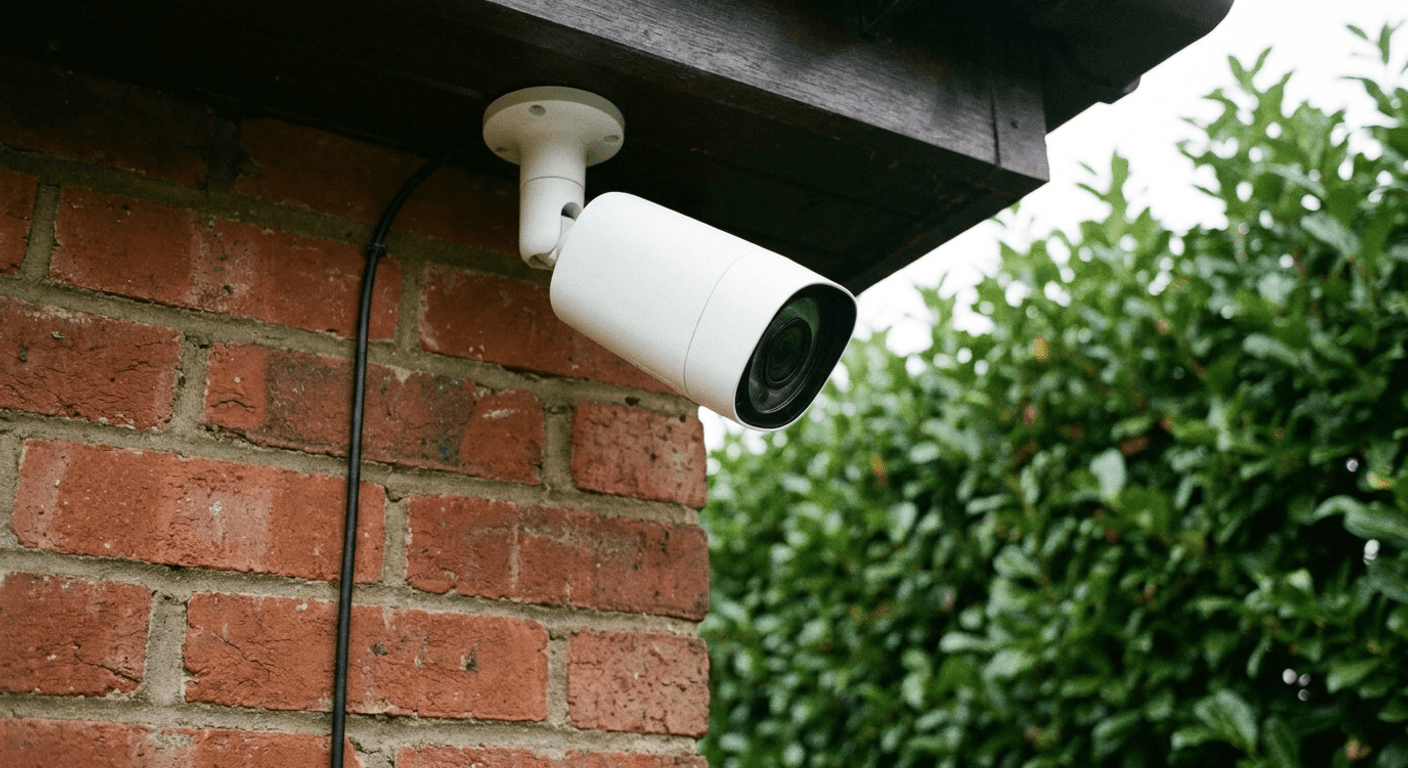
Installing a camera in France triggers different rules depending on what it actually films. A device pointed only at your own home is largely outside data protection law, but that exemption ends the instant the lens reaches a neighbour's garden or the public street, where criminal and civil law take over instead.
Information last verified on 19 July 2026. This article presents general legal information, not legal advice.
Jurisdiction scope: This article covers video surveillance law in France only. Rules differ in other countries, including elsewhere in the European Union.
Vidéoprotection vs vidéosurveillance: two different regimes
French law draws a firm line between two camera regimes based on what a camera actually films.
Vidéoprotection covers cameras filming the public road or places open to the public: a street, a station, a shopping centre, a marketplace. Installing one requires authorisation from the prefect (in Paris, the prefect of police), granted after advice from a departmental commission chaired by a magistrate, under Code de la sécurité intérieure articles L.251-1 through L.255-1. Authorisation runs five years, renewable, and the retention period fixed in the prefectural order can never exceed one month, a hard ceiling under article L.252-5.
Vidéosurveillance covers cameras filming places not open to the public: a stockroom, a warehouse, a private home, a closed copropriété. This governs almost every camera an individual, small business, or employer installs, and sits under ordinary data protection law (RGPD and the Loi Informatique et Libertés), not the CSI's prefectural process. The rest of this article deals mainly with vidéosurveillance, since that is what applies to homes, neighbours, and workplaces.
Cameras at home: what data protection law does not cover
A camera you install at your own home escapes the RGPD and the Loi Informatique et Libertés only when it is limited to the strictly private sphere: filming the inside of your own dwelling, garden, or private access path, used only by your household.
This carve-out is narrower than most people assume. Two situations pull a home camera back under data protection rules. First, if the camera also captures people outside the family or friendly circle on a recurring basis, such as a nanny or a home-care aide, those people must be informed a camera exists and why (a sign at the filmed area, or a clause in their contract), and it must not permanently film them while they work. Second, and this is the trap most writers miss, the household exemption never covers footage of a neighbour's property or the public street. Once the lens crosses that boundary, the strictly-private-sphere test fails for that portion of the footage.
The absolute rule: never the public street, never a neighbour's property
The CNIL states this without qualification: private individuals do not have the right to film the public highway, including to protect a vehicle parked outside their own home. Its own example: a view of a neighbour's garden and swimming pool is simply not permitted.
This matters because the household exemption cannot be used as a workaround. Where footage genuinely stays inside the strictly private sphere, RGPD does not apply, but the Code pénal, the Code civil, and neighbour-law doctrine still do. Article 226-1 punishes deliberately capturing, recording, or transmitting the image of a person in a private place without consent with up to one year in prison and a 45,000 EUR fine; article 226-2 imposes the same penalties for keeping or sharing that recording. Code civil article 9 separately protects the right to a private life, which covers a person's image. French courts also recognise trouble anormal de voisinage, and the Cour de cassation confirmed on 10 April 2025 that capturing the image of people using a shared path can qualify, even without intent to harm, and can justify ordering the camera's removal.
A camera aimed at a street or a neighbour's land is exposed on two fronts at once: a data protection violation if RGPD applies, and a criminal or civil wrong if it does not.
Doorbells and camera intercoms
A connected doorbell or video intercom is not a special category. The same rule as any other home camera applies: it cannot capture the public street or a neighbour's entrance or windows. A doorbell camera angled narrowly enough to cover only your own doorstep can sit within the strictly private sphere, but once its field of view sweeps the pavement, the road, or a neighbour's door, the public-way limits and neighbour-law exposure above apply.
Cameras in a copropriété
Installing cameras in a shared building requires a vote at the general assembly of co-owners. Even once approved, permitted zones are limited to common areas: parking, the bike or stroller room, the entrance hall, lift doors, and the courtyard. Apartment doors, balconies, terraces, and windows must never be filmed.
Footage access should be restricted to the syndic, the council, or the caretaker, and is consulted only after an incident in practice. Retention should not exceed one month. One wrinkle: if the entrance hall is freely accessible, without a keycode or intercom, it counts as open to the public, pushing the camera into the vidéoprotection regime and its authorisation requirement.
Cameras in a rented property
The household exemption belongs to the household living in the space, not to a landlord who does not occupy it. A landlord cannot justify a camera inside a tenant's dwelling as their own private use, since it is the tenant's private life, protected under Code civil article 9, at stake; filming a tenant at home raises the same exposure under Code pénal article 226-1 as filming any other private space without consent. Cameras in shared parts of the building, an entrance, a stairwell, a courtyard, follow the copropriété logic above: common areas only, never a tenant's door, window, balcony, or terrace.
Video surveillance at work: information, the CSE, banned zones, sound, retention
Workplace cameras sit under both data protection law and the Code du travail, with more detailed requirements than for a home camera.
Information and consultation. Staff representatives, the CSE, must be informed and consulted before any decision to install cameras, under Code du travail article L.2312-38, and employees must be told a system exists and why.
Proportionality. Article L.1121-1 bars restrictions on employee rights and freedoms that are not justified by the task and proportionate to it. The CNIL applies that directly to cameras: permanent, constant surveillance of an employee is not proportionate.
Banned zones. Certain areas cannot be filmed regardless of the justification offered: break rooms, toilets, union or staff-representative offices and their access routes, and an employee's workstation on a permanent basis. The narrow exception is a cash-handling station, and even there the camera must frame the equipment, not the person.
Sound. Recording sound alongside video is not standard practice. The CNIL reserves it for exceptional, employee-triggered situations, such as an assault, not routine monitoring. Capturing ordinary employee conversations as a matter of course is disproportionate, and was an aggravating factor in the Samaritaine sanction below. See also our overview of recording conversations under French law.
Retention. In principle, workplace footage is not kept beyond one month, and the CNIL adds that a few days is usually enough to carry out the checks needed after an incident. This is a stated principle for private-space vidéosurveillance, not the hard statutory ceiling article L.252-5 sets for public-space vidéoprotection.
When is a DPIA required?
A data protection impact assessment (AIPD) becomes mandatory when a video surveillance system amounts to systematic, large-scale monitoring of an area accessible to the public, alongside other CNIL DPIA-trigger criteria. Employers and building managers running larger or more sensitive camera networks should check this threshold before deployment, not after a complaint arrives. For the wider framework these camera rules sit inside, see our guides to France's data privacy laws and EU data privacy law.
Recent CNIL enforcement: the Samaritaine case and 2026 simplified sanctions
The CNIL does not treat these rules as theoretical. In September 2025 it fined department store La Samaritaine 100,000 EUR over hidden cameras, disguised as smoke detectors, installed in stockrooms in August 2023. The cameras also recorded sound, capturing employee conversations, until staff discovered them and complained. Findings included no prior impact assessment, a device left off the company's processing register, disproportionate sound capture, and no consultation of the data protection officer beforehand.
That case was not isolated. Since January 2026 the CNIL has issued 23 further simplified-procedure sanctions, totalling 133,750 EUR, against fast food, urban transport, and station-retail operators, mostly for running video systems without prefectural authorisation or permanently filming employees.
Across all of 2025, the CNIL issued 83 sanctions for a combined 486,839,500 EUR, and separately sanctioned 16 organisations that year over employee video surveillance breaches. That headline total is not a camera-enforcement figure: it is dominated by two large, unrelated cookie-consent fines. Strip those out and the other 81 sanctions add up to roughly 11.8 million EUR, a truer picture of a typical CNIL sanction.
What can a neighbour do about an unlawful camera?
Someone whose property is being filmed by a neighbour's camera has several routes available. They can contact the CNIL's own complaints service, and our guide to filing a CNIL complaint walks through what that process requires. They can also go to the police or municipal police, report the matter to the public prosecutor, or bring a civil claim, including an urgent référé application asking a judge to order the camera removed pending a full hearing.
That last route has real teeth. In the 10 April 2025 ruling already discussed, the Cour de cassation confirmed a camera capturing people on a shared path can itself amount to an abnormal neighbourhood disturbance, independent of any separate privacy claim, supporting an order to take it down. For how home and neighbour footage can be used or challenged as evidence in France, see our overview of recordings as evidence.
Disclaimer
This article explains the general framework for video surveillance and video protection law in France as of the verification date above. It is general legal information, not legal advice. Camera rules can depend on precise facts, such as field of view or a building's layout, so confirm details with the CNIL, a French avocat, or the relevant prefecture before installing or challenging a camera system.
Frequently Asked Questions
Can I film the street in front of my house to protect my car?
No. The CNIL is explicit that private individuals may not film the public highway, including to protect a vehicle parked outside their own home.
Does data protection law apply to a camera inside my own home?
Only if its use goes beyond the strictly private sphere. Filming just the inside of your home for your own use falls outside the RGPD, but the Code pénal (article 226-1), the Code civil (article 9), and the rule against trouble anormal de voisinage still apply if the camera also captures a neighbour's space or the street.
Can my employer listen to sound captured by workplace surveillance cameras?
In principle, no. A proportionate system should not capture sound, except in an exceptional situation triggered by the employee, such as an assault. The CNIL fined La Samaritaine 100,000 EUR partly for recording employee conversations through concealed cameras.
How long can an employer keep video surveillance footage?
In principle no more than one month, and often just a few days is enough. This is a proportionality principle, not the same absolute statutory ceiling that applies to public-space vidéoprotection.
Can a camera be installed in the entrance hall of an apartment building?
Yes, after a vote at the general assembly of co-owners, but only covering common areas such as the hall, lift, parking, or courtyard, never apartment doors or windows. If the hall is freely accessible without a keycode or intercom, it needs the prefect's authorisation instead.
What can I do if a neighbour's camera films my property?
You can complain to the CNIL, contact the police, report it to the public prosecutor, or bring a civil claim, including an urgent référé request asking a judge to order the camera's removal. French courts have confirmed a camera capturing a shared path can amount to an abnormal neighbourhood disturbance on its own.
Does the household exemption mean any camera on my own property is automatically legal?
No. The exemption only covers footage staying within the strictly private sphere of your own household. A camera that also reaches the public street or a neighbour's property falls outside it and can expose you to criminal, civil, or data protection liability.
Did the CNIL fine nearly 487 million euros for camera cases in 2025?
No. That figure covers every CNIL sanction in 2025 and is dominated by two large, unrelated cookie-consent fines. The video-surveillance-specific figure for 2025 is 16 organisations sanctioned over employee camera rules.
Sources and References
- Vidéoprotection, vidéosurveillance : c'est quoi la différence(cnil.fr).gov
- La vidéoprotection(cnil.fr).gov
- Code de la sécurité intérieure, Titre V Vidéoprotection (Articles L251-1 à L255-1)(legifrance.gouv.fr).gov
- La vidéosurveillance, vidéoprotection chez soi(cnil.fr).gov
- Un particulier employeur peut-il installer un dispositif de vidéosurveillance(cnil.fr).gov
- Code pénal, De l'atteinte à la vie privée (Articles 226-1 à 226-7)(legifrance.gouv.fr).gov
- Troubles de voisinage : un dispositif de vidéo-surveillance filmant un chemin voisin est-il légal(service-public.gouv.fr).gov
- La vidéosurveillance, vidéoprotection au travail(cnil.fr).gov
- Caméras dissimulées : la CNIL sanctionne la Samaritaine(cnil.fr).gov
- La CNIL a prononcé 23 nouvelles sanctions depuis janvier au titre de la procédure simplifiée(cnil.fr).gov
- Sanctions et mesures correctrices : la CNIL présente le bilan 2025(cnil.fr).gov
- La vidéosurveillance, vidéoprotection dans les immeubles d'habitation(cnil.fr).gov