
France
Is It Legal to Record a Conversation in France Without Consent?
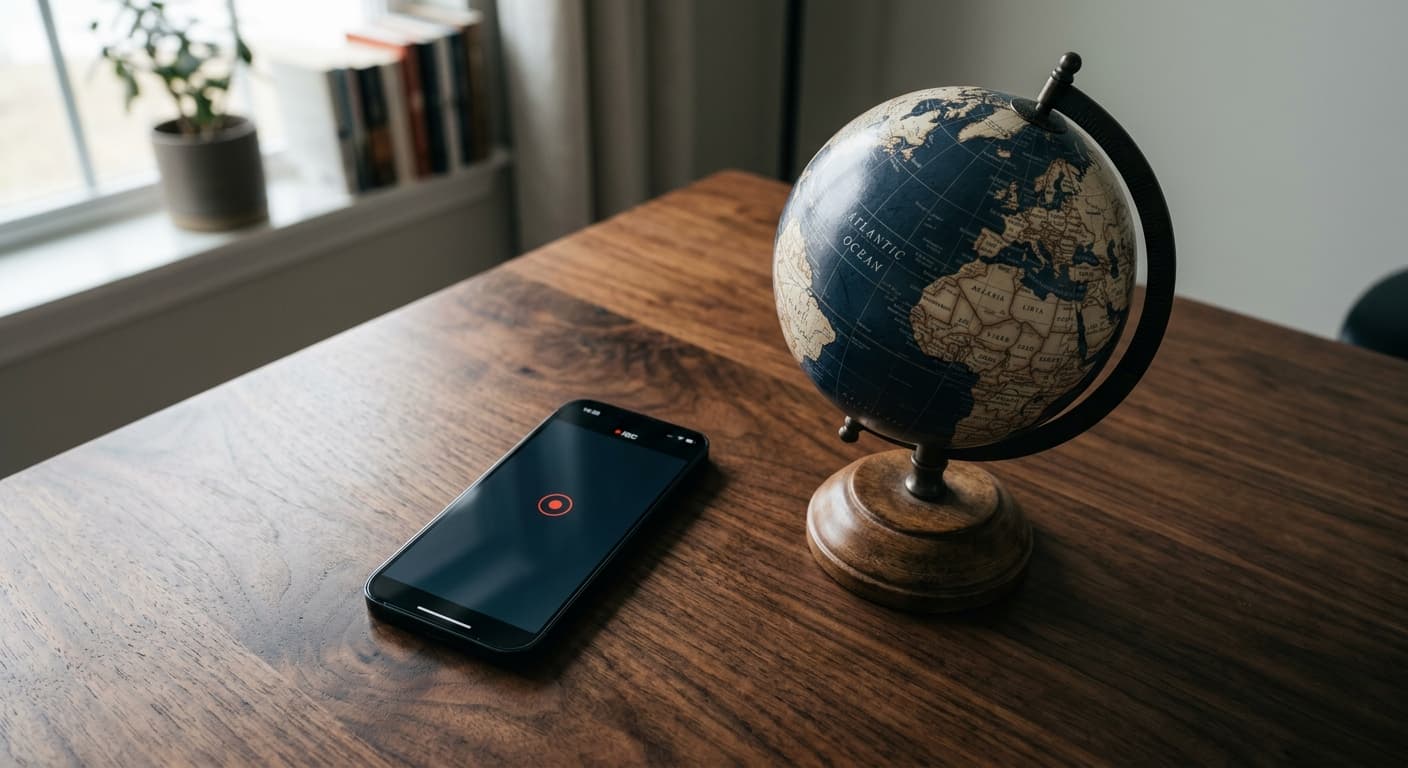
Recording a private conversation in France without the other person's knowledge is a criminal offence in principle under Article 226-1 of the Code pénal, punishable by up to one year in prison and a 45,000 EUR fine. There is no general legal shortcut for participants; a narrow case-law exception covers only professional-content phone calls.
Information last verified on 19 July 2026. This article presents general legal information, not legal advice.
Jurisdiction scope: This article covers French law only (the Code pénal, as applied in metropolitan France). It does not extend to Belgium, Switzerland, Quebec, or other French-speaking jurisdictions, which set their own rules on recording conversations.
What French law actually says: article 226-1 of the Code pénal
Article 226-1 of the Code pénal punishes, by any means, the intentional invasion of another person's private life. It covers three separate situations: capturing, recording, or transmitting words spoken privately or confidentially without the speaker's consent; capturing, recording, or transmitting the image of a person in a private place without their consent; and capturing, recording, or transmitting a person's real-time or after-the-fact location without their consent.
The base penalty for any of these three acts is one year of imprisonment and a 45,000 EUR fine.
A second paragraph of article 226-1 adds a presumption. When the acts described in the first two limbs, words or image, were carried out openly, in the presence and knowledge of the people concerned, and those people did not object while they were able to, their consent is presumed. That presumption exists for open, visible recording, made in front of the people being recorded. It says nothing about a recording made secretly, since a secret recording is by definition not made au vu et au su des intéressés, meaning in the sight and with the knowledge of the people concerned.
Article 226-1 carries two aggravated forms, both punished by two years of imprisonment and a 60,000 EUR fine. The first applies where the person doing the recording is the victim's spouse, cohabiting partner (concubin), or partner under a pacte civil de solidarité (PACS). The second, added by the loi of 21 March 2024, applies where the victim is a person holding public authority, charged with a public service mission, holding or standing for elected office, or a member of their family. Under the first of those, the penalties rise to two years of imprisonment and a 60,000 EUR fine. That aggravation is directly relevant to anyone recording a spouse or partner during a separation.
Recording a conversation you are part of: what the case law really allows
A common assumption is that being a participant in a conversation automatically makes it lawful to record it. French law does not provide that general exception. The open-recording presumption in article 226-1's second paragraph requires the recording to be made visibly and with everyone's knowledge; a secret recording cannot rely on it.
The most solid authority on record for a participant secretly recording their own conversation is a decision of the Cour de cassation's chambre criminelle of 14 February 2006 (n. 05-84.384, published in the Bulletin). The case involved a former employee who had recorded two of his own phone calls with former colleagues and produced a bailiff's transcript of them during his unfair-dismissal case before the conseil de prud'hommes. The Cour de cassation held that recording one's own phone call, without the other party's knowledge, does not amount to a breach of privacy when the conversation concerns the parties' professional activity.
That holding is narrow. It is limited to phone calls between the parties about professional matters, not a blanket rule that a participant may record any conversation they take part in. A secretly recorded personal, intimate, or purely private conversation between participants sits outside this exception and remains governed by the general rule in article 226-1.
Whether the making of a recording is lawful under article 226-1 is a different question from whether that recording can later be used as evidence in a French court. The two are governed by separate bodies of law, and a recording can, in principle, be a legally questionable way to gather information while still being admitted as evidence in litigation. For how French courts weigh secretly obtained recordings as evidence, including a major 2023 change of approach by the Cour de cassation, see our companion article on recordings as evidence in France.
Recording someone else, or a conversation you are not part of
Recording, capturing, or transmitting the private or confidential words of people who are not aware of it, and who did not consent, falls squarely within the first limb of article 226-1, regardless of whether the person doing the recording later takes part in the conversation. The same applies to capturing someone's image in a private place, or their location, under the second and third limbs.
Beyond the act of recording itself, article 226-2 separately punishes keeping, disclosing to the public or to a third party, or otherwise using in any way a recording or document obtained through one of the acts described in article 226-1. The penalty scale mirrors article 226-1. In practice, this means sharing or publishing a recording that was unlawfully made can be its own offence, distinct from the recording itself.
Does the location matter? Private place versus public place
Location matters differently depending on which limb of article 226-1 applies. The image limb, the second one, is expressly restricted to a person's image taken in a private place. The words limb, the first one, turns instead on whether what was said was spoken à titre privé ou confidentiel, meaning in a private or confidential capacity, not on where the conversation physically took place. A hushed, private exchange between two people in a public park can still qualify as words spoken privately, even though the location itself is public.
The CNIL, France's data protection authority, applies a related but distinct rule to home video surveillance: a private individual may only film the interior of their own property, meaning their home, garden, or private access path. Filming the public street, even to keep an eye on a car parked outside the house, is not permitted and can infringe the privacy of neighbours and passersby. For more on video surveillance rules for individuals and businesses in France, see our article on video surveillance law.
Recording a phone call
A phone call is, for the purposes of article 226-1, simply another form of privately spoken words. Recording the other party's side of the call without their consent is, in principle, subject to the same offence and the same penalty as recording an in-person conversation, subject to the narrow professional-content exception described above for calls between the parties themselves.
Businesses recording calls with customers face an additional layer of rules from the CNIL. Its guidance on recording calls to prove the formation of a contract states that recording is permitted only where necessary, must not be systematic or permanent, and requires informing the caller both orally, at the start of the call, of the purpose of the recording and their right to use another channel, and in writing, through a privacy notice.
Practical situations: employer, landlord, doctor, and spouse
Recording an employer or manager during a workplace meeting is governed by the same general rule as any other private conversation: it is, in principle, an offence unless the narrow professional-phone-call exception from the 2006 case law applies, or unless the recording is made openly. Whether such a recording can later support a claim before the conseil de prud'hommes is a separate, evidentiary question, addressed in our article on recordings as evidence in France.
Recording a landlord during a dispute or a état des lieux, the move-in or move-out inspection, follows the same general framework: the words limb of article 226-1 applies to private or confidential statements regardless of the setting.
Recording a doctor during a consultation likewise falls under the general rule for private, confidential conversation, since medical consultations are, by their nature, confidential exchanges.
Recording a spouse, former spouse, or partner carries the added risk of the aggravated penalty described above, two years and a 60,000 EUR fine, precisely because the aggravating factor in article 226-1 is the family relationship between the person recording and the person recorded.
Filming or photographing police officers
There is no statute in France that expressly grants a right to film police officers. What exists instead is the absence of a specific offence that would have restricted it. During the 2020-2021 debate over the loi dite sécurité globale, a provision commonly called article 24 at that stage of the bill would have punished provoking the identification of an on-duty police officer, gendarme, or customs agent with manifest intent to cause them physical or psychological harm. By the time the law was adopted, that provision had been renumbered to article 52, with a proposed penalty of five years' imprisonment and a 75,000 EUR fine.
The Conseil constitutionnel struck down article 52 in decision n. 2021-817 DC of 20 May 2021, on the ground that its wording was too imprecise, violating the constitutional principle that offences and penalties must be clearly defined, including vague terms such as en opération and ambiguity over whether harmful intent had to be independently proven.
Because that provision never took effect, filming police officers performing their duties in a public place is best described as an area with no specific criminal prohibition, rather than as a codified, affirmatively protected right. General rules, including article 226-1 itself where relevant, and general principles of freedom of expression and information, continue to apply to any recording, as they do to any other subject.
What the CNIL says
Beyond its guidance on home video surveillance and call recording described above, the CNIL frames its recommendations against the same two legal bases used throughout this article: article 226-1 of the Code pénal and article 9 of the Code civil, which protects respect for private life. A person or organisation unsure whether a planned recording complies with the rules can consult CNIL's published guidance, and a person affected by an unlawful recording can bring a complaint to CNIL's own complaints service, to the police or gendarmerie, or to the public prosecutor or a civil court.
For a country-level overview of how France's recording rules compare with other jurisdictions, see the France recording laws overview and the broader world recording laws hub. France's data protection framework more broadly, including GDPR-related obligations, is covered in the France data privacy laws article, and the France hub page links to the full set of France-specific legal topics on this site.
Penalties, and who can bring a complaint
The base penalty under article 226-1 is one year of imprisonment and a 45,000 EUR fine. The aggravated penalty, where the person recording is the victim's spouse, cohabiting partner, or PACS partner, is two years of imprisonment and a 60,000 EUR fine. Article 226-2, covering keeping, disclosing, or using an unlawfully obtained recording, carries the same penalty scale.
Article 226-15 addresses a related but separate offence: intercepting, diverting, using, or disclosing correspondence, including electronic correspondence, without being one of the parties to it, carries the same base penalty (one year and 45,000 EUR) and the same spousal aggravation (two years and 60,000 EUR). This should not be confused with judicial or administrative wiretaps carried out by state authorities, which fall under an entirely separate legal framework aimed at law enforcement and intelligence bodies, not private individuals.
Importantly, none of these offences is prosecuted automatically. Article 226-6 provides that, for offences under articles 226-1 to 226-2-1, criminal prosecution may only be brought following a complaint (plainte) filed by the victim, their legal representative, or their heirs. The public prosecutor cannot open a case on its own initiative in these matters.
Disclaimer
This article provides general legal information about French law as it stood on 19 July 2026. It is not a consultation juridique and does not constitute legal advice for any individual situation. Rules under the Code pénal and related case law can change, and their application depends heavily on the specific facts involved. A person facing a specific situation involving recording, privacy, or evidence in France should consult a qualified avocat.
Frequently Asked Questions
Can I record a conversation with my boss without telling them?
French law does not provide a general exception for participants in a conversation. A Cour de cassation ruling of 14 February 2006 held that secretly recording your own phone call is not a breach of privacy when the exchange concerns the parties' professional activity, but this is a narrow, content-specific exception, not a general permission. Whether such a recording could later be used as evidence at a labour tribunal is a separate question, covered in our article on recordings as evidence in France.
Is it legal to record a phone call in France?
Recording another person's privately or confidentially spoken words without their consent is, in principle, an offence under article 226-1 of the Code pénal, punishable by up to one year in prison and a 45,000 EUR fine. Consent is presumed only where the recording was made openly, with the other person's knowledge, and they did not object while able to.
Can I record my spouse during an argument, for a divorce case?
This is a higher-risk situation. When the person doing the recording is the victim's spouse, cohabiting partner, or PACS partner, article 226-1's penalties increase to two years in prison and a 60,000 EUR fine.
Can I film a police officer who stops me in the street?
There is no specific offence that prohibits filming police officers carrying out their duties in a public place. An attempt to create such an offence, in the law known informally as loi sécurité globale, was struck down by the Conseil constitutionnel in decision n. 2021-817 DC of 20 May 2021, for being too imprecise.
What happens if someone is caught recording another person without their knowledge?
Up to one year in prison and a 45,000 EUR fine, or two years and 60,000 EUR if the person recording is the victim's spouse, cohabiting partner, or PACS partner, but only if the victim files a complaint. Under article 226-6, the public prosecutor cannot open a case on its own initiative.
Can a secret recording still be used as evidence in a French court, even if making it broke the law?
Potentially, yes. Whether making a recording is an offence and whether it can be admitted as evidence are different legal questions, governed by different rules. See our companion article on recordings as evidence in France for how French courts approach admissibility.
Does recording someone in a public place avoid the offence?
Not automatically. The image-related part of article 226-1 is limited to private places, but the words-related part turns on whether what was said was spoken privately or confidentially, not simply on where the conversation happened. A hushed private exchange in a public park can still qualify.
Can a company legally record my phone call with customer service?
According to guidance from the CNIL, France's data protection authority, recording calls is permitted only where necessary, must not be systematic, and the caller must be told at the start of the call, plus given a written privacy notice.
Sources and References
- Code pénal, article 226-1 (atteinte à l'intimité de la vie privée)(legifrance.gouv.fr).gov
- Code pénal, article 226-1 (version datée, alinéas consentement/conjoint)(legifrance.gouv.fr).gov
- Code pénal, article 226-2 (conservation/usage d'un enregistrement illicite)(legifrance.gouv.fr).gov
- Code pénal, article 226-6 (plainte préalable de la victime)(legifrance.gouv.fr).gov
- Code pénal, article 226-15 (secret des correspondances)(legifrance.gouv.fr).gov
- Cass. crim., 14 février 2006, n°05-84.384, Publié au bulletin(legifrance.gouv.fr).gov
- Conseil constitutionnel, décision n°2021-817 DC du 20 mai 2021 (loi sécurité globale)(conseil-constitutionnel.fr).gov
- CNIL: La vidéosurveillance/vidéoprotection chez soi(cnil.fr).gov
- CNIL: L'enregistrement des conversations téléphoniques afin d'établir la preuve de la formation d'un contrat(cnil.fr).gov
- Service-public.fr: Écoutes téléphoniques (interceptions judiciaires et administratives)(service-public.gouv.fr).gov