
Canada
Is There a Lemon Law in Canada?
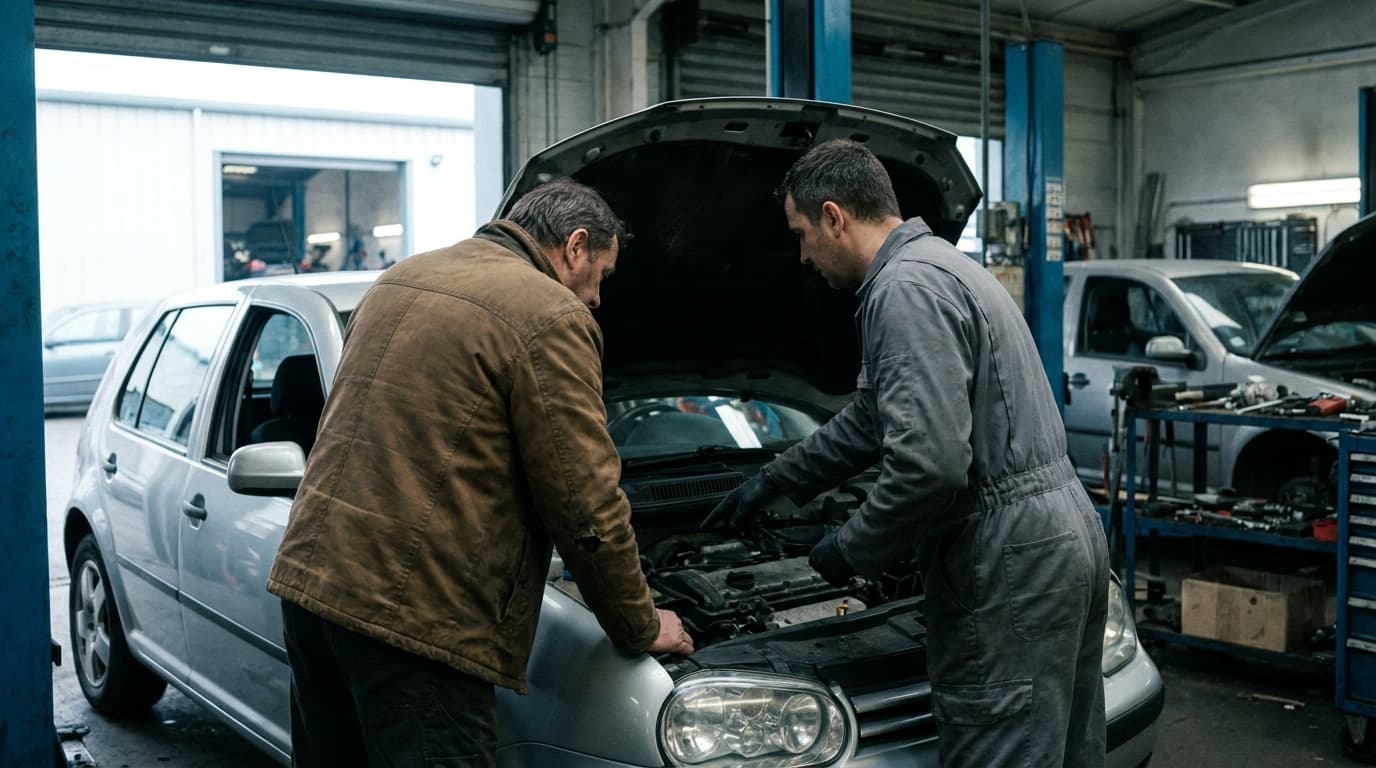
If you just found out your new vehicle has a serious, recurring problem, the short answer is that Canada does not have a law like the American state lemon laws that automatically force a manufacturer to buy back or replace a defective new vehicle after a set number of failed repairs. There is no federal lemon law, and until recently no province had one either.
That does not mean Canadian buyers are unprotected. Manufacturer warranties, a free national arbitration program called CAMVAP, provincial consumer protection law, and, since October 2023, a genuinely new Quebec rule all give Canadians real ways to deal with a defective vehicle. This article explains what actually applies, where, and what to do next.
Quick Answer
No. Canada has no lemon law in the sense most people mean: a statute that automatically forces a manufacturer to repurchase or replace a new vehicle after a fixed number of failed repairs, the way many U.S. state laws do. The Government of Canada's own consumer affairs office puts it plainly: there are no lemon laws in Canada, though there are measures in place to help.
Quebec is now the one meaningful exception. Since October 5, 2023, an amendment to Quebec's Consumer Protection Act lets a court declare a vehicle a "seriously defective automobile" in narrow, specific circumstances, described below. No other province has anything comparable.
What Canadians Have Instead of a Lemon Law
CAMVAP: Free, Binding Arbitration
The main tool available across the country is the Canadian Motor Vehicle Arbitration Plan, or CAMVAP. It is a national, no-cost arbitration program for disputes about alleged manufacturing defects in a vehicle or how a manufacturer has handled its new-vehicle warranty.
To qualify, a vehicle generally needs to be from the current model year or one of the four previous model years, have fewer than 160,000 kilometres on it, and be used mainly for personal purposes. The manufacturer also has to participate. Most major automakers do, including Ford, General Motors, Honda, Hyundai, Toyota, Nissan, Mazda, Subaru, Volkswagen, Volvo, Porsche, Kia, and Jaguar Land Rover, together covering the large majority of new vehicle sales in Canada. BMW and MINI are notable holdouts. Owners of those brands cannot use CAMVAP and have to rely on warranty terms, provincial consumer protection law, or the courts instead.
A CAMVAP case typically runs about 70 to 90 days from application to decision, with a hearing held as close to the owner's home as possible. An arbitrator's decision is final and binding on the manufacturer, and can include a repair at the manufacturer's expense, a formula-based buyback of the vehicle, or reimbursement of diagnostic and repair costs and certain out-of-pocket expenses. There is no cost to the consumer to file or use the program. See CAMVAP explained for the full application process.
The Manufacturer's Warranty
Every new vehicle sold in Canada comes with a manufacturer's warranty, and it is the first place to look. Coverage terms vary by brand and vary between powertrain and bumper-to-bumper protection, but a manufacturer that will not honour its own written warranty is exactly the kind of dispute CAMVAP and small claims court are built to handle.
Implied Warranty Under Provincial Law
Separately from any written warranty, most provinces have a Sale of Goods Act (Quebec's equivalent sits in its Civil Code and Consumer Protection Act instead) that implies a basic warranty into most sales even when nothing was promised in writing. In Ontario, for example, the Sale of Goods Act implies that goods sold by a dealer are of merchantable quality and reasonably fit for their purpose, and Ontario's Consumer Protection Act, 2002 reinforces this by barring a dealer from waiving it, even on an "as is" sale to a consumer.
These implied warranty rules generally apply to both new and used vehicles bought from a dealer, though they are enforced case by case in court or before a tribunal rather than through a fixed number-of-repairs formula. For a broader look at how these remedies fit together, see car defect remedies.
Provincial Consumer Protection Acts and Small Claims Court
Each province also has a general consumer protection statute covering dealer misrepresentation and licensing, and several provinces tie a compensation fund to that licensing, which can help if a dealer misrepresented a vehicle or has gone out of business. Provincial consumer affairs offices can point a buyer to the right complaint process for their situation.
If none of the above resolves things, small claims court remains available in every province, generally as a step after trying to resolve the issue directly with the dealer or manufacturer. See Canada consumer protection for province-specific resources, or Canadian law by province for other topics.
Quebec's New Anti-Lemon Rule
Quebec is different, and not only because of its distinct Civil Code tradition. Since October 5, 2023, an amendment to the Consumer Protection Act, enacted through Bill 29, lets a Quebec owner or long-term lessee ask a court to declare a vehicle a seriously defective automobile.
A vehicle can qualify if a defect appears within the vehicle's first three years or 60,000 kilometres, whichever comes first, and the defect makes the vehicle unfit for its normal use or significantly reduces its usefulness. On top of that, one of the following also has to be true: the same defect has survived three separate repair attempts; the manufacturer or dealer has kept the vehicle for more than 30 days while attempting to fix one or two occurrences of the same defect; or the vehicle has been brought in for twelve repair attempts across unrelated problems.
If a court agrees, the vehicle is treated as affected by a hidden defect, and the owner can seek cancellation of the sale, a reduction in the price paid, and damages, including punitive damages in appropriate cases. The rule currently applies to new gas, hybrid, and electric vehicles purchased or leased long term. Used vehicles fall instead under Quebec's separate warranty of good working order, which scales by the vehicle's age and mileage rather than by repair attempts.
None of this replaces CAMVAP in Quebec. CAMVAP is available to Quebec residents just as it is everywhere else in Canada, so a Quebec owner facing a defective vehicle can choose between CAMVAP arbitration and this newer court-based process, whichever fits the situation better. For the full picture, see Quebec consumer protection and vehicle defects.
Is There a Three-Strikes Rule Anywhere Else?
Not really. Outside Quebec's specific automobile rule, Canadian law does not set a fixed number of repair attempts, or a fixed number of days in the shop, that automatically turns a vehicle into a legal lemon. A CAMVAP arbitrator weighs the facts of each case against the manufacturer's warranty and the vehicle's repair history rather than applying a set formula, and a court applying a province's Sale of Goods Act asks whether the vehicle was of merchantable quality and fit for its purpose when sold, not whether it hit a specific repair count.
In practice, though, a pattern of repeated failed repairs for the same problem, or a vehicle spending a long stretch off the road, is exactly the kind of evidence that supports a CAMVAP claim or a small claims case anywhere in the country. Keeping detailed records of every repair visit, including the date, mileage, and description of the problem, makes any of these routes easier to pursue.
What to Do If You Think You Bought a Lemon
- Put the problem in writing to the dealer and manufacturer, and keep a paper trail of every repair visit.
- Review your manufacturer's warranty to see exactly what it covers and for how long.
- Check whether your manufacturer participates in CAMVAP, and whether your vehicle fits the model year and mileage limits.
- In Quebec, track how many repair attempts the same defect has needed, and how long the vehicle has been off the road, in case the anti-lemon thresholds are met.
- If the manufacturer will not resolve things, file a CAMVAP application, or contact your provincial consumer affairs office about next steps, including small claims court.
Disclaimer
This article provides general information about vehicle defect remedies in Canada. It is not legal advice and does not create a lawyer-client relationship. Consumer protection and warranty law is set at the federal, provincial, and program level, and details such as CAMVAP's model-year cutoffs and participating manufacturers change over time. Information in this article was last verified in July 2026. Anyone dealing with a specific vehicle defect dispute should confirm current rules with CAMVAP, their provincial consumer affairs office, or a lawyer in their jurisdiction.
Frequently Asked Questions
Does Canada have a lemon law like the United States?
No, not in the way most U.S. states do. Canada has no federal lemon law, and until Quebec's 2023 reform, no province had one either. Instead, Canadians rely on manufacturer warranties, the CAMVAP arbitration program, provincial consumer protection law, and small claims court.
What is CAMVAP and who can use it?
CAMVAP, the Canadian Motor Vehicle Arbitration Plan, is a free, binding arbitration program for disputes over manufacturing defects or how a manufacturer has honoured its new-vehicle warranty. It generally covers vehicles from the current model year and the four previous model years with fewer than 160,000 kilometres, as long as the manufacturer participates.
Which manufacturers do not participate in CAMVAP?
BMW and MINI are the most commonly cited holdouts. Owners of those brands cannot use CAMVAP and need to rely on the manufacturer's warranty, provincial consumer protection law, or small claims court instead.
Is Quebec's anti-lemon rule the same as an American lemon law?
It is closer than anything else in Canada, but it is narrower. It only applies to new vehicles within their first three years or 60,000 kilometres, requires specific repair-attempt or downtime thresholds to be met, and works through a court petition rather than an automatic buyback.
Is there a three strikes rule for repairs anywhere in Canada?
Only in Quebec, and it is not exactly three strikes. A vehicle there can qualify as seriously defective after three failed attempts at the same repair, more than 30 days in the shop for one or two attempts, or twelve attempts at unrelated problems. No other province has a fixed repair-count rule.
Does an implied warranty cover a used vehicle bought from a dealer?
Generally yes. Provincial Sale of Goods Act rules imply a basic warranty of merchantable quality and fitness for purpose into most dealer sales of new or used vehicles, even without a written promise, though enforcing it usually means a complaint to the dealer, a tribunal, or small claims court rather than an automatic remedy.
The Law Behind This Article
This article rests on the statutory provisions below, held in our own legal record and retrieved from the official source. Tap a section to read the operative text.
Sale of Goods Act (Ontario)
s. 1Definitions and interpretationIn forcecited in 2 of our articles
(1) In this Act, “buyer” means the person who buys or agrees to buy goods; (“acheteur”) “contract of sale” includes an agreement to sell as well as a sale; (“contrat de vente”) “delivery” means the voluntary transfer of possession from one person to another; (“livraison”) “document of title” include
Official text (excerpt) · last checked 2026-08-13 · Read the full text in our law library · Verify at ontario.ca
s. 15Implied conditions as to quality or fitnessIn force
Subject to this Act and any statute in that behalf, there is no implied warranty or condition as to the quality or fitness for any particular purpose of goods supplied under a contract of sale, except as follows: 1. Where the buyer, expressly or by implication, makes known to the seller the particul
Official text (excerpt) · last checked 2026-08-13 · Read the full text in our law library · Verify at ontario.ca
Search our full record of US law — 2.1 million sections, every state + federal →
Sources and References
- Innovation, Science and Economic Development Canada, Office of Consumer Affairs - Recourse for Vehicle Defects (confirms Canada has no lemon laws; describes warranty, CAMVAP, and small claims court recourse)(ised-isde.canada.ca).gov
- CAMVAP (Canadian Motor Vehicle Arbitration Plan) - Before You Apply (eligibility: current + 4 prior model years, under 160,000 km, remedies available)(camvap.ca)
- CAMVAP - Frequently Asked Questions (no-cost to consumer, 70-90 day process, remedy caps for diagnostic/out-of-pocket/witness/aftermarket-part reimbursement, available in all provinces and territories)(camvap.ca)
- Office de la protection du consommateur (Quebec) - Anti-Lemon Warranty for Recent Automobiles (3-year/60,000 km window, 3/12-attempt and 30-day thresholds, remedies via court petition)(opc.gouv.qc.ca).gov
- Office de la protection du consommateur (Quebec) - New Protections for Consumers (Bill 29 rollout dates, including the October 5, 2023 anti-lemon provision)(opc.gouv.qc.ca).gov
- Office de la protection du consommateur (Quebec) - New Automobile Purchased From a Dealer: Resolving a Problem (confirms CAMVAP is available to Quebec consumers alongside provincial remedies)(opc.gouv.qc.ca).gov
- Government of Ontario (e-Laws) - Sale of Goods Act, RSO 1990, c S.1 (implied condition of merchantable quality and fitness for purpose, s 15)(ontario.ca).gov
- Legis Quebec - Consumer Protection Act, CQLR c P-40.1 (statutory basis for the anti-lemon and used-automobile warranty of good working order provisions)(legisquebec.gouv.qc.ca).gov