
Virginia
Virginia E-Scooter Laws: Sidewalk, Helmet & Age Rules (2026)
Independently fact-checked against primary sources (last audited July 23, 2026). · Law checked current as of August 8, 2026. · 5 primary sources cited on this page. How we verify our legal content
This article is general information about Virginia e-scooter law and is not legal advice. If you were cited or injured, a Virginia-licensed attorney or the Code of Virginia text at law.lis.virginia.gov can give you a current, situation-specific answer. Information last verified on 23 July 2026.
Are e-scooters legal in Virginia?
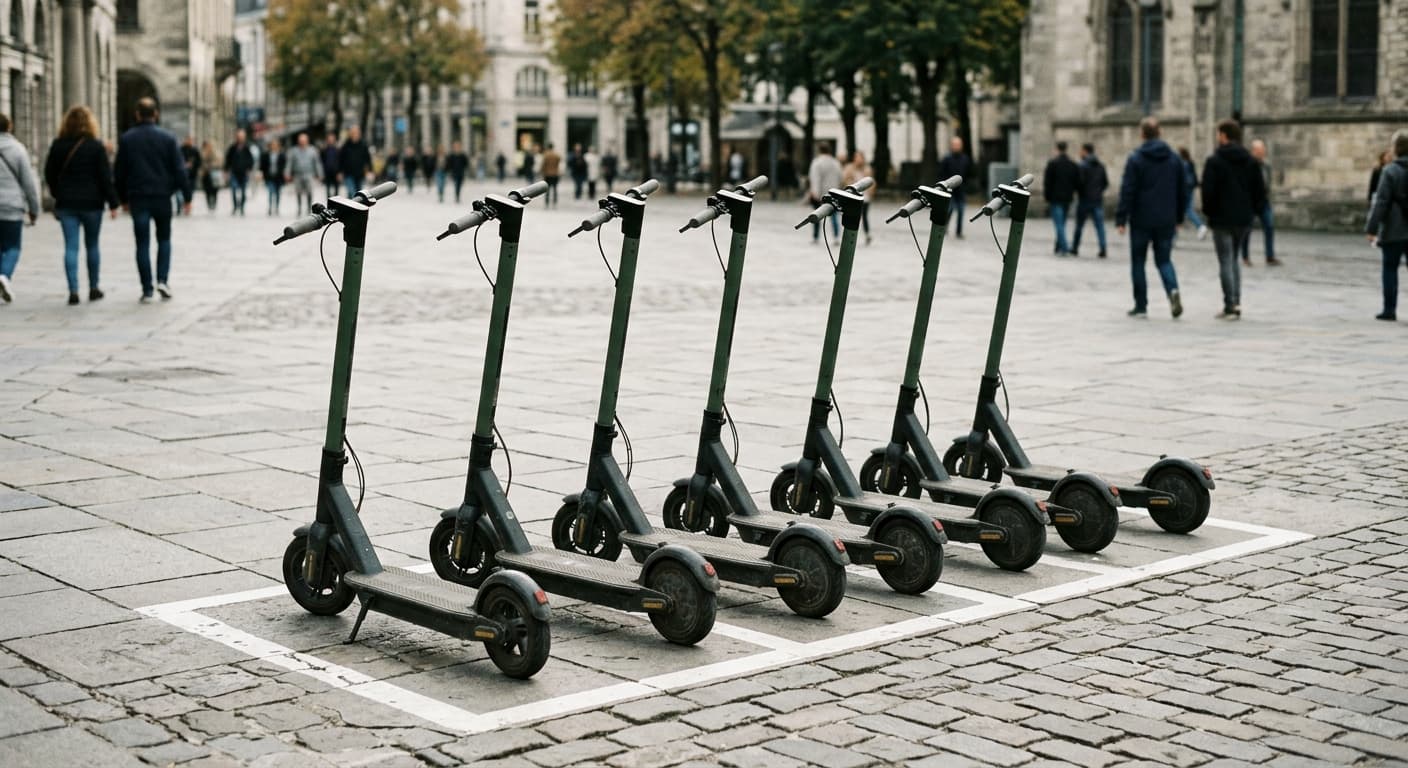
Yes. Virginia Code Title 46.2, Chapter 8, Article 12 gives stand-up electric scooters their own defined vehicle category, "motorized skateboard or scooter," alongside bicycles, electric personal assistive mobility devices (EPAMDs), and electric power-assisted bicycles. The core operating rules sit mainly in sections 46.2-904, 46.2-906.1, and 46.2-908.1. Unlike a state that stays silent on e-scooters and leaves them to a moped or motor-vehicle default, Virginia's statute speaks to them directly, so most legal questions about a standard rental or personally-owned kick scooter have a direct statutory answer here. See the e-scooter laws hub for how Virginia compares to other states.
What counts as an e-scooter in Virginia
Section 46.2-100 defines a "motorized skateboard or scooter" as any vehicle, regardless of the number of wheels touching the ground, that lets the operator sit or stand, carries no manufacturer-issued vehicle identification number, is powered in whole or in part by an electric motor, weighs less than 100 pounds, and has a top speed of no more than 20 mph. The definition specifically excludes EPAMDs and electric power-assisted bicycles, which are separate categories with their own rules. A standard stand-up rental or personal e-scooter fits comfortably within these limits.

Where you can ride
Motorized skateboards and scooters have a top speed of 20 mph under section 46.2-908.1. That section's rule allowing roadway operation only where the posted speed limit is 25 mph or lower, and only when a sidewalk isn't available or sidewalk riding has been locally prohibited, is written for electric personal assistive mobility devices (EPAMDs) rather than motorized skateboards or scooters. Riders may not ride more than two abreast on the roadway.
On a sidewalk or shared-use path, riders must yield the right-of-way to pedestrians and give an audible signal before overtaking. A locality may prohibit riding on specific sidewalks or crosswalks by ordinance, as long as it posts signage saying so, so sidewalk access can vary block by block depending on local rules layered on top of the state baseline.
Rider rules
Age: 14 to ride unsupervised. A rider younger than 14 must have the immediate supervision of someone at least 18 years old.
Helmet: Virginia has no statewide helmet requirement for motorized-skateboard-or-scooter riders of any age. Section 46.2-906.1 only authorizes counties, cities, and towns to adopt their own helmet ordinance, and only for riders 14 and under. Where a locality has adopted one, the fine is $25, typically suspended for a first offense if the rider buys a helmet afterward. A local helmet ordinance is not treated as evidence of negligence or contributory negligence in a civil lawsuit.
License/registration: none required for a motorized skateboard or scooter.
Penalties
A violation of the sidewalk, crosswalk, or shared-use path operating rules in section 46.2-904 carries a civil penalty of up to $50. Virginia treats these as civil infractions rather than criminal traffic offenses.
Section 46.2-908.1, which sets the 20 mph cap and the under-14 supervision rule, states no penalty of its own. That does not make it unenforceable. Section 46.2-113 supplies the residual penalty for all of Title 46.2: unless a section states otherwise, a violation is a traffic infraction punishable by a fine of not more than the maximum for a Class 4 misdemeanor under section 18.2-11, which is $250.
So exceeding the 20 mph cap, or letting a rider under 14 ride without the immediate supervision of someone at least 18, can draw a fine of up to $250. The section 46.2-904 sidewalk and crosswalk rules keep their lower $50 civil penalty because that section states a penalty of its own.
Enforcement in practice
No statewide Virginia enforcement statistics specific to motorized skateboards or scooters, such as citation counts, were documented in the research behind this article. Enforcement patterns do not change what the statute requires, and how strictly a particular locality enforces the roadway, sidewalk, or local helmet rules is not a form of permission to disregard them.
Virginia Beach e-scooter rules
No Virginia Beach municipal ordinance specific to e-scooters was confirmed in the research behind this article. Riders in Virginia Beach are subject to the statewide framework described above, including whichever local helmet ordinance, if any, the city has adopted for riders 14 and under. Check the city's current municipal code directly before assuming a citywide rule beyond the state baseline.

If a scooter rider is hit by a vehicle, or a rider collides with someone else, in Virginia Beach or anywhere else in the state, the general framework in Virginia car accident laws covers fault and insurance questions for road users generally. If you were the one hurt, get a free consultation from a Virginia personal injury lawyer on those fault and insurance questions (attorney advertising). Virginia's impaired-operation laws can also come into play for a motorized skateboard or scooter much as they do for a bicycle or moped; see Virginia DUI laws for that broader framework.
Frequently Asked Questions
Can I ride an e-scooter on the sidewalk in Virginia?
Generally yes. State law allows sidewalk and shared-use-path riding but requires yielding to pedestrians and giving an audible signal before passing. A locality can prohibit riding on specific sidewalks by ordinance if it posts signage.
Do I need a helmet to ride an e-scooter in Virginia?
Not under state law, for any age. Localities may require a helmet for riders 14 and under, but Virginia has no statewide helmet mandate.
How old do you have to be to ride an e-scooter in Virginia?
14 to ride unsupervised. Anyone younger must have the immediate supervision of someone at least 18 years old.
Do I need a license to ride an e-scooter in Virginia?
No. Virginia's motorized skateboard and scooter category requires no driver's license or registration.
What's the fine for an e-scooter violation in Virginia?
It depends on which section you violated. Breaking the sidewalk, crosswalk, or shared-use path operating rules in section 46.2-904 carries a civil penalty of up to $50 rather than a criminal fine. Section 46.2-908.1, which sets the 20 mph cap and the under-14 supervision rule, states no penalty of its own, so the residual penalty in section 46.2-113 applies instead: a traffic infraction punishable by a fine of up to $250, the Class 4 misdemeanor maximum under section 18.2-11.
Can I ride an e-scooter on the road in Virginia?
Motorized skateboards and scooters are capped at 20 mph under section 46.2-908.1. The 25-mph-roadway rule that applies only when a sidewalk is unavailable or sidewalk use is locally prohibited is written for electric personal assistive mobility devices (EPAMDs), a separate device category, not motorized skateboards or scooters.
Are e-scooter rules different in Virginia Beach?
No Virginia Beach-specific e-scooter ordinance was confirmed for this article. The statewide rules apply unless the city has adopted additional local rules of its own.
Does Virginia's e-scooter law cover Segway-style devices?
No. Electric personal assistive mobility devices (EPAMDs) are defined and regulated separately from motorized skateboards and scooters under Virginia law.
Updates
Corrected the penalties section to explain that although Code section 46.2-908.1 states no penalty of its own, section 46.2-113 makes a violation of its 20 mph cap or under-14 supervision rule a traffic infraction carrying a fine of up to $250, and fixed the statutory name of the electric personal assistive mobility device throughout.
Corrected two device-category and penalty errors: the 25-mph/sidewalk-unavailable roadway rule in section 46.2-908.1 is written for electric personal assistive mobility devices, not motorized skateboards or scooters, and the up-to-$50 civil penalty in section 46.2-904 covers only sidewalk, crosswalk, and shared-use-path violations, not roadway operation.
Governing law re-checked for recent changes
Independently fact-checked against the cited primary sources
The Law Behind This Article
This article rests on the statutory provisions below, held in our own legal record and retrieved from the official source. Tap a section to read the operative text.
Code of Virginia, Title 46.2: Motor Vehicles
§ 46.2-908.1Electric personal assistive mobility devices, electrically powered toy vehicles, electric power-assisted bicycles, and motorized skateboards or scootersIn force
All electric personal assistive mobility devices, electrically powered toy vehicles, and electric power-assisted bicycles shall be equipped with spill-proof, sealed, or gelled electrolyte batteries. No person shall at any time or at any location operate (i) an electric personal assistive mobility device at a speed faster than 25 miles per hour or (ii) a motorized skateboard or scooter at a speed faster than 20 miles per hour. No person shall operate a skateboard or scooter that would otherwise meet the definition of a motorized skateboard or scooter but is capable of speeds greater than 20 miles per hour at a speed greater than 20 miles per hour. No person less than 14 years old shall drive any electric personal assistive mobility device, motorized skateboard or scooter, or class three electric power-assisted bicycle unless under the immediate supervision of a person who is at least 18 years old. An electric personal assistive mobility device may be operated on any highway with a maximum speed limit of 25 miles per hour or less.
Official text (excerpt) · last checked 2026-09-07 · Read the full text in our law library · Verify at law.lis.virginia.gov
§ 46.2-904Use of roller skates and skateboards on sidewalks and shared-use paths; operation of bicycles and certain motorized and electric items and devices on sidewalks, crosswalks, and shared-use paths; local ordinancesIn force
The governing body of any county, city, or town may by ordinance prohibit the use of roller skates, skateboards, and personal delivery devices, and/or the riding of bicycles, electric personal assistive mobility devices, motorized skateboards or scooters, motor-driven cycles, or electric power-assisted bicycles on designated sidewalks or crosswalks, including those of any church, school, recreational facility, or any business property open to the public where such activity is prohibited. Signs indicating such prohibition shall be posted in general areas where use of roller skates, skateboards, and personal delivery devices, and/or bicycle, electric personal assistive mobility devices, motorized skateboards or scooters, motor-driven cycles, or electric power-assisted bicycle riding is prohibited. A person riding a bicycle, electric personal assistive mobility device, motorized skateboard or scooter, motor-driven cycle, or electric power-assisted bicycle on a sidewalk or shared-use path or across a roadway on a crosswalk shall yield the right-of-way to any pedestrian and shall give an audible signal before overtaking and passing any pedestrian.
Official text (excerpt) · last checked 2026-07-29 · Read the full text in our law library · Verify at law.lis.virginia.gov
Cited in 1 court opinions in our collectionLatest citing opinion in our collection: 2020
Opinions citing this section in our collection:
- Lake v. Adams (District Court, W.D. Virginia 2020)“…004) (holding that jury instructions were in error, citing Va. Code Ann. §§ 46.2-904, 46.2-924(B)). Thus, applying Fourth…”
Identified automatically from the court opinions citing this section — not a ranking of which case controls.
§ 46.2-906.1Local ordinances may require riders of bicycles, electric personal assistive mobility devices, toy vehicles, motorized skateboards or scooters, nonmotorized scooters, and electric power-assisted bicycles to wear helmetsIn force
The governing body of any county, city, or town may, by ordinance, provide that every person 14 years of age or younger shall wear a protective helmet that at least meets the Consumer Product Safety Commission standard whenever riding or being carried on a bicycle, an electric personal assistive mobility device, a toy vehicle, a motorized skateboard or scooter, a nonmotorized scooter, or an electric power-assisted bicycle on any highway as defined in § 46.2-100, sidewalk, or public bicycle path. Violation of any such ordinance shall be punishable by a fine of $25. However, such fine shall be suspended (i) for first-time violators and (ii) for violators who, subsequent to the violation but prior to imposition of the fine, purchase helmets of the type required by the ordinance.
Official text (excerpt) · last checked 2026-07-29 · Read the full text in our law library · Verify at law.lis.virginia.gov
§ 46.2-100DefinitionsIn force
As used in this title, unless the context requires a different meaning: "All-terrain vehicle" means a motor vehicle having three or more wheels that is powered by a motor and is manufactured for off-highway use. "All-terrain vehicle" does not include four-wheeled vehicles commonly known as "go-carts" that have low centers of gravity and are typically used in racing on relatively level surfaces, nor does the term include any riding lawn mower. "Antique motor vehicle" means every motor vehicle, as defined in this section, which was actually manufactured or designated by the manufacturer as a model manufactured in a calendar year not less than 25 years prior to January 1 of each calendar year and is owned solely as a collector's item. "Antique trailer" means every trailer or semitrailer, as defined in this section, that was actually manufactured or designated by the manufacturer as a model manufactured in a calendar year not less than 25 years prior to January 1 of each calendar year and is owned solely as a collector's item.
Official text (excerpt) · last checked 2026-07-29 · Read the full text in our law library · Verify at law.lis.virginia.gov
Cited in 30 court opinions in our collectionLatest citing opinion in our collection: 2026
Opinions citing this section in our collection:
- Select Auto Imports, Inc. v. Minor (Virginia Circuit Court 2002, 58 Va. Cir. 280)“…the Court to adopt the definition of ownership espoused in Va. Code § 46.2-100, rather than the traditional strict tit…”
- Archer v. Fink (Virginia Circuit Court 2002, 57 Va. Cir. 354)“…272. 1 Thus, the definition ascribed to “motor vehicle” by Va. Code § 46.2-100 applies to Va. Code § 18.2-272. Va. Cod…”
- United States v. Terrence Ormstom Smith (Court of Appeals for the Fourth Circuit 2005, 395 F.3d 516)“…nwealth, including the streets and alleys .... Va.Code § 46.2-100 (emphasis added). Smith contends that t…”
Identified automatically from the court opinions citing this section — not a ranking of which case controls.
§ 46.2-113Violations of this title; penaltiesIn force
It is unlawful for any person to violate any of the provisions of this title, or any regulation adopted pursuant to this title, or local ordinances adopted pursuant to the authority granted in this title. Unless otherwise stated, these violations shall constitute traffic infractions punishable by a fine of not more than that provided for a Class 4 misdemeanor under § 18.2-11. If it is found by the judge of a court of proper jurisdiction that the violation of any provision of this title was a serious traffic violation as defined in § 46.2-341.20 and that such violation was committed while operating a vehicle or combination of vehicles used to transport property that either (i) has a gross vehicle weight rating of 26,001 or more pounds or (ii) has a gross combination weight rating of 26,001 or more pounds inclusive of a towed vehicle with a gross vehicle weight rating of more than 10,000 pounds, the judge may assess, in addition to any other penalty assessed, a further monetary penalty not exceeding $500.
Official text (excerpt) · last checked 2026-07-29 · Read the full text in our law library · Verify at law.lis.virginia.gov
Cited in 5 court opinions in our collectionLatest citing opinion in our collection: 2024
Opinions citing this section in our collection:
- United States v. Brooks (Army Court of Criminal Appeals 2006, 64 M.J. 587)“…der Virginia law as non-criminal traffic infractions. See Va.Code Ann. § 46.2-113. At the time of appellant’s trial, Va…”
- Lytle v. Griffith (Court of Appeals for the Fourth Circuit 2001, 240 F.3d 404)“…violating the statute is a fine of two hundred dollars. See Va. Code Ann. § 46.2-113 (Michie’s 1998). For purposes of arrest…”
- Caron Nazario v. Joe Gutierrez (Court of Appeals for the Fourth Circuit 2024, 103 F.4th 213)“…infraction,” and it is not criminal in nature. See Va. Code Ann. § 46.2-113; § 18.2-8. Crocker turn…”
Identified automatically from the court opinions citing this section — not a ranking of which case controls.
Code of Virginia, Title 18.2: Crimes and Offenses Generally
§ 18.2-11Punishment for conviction of misdemeanorIn forcecited in 16 of our articles
The authorized punishments for conviction of a misdemeanor are: (a) For Class 1 misdemeanors, confinement in jail for not more than twelve months and a fine of not more than $2,500, either or both. (b) For Class 2 misdemeanors, confinement in jail for not more than six months and a fine of not more than $1,000, either or both. (c) For Class 3 misdemeanors, a fine of not more than $500. (d) For Class 4 misdemeanors, a fine of not more than $250. For a misdemeanor offense prohibiting proximity to children as described in subsection A of § 18.2-370.2, the sentencing court is authorized to impose the punishment set forth in subsection B of that section in addition to any other penalty provided by law.
Official text (excerpt) · last checked 2026-07-29 · Read the full text in our law library · Verify at law.lis.virginia.gov
Cited in 27 court opinions in our collectionLatest citing opinion in our collection: 2026
Opinions citing this section in our collection:
- Commonwealth v. White (Virginia Circuit Court 2002, 58 Va. Cir. 154)“…meanors carry a possible sentence of twelve months in jail. Va. Code § 18.2-11(a). Upon discovery of this violation…”
- Virginia v. Moore (Supreme Court of the United States 2008, 553 U.S. 164)“…le under Virginia law by a year in jail and a $2,500 fine, Va. Code Ann. §§18.2-11 (Lexis 2004), 18.2-272 (Supp. 2007), 4…”
- Richard Weidman v. Exxon Mobil Corporation (Court of Appeals for the Fourth Circuit 2015, 776 F.3d 214)“…months and a fine of not more than $2,500, either or both.” Va. Code Ann. § 18.2-11(a).…”
Identified automatically from the court opinions citing this section — not a ranking of which case controls.
Also relied on in: Virginia Smart Glasses Recording Laws, Virginia GPS Tracking Laws: Is It Legal to Put a Tracker on a Car? (2026), Virginia Surveillance Camera Laws (2026 Guide)
Search our full record of US law — 2.1 million sections, every state + federal →
Sources and References
- Code of Virginia section 46.2-100, definitions (motorized skateboard or scooter)(law.lis.virginia.gov).gov
- Code of Virginia section 46.2-904, sidewalk and shared-use path operation(law.lis.virginia.gov).gov
- Code of Virginia section 46.2-906.1, local helmet ordinance authority(law.lis.virginia.gov).gov
- Code of Virginia section 46.2-908.1, EPAMD and motorized skateboard/scooter operation(law.lis.virginia.gov).gov
- Code of Virginia Title 46.2, Chapter 8, Article 12 (Bicycles) section index(law.lis.virginia.gov).gov
- Code of Virginia section 46.2-113, residual penalty for Title 46.2 violations (traffic infraction, Class 4 misdemeanor fine maximum)(law.lis.virginia.gov)
- Code of Virginia section 18.2-11, punishment for Class 1 through Class 4 misdemeanors ($250 maximum fine for Class 4)(law.lis.virginia.gov)
Paid attorney referral. RecordingLaw may receive compensation when you use an attorney-help link. RecordingLaw is not a law firm. Submitting a request does not guarantee that an attorney will accept your case and does not create an attorney-client relationship.