
Virginia
Virginia Car Accident Laws: Fault, Insurance, and Your Claim
Independently fact-checked against primary sources (last audited August 18, 2026). · Reviewed by the RecordingLaw editorial team. · Law checked current as of August 18, 2026. · 7 primary sources cited on this page. How we verify our legal content
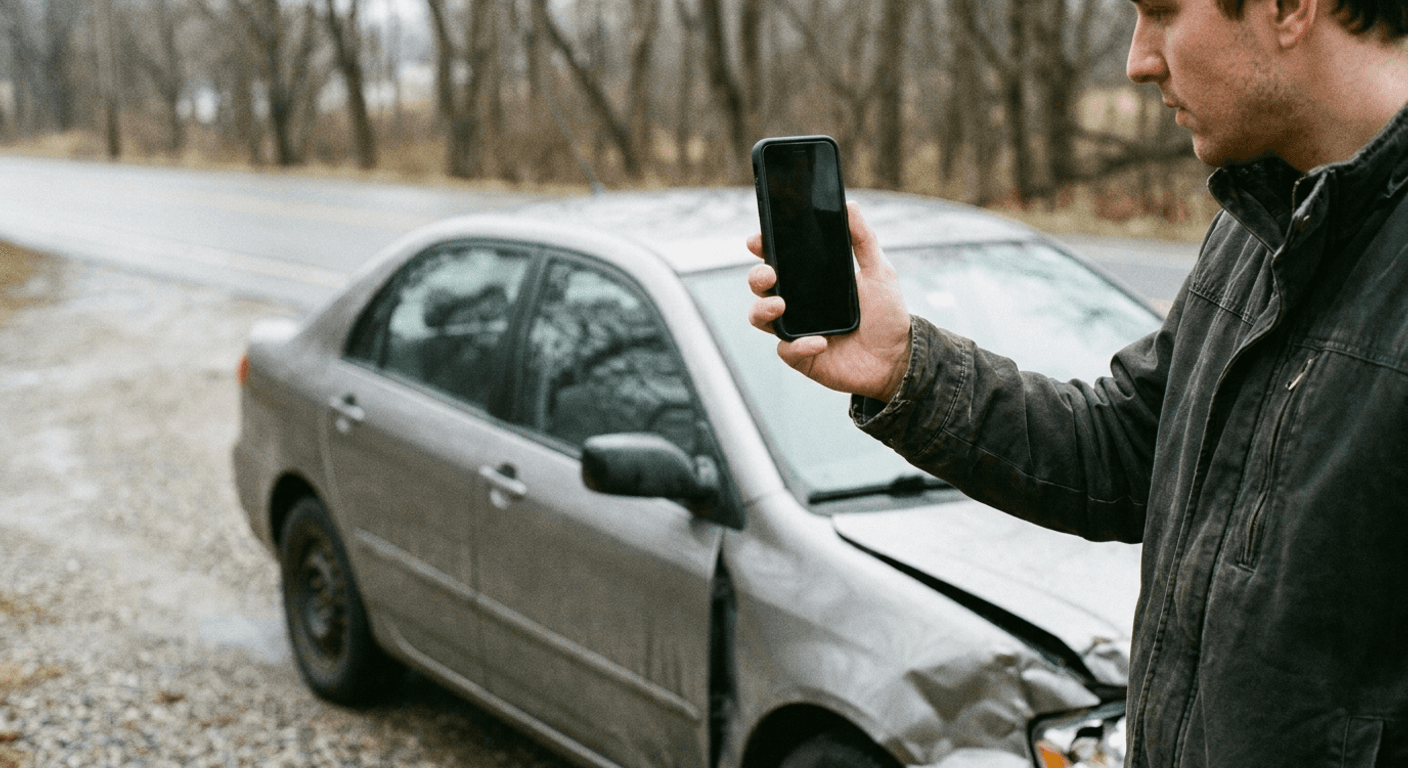
Virginia is an at-fault (tort) state that follows pure contributory negligence, meaning the at-fault driver's insurer pays. Critically: if you are even 1% responsible for the crash, you can be barred from recovering anything at all. Minimum liability limits rose to 50/100/25 effective January 1, 2025.
Is Virginia a no-fault or at-fault state?
Virginia is a traditional at-fault (tort) state. When a crash occurs, the driver who caused the accident (along with their liability insurer) is responsible for paying the resulting injuries and property damage. An injured person files a third-party claim against the at-fault driver's bodily-injury or property-damage liability coverage, or sues that driver directly in tort. Virginia is not one of the 12 no-fault states, and there is no statutory PIP first-party system. Under Va. Code 38.2-2201, an insurer must make medical-expense (med-pay) coverage available on the insured's request and provide it on payment of the premium, and the insured has the option of purchasing it. There is no written-rejection step for med-pay: the coverage is simply not part of the policy unless it was bought. Because Virginia is a pure tort state, there is also no "serious-injury threshold" that must be crossed before you can seek pain-and-suffering compensation; you may sue for those damages freely, though Virginia's contributory-negligence rule (discussed below) can completely extinguish that right.
How fault is shared: Virginia's negligence rule
Virginia is one of only five U.S. jurisdictions still applying pure contributory negligence (Alabama, Maryland, North Carolina, Virginia, and the District of Columbia). Under this doctrine, if a plaintiff is even 1% at fault for the accident, they are generally barred from recovering any damages from the other driver. This is one of the harshest liability rules in the country. For example, if a jury finds the other driver was 99% responsible and you were 1% responsible, you collect nothing. The limited statutory exceptions found in Va. Code 8.01-58 apply only to common-carrier employee injury claims and safety-appliance situations, not to ordinary auto torts. Virginia courts have recognized the sudden-emergency doctrine as a narrow defense, but it does not modify the basic contributory-negligence bar. Because a finding of even slight shared fault is fatal to your claim, liability disputes in Virginia car-accident cases are unusually high-stakes, and the question of whether the plaintiff contributed to the crash is frequently central to litigation.

Minimum car insurance in Virginia
Virginia law (Va. Code 46.2-472) currently requires liability policies to carry at least $50,000 for bodily injury per person, $100,000 for bodily injury per accident, and $25,000 for property damage. These 50/100/25 minimums took effect January 1, 2025 under Senate Bill 1182, replacing the prior 30/60/20 floor that applied from January 1, 2022 through December 31, 2024. Virginia used to let owners pay a $500 Uninsured Motor Vehicle (UMV) fee at registration instead of buying liability insurance. That option was repealed effective July 1, 2024 by SB 951, and Virginia no longer has a pay-instead-of-insure alternative: every vehicle registered in the Commonwealth must be covered by a liability policy meeting the 50/100/25 minimums. Every Virginia auto liability policy must also include uninsured/underinsured motorist (UM/UIM) coverage at limits equal to the policy's liability limits and not less than the statutory minimums, per Va. Code 38.2-2206. UM property-damage coverage must be at least $20,000 per accident (a $200 deductible applies to hit-and-run/unidentified-vehicle property claims). A named insured cannot reject UM coverage entirely; they may only decline limits above the state minimum.
How long you have to file: the statute of limitations
You have two years from the date of the accident to bring a personal-injury lawsuit in Virginia. Va. Code 8.01-243(A) states that "every action for personal injuries, whatever the theory of recovery, shall be brought within two years after the cause of action accrues." Missing this deadline almost always results in the court dismissing your claim permanently, no matter how strong the underlying case. Two important differences apply to other claim types: vehicle and property-damage actions enjoy a five-year window under Va. Code 8.01-243(B), and wrongful-death claims must be filed within two years from the date of death under Va. Code 8.01-244. If the at-fault party is a government entity (a city, county, or state agency), additional notice-of-claim requirements and shorter administrative deadlines may apply, so consulting an attorney promptly is especially important in those cases. For a full breakdown of Virginia filing deadlines across different injury types, see the Virginia statute of limitations page.

What a Virginia car accident claim is worth
The value of a Virginia car accident claim turns on two pools of damages: economic (medical bills, lost wages, future care costs, vehicle repair) and non-economic (pain and suffering, emotional distress, loss of enjoyment). Virginia's pure contributory negligence rule means that if you share any fault at all, those damages drop to zero as far as the at-fault driver is concerned. If you are found entirely free of fault, you may recover the full measure of your proven losses. In practice, however, most claims settle within the at-fault driver's policy limits, which can be as low as $50,000 per person under current minimums. Severe injuries often exceed those limits, making UM/UIM coverage (mandatory in Virginia, tracks your own liability limits) critical for filling the gap. Your own med-pay policy, health insurance, and income-replacement coverage also affect the net recovery. Use the Virginia car accident settlement calculator to get a rough sense of typical settlement ranges based on injury severity and fault allocation.
What to do after a car accident in Virginia
Taking the right steps immediately after a crash protects both your safety and your legal rights. First, move to safety if possible and call 911.
Know which reporting duty is actually yours. If the crash resulted in injury to or death of any person, Va. Code 46.2-371 requires the driver (or someone acting for the driver) to immediately give notice of the accident to a law-enforcement officer, and a willful failure to do so is a Class 4 misdemeanor. That duty has no dollar threshold. The $3,000 figure that circulates online is not a driver's duty at all: under Va. Code 46.2-373 it is the point at which the law-enforcement officer who investigates a crash must forward a written report to the DMV, and that officer also reports every crash involving injury or death. A driver's own written report to the DMV Commissioner under Va. Code 46.2-372 is permissive, not mandatory.
Separately, Va. Code 46.2-894 requires you to stop as close to the scene as possible without obstructing traffic, render reasonable assistance to anyone injured, and report your name, address, driver's license number, and vehicle registration number to law enforcement or to the other driver, any injured person, and the owner of damaged attended property. If you damage unattended property, Va. Code 46.2-896 requires a reasonable effort to find the owner or a conspicuously left note with your identifying information, plus a report to police within 24 hours.
Stay at the scene until law enforcement arrives, as leaving can result in hit-and-run charges (see Virginia hit-and-run laws). Exchange insurance information, driver's license numbers, and contact details with all involved drivers. Document the scene thoroughly: photograph vehicle damage, skid marks, road conditions, traffic controls, and any visible injuries. Collect witness names and contact information while people are still present. Seek medical evaluation as soon as possible, even if you feel fine, because some injuries (concussions, soft-tissue damage) present symptoms hours or days later and gaps in treatment are used by insurers to minimize claims. Notify your own insurer promptly, but be cautious about giving recorded statements or signing any release before you understand the full extent of your injuries. Under Virginia's pure contributory negligence rule, any admission of partial fault can extinguish your entire claim, so get a free claim review from a Virginia car accident lawyer on what to tell the other driver's insurer (attorney advertising).

This article is general legal information, not legal advice. Car accident law varies by state and changes, and settlement values depend on the specific facts. For advice about a specific crash, consult a licensed attorney in Virginia.
Related:
- Virginia Car Accident Settlement Calculator
- Virginia Hit-and-Run Laws
- Virginia Statute of Limitations
- Car Accident Laws by State: Hub
More Virginia Laws
- Virginia Dashcam Laws
- Virginia Hit and Run Laws
- Virginia Slip and Fall Laws
- Virginia Statute of Limitations
- Virginia Workers Compensation Laws
Frequently Asked Questions
Is Virginia a no-fault state?
No. Virginia is a pure at-fault (tort) state. There is no no-fault/PIP system. The driver who caused the crash (and their liability insurer) is responsible for paying the resulting damages. You file a third-party claim against the at-fault driver's coverage or sue them directly in tort.
Is Virginia an at-fault state?
Yes. Virginia is a traditional at-fault state. An injured person pursues the at-fault driver's liability insurer for compensation. If the at-fault driver is uninsured or underinsured, your own mandatory UM/UIM coverage steps in under Va. Code 38.2-2206.
What is the statute of limitations for a car accident in Virginia?
Two years from the date of the accident for personal-injury claims (Va. Code 8.01-243(A)). Property-damage claims have a five-year window (Va. Code 8.01-243(B)), and wrongful-death actions must be filed within two years from the date of death (Va. Code 8.01-244). Missing these deadlines generally forfeits your right to sue.
Can I still recover if I was partly at fault in Virginia?
Generally no. Virginia follows pure contributory negligence, one of the strictest rules in the country. If you are found even 1% at fault for the accident, you are typically barred from recovering any damages from the other driver. The very narrow exceptions in Va. Code 8.01-58 apply to common-carrier employee injury claims and safety-appliance cases, not ordinary auto accidents.
What are the minimum insurance requirements in Virginia?
For policies effective on or after January 1, 2025: $50,000 bodily injury per person, $100,000 bodily injury per accident, and $25,000 property damage (50/100/25) under Va. Code 46.2-472. Uninsured/underinsured motorist coverage at matching limits is also mandatory. Note that Virginia repealed its $500 UMV registration fee option effective July 1, 2024 (SB 951); every registered vehicle must now carry an actual liability policy, with no pay-instead-of-insure alternative.
How much is my Virginia car accident claim worth?
Claim value depends on your total economic losses (medical bills, lost wages, vehicle damage) plus non-economic losses (pain and suffering), minus any contributory negligence bar. Because Virginia's pure contributory negligence rule can wipe out your recovery entirely if you share any fault, the facts around liability are especially critical. Most settlements are bounded by the at-fault driver's policy limits. Use the Virginia car accident settlement calculator for a rough estimate.
Does Virginia require PIP coverage?
No. Virginia does not require Personal Injury Protection (PIP) and has no mandatory no-fault PIP system. Under Va. Code 38.2-2201, an insurer must make medical-expense (med-pay) coverage available on the insured's request and provide it on payment of the premium, and the insured has the option of purchasing it. There is no written rejection of med-pay: you simply do not have the coverage unless you bought it.
Updates
Corrected how Virginia medical-expense (med-pay) coverage works (it must be made available on request and is absent unless purchased, rather than rejected in writing) and reattributed the $3,000 crash-reporting threshold to the investigating officer’s DMV report, restating the driver’s own notice, stop and exchange duties under Va. Code 46.2-371, 46.2-894 and 46.2-896.
Updated the page to reflect that Virginia repealed its $500 pay-instead-of-insure Uninsured Motor Vehicle fee effective July 1, 2024 (all vehicles now require actual insurance), corrected the accident-report property-damage threshold from a stale $1,500 to the current $3,000, and fixed an over-narrow description of the Va. Code 8.01-58 exception.
Independently fact-checked against the cited primary sources; governing law re-checked for recent changes
Governing law re-checked for recent changes
Reviewed and approved by an editor
The Law Behind This Article
This article rests on the statutory provisions below, held in our own legal record and retrieved from the official source. Tap a section to read the operative text.
Code of Virginia, Title 46.2: Motor Vehicles
§ 46.2-472Coverage of owner's policyIn forcecited in 2 of our articles
A. For all policies effective on or after January 1, 2022, but prior to January 1, 2025, every motor vehicle owner's policy shall: 1. Designate by explicit description or by appropriate reference, all motor vehicles with respect to which coverage is intended to be granted. 2. Insure as insured the person named and any other person using or responsible for the use of the motor vehicle or motor vehicles with the permission of the named insured. 3. Insure the insured or other person against loss from any liability imposed by law for damages, including damages for care and loss of services, because of bodily injury to or death of any person, and injury to or destruction of property caused by accident and arising out of the ownership, use, or operation of such motor vehicle or motor vehicles within the Commonwealth, any other state in the United States, or Canada, subject to a limit exclusive of interest and costs, with respect to each motor vehicle, of $30,000 because of bodily injury to or death of one person in any one accident and, subject to the limit for one person, to a limit of $60,000 because of bodily injury to or death of two or more persons in any one accident, and to a…
Official text (excerpt) · last checked 2026-09-14 · Read the full text in our law library · Verify at law.lis.virginia.gov
Cited in 11 court opinions in our collectionLatest citing opinion in our collection: 2020
Opinions citing this section in our collection:
- MacDougall v. Hartford Ins. Group (Virginia Circuit Court 2003, 61 Va. Cir. 181)“…mited to the minimum financial responsibility limits set by Va. Code § 46.2-472. This issue is framed by Paragraph B.4,…”
- Field v. Transcontinental Insurance (District Court, E.D. Virginia 1998, 219 B.R. 115)“…38.2-2205, the .omnibus insurance clause at issue here, to Va.Code § 46.2-472. This reference demonstrates that when…”
- Insurance Co. of North America v. MacMillan (Court of Appeals for the Fourth Circuit 1991, 945 F.2d 729)“…bodily injury or death to one person in any one accident. Va. Code Ann. § 46.2-472 (3). . A violation of that notice…”
Identified automatically from the court opinions citing this section — not a ranking of which case controls.
Also relied on in: Virginia Hit and Run Laws: Penalties and What to Do
§ 46.2-371Driver to give immediate notice of certain accidentsIn force
The driver of any vehicle involved in any accident resulting in injury to or death of any person, or some person acting for him, shall immediately give notice of the accident to a law-enforcement officer. A willful failure to make the report required in this section shall constitute a Class 4 misdemeanor.
Official text (excerpt) · last checked 2026-07-29 · Read the full text in our law library · Verify at law.lis.virginia.gov
§ 46.2-372Driver to report certain accidents in writing; certification of financial responsibility to Department; supplemental reports; reports by witnessesIn force
A. Any person involved in an accident (i) resulting in injury to or death of any person or property damage, or (ii) when there is reason to believe a motor vehicle involved in the accident was uninsured at the time of the accident, may make a written report of it to the Commissioner, on a form prescribed by the Department. B. If any accident report filed pursuant to the provisions of this article is alleged to be false or inaccurate, the Commissioner shall withhold any action under this section or imposition of any penalty and shall investigate and determine the true circumstances of the accident, including a determination of the identity of the parties involved. C. For the purposes of this article the definitions provided in subsection B of § 38.2-2206 shall apply. D. The Commissioner shall require the owner of a motor vehicle involved in any accident of which report is made pursuant to this section to provide information relating to certification of insurance or bond if there was in effect at the time of the accident with respect to the motor vehicle involved: 1.
Official text (excerpt) · last checked 2026-07-29 · Read the full text in our law library · Verify at law.lis.virginia.gov
§ 46.2-373Report by law-enforcement official investigating accidentIn forcecited in 2 of our articles
A. Every law-enforcement officer who in the course of duty investigates a motor vehicle accident resulting in injury to or death of any person or total property damage to an apparent extent of $3,000 or more, either at the time of and at the scene of the accident or thereafter and elsewhere, by interviewing participants or witnesses shall, within twenty-four hours after completing the investigation, forward a written report of the accident to the Department. The report shall include the name or names of the insurance carrier or of the insurance agent of the automobile liability policy on each vehicle involved in the accident. A law-enforcement agency may utilize a contracted service provider to forward reports electronically to the Department in compliance with this section and to manage or disseminate copies of such reports to persons identified in, and in a manner consistent with, § 46.2-380, provided such contracted service provider complies with the requirements applicable to an agency in Chapter 38 (§ 2.2-3800 et seq.) of Title 2.2. B.
Official text (excerpt) · last checked 2026-07-29 · Read the full text in our law library · Verify at law.lis.virginia.gov
Cited in 2 court opinions in our collectionLatest citing opinion in our collection: 2005
Opinions citing this section in our collection:
- Burrell v. Virginia (Court of Appeals for the Fourth Circuit 2005, 395 F.3d 508)“…formation of the parties, of any accident involving injury. Va.Code Ann. § 46.2-373(A). The officer thus had probable cause…”
- Burrell v. Commonwealth of VA (Court of Appeals for the Fourth Circuit 2005, 395 F.3d 508)“…rmation of the parties, of any accident involv- ing injury. Va. Code Ann. § 46.2-373(A). The officer thus had proba- ble cau…”
Identified automatically from the court opinions citing this section — not a ranking of which case controls.
§ 46.2-894Duty of driver to stop, etc., in event of accident involving injury or death or damage to attended property; penaltyIn forcecited in 5 of our articles
The driver of any vehicle involved in an accident in which a person is killed or injured or in which an attended vehicle or other attended property is damaged shall immediately stop as close to the scene of the accident as possible without obstructing traffic, as provided in § 46.2-888, and report his name, address, driver's license number, and vehicle registration number forthwith to the State Police or local law-enforcement agency, to the person struck and injured if such person appears to be capable of understanding and retaining the information, or to the driver or some other occupant of the vehicle collided with or to the custodian of other damaged property. The driver shall also render reasonable assistance to any person injured in such accident, including taking such injured person to a physician, surgeon, or hospital if it is apparent that medical treatment is necessary or is requested by the injured person.
Official text (excerpt) · last checked 2026-09-24 · Read the full text in our law library · Verify at law.lis.virginia.gov
Cited in 8 court opinions in our collectionLatest citing opinion in our collection: 2025
Opinions citing this section in our collection:
- Katz v. Waterman (Virginia Circuit Court 2002, 59 Va. Cir. 182)“…er County for, among other things, felony hit and run under Va. Code § 46.2-894. It was alleged that Waterman fled the…”
- Jerome Arthur Godwin v. Commonwealth of Virginia (Court of Appeals of Virginia 2024)“…s motion to strike the charge of felony hit and run under Va. Code § 46.2-894.” He argues that “the Commonwealth’s e…”
- United States v. Carter (District Court, E.D. Virginia 2004, 349 F. Supp. 2d 982)“…nviction for “hit and run” in the Commonwealth of Virginia, Va.Code § 46.2-894, constitutes a crime of violence for pu…”
Identified automatically from the court opinions citing this section — not a ranking of which case controls.
Also relied on in: Virginia Dashcam Laws: Installation, Audio, and Evidence Rules, Hit and Run Laws in the United States (2026 Guide), Virginia Hit-and-Run Victims Can Now Seek Punitive Damages Even If the Driver Is Never Found
§ 46.2-896Duties of driver in event of accident involving damage only to unattended propertyIn forcecited in 2 of our articles
The driver of any vehicle involved in an accident in which no person is killed or injured, but in which an unattended vehicle or other unattended property is damaged, shall make a reasonable effort to find the owner or custodian of such property and shall report to the owner or custodian the information which the driver is required to report pursuant to § 46.2-894 if such owner or custodian is found. If the owner or custodian of such damaged vehicle or property cannot be found, the driver shall leave a note or other sufficient information including driver identification and contact information in a conspicuous place at the scene of the accident and shall report the accident in writing within 24 hours to the State Police or the local law-enforcement agency. Such note or other information and written report shall contain the information that the driver is required to report pursuant to § 46.2-894. The written report shall, in addition, state the date, time, and place of the accident and the driver's description of the property damage.
Official text (excerpt) · last checked 2026-07-29 · Read the full text in our law library · Verify at law.lis.virginia.gov
Cited in 1 court opinions in our collectionLatest citing opinion in our collection: 2004
Opinions citing this section in our collection:
- Durney v. Doss (Court of Appeals for the Fourth Circuit 2004, 106 F. App'x 166)“…DURNEY v. DOSS 5 See also Va. Code Ann. § 46.2-896 (requiring driver who damages unattende…”
Identified automatically from the court opinions citing this section — not a ranking of which case controls.
Code of Virginia, Title 38.2: Insurance
§ 38.2-2206Uninsured motorist insurance coverageIn forcecited in 2 of our articles
A. Except as provided in subsection J, no policy or contract of bodily injury or property damage liability insurance relating to the ownership, maintenance, or use of a motor vehicle shall be issued or delivered in this Commonwealth to the owner of such vehicle or shall be issued or delivered by any insurer licensed in this Commonwealth upon any motor vehicle principally garaged or used in this Commonwealth unless it contains an endorsement or provisions undertaking to pay the insured all sums that he is legally entitled to recover as damages from the owner or operator of an uninsured motor vehicle, within limits not less than the requirements of § 46.2-472. Those limits shall equal but not exceed the limits of the liability insurance provided by the policy, unless any one named insured rejects the additional uninsured motorist insurance coverage by notifying the insurer as provided in subsection B of § 38.2-2202. This rejection of the additional uninsured motorist insurance coverage by any one named insured shall be binding upon all insureds under such policy.
Official text (excerpt) · last checked 2026-07-29 · Read the full text in our law library · Verify at law.lis.virginia.gov
Cited in 70 court opinions in our collectionLatest citing opinion in our collection: 2025
Opinions citing this section in our collection:
- MacDougall v. Hartford Ins. Group (Virginia Circuit Court 2003, 61 Va. Cir. 181)“…es Overview All parties recognize that pursuant to Va. Code § 38.2-2206(A), Virginia auto liability policies af…”
- O'Neil v. United States Automobile Ass'n (Virginia Circuit Court 2002, 57 Va. Cir. 257)“…inia Auto Policy at 10. The Uninsured Motorist Statute, Va. Code § 38.2-2206 Last, both parties agree, as does t…”
- Atkinson v. Penske Logistics, L.L.C. (Virginia Circuit Court 2003, 61 Va. Cir. 223)“…ng the insurer as provided in subsection B of § 38.2-2202.” Va. Code § 38.2-2206(A) (2001) (emphasis added). “This rejec…”
Identified automatically from the court opinions citing this section — not a ranking of which case controls.
§ 38.2-2201Provisions for payment of medical expense and loss of income benefits; assignment of certain benefitsIn force
A. Upon request of an insured, each insurer licensed in this Commonwealth issuing or delivering any policy or contract of bodily injury or property damage liability insurance covering liability arising from the ownership, maintenance or use of any motor vehicle shall provide on payment of the premium, as a minimum coverage (i) to persons occupying the insured motor vehicle; and (ii) to the named insured and, while resident of the named insured's household, the spouse and relatives of the named insured while in or upon, entering or alighting from or through being struck by a motor vehicle while not occupying a motor vehicle, the following health care and disability benefits for each accident: 1. All reasonable and necessary expenses for medical, chiropractic, hospital, dental, surgical, prosthetic and rehabilitation services, services provided by an emergency medical services vehicle as defined in § 32.1-111.1, and funeral expenses, resulting from the accident and incurred within three years after the date of the accident, up to $2,000 per person; however, if the insured does not elect to purchase such limit the insurer and insured may agree to any other limit; 2.
Official text (excerpt) · last checked 2026-07-29 · Read the full text in our law library · Verify at law.lis.virginia.gov
Code of Virginia, Title 8.01: Civil Remedies and Procedure
§ 8.01-243Personal action for injury to person or property generally; extension in actions for malpractice against health care providerIn forcecited in 10 of our articles
A. Unless otherwise provided in this section or by other statute, every action for personal injuries, whatever the theory of recovery, and every action for damages resulting from fraud, shall be brought within two years after the cause of action accrues. B. Every action for injury to property, including actions by a parent or guardian of an infant against a tort-feasor for expenses of curing or attempting to cure such infant from the result of a personal injury or loss of services of such infant, shall be brought within five years after the cause of action accrues. An infant's claim for medical expenses pursuant to subsection B of § 8.01-36 accruing on or after July 1, 2013, shall be governed by the applicable statute of limitations that applies to the infant's cause of action. C. The two-year limitations period specified in subsection A shall be extended in actions for malpractice against a health care provider as follows: 1. In cases arising out of a foreign object having no therapeutic or diagnostic effect being left in a patient's body, for a period of one year from the date the object is discovered or reasonably should have been discovered; 2.
Official text (excerpt) · last checked 2026-09-14 · Read the full text in our law library · Verify at law.lis.virginia.gov
Cited in 376 court opinions in our collectionLatest citing opinion in our collection: 2026
In the courts (editorial summary, independently checked):Dunlap v. Cottman Transmissions Systems (2014) held Section 8.01-243(B)'s five-year property period governs tortious interference claims, not the two years in (A). Dixon v. Messer (2003) read the (C)(2) extension to cover fraud, concealment and intentional misrepresentation, but not negligence.
Opinions citing this section in our collection:
- Herman v. McCarthy Enterprises, Inc. (Virginia Circuit Court 2002, 61 Va. Cir. 697)✓Homeowners sued the subcontractor that applied synthetic stucco to their new house. The court held they sought damages for injury to property, not personal injury, so subsection (B)'s five-year period applied rather than subsection (A)'s two years, and it denied the plea in bar.
- Ansari v. Pahlavi (Virginia Circuit Court 1991, 23 Va. Cir. 402)✓A businessman sued in detinue to recover corporate stock he said was held only as collateral. The court held detinue is governed by the five-year property-injury period of 8.01-243(B) rather than the one-year catch-all, and denied summary judgment on limitations grounds.
- Dixon v. Messer (Virginia Circuit Court 2003, 61 Va. Cir. 527)✓A former surgical patient sued her surgeon after the two-year period ran. The court held 8.01-243(C)(2) extends that period only for actual fraud, concealment or intentional misrepresentation, which the patient must prove by clear and convincing evidence, and sent it to a jury.
Identified automatically from the court opinions citing this section — not a ranking of which case controls.
Also relied on in: Virginia Dog Bite Laws: Liability and Victim Rights, Motorcycle Accident Laws in Virginia (2026): Deadlines & Helmets, Virginia Slip and Fall Laws: Proving Premises Liability in a Pure-Contributory State
§ 8.01-244Actions for wrongful death; limitationIn forcecited in 6 of our articles
A. Notwithstanding the provisions of subsection B of § 8.01-229, if a person entitled to bring an action for personal injury dies as a result of such injury with no such action pending before the expiration of the limitations period set forth in § 8.01-243, then an action under § 8.01-50 may be commenced within the time limits specified in subsection B or as provided in subsection K of § 8.01-229. B. Every action under § 8.01-50 shall be brought by the personal representative of the decedent within two years after the death of the injured person. If any such action is brought within such period of two years after such person's death and for any cause abates or is dismissed without determining the merits of such action, the time such action is pending shall not be counted as any part of such period of two years and another action may be brought within the remaining period of such two years as if such former action had not been instituted.
Official text (excerpt) · last checked 2026-07-29 · Read the full text in our law library · Verify at law.lis.virginia.gov
Cited in 28 court opinions in our collectionLatest citing opinion in our collection: 2025
Opinions citing this section in our collection:
- Goodwin v. Salsano (Virginia Beach County Circuit Court 1996, 39 Va. Cir. 362)“…nt. *363 All parties agree that the operative statute is Code of Virginia § 8.01-244, “which provides, in material part, tha…”
- Watson v. Warne (Virginia Beach County Circuit Court 2004, 69 Va. Cir. 513)“…e defendants argue that the plaintiffs claims are barred by Va. Code § 8.01-244(A), which establishes a two-year statut…”
- Jones v. R. S. Jones & Associates, Inc. (Supreme Court of Virginia 1993, 246 Va. 3)“…led to a two-year limitation, determined by applying either Va. Code § 8.01-244 or Fla. Stat. Ann. § 95.11 (4)(d), bot…”
Identified automatically from the court opinions citing this section — not a ranking of which case controls.
Also relied on in: Virginia Statute of Limitations: Filing Deadlines by Case Type, Truck Accident Laws in Virginia (2026): Deadlines & Liability, Virginia Wrongful Death Laws (2026): Deadlines & Who Sues
§ 8.01-58Contributory negligence no bar to recovery; violation of safety appliance actsIn forcecited in 2 of our articles
In all actions brought against any such common carrier to recover damages for personal injuries to any employee or when such injuries have resulted in his death, the fact that such employee may have been guilty of contributory negligence shall not bar a recovery, but the damages shall be diminished by the jury in proportion to the amount of negligence attributable to such employee; and no such employee, who may be injured or killed, shall be held to have been guilty of contributory negligence in any case when the violation by such common carrier of any statute enacted for the safety of employees contributed to the injury or death of such employee.
Official text (excerpt) · last checked 2026-07-29 · Read the full text in our law library · Verify at law.lis.virginia.gov
Search our full record of US law — 2.1 million sections, every state + federal →
Sources and References
- Va. Code 46.2-472 — Minimum liability insurance limits (50/100/25 eff. 1/1/2025)(law.lis.virginia.gov).gov
- Va. Code 38.2-2206 — Uninsured motorist coverage requirements(law.lis.virginia.gov).gov
- Va. Code 38.2-2201 — Medical-expense (med-pay) offer requirement(law.lis.virginia.gov).gov
- Va. Code 8.01-243(A) — Two-year personal-injury statute of limitations(law.lis.virginia.gov).gov
- Va. Code 8.01-243(B) — Five-year property-damage statute of limitations(law.lis.virginia.gov).gov
- Va. Code 8.01-244 — Two-year wrongful-death statute of limitations(law.lis.virginia.gov).gov
- Va. Code 8.01-58 — Contributory negligence statutory exceptions(law.lis.virginia.gov).gov
- Va. Code 46.2-371 - Driver must immediately give notice of an injury or death crash to a law-enforcement officer(law.lis.virginia.gov)
- Va. Code 46.2-372 - Driver’s own written report to the DMV Commissioner is permissive(law.lis.virginia.gov)
- Va. Code 46.2-373 - Investigating officer forwards a crash report to DMV (injury, death, or $3,000 or more in property damage)(law.lis.virginia.gov)
- Va. Code 46.2-894 - Duty to stop, render reasonable assistance, and give identifying information(law.lis.virginia.gov)
- Va. Code 46.2-896 - Duty after damaging unattended property(law.lis.virginia.gov)
Paid attorney referral. RecordingLaw may receive compensation when you use an attorney-help link. RecordingLaw is not a law firm. Submitting a request does not guarantee that an attorney will accept your case and does not create an attorney-client relationship.