Virginia Recording Laws: Consent Rules and Penalties
Quick Answer
Virginia is a one-party consent state. You can legally record phone calls and in-person conversations as long as you are a party to the conversation or have consent from at least one participant. Illegal recording is a Class 6 felony, and civil liability includes $400 per day of violation with a $4,000 minimum.
| Key Point | Answer |
|---|---|
| Consent Type | One-Party |
| Can you record your own calls? | Yes |
| Must you inform others? | No |
| Primary Statute | Va. Code Ann. \u00a7 19.2-62 |
| Criminal Penalty | Class 6 Felony |
| Civil Damages | $400/day or $4,000 minimum |
| Evidence Limitation | Phone recordings may be inadmissible in civil cases without all-party awareness (Va. Code \u00a7 8.01-420.2) |
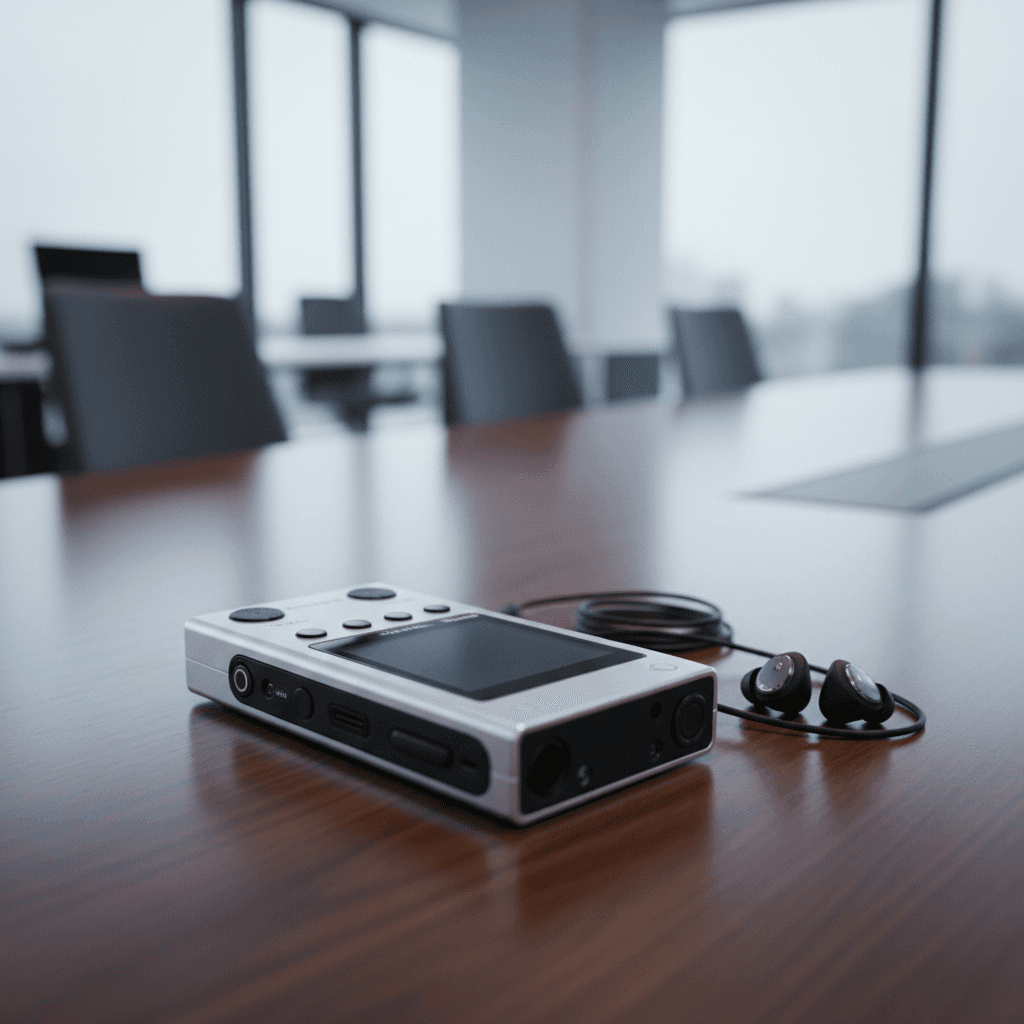
Our recommended Digital Voice Recorder.
Understanding Virginia's Recording Laws
The Legal Foundation
Virginia's wiretapping and electronic surveillance laws are found in Title 19.2, Chapter 6 of the Code of Virginia, titled "Interception of Wire, Electronic or Oral Communications." The key statute is:
- Va. Code Ann. \u00a7 19.2-62 - Interception, disclosure, etc., of wire, electronic or oral communications unlawful; penalties; exceptions
Under this statute, it is unlawful to intentionally intercept any wire, electronic, or oral communication without proper consent. However, recording is legal when at least one party to the communication consents.
The statute specifically states: "It shall not be a criminal offense under this chapter for a person to intercept a wire, electronic or oral communication, where such person is a party to the communication or one of the parties to the communication has given prior consent to such interception."
What Communications Are Covered
Virginia's recording law applies to:
- Wire communications - Phone calls, including cell phones and VoIP
- Oral communications - In-person conversations where there is an expectation that the communication is not subject to interception
- Electronic communications - Text messages, emails, video calls
One-Party vs. Two-Party Consent Explained
In a one-party consent state like Virginia, only one person in the conversation needs to know about and consent to the recording. That person can be you. You do not need to announce "this call is being recorded" or get anyone else's permission.
In contrast, two-party (or all-party) consent states like neighboring Maryland require everyone in the conversation to agree to be recorded.
Recording Phone Calls in Virginia
Can You Record Phone Calls in Virginia?
Yes. Under Va. Code Ann. \u00a7 19.2-62, you can record any phone call you are participating in without informing the other party. This applies to:
- Landline calls
- Cell phone calls
- VoIP calls (Zoom, Teams, Google Meet, etc.)
- Video calls
Important: Evidentiary Limitation for Civil Cases
While recording phone calls is legal in Virginia, using those recordings in court is a different matter. Va. Code \u00a7 8.01-420.2 places an important limitation on admissibility:
No recorded phone conversation may be admitted as evidence in a civil proceeding unless:
- All parties to the conversation were aware the conversation was being recorded, or
- The recording contains admissions of criminal conduct that is the basis for the civil action, and at least one party knew about the recording (this exception does not apply to divorce, separate maintenance, or annulment cases)
Awareness of the recording must be demonstrated by a declaration at the beginning of the recorded conversation stating that it is being recorded.
This means that even though Virginia is a one-party consent state, secretly recorded phone conversations are often not admissible in civil court. This is a critical distinction for anyone planning to use recordings in custody disputes, contract cases, or civil lawsuits.
Note: This evidentiary limitation applies specifically to phone conversations in civil proceedings. It does not apply to criminal cases, in-person recordings, or other forms of evidence.
Recording Calls Across State Lines
If you are in Virginia calling someone in a two-party consent state, the stricter law typically applies. Important: Virginia borders Maryland, which is a two-party consent state. Other states requiring all-party consent include:
- California
- Connecticut
- Florida
- Illinois
- Maryland (Virginia's neighbor)
- Massachusetts
- Montana
- Nevada (for phone calls)
- New Hampshire
- Pennsylvania
- Washington
Best practice: When calling people in two-party consent states (especially Maryland), either inform them or get explicit consent to be safe.
Business Call Recording
Virginia businesses can record calls for quality assurance, training, or compliance. The law specifically provides an exception for telephone and electronic communications service providers acting in the normal course of employment. While not legally required for most businesses, many choose to provide notice. Consent can be obtained through:
- Verbal consent before the call begins
- A recorded announcement ("This call may be recorded...")
- A periodic beep tone during the call
Recording In-Person Conversations
When Is It Legal?
You can record in-person conversations in Virginia when:
- You are participating in the conversation
- You are in a public place where there is no reasonable expectation of privacy
- You have consent from at least one party (which can be yourself)
The Expectation of Privacy Standard
Virginia law applies to oral communications when speakers have "an expectation that such communication is not subject to interception under circumstances justifying such expectations." This means you can record in public places without consent because there is no justified privacy expectation.
When Is It Illegal?
Recording is illegal in Virginia when:
- You are not a party to the conversation and do not have consent
- Recording in areas with reasonable expectation of privacy (bathrooms, changing rooms, private residences)
- Using electronic or mechanical devices to intercept communications without consent
- You are disclosing or using illegally obtained recordings
What About Recording in Your Own Home?
You can record conversations in your own home if you are participating. However, you cannot:
- Plant a hidden device and leave to record others without being present
- Record guests in areas with privacy expectations (bathrooms, guest bedrooms)
- Record intimate activities without consent

Virginia Video Recording Laws

Public Spaces
Virginia has no general prohibition on video recording in public spaces. You can:
- Film on public streets, parks, and sidewalks
- Record public meetings and government proceedings
- Use dashcams in your vehicle
- Film public protests or demonstrations
Private Property and Privacy
On private property, the property owner sets the rules. Virginia also has specific privacy laws that prohibit:
- Peeping or spying (Va. Code Ann. \u00a7 18.2-130)
- Unlawful creation of image of another (Va. Code Ann. \u00a7 18.2-386.1) - It is a Class 1 misdemeanor to knowingly create a video or image of a nonconsenting person who is nude or in a state of undress in a location where they have a reasonable expectation of privacy. If the victim is under 18, this offense becomes a Class 6 felony.
- Unlawful dissemination of intimate images (Va. Code Ann. \u00a7 18.2-386.2) - It is illegal to maliciously distribute intimate images without consent, including AI-generated deepfake images. Virginia expanded this law to cover images created using machine learning or other computer-generated means that depict a recognizable actual person.
- Non-consensual distribution of intimate images - Victims have a civil cause of action under Va. Code \u00a7 8.01-40.4 to recover compensatory damages, punitive damages, and attorney fees.
If you are recording someone's likeness for business purposes, you should ensure that you gain proper consent by having them fill out a photo or video consent form.
Recording in the Workplace
Can Your Employer Record You?
Virginia employers can generally record in common work areas where employees do not have a privacy expectation. However, employers cannot record in:
- Bathrooms
- Locker rooms
- Changing areas
Can You Record Your Employer?
Yes. As a one-party consent state, you can record conversations with your boss, HR, coworkers, or anyone else at work as long as you are part of the conversation. This can be valuable for:
- Documenting harassment or discrimination
- Recording performance reviews
- Protecting yourself in disputes
- Preserving important instructions
Caution: Your employer may have policies against recording. While recording is legal under Virginia law, violating company policy could result in termination. Many federal employees in Northern Virginia should also be aware of federal workplace policies.
Recording Police and Government Officials
Can You Record Police Officers in Virginia?
Yes. The First Amendment protects your right to record law enforcement officers performing their duties in public. In Virginia, you can:
- Film traffic stops (including your own)
- Record arrests happening in public
- Document interactions with police
- Livestream encounters
Police officers cannot legally seize or delete your footage without a warrant.
Important limitations:
- Do not interfere with police operations
- Do not trespass to get a better angle
- Follow lawful orders to step back (within reason)
- Do not obstruct the officer's duties
Custodial Interrogation Recording Requirements
Virginia law also requires law enforcement to record certain interactions. Under Va. Code \u00a7 19.2-390.04, police officers must make an audiovisual recording of any custodial interrogation conducted at a place of detention. If audiovisual recording is not possible, they must make an audio recording.
Exceptions exist when recording equipment fails, is unavailable, or exigent circumstances involving public safety prevent recording. Failure to record does not make statements inadmissible, but courts may consider the lack of recording when weighing the evidence.
Recording Government Meetings
Virginia's Freedom of Information Act (Va. Code Ann. \u00a7 2.2-3700 et seq.) requires most government meetings to be open to the public. Recording of public meetings is generally permitted. You can record:
- Board of Supervisors meetings
- City council meetings
- School board meetings
- State General Assembly proceedings
- Public hearings
Specific Situations
Can I Record My Landlord in Virginia?
Yes, if you are part of the conversation. Recording interactions with landlords can help document:
- Verbal agreements about repairs
- Harassment or illegal entry
- Disputes about lease terms
- Evidence for tenant rights cases
Keep in mind the evidentiary limitation under Va. Code \u00a7 8.01-420.2 if you plan to use phone recordings in civil court.
Can I Record My Doctor in Virginia?
Yes, you can record medical appointments you attend. This can be helpful for:
- Remembering complex medical instructions
- Documenting informed consent discussions
- Having a record of diagnoses
- Sharing information with family caregivers
Note that doctor-patient communications are considered privileged. If someone illegally records a doctor-patient conversation, they face enhanced civil damages of $800 per day with an $8,000 minimum under Va. Code \u00a7 19.2-69.
Can I Record DSS Workers?
Yes. Department of Social Services (DSS) workers are government employees, and you can record your interactions with them as long as you are participating in the conversation.
Can I Record My Ex-Spouse or Co-Parent?
Yes, during conversations you are part of. This is common in custody disputes. However:
- Do not record your children's private conversations without being present
- Do not use children to secretly record the other parent
- Consider how recordings may be viewed by Virginia courts
- Be aware that secretly recorded phone calls between spouses face enhanced civil penalties ($800/day, $8,000 minimum) under Va. Code \u00a7 19.2-69 and may not be admissible in divorce proceedings under Va. Code \u00a7 8.01-420.2
Can I Use a Dashcam in Virginia?
Yes. Dashcams are legal in Virginia. There are no specific laws restricting their use, but you should:
- Mount the camera so it does not obstruct your view
- Be aware that audio recording follows one-party consent rules
- Check if your insurance offers dashcam discounts
Using Recordings as Evidence in Virginia
Are Recordings Admissible in Court?
Recordings made legally under Virginia's one-party consent law are generally admissible as evidence, but there are important distinctions between criminal and civil cases.
For all cases, courts may consider:
- Authentication - Can you prove the recording is genuine and unaltered?
- Relevance - Does the recording matter to the case?
- Hearsay rules - Some statements may be excluded
- Prejudicial vs. probative value - Does it unfairly influence the jury?
Criminal Cases
In criminal cases, legally obtained one-party consent recordings are generally admissible. Under Va. Code \u00a7 19.2-65, illegally intercepted communications and any evidence derived from them cannot be received as evidence in any trial, hearing, or other proceeding.
Civil Cases
Civil cases have additional restrictions. Under Va. Code \u00a7 8.01-420.2, recorded phone conversations are not admissible in civil proceedings unless all parties knew about the recording, or the recording contains admissions of criminal conduct (except in divorce cases). This limitation does not apply to emergency reporting systems operated by police, fire departments, or rescue squads.
Penalties for Illegal Recording in Virginia
Criminal Penalties (Va. Code Ann. \u00a7 19.2-62)
Violating Virginia's wiretapping laws is a Class 6 felony.
| Offense | Classification | Potential Penalty |
|---|---|---|
| Illegal interception | Class 6 Felony | 1-5 years imprisonment (or up to 12 months in jail and/or $2,500 fine) |
| Disclosing intercepted communications | Class 6 Felony | 1-5 years imprisonment |
| Using illegally obtained communications | Class 6 Felony | 1-5 years imprisonment |
Note: Class 6 felonies in Virginia are considered "wobblers." At the court's discretion, the offense can be treated as a misdemeanor, resulting in a maximum of 12 months in jail and/or a $2,500 fine. Factors like criminal history, the nature of the offense, and the defendant's intent influence sentencing.
Civil Liability (Va. Code \u00a7 19.2-69)
Virginia provides substantial civil remedies for victims of illegal recording:
Standard damages:
- Actual damages
- $400 per day of violation, with a minimum of $4,000
- Punitive damages for willful violations
- Attorney's fees and court costs
Enhanced damages for privileged communications:
If the illegally intercepted communication involved a privileged relationship, damages increase to $800 per day with a minimum of $8,000. Protected relationships include:
- Married persons communicating with each other
- Attorney and client
- Licensed medical practitioners and patients
- Licensed professional counselors and clients
- Clergy and congregants
More Virginia Laws
Sources and References
- Va. Code Ann. \u00a7 19.2-62 - Interception of wire, electronic or oral communications(law.lis.virginia.gov).gov
- Va. Code \u00a7 8.01-420.2 - Limitation on use of recorded conversations as evidence(law.lis.virginia.gov).gov
- Va. Code \u00a7 19.2-69 - Civil action for unlawful interception, disclosure, or use(law.lis.virginia.gov).gov
- Va. Code \u00a7 19.2-65 - Intercepted communications not to be received in evidence(law.lis.virginia.gov).gov
- Va. Code \u00a7 19.2-390.04 - Custodial interrogations; recording(law.lis.virginia.gov).gov
- Va. Code \u00a7 18.2-386.1 - Unlawful creation of image of another(law.lis.virginia.gov).gov
- Va. Code \u00a7 18.2-386.2 - Unlawful dissemination or sale of images of another(law.lis.virginia.gov).gov
- Va. Code \u00a7 18.2-130 - Peeping or spying into dwelling or enclosure(law.lis.virginia.gov).gov
- Virginia Freedom of Information Act - Va. Code \u00a7 2.2-3700 et seq.(law.lis.virginia.gov).gov
- RCFP Reporters Recording Guide - Virginia(www.rcfp.org)