
New Mexico
New Mexico E-Scooter Laws: Sidewalk, Helmet & Age Rules (2026)
Independently fact-checked against primary sources (last audited July 23, 2026). · Law checked current as of August 9, 2026. · 5 primary sources cited on this page. How we verify our legal content
This article is general information about New Mexico e-scooter laws and is not legal advice. If you were cited under an Albuquerque ordinance or another local rule, check the current city code directly or consult a New Mexico attorney. Information last verified on 7 September 2026 against the official NMSA 1978 Chapter 66 compilation.
Are e-scooters legal in New Mexico?
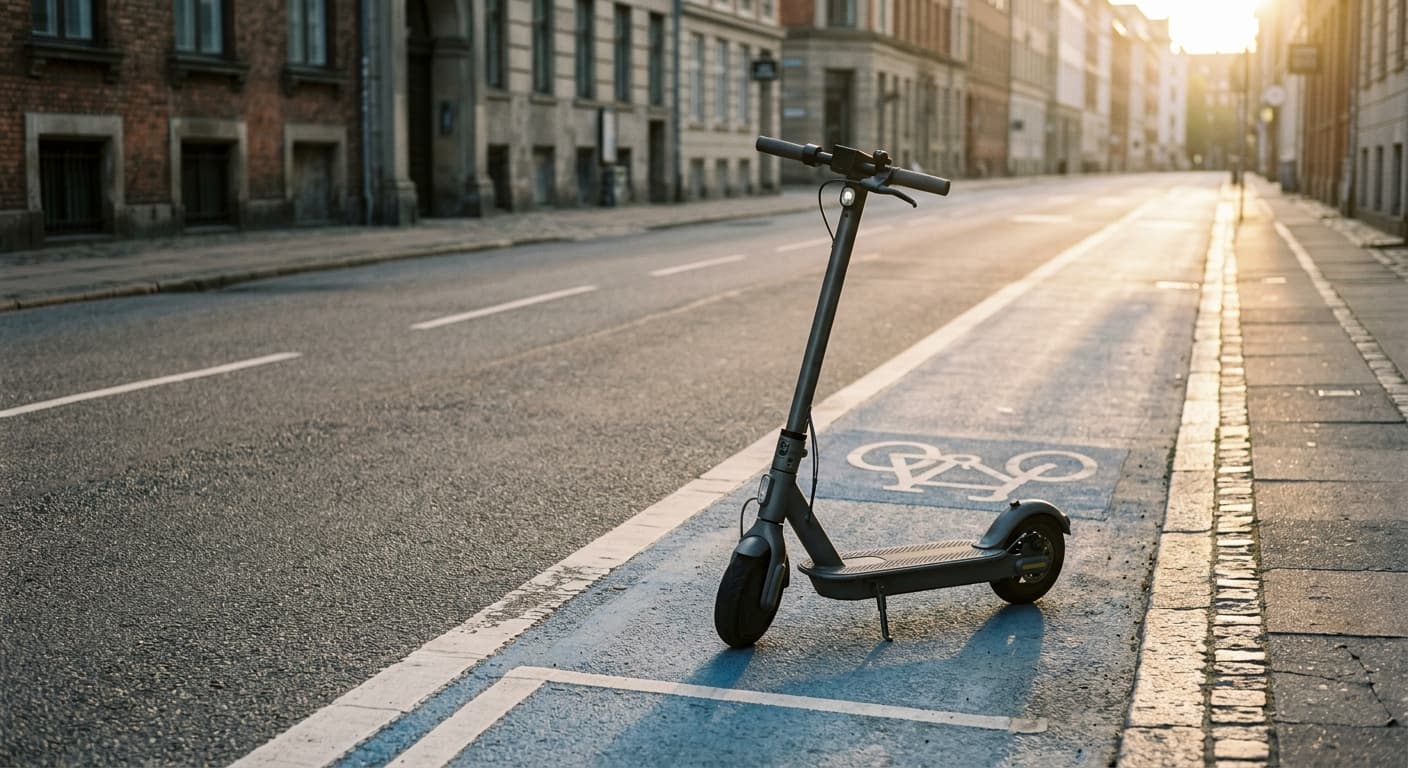
There is no New Mexico statute dedicated to electric foot scooters, and the phrase does not appear anywhere in the Motor Vehicle Code. That is not the same as saying no state law reaches them.
Effective 1 July 2023, Laws 2023, ch. 93 added a new definition to NMSA 1978 § 66-1-4.5(B): an "electric mobility device" is "a two- or three-wheel vehicle with an electric motor for propulsion that does not meet the definition of an electric-assisted bicycle and is capable of exceeding a speed of twenty miles per hour on motor power alone." The same act amended § 66-1-4.11(H) so that "motor vehicle" now means every self-propelled or battery-propelled vehicle "including an electric mobility device, but does not include an electric-assisted bicycle."
So a stand-up scooter capable of exceeding 20 mph on motor power alone is a motor vehicle under the Motor Vehicle Code, with the registration, insurance and licensing consequences set out below. What the 2023 act did not do is write any operating rules for these devices: it classified them and stopped there.
A 2019 bill, House Bill 282, titled "relating to motor vehicles; excluding electric foot scooters," would have taken the opposite approach. It would have created NMSA 1978 § 66-3-1104, given "every person operating an electric foot scooter on a highway or bicycle lane or bicycle path" the same rights and duties as a bicycle rider, and excluded scooters from registration and insurance requirements. That bill died in committee (Action Postponed Indefinitely) and was never signed into law. Section 66-3-1104 does not exist in the current statute compilation, so none of that language ever took effect.
New Mexico law also has a separate, currently enacted provision, § 66-3-1102, for "electric personal assistive mobility devices" (EPAMDs), the Segway-style category. An EPAMD is defined in § 66-1-4.5(C) as a self-balancing device with two nontandem wheels and a top speed under 20 mph. A stand-up foot scooter is not self-balancing, so it is not an EPAMD and § 66-3-1102 does not apply to it. Do not confuse the two categories: an EPAMD rider gets pedestrian rights and duties and is otherwise outside the Motor Vehicle Code, while a higher-powered foot scooter is now inside it as a motor vehicle.
What counts as an e-scooter in New Mexico
State law does not define an "electric foot scooter." The operative statutory category since 2023 is the "electric mobility device" in § 66-1-4.5(B), and the dividing line it draws is speed capability: a scooter capable of exceeding 20 mph on motor power alone is inside the definition, and one that is not capable of that speed is outside it.
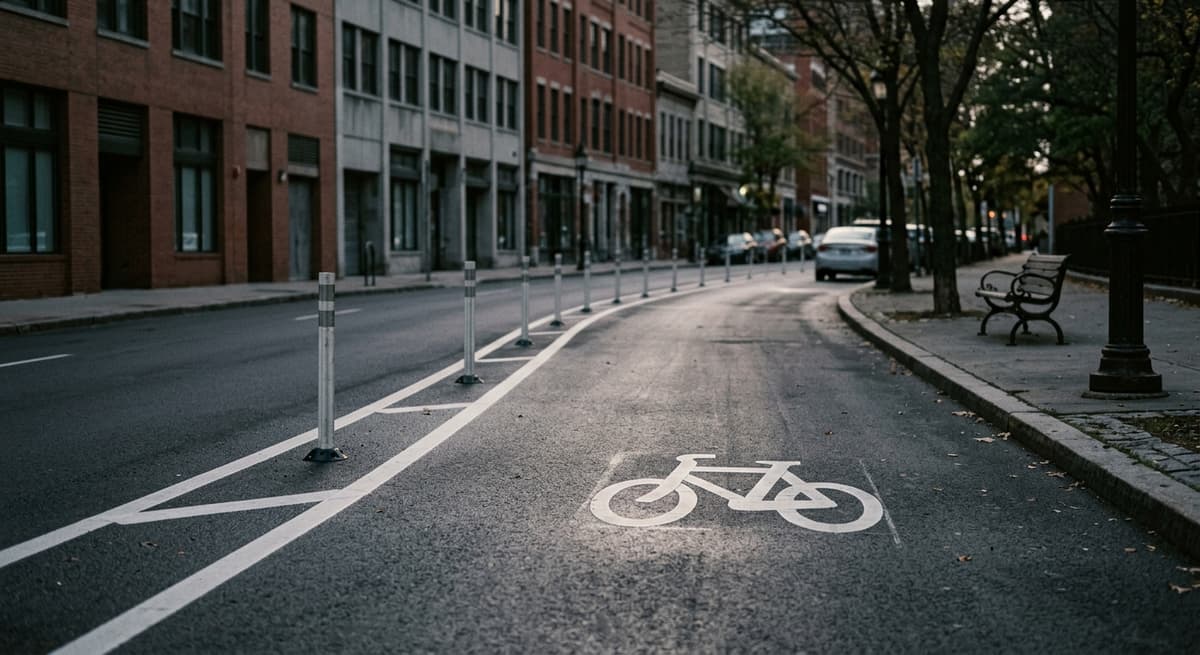
A lower-speed scooter is not named in any exemption either. Section 66-1-4.11(H) defines a motor vehicle to include "every vehicle that is propelled by electric power obtained from batteries," and § 66-1-4.19(B) defines "vehicle" broadly, excluding only devices moved exclusively by human power. The registration exception list in § 66-3-1(A) covers mopeds, EPAMDs and electric-assisted bicycles, none of which is a stand-up foot scooter. If you are relying on your scooter's top speed to stay outside the electric mobility device definition, confirm the treatment of your specific model with the MVD rather than assuming it is unregulated.
Note also that a scooter is not a bicycle under state law. Section 66-1-4.2(A) defines a bicycle as a human-powered device with two tandem wheels, "except scooters and similar devices."
The dead 2019 bill would have defined an electric foot scooter as a device that:
- Weighs under 100 pounds
- Has two or three wheels
- Has handlebars and a floorboard
- Is powered solely by an electric motor
- Has a maximum speed of no more than 20 mph on a paved, level surface
That bill would also have required an electric foot scooter to comply with the bicycle equipment standards in NMSA 1978 § 66-3-707, which covers lighting and similar equipment. Since it never took effect, no state law imposes that particular requirement on e-scooters.
Where you can ride
No enacted state statute tells an electric foot scooter rider where to ride. The 2019 bill would have given a rider on a highway, bicycle lane, or bicycle path the same rights and duties as a bicycle rider, but since the bill died, that grant never took effect, and the 2023 classification act created no operating rules of its own.
The practical consequence for a higher-powered scooter is awkward: it is a motor vehicle, so it has no statutory right to a bicycle lane or bicycle path, and it is subject to the rules of the road that apply to motor vehicles.
Sidewalks are narrower than several secondary sources suggest. The dead bill's only sidewalk-specific language covered parking, not riding: it would have read, "Electric foot scooters shall be permitted to park on sidewalks in a manner that does not impede the lawful movement of pedestrians or other traffic." Since that bill never became law, state law does not affirmatively authorize or prohibit sidewalk riding or sidewalk parking at all, so a claim that New Mexico flatly bans sidewalk riding statewide overstates the law. Whether you can ride on a sidewalk in a given city comes down entirely to that city's local ordinance. Albuquerque's own approach is covered below.
Rider rules
- Age: No statewide minimum age applies to e-scooter riders as such, because no statute regulates scooter operation directly. But a scooter that meets the electric mobility device definition is a motor vehicle, and § 66-5-2(A) requires a valid driver's license to drive a motor vehicle on a highway in this state, which carries its own age requirements. A local ordinance may also set a minimum age.
- Helmet: New Mexico requires a helmet for scooter riders under 18, but this rule comes from a separate law, the Child Helmet Safety Act (NMSA 1978, Ch. 32A, Art. 24, enacted by 2007 Senate Bill 397), not from any scooter-specific statute. The Act defines "scooter" broadly enough to cover a stand-up scooter and makes it unlawful for a parent or legal guardian to knowingly let a minor ride one without a well-fitted, securely fastened protective helmet. The civil penalty for a violation runs against the parent or guardian, capped at $10, with magistrate and municipal courts sharing jurisdiction; a first offense may draw only a verbal warning or a requirement to show proof a helmet was purchased, and a municipal court may issue only a verbal warning for any offense.
- License, registration, insurance: This is where the 2023 amendment bites. A scooter capable of exceeding 20 mph on motor power alone is an electric mobility device, and therefore a motor vehicle under § 66-1-4.11(H). Under § 66-3-1(A), every motor vehicle driven or moved upon a highway is subject to the registration and certificate of title provisions of the Motor Vehicle Code unless it appears on that subsection's exception list, and electric mobility devices are not on that list. Under § 66-5-205, no one may drive or permit the operation of an uninsured motor vehicle on New Mexico streets or highways unless the vehicle is specifically exempted from the Mandatory Financial Responsibility Act, and the only vehicle class that section's definitions carve out of that Act is special mobile equipment. Under § 66-5-2(A), driving a motor vehicle on a highway requires a valid license. Riders should not assume they are exempt; the 2019 bill that would have written an express exemption never passed.
Penalties
There is no e-scooter-specific penalty statute, and § 66-3-1104 does not exist. But real penalties reach a higher-powered scooter through the motor vehicle route. Section 66-3-1(C) makes a violation of the registration and title requirement a penalty assessment misdemeanor, with a defense if the rider produces evidence of compliance valid at the time of the citation in court. Section 66-5-205(E) makes driving or permitting the operation of an uninsured motor vehicle a misdemeanor punishable as provided in § 66-8-7, with the same produce-it-in-court defense.
The warning, then $10 fine, then impoundment schedule that some sources attribute to a New Mexico e-scooter statute is a real New Mexico provision, but it is not a scooter provision. Section 66-3-1102(E) reads: "An operator who violates a provision of this section shall receive a warning for the first offense. For a second offense, the operator shall be punished by a fine of ten dollars ($10.00). For a third or subsequent offense, in addition to the fine, the electric personal assistive mobility device shall be impounded for up to thirty days." That schedule governs electric personal assistive mobility devices, and § 66-3-1102(D) provides that no other part of the Motor Vehicle Code applies to them. It does not reach a stand-up electric foot scooter. Riders should also check a local ordinance for any citation-specific penalty.
Enforcement in practice
No statewide enforcement data specific to electric foot scooters was located for this research, and the 2023 reclassification is recent enough that its practical enforcement against scooter riders is not yet documented. Local rules, including Albuquerque's ordinance, are covered below where they could be confirmed against a primary city source. Enforcement patterns do not change the underlying legal status described above, and this page does not treat any unconfirmed local enforcement claim as settled fact.
Albuquerque e-scooter rules
Albuquerque is New Mexico's largest city. The city's own shared-mobility guidance page confirms sidewalk riding is restricted, not flatly banned: riders should "not operate a small vehicle on a sidewalk when there is a wide right lane, bike lane, or multi-use trail adjacent to the road," and sidewalk use is meant for when no better alternative exists, with a duty to yield to pedestrians. E-scooters are barred from the city's designated "business districts," defined as areas with 50% or more commercial, office, or civic frontage, and from city buses. Helmets are mandatory for riders under 18, consistent with the statewide Child Helmet Safety Act described above.
See also RecordingLaw's New Mexico DUI Laws and New Mexico Car Accident Laws pages, and the E-Scooter Laws by State hub to compare New Mexico's rules to other states.
Frequently Asked Questions
Is there a minimum age to ride an e-scooter in New Mexico?
No statewide minimum age applies to e-scooter riders as such, because no New Mexico statute regulates scooter operation directly. But a scooter capable of exceeding 20 mph on motor power alone is an electric mobility device and therefore a motor vehicle, and NMSA 1978 § 66-5-2(A) requires a valid driver's license to drive a motor vehicle on a highway, which carries its own age requirements. A local ordinance may set its own rule as well.
Do I need a helmet to ride an e-scooter in New Mexico?
Riders under 18 need a helmet, but that requirement comes from the separate Child Helmet Safety Act, not from any scooter statute. There is no statewide helmet requirement for riders 18 and older.
Can I ride an e-scooter on the sidewalk in New Mexico?
State law does not address e-scooter sidewalk riding or parking at all, so it does not flatly ban or flatly allow sidewalk riding statewide. It depends on local ordinance. In Albuquerque, sidewalk riding is restricted rather than banned outright.
What is the fine for an e-scooter violation in New Mexico?
There is no e-scooter-specific fine schedule. The warning, then $10 fine, then impoundment schedule often attributed to a New Mexico e-scooter law is real, but it is NMSA 1978 § 66-3-1102(E), which governs electric personal assistive mobility devices (the Segway-style category) and does not reach stand-up foot scooters. A higher-powered scooter is a motor vehicle, so the penalties that actually apply are the registration violation in § 66-3-1(C), a penalty assessment misdemeanor, and the uninsured motor vehicle misdemeanor in § 66-5-205(E).
Do I need to register or insure my e-scooter in New Mexico?
If your scooter is capable of exceeding 20 mph on motor power alone, it is an electric mobility device under NMSA 1978 § 66-1-4.5(B) and a motor vehicle under § 66-1-4.11(H), which pulls in title and registration under § 66-3-1 and liability coverage under the Mandatory Financial Responsibility Act. The exception list in § 66-3-1(A) exempts mopeds, Segway-style devices and electric-assisted bicycles, but not electric mobility devices. Slower scooters are not expressly exempted either, so confirm your specific model with the MVD rather than assuming you are exempt.
Is New Mexico's e-scooter law the same as its Segway law?
No. Segway-style self-balancing devices are governed by NMSA 1978 § 66-3-1102, which gives them pedestrian rights and duties and places them outside the rest of the Motor Vehicle Code. A stand-up foot scooter is not self-balancing, so that statute does not apply to it. Since 2023, a foot scooter capable of exceeding 20 mph on motor power alone is instead treated as a motor vehicle.
Are Albuquerque's e-scooter rules different from the rest of New Mexico?
Albuquerque adds its own layer: sidewalk riding is restricted to situations without a safer alternative, e-scooters are barred from designated business districts and city buses, and helmets are required under 18, consistent with statewide law.
Updates
Corrected this page to reflect the 2023 amendment (Laws 2023, ch. 93) that made a scooter capable of exceeding 20 mph an electric mobility device and therefore a motor vehicle subject to New Mexico registration, insurance and licensing rules, and corrected the statement that the widely cited $10 fine and impoundment schedule matches no enacted law: it is real, but it is the Segway-class provision in NMSA 1978 section 66-3-1102(E) and does not apply to stand-up foot scooters.
Corrected a false claim that NM Stat. 66-3-1104 (electric foot scooters) is enacted law; the 2019 bill that would have created it died in committee and was never signed. The page now explains New Mexico has no dedicated statewide e-scooter statute, and that the Segway-style EPAMD law (66-3-1102) and the Child Helmet Safety Act remain real, separate, currently enacted laws.
Governing law re-checked for recent changes
Governing law re-checked for recent changes
Independently fact-checked against the cited primary sources
The Law Behind This Article
This article rests on the statutory provisions below, held in our own legal record and retrieved from the official source. Tap a section to read the operative text.
New Mexico Statutes Annotated 1978, Chapter 32A
§ 32A-24-3Helmet use requirements; civil penaltyIn forcecited in 2 of our articles
A. It is unlawful for a parent or legal guardian of a minor to knowingly permit that minor to operate or be a passenger on a bicycle, skates, scooter or skateboard unless that minor wears a well-fitted protective bicycle helmet, fastened securely upon the head with the straps of the helmet. B. Except as provided in Subsection C of this section, a parent or legal guardian found guilty of violating Subsection A of this section shall pay a civil penalty of not more than ten dollars ($10.00). Magistrate and municipal courts shall have concurrent jurisdiction. C. If a violation of Subsection A of this section is a first offense, the magistrate or municipal court may issue a verbal warning or require, in lieu of the fine imposed in Subsection B of this section, that the person found in violation provide proof that a protective helmet has been purchased for use by the minor found on the bicycle, skates, scooter or skateboard without a protective helmet. D. A municipal court may issue only a verbal warning for a first or later violation.
Official text (excerpt) · last checked 2026-09-07 · Read the full text in our law library · Verify at nmonesource.com
New Mexico Statutes Annotated 1978, Chapter 66
§ 66-3-1102Electric personal assistive mobility devices; standards; operator requirements; applicability; penalties.In forcecited in 2 of our articles
A. An electric personal assistive mobility device shall be equipped with: (1) front, rear and side reflectors; (2) a braking system that enables the operator to bring the device to a controlled stop; and (3) if operated at any time from one-half hour after sunset to one-half hour before sunrise, a lamp that emits a white light that sufficiently illuminates the area in front of the device. B. The secretary shall by rule prescribe motor vehicle safety standards applicable to electric personal assistive mobility devices. C. An operator of an electric personal assistive mobility device traveling on a sidewalk, roadway or bicycle path shall have the rights and duties of a pedestrian and shall exercise due care to avoid colliding with pedestrians. An operator shall yield the right of way to pedestrians. D. Except as provided in this section, no other provisions of the Motor Vehicle Code [66-1-1 NMSA 1978] shall apply to electric personal assistive mobility devices. E. An operator who violates a provision of this section shall receive a warning for the first offense. For a second offense, the operator shall be punished by a fine of ten dollars ($10.00).
Official text (excerpt) · last checked 2026-07-30 · Read the full text in our law library · Verify at nmonesource.com
§ 66-1-4.2DefinitionsIn forcecited in 2 of our articles
As used in the Motor Vehicle Code: A. "bicycle" means every device propelled by human power upon which any person may ride, having two tandem wheels, except scooters and similar devices; B. "bureau" means the traffic safety bureau of the department of transportation; C. "bus" means every motor vehicle designed and used for the transportation of persons and every motor vehicle, other than a taxicab, designed and used for the transportation of persons for compensation; and D. "business district" means the territory contiguous to and including a highway when within any three hundred feet along the highway there are buildings in use for business or industrial purposes, including but not limited to hotels, banks or office buildings, railroad stations and public buildings that occupy at least fifty percent of the frontage on one side or fifty percent of the frontage collectively on both sides of the highway.
Official text (excerpt) · last checked 2026-07-30 · Read the full text in our law library · Verify at nmonesource.com
§ 66-3-707Lamps and other equipment on bicyclesIn forcecited in 2 of our articles
A. Every bicycle when in use at nighttime shall be equipped with a lamp on the front which shall emit a white light visible from a distance of at least five hundred feet to the front and with a red reflector on the rear of a type approved by the division which shall be visible from all distances from fifty feet to three hundred feet to the rear when directly in front of lawful upper beams of head lamps on a motor vehicle. A lamp emitting a red light visible from a distance of five hundred feet to the rear may be used in addition to the red reflector. B. No person shall operate a bicycle unless it is equipped with a bell or other device capable of giving a signal audible for a distance of at least one hundred feet, except that a bicycle shall not be equipped with, nor shall any person use upon a bicycle any siren or whistle. C. Every bicycle shall be equipped with a brake which will enable the operator to make the brake wheels skid on dry, level, clean pavement.
Official text (excerpt) · last checked 2026-07-30 · Read the full text in our law library · Verify at nmonesource.com
Cited in 3 court opinions in our collectionLatest citing opinion in our collection: 2024
Opinions citing this section in our collection:
- Barela v. City of Hobbs (District Court, D. New Mexico 2024)“…lighting is an arrestable offense. ECF 74 at 17–18 (citing N.M. Stat. Ann. § 66-3-707 (1978)).…”
Identified automatically from the court opinions citing this section — not a ranking of which case controls.
§ 66-1-4.5DefinitionsIn forcecited in 2 of our articles
As used in the Motor Vehicle Code: A. "electric-assisted bicycle" means a vehicle having two or three wheels, fully operable pedals and an electric motor. Electric-assisted bicycles are classified as follows: (1) "class 1 electric-assisted bicycle" means an electric-assisted bicycle equipped with a motor not exceeding seven hundred fifty watts of power that provides assistance only when the rider is pedaling and that ceases to provide assistance when the bicycle reaches a speed of twenty miles per hour; (2) "class 2 electric-assisted bicycle" means an electric-assisted bicycle equipped with a motor not exceeding seven hundred fifty watts of power that provides assistance regardless of whether the rider is pedaling but ceases to provide assistance when the bicycle reaches a speed of twenty miles per hour; and (3) "class 3 electric-assisted bicycle" means an electric-assisted bicycle equipped with a motor not exceeding seven hundred fifty watts of power that provides assistance only when the rider is pedaling and that ceases to provide assistance when the bicycle reaches a speed of twenty-eight miles per hour; B.
Official text (excerpt) · last checked 2026-07-30 · Read the full text in our law library · Verify at nmonesource.com
§ 66-5-2Drivers must be licensedIn forcecited in 2 of our articles
A. Except those expressly exempted from the Motor Vehicle Code, no person shall drive any motor vehicle, neighborhood electric car or moped upon a highway in this state unless the person: (1) holds a valid license issued under the provisions of the Motor Vehicle Code; and (2) has surrendered to the division any other license previously issued to the person by this state or by another state or country or has filed an affidavit with the division that the person does not possess such other license; however, the applicant need not surrender a motorcycle license duly obtained under Paragraph (4) of Subsection A of Section 66-5-5 NMSA 1978. B. Any person licensed under the provisions of the Motor Vehicle Code or expressly exempted from licensure may exercise the privilege granted upon all streets and highways in this state and shall not be required to obtain any other license to exercise the privilege by any county, municipality or any other local body having authority to adopt local police regulations. C.
Official text (excerpt) · last checked 2026-07-30 · Read the full text in our law library · Verify at nmonesource.com
Cited in 13 court opinions in our collectionLatest citing opinion in our collection: 2024
Opinions citing this section in our collection:
- State v. Manzanares (New Mexico Supreme Court 1983, 100 N.M. 621)“…ection 66-7-201(A); and failure to have a driver’s license, NMSA 1978, Section 66-5-2 (Cum.Supp.1982). Defendant pled guilty…”
- State v. Randy J. (New Mexico Court of Appeals 2011, 150 N.M. 683)“…ded 2010); (2) driving without a valid license, contrary to NMSA 1978, Section 66-5-2(A)(1) (2007); (3) failure to stop and y…”
- State v. Ingram (New Mexico Court of Appeals 1998, 126 N.M. 426)“…ilty to the charge of driving without a valid license under NMSA 1978, § 66-5-2(A) (1989). The offense is- a misdemeano…”
Identified automatically from the court opinions citing this section — not a ranking of which case controls.
Search our full record of US law — 2.1 million sections, every state + federal →
Sources and References
- New Mexico House Bill 282 (2019), which would have enacted NMSA 1978 § 66-3-1104 (electric foot scooters) but died in committee (Action Postponed Indefinitely) and was never signed into law(nmlegis.gov).gov
- New Mexico Motor Vehicle Division, Chapter 18: Other Vehicles(mvd.newmexico.gov).gov
- City of Albuquerque, Shared Active Transportation (e-scooter rules)(cabq.gov).gov
- New Mexico Senate Bill 397 (2007), enacting the Child Helmet Safety Act (NMSA 1978, Ch. 32A, Art. 24)(nmlegis.gov).gov
- RecordingLaw.com, New Mexico DUI Laws(recordinglaw.com)
- RecordingLaw.com, New Mexico Car Accident Laws(recordinglaw.com)
- New Mexico Legislature, HB 282 (2019) bill status page — confirms "Action Postponed Indefinitely" (died in committee)(nmlegis.gov).gov
- New Mexico Statutes Annotated 1978, Chapter 66 Article 3 (current official compilation) — no § 66-3-1104 exists(nmonesource.com)
Paid attorney referral. RecordingLaw may receive compensation when you use an attorney-help link. RecordingLaw is not a law firm. Submitting a request does not guarantee that an attorney will accept your case and does not create an attorney-client relationship.