
Hawaii
Hawaii Dashcam Laws: Recording Rules, Audio Consent, and Legal Limits (2026)
Independently fact-checked against primary sources (last audited August 15, 2026). · Reviewed by the RecordingLaw editorial team. · Law checked current as of August 15, 2026. · 3 primary sources cited on this page. How we verify our legal content
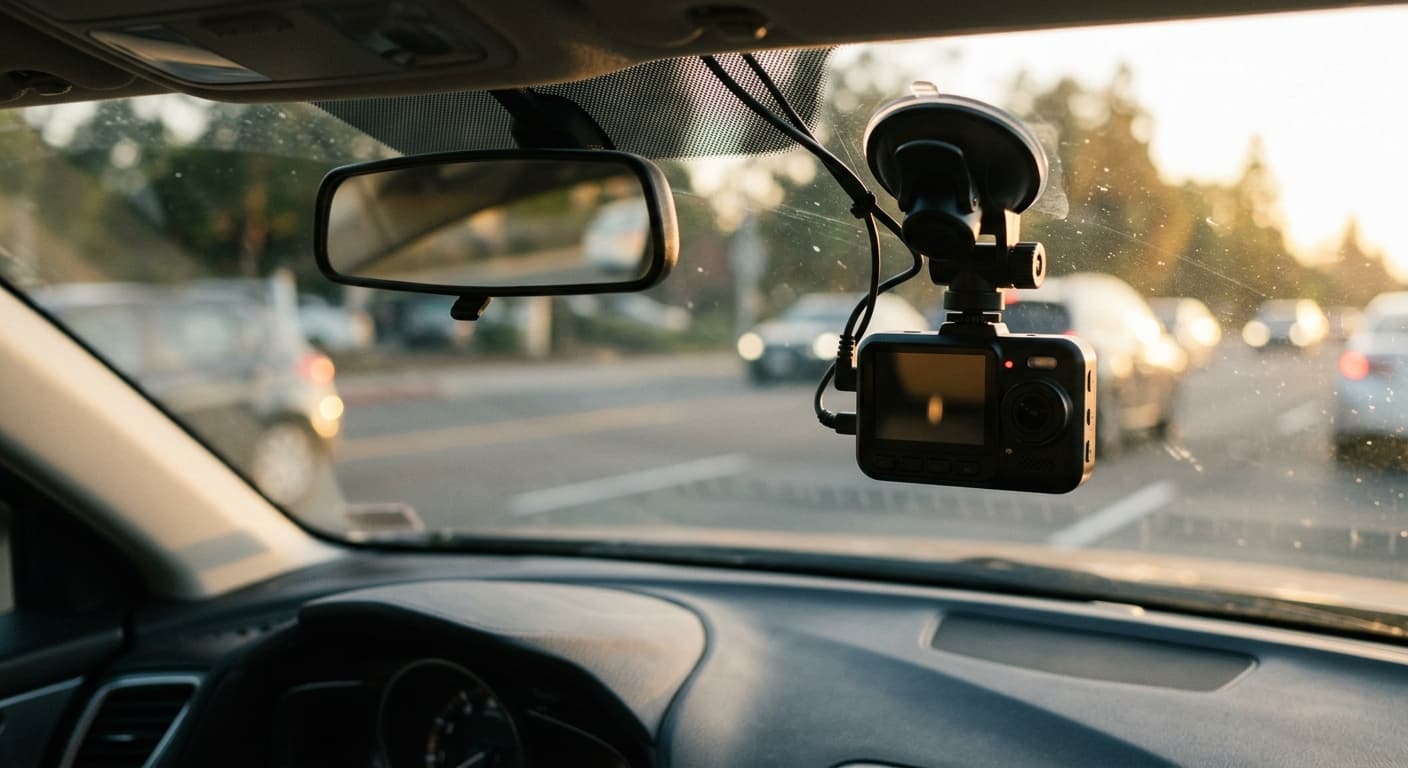
Dashcams are legal in Hawaii. As a one-party consent state under HRS 803-42, drivers may record audio inside their vehicle without notifying passengers. Hawaii does not have a statute specifically regulating windshield-mounted device placement, but drivers should still avoid mounting a device in a way that blocks the driver's view of the road.
Hawaii does not have a standalone dashcam law, but dashboard cameras are legal throughout the state. As a one-party consent state under HRS Section 803-42, Hawaii allows you to record conversations you participate in. This means a driver can use an audio-enabled dashcam without informing passengers.
However, Hawaii's separate privacy statute (HRS Section 711-1111) creates an additional layer of complexity. This law makes it a crime to record people in a "private place" without their consent. Whether a vehicle interior qualifies as a private place depends on the circumstances, adding nuance that dashcam users should understand.
Hawaii Dashcam Legality Overview
Is It Legal to Use a Dashcam in Hawaii?
Yes. Hawaii law does not prohibit dashcams. Drivers across all Hawaiian islands use dashcams for accident documentation, insurance protection, and recording scenic drives.
Video-Only vs. Audio-Enabled Dashcams
| Feature | Legal Status in Hawaii |
|---|---|
| Video-only dashcam | Legal on public roads |
| Dashcam with audio (driver present) | Legal under one-party consent |
| Exterior audio on public roads | Legal (no privacy expectation) |
| Interior audio recording passengers | Legal under HRS 803-42; consider HRS 711-1111 |
Under the wiretapping statute (HRS 803-42), the driver's consent is sufficient for audio recording. The privacy statute (HRS 711-1111) could potentially apply if a vehicle interior is deemed a "private place" and the recording captures someone in circumstances where they would not expect to be observed. As a practical matter, a dashcam in the driver's own vehicle is unlikely to trigger the privacy statute, but drivers should be aware of this secondary law.
Windshield Mounting Rules in Hawaii
No Dedicated Windshield-Mount Statute
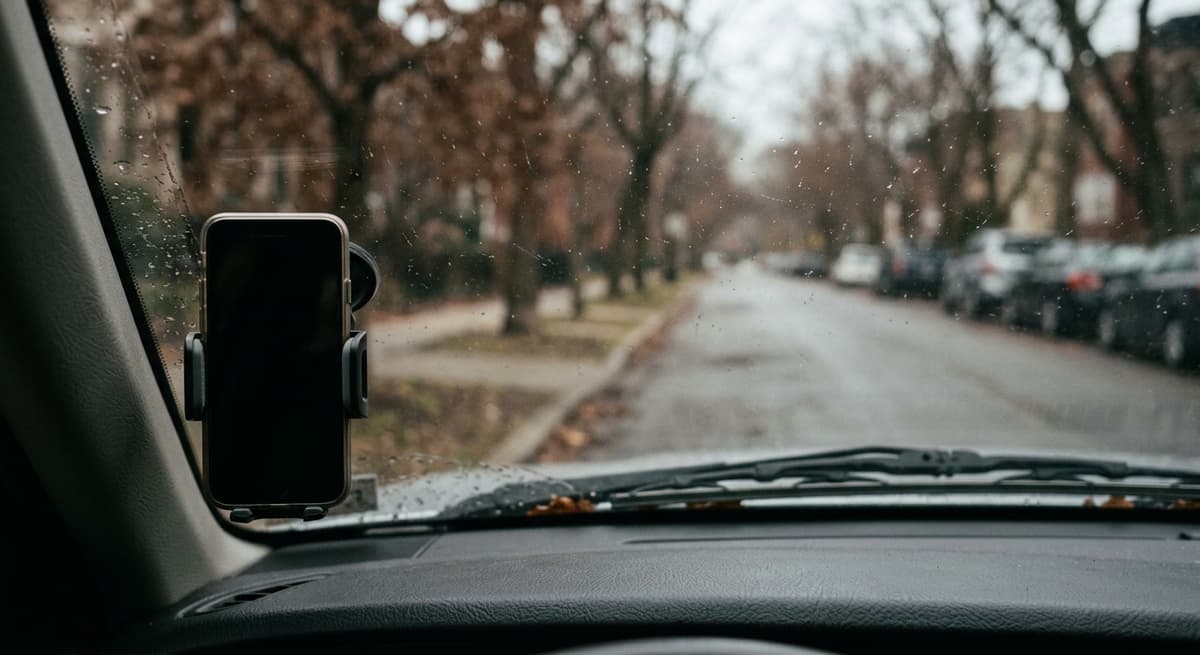
Hawaii does not have a codified statute that specifically regulates windshield-mounted devices like dashcams. The nearest related provisions are HRS Section 291-12 (inattention to driving) and HRS Section 291-21.5 (regulation of motor vehicle window tint), neither of which directly addresses dashcam placement. As general practice, and to avoid an inattentive-driving citation, mount a dashcam where it does not obstruct the driver's forward view.
Best Practices for Placement
Hawaii's tropical conditions and frequent rain make proper dashcam placement important:
- Behind the rearview mirror: Most common and safest placement
- Dashboard mount: Avoids windshield entirely
- Lower passenger-side corner: Keeps camera out of driver's view
- Avoid center placement: Most likely to draw a citation
- Consider heat-resistant dashcams, as Hawaii's tropical climate can cause high interior temperatures that damage electronics
Audio Recording and Consent
How HRS Section 803-42 Applies
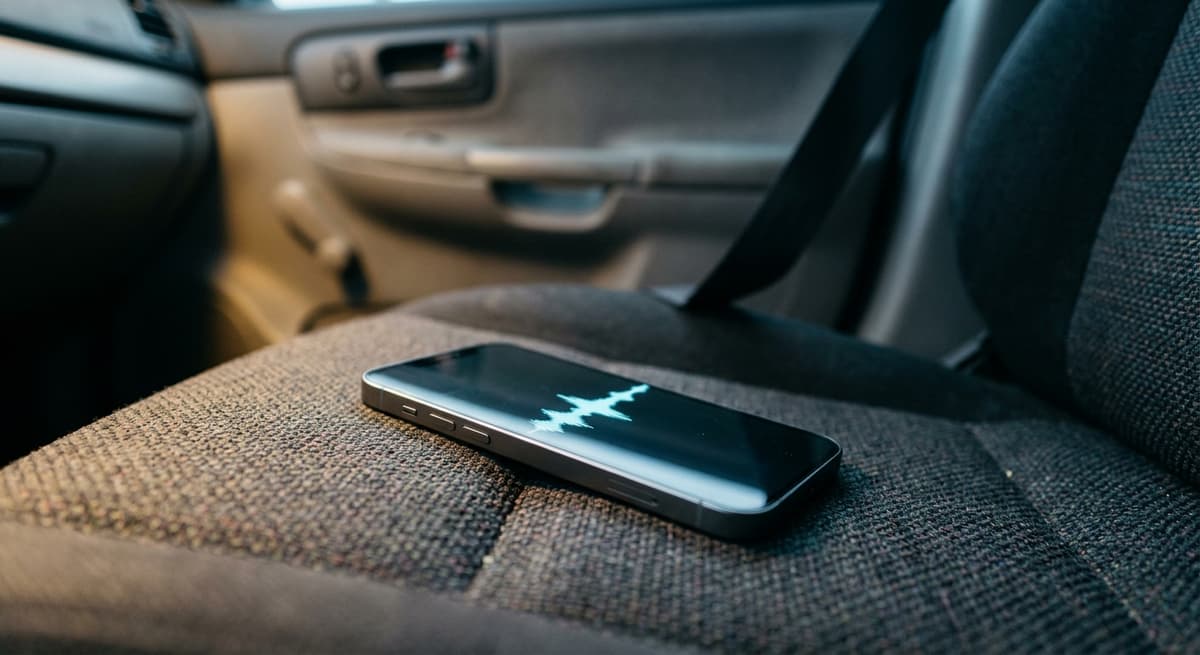
HRS Section 803-42 makes it illegal to intentionally intercept wire, oral, or electronic communications without the consent of at least one party. As the driver and a party to conversations in the vehicle, your consent satisfies this statute.
The Privacy Statute: HRS Section 711-1111
HRS Section 711-1111 addresses surveillance in private places. Under this statute, a person commits the offense of violation of privacy in the second degree if they install or use a device for observing, recording, or photographing events in a "private place" without the consent of the person being observed.
For dashcam purposes:
- A vehicle parked on a public road is not clearly a "private place"
- A vehicle in a private garage with closed doors might qualify
- The statute primarily targets voyeurism-type surveillance, not routine dashcam use
- Courts have not squarely addressed whether a vehicle interior is a "private place" under this statute
Rideshare and Taxi Drivers
Hawaii rideshare and taxi drivers can record under one-party consent. The Hawaii Public Utilities Commission regulates transportation network companies but does not specifically address dashcam recording. Posting a visible notice about recording is a best practice for professional drivers.
Using Dashcam Footage as Evidence
Accident Claims
Dashcam footage is valuable in Hawaii accident claims. Hawaii follows a modified comparative negligence system with a 51% bar, meaning you can recover damages as long as your fault does not exceed 50%. Dashcam video clearly establishing the other driver's fault can be critical.
To maximize evidentiary value:
- Enable date and time stamps
- Use high-resolution cameras to capture license plates
- Preserve original footage without editing
- Back up recordings promptly
Admissibility in Hawaii Courts
For dashcam footage to be admissible:
- Relevant to the case
- Authenticated as genuine and unaltered
- Proper chain of custody maintained
- Audio recorded under one-party consent is generally admissible
Law Enforcement
Hawaii law enforcement, including the Honolulu Police Department and county police departments, may request dashcam footage during investigations. You are not required to provide footage voluntarily, but a court order may compel production.
Criminal Penalties
HRS Section 803-42 Violations
Illegal wiretapping under HRS 803-42 is a Class C felony, one of the harshest penalties for recording violations in the country:
| Offense | Classification | Max Prison | Max Fine |
|---|---|---|---|
| Illegal interception | Class C Felony | 5 years | $10,000 |
Civil Liability Under HRS Section 803-48
Victims can sue under HRS Section 803-48 for:
- Actual damages
- Punitive damages
- Reasonable attorney fees and costs
Privacy Statute Penalties
Violating HRS 711-1111 (surveillance in a private place) is a misdemeanor, punishable by up to 1 year in jail and a $2,000 fine. Charges can escalate to a Class C felony under HRS 711-1110.9 only if intimate images are captured.
Commercial and Special Considerations
Fleet and Commercial Vehicles
Commercial vehicles operating on Hawaii's highways can use dashcams. The FMCSA does not mandate or prohibit them.
School Bus Cameras
Hawaii school districts may use cameras on school buses. The Hawaii Department of Education oversees public school transportation safety.
Parking Mode
Parking mode recording is generally legal on public streets. Recording in private parking areas without the property owner's knowledge may raise concerns under HRS 711-1111.
Federal Developments
Hawaii's election deepfake law, Act 191 SLH 2024, was permanently enjoined as facially unconstitutional in Babylon Bee LLC v. Lopez, No. 1:25-cv-00234 (D. Haw. Jan. 30, 2026) (Park, J.). The federal TAKE IT DOWN Act (effective May 19, 2026) addresses non-consensual intimate images. These federal developments do not change the rules for dashcam use in Hawaii but are part of the broader legal landscape around recordings and recorded content.
Explore More Hawaii Recording Laws
Audio Recording | Video Recording | Voyeurism Laws | Workplace Recording | Recording Police | Phone Call Recording | Security Cameras | Recording in Public | Landlord-Tenant Recording | Dashcam Laws | School Recording | Medical Recording
More Hawaii Recording Topics
More Hawaii Laws
Frequently Asked Questions
Are dashcams legal in Hawaii?
Yes. Hawaii does not prohibit dashcams. Both video-only and audio-enabled dashcams are legal on public roads. Under one-party consent (HRS Section 803-42), the driver can record audio without informing passengers.
Do I need to tell passengers my dashcam records audio in Hawaii?
No. Hawaii's one-party consent law allows you to record conversations you participate in without notification. However, posting a notice is a courteous practice.
Where should I mount my dashcam in Hawaii?
Mount your dashcam behind the rearview mirror or on the dashboard. Hawaii has no statute specifically regulating windshield-mounted devices, but avoid any placement that blocks your view of the road. Choose a heat-resistant model for Hawaii's tropical climate.
Can dashcam footage be used in Hawaii courts?
Yes. Dashcam footage is admissible if it is relevant, authentic, unaltered, and lawfully obtained. Audio recorded under one-party consent is generally admissible.
What are the penalties for illegal dashcam recording in Hawaii?
Illegal wiretapping is a Class C felony under HRS 803-42, carrying up to 5 years in prison and a $10,000 fine. This is among the harshest recording penalties in the United States.
Updates
Removed a fabricated citation to 'HRS 291-12.5,' a windshield-obstruction statute that does not exist in Hawaii law, and replaced the mounting guidance with an honest statement that Hawaii has no dashcam-mounting statute, plus general safety practice.
Independently fact-checked against the cited primary sources; governing law re-checked for recent changes
Governing law re-checked for recent changes
Reviewed and approved by an editor
The Law Behind This Article
This article rests on the statutory provisions below, held in our own legal record and retrieved from the official source. Tap a section to read the operative text.
Hawaii Revised Statutes, Chapter 803: ARRESTS, SEARCHES, SEARCH WARRANTS
§ 803-42Interception, access, and disclosure of wire, oral, or electronic communications, use of pen register, trap and trace device, and mobile tracking device prohibitedIn forcecited in 20 of our articles
(a) Except as otherwise specifically provided in this part, any person who: (1) Intentionally intercepts, endeavors to intercept, or procures any other person to intercept or endeavor to intercept, any wire, oral, or electronic communication; (2) Intentionally uses, endeavors to use, or procures any other person to use or endeavor to use any electronic, mechanical, or other device to intercept any wire, oral, or electronic communication when: (A) Such a device is affixed to, or otherwise transmits a signal through, a wire, cable, or other similar connection used in wire communication; or (B) Such a device transmits communications by radio, or interferes with the transmission of such communication; (3) Intentionally discloses, or endeavors to disclose, to any other person the contents of any wire, oral, or electronic communication, knowing or having reason to know that the information was obtained through the interception of a wire, oral, or electronic communication in violation of this part; (4) Intentionally uses, or endeavors to use, the contents of any wire, oral, or electronic communication, knowing or having reason to know that the information was obtained through the…
Official text (excerpt) · last checked 2026-08-28 · Read the full text in our law library · Verify at capitol.hawaii.gov
Cited in 14 court opinions in our collectionLatest citing opinion in our collection: 2026
In the courts (editorial summary, independently checked):State v. Lo (1983) held HRS 803-42(b)(3) barred police from secretly installing recording devices in a hotel room even though one participant consented, and suppressed the evidence. State v. Lee (1984) held a recorder worn by a consenting participant is not an installation in a private place, so no violation.
Opinions citing this section in our collection:
- State v. Lo (Hawaii Supreme Court 1983, 66 Haw. 653)✓Agents wired a hotel room and recorded a doctor lured there by a cooperating patient; the Hawaii Supreme Court held the statute bars installing a recording device in any private place without the consent of those entitled to privacy, and affirmed suppression.
- State v. Okubo (Hawaii Supreme Court 1984, 67 Haw. 197)✓Police recorded roughly forty bribery conversations using body recorders and phone taps with the participating officers' consent; the Hawaii Supreme Court found the consensual monitoring valid under the statute and the state constitution.
- State v. Lee (Hawaii Supreme Court 1984, 67 Haw. 307)✓An officer posing as a patient wore a recorder into a doctor's private office; the Hawaii Supreme Court held a device worn on a participant's body is not an installation in a private place, so the statute was not violated, distinguishing Lo.
Identified automatically from the court opinions citing this section — not a ranking of which case controls.
Also relied on in: Hawaii Recording Laws (2026): Hybrid Consent State Rules, Hawaii Audio Recording Laws: One-Party Consent Rules and Penalties, Hawaii Smart Glasses Recording Laws (2026)
§ 803-48Recovery of civil damages authorizedIn forcecited in 13 of our articles
Any person whose wire, oral, or electronic communication is accessed, intercepted, disclosed, or used in violation of this part shall[:] (1) Have a civil cause of action against any person who accesses, intercepts, discloses, or uses, or procures any other person to access, intercept, disclose, or use the communications[;] and (2) Be entitled to recover from any such person: (A) The greater of[:] (i) The sum of the actual damages suffered by the plaintiff and any profits made by the violator as a result of the violation[;] or (ii) Statutory damages of the greater of $100 a day for each day of violation or $10,000; (B) Punitive damages, where appropriate; and (C) A reasonable attorney's fee and other litigation costs reasonably incurred. The aggrieved person may also seek and be awarded such preliminary, and other equitable or declaratory relief as may be appropriate. A good faith reliance on a court order shall constitute a complete defense to any civil action brought under this part. [L 1978, c 218, pt of §2; am L 1986, c 303, §8; am L 1989, c 164, §10; am L 2006, c 200, pt of §4]
Official text (excerpt) · last checked 2026-07-30 · Read the full text in our law library · Verify at capitol.hawaii.gov
Also relied on in: Hawaii AI Meeting Recording Laws (2026), Hawaii Surveillance Camera Laws: Complete 2026 Guide, Hawaii Landlord-Tenant Recording Laws: Surveillance and Privacy Rights
Hawaii Revised Statutes, Chapter 711: OFFENSES AGAINST PUBLIC ORDER
§ 711-1111Violation of privacy in the second degreeIn forcecited in 19 of our articles
(1) A person commits the offense of violation of privacy in the second degree if, except in the execution of a public duty or as authorized by law, the person intentionally: (a) Trespasses on property for the purpose of subjecting anyone to eavesdropping or other surveillance in a private place; (b) Peers or peeps into a window or other opening of a dwelling or other structure adapted for sojourn or overnight accommodations for the purpose of spying on the occupant thereof or invading the privacy of another person with a lewd or unlawful purpose, under circumstances in which a reasonable person in the dwelling or other structure would not expect to be observed; (c) Trespasses on property for the sexual gratification of the actor; (d) Installs or uses, or both, in any private place, without consent of the person or persons entitled to privacy therein, any means or device for observing, recording, amplifying, or broadcasting sounds or events in that place other than another person in a stage of undress or sexual activity; provided that this paragraph shall not prohibit a person from making a video or audio recording or taking a photograph of a law enforcement officer while the…
Official text (excerpt) · last checked 2026-08-31 · Read the full text in our law library · Verify at capitol.hawaii.gov
Cited in 10 court opinions in our collectionLatest citing opinion in our collection: 2026
In the courts (editorial summary, independently checked):Hawaii decisions have construed HRS 711-1111 mainly alongside neighboring statutes. State v. Kaakimaka (2026) read subsections (1)(d) and (1)(e) as an inside and outside pair while construing the first-degree offense. State v. Lee (1984) treated 711-1111(1) as drawn from Model Penal Code 250.12 in reading the wiretap statute.
Opinions citing this section in our collection:
- State v. Lee (Hawaii Supreme Court 1984, 67 Haw. 307)✓An undercover officer wearing a recorder taped conversations in a doctor's private office; construing the wiretap consent provision drawn from HRS 711-1111(1)(b) and (c), the court held a body-worn device is not an "installation" in a private place, so the tapes were admissible.
- State v. Kaakimaka (Hawaii Supreme Court 2026)“…711-1110.9 and second degree violation of privacy under HRS § 711-1111 (2014 & Supp. 2025) convinces me that…”
- State v. Lester (Hawaii Supreme Court 1982, 64 Haw. 659)“…The Code provision covering wiretapping and eavesdropping, HRS § 711-1111, permits "consensual eavesdropping".…”
Identified automatically from the court opinions citing this section — not a ranking of which case controls.
Also relied on in: Hawaii Medical Recording Laws: Patient Rights, HIPAA, and Consent Rules (2026), Hawaii Phone Call Recording Laws: One-Party Consent Rules for Calls, Hawaii Laws on Recording in Public: Your Rights in Public Spaces
Search our full record of US law — 2.1 million sections, every state + federal →
Sources and References
- HRS Section 803-42 - Interception of Communications(capitol.hawaii.gov).gov
- HRS Section 711-1111 - Violation of Privacy in the Second Degree(capitol.hawaii.gov).gov
- HRS Section 803-48 - Civil Liability(capitol.hawaii.gov).gov