
United Kingdom
Squatters' Rights in the UK: England, Wales and Scotland Explained
Independently fact-checked against primary sources (last audited August 20, 2026). · 4 primary sources cited on this page. How we verify our legal content

Squatting in a residential building is a criminal offence in England and Wales, punishable by up to 6 months in prison, a £5,000 fine or both. Squatting in commercial premises is not, by itself, a crime. Scotland has criminalised squatting since 1865, but only as a fine-only offence. Northern Ireland has its own separate trespass rules, not covered here.
Is squatting illegal in England and Wales?
Squatting in a residential building is a crime in England and Wales under section 144 of the Legal Aid, Sentencing and Punishment of Offenders Act 2012 (LASPO). The offence applies where a person is in a residential building as a trespasser having entered as a trespasser, knows or ought to know they are a trespasser, and is living there or intends to live there for any period.
Squatting in a non-residential (commercial) building is different. gov.uk states plainly that "simply being on another person's non-residential property without their permission is not usually a crime." The distinction turns on whether the building is "residential," which the Act defines as one designed or adapted, before the time of entry, for use as a place to live. An empty office, shop or warehouse falls outside section 144 for that reason alone.
The section 144 offence in detail
Section 144(3) defines "building" broadly, covering any structure or part of a structure, including a temporary or moveable structure, so a residential building does not need to be a conventional house. Section 144(4) closes a loophole: a person who takes their "right" to occupy from a trespasser, or who has that trespasser's permission, is still a trespasser themselves. Sub-letting from a squatter does not create a lawful tenancy.
The penalty: 6 months, not 51 weeks
The Act's text at section 144(5) sets a maximum of imprisonment for a term not exceeding 51 weeks, a fine, or both. In practice, that 51-week figure is not yet the operative maximum. Section 144(6) provides that until a separate provision of the Criminal Justice Act 2003 (which would raise magistrates' court sentencing powers generally) comes into force, "51 weeks" is read as 6 months. That provision has never been brought into force, which is why gov.uk's own current guidance still states the penalty as "6 months in prison, a £5,000 fine or both." Use that figure, attributed to gov.uk, rather than the 51-week figure printed in the Act's text.
The holdover-tenant carve-out
Section 144(2) makes clear the offence does not apply to someone who is holding over after their lease or licence has ended, even if they temporarily leave and come back. In other words, section 144 is not a tool for evicting a tenant who has simply stayed past the end of their tenancy. That situation is a civil matter, handled through the ordinary eviction process, not a criminal squatting case.
Commercial and non-residential premises: the civil route
Because merely occupying a non-residential building is not a crime, an owner dealing with squatters in commercial premises, or any premises where section 144 does not apply, generally needs to use the civil courts. Police can intervene if squatters commit separate offences while inside, such as criminal damage, theft, unauthorised use of utilities, fly-tipping, or refusing to leave once a court has ordered them to.

Interim Possession Orders (IPOs)
For a faster civil remedy, an owner can apply for an Interim Possession Order (IPO). Per gov.uk's guidance:
- The application must be made within 28 days of the owner discovering the squatting.
- The application is made at the local county court, which confirms the claim and provides documents for the owner to serve on the squatters within 48 hours.
- Once served, squatters commit an offence, and can be sent to prison, if they do not leave within 24 hours of service, or if they return to the property within 12 months.
- An IPO only provides interim relief. To recover the property permanently, the owner still has to bring an ordinary claim for possession.
- An IPO cannot be used where the owner is also claiming damages (an ordinary possession claim covers that instead), or where the occupiers are former tenants, sub-tenants or licensees rather than trespassers. A landlord dealing with an overstaying tenant should use the eviction process, not an IPO.
If more than 28 days have passed since the owner discovered the squatting, an ordinary claim for possession is used instead of an IPO.
Squatting and adverse possession are two separate tracks
Long-term, unresolved squatting can eventually lead to a civil adverse possession claim, where a squatter who has occupied land for long enough (measured in years, and with stricter conditions for registered land) may be able to claim legal title. That is a wholly separate legal track from the criminal offence under section 144: a squatter can, in principle, be prosecuted under section 144 and still be accruing time toward an adverse possession claim if never actually removed from the property. For the detail on how that claim works and the qualifying periods involved, see adverse possession.
Scotland: criminal since 1865, but a much lighter penalty
Scotland treats squatting differently from England and Wales, both in its legal basis and in how severely it is punished.

Under section 3(1) of the Trespass (Scotland) Act 1865, it is an offence to lodge in any premises, or to occupy or encamp on private land, without the consent of the owner or legal occupier. This Act has never been repealed and remains the operative basis for criminalising unauthorised occupation in Scotland. Section 3(2), added later, carves out anyone exercising statutory access rights under the Land Reform (Scotland) Act 2003, Scotland's "right to roam" legislation, so lawful access-rights walkers and campers are not caught by the offence.
The key difference from England and Wales is the penalty. Under section 4 of the 1865 Act, the maximum penalty is a fine not exceeding level 1 on the standard scale (currently £200). There is no prison sentence available under this offence at all, in sharp contrast to the up-to-6-months custodial penalty that can apply in England and Wales under section 144. Prosecution is brought by the procurator fiscal and, under section 5, must be started within one month of the offence, a notably short window.
Scotland's practical route for removing squatters from a property through the civil courts was not confirmed against a primary procedural source for this page, so it is not described here in specific terms; a property owner in Scotland facing a squatting situation should raise it with a solicitor or the sheriff court rather than relying on a generic process description.
Northern Ireland
Northern Ireland has its own trespass and property law, separate from both the England and Wales regime and the Scottish regime described above. This page does not cover Northern Ireland; a property owner there should not assume either the LASPO section 144 offence or the Trespass (Scotland) Act 1865 applies.
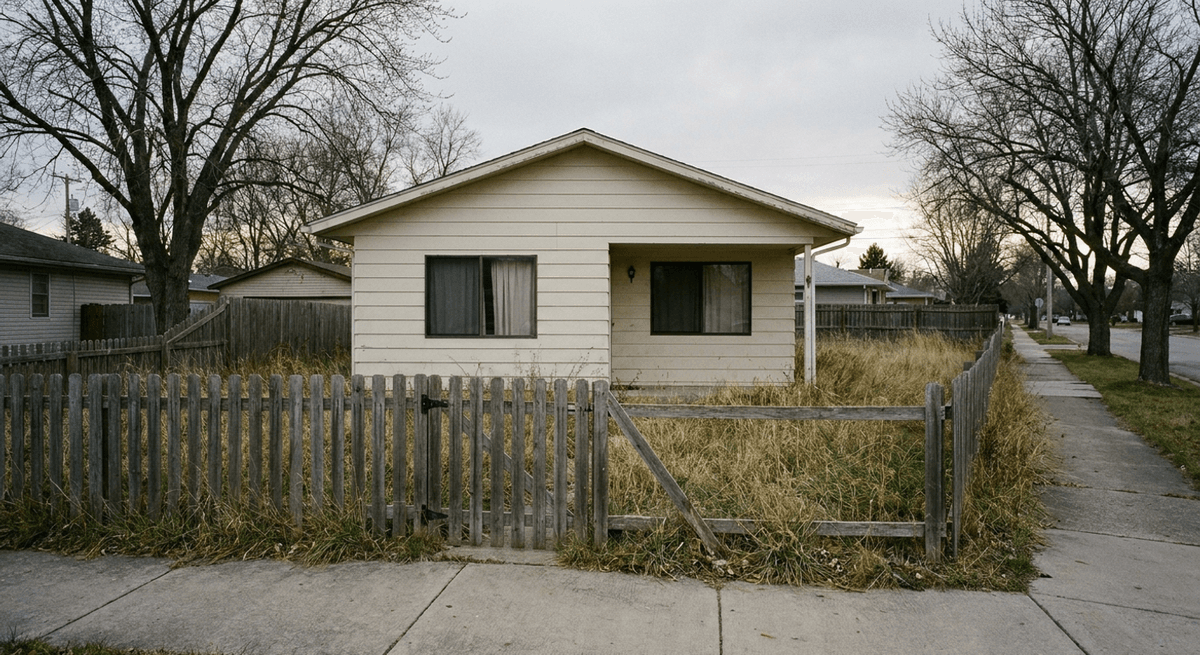
This page describes the general legal position on squatting in England, Wales and Scotland as of August 2026, based on the current text of LASPO 2012, the Trespass (Scotland) Act 1865, and gov.uk's own guidance. It is general legal information, not legal advice on a specific property or situation. For a claim to legal title after long-term occupation, see adverse possession; for removing an overstaying tenant, see the eviction process.
Frequently Asked Questions
Can squatters really claim ownership of my house in the UK?
Not simply by moving in. Long-term unresolved occupation can eventually support a civil adverse possession claim, which has its own qualifying periods and conditions and is separate from the criminal offence of squatting. See our adverse possession guide for how that process works.
Is it illegal to squat in an empty commercial building in England?
Merely being present is not, by itself, a crime under gov.uk's guidance, because the section 144 offence only covers residential buildings. Police can still act if squatters commit other offences, such as criminal damage or theft, and an owner can apply for a civil Interim Possession Order to remove them.
What is the penalty for squatting in a house in England and Wales?
Under section 144 of LASPO 2012, and per gov.uk's current guidance, squatting in a residential building can lead to up to 6 months in prison, a £5,000 fine, or both.
Is squatting illegal in Scotland?
Yes, under section 3 of the Trespass (Scotland) Act 1865, but the maximum penalty is a fine only, currently up to £200 under level 1 of the standard scale. There is no prison sentence available under this particular offence, unlike the position in England and Wales.
Can I be prosecuted for squatting if I used to be a tenant at the property?
No. Section 144 of LASPO 2012 does not apply to someone holding over after their lease or licence has ended. A landlord in that situation needs to use the ordinary eviction process through the civil courts, not the criminal squatting offence.
How quickly can I get squatters out of my commercial property?
An Interim Possession Order (IPO), applied for at the county court within 28 days of discovering the squatting, is the fastest civil route. Once served, squatters can face prosecution if they do not leave within 24 hours or if they return within 12 months, though the owner still needs an ordinary possession claim for final, permanent possession.
Does the squatting law apply in Northern Ireland the same way as England or Scotland?
No. Northern Ireland has its own separate trespass and property law. This guide covers England, Wales and Scotland only, and nothing here should be assumed to apply in Northern Ireland.
Updates
Independently fact-checked against the cited primary sources
The Law Behind This Article
This article rests on the statutory provisions below, held in our own legal record and retrieved from the official source. Tap a section to read the operative text.
Legal Aid, Sentencing and Punishment of Offenders Act 2012
s. 144Offence of squatting in a residential buildingIn forcecited in 2 of our articles
(1) A person commits an offence if— (a) the person is in a residential building as a trespasser having entered it as a trespasser, (b) the person knows or ought to know that he or she is a trespasser, and (c) the person is living in the building or intends to live there for any period. (2) The offence is not committed by a person holding over after the end of a lease or licence (even if the person leaves and re-enters the building). (3) For the purposes of this section— (a) “ building ” includes any structure or part of a structure (including a temporary or moveable structure), and (b) a building is “residential” if it is designed or adapted, before the time of entry, for use as a place to live. (4) For the purposes of this section the fact that a person derives title from a trespasser, or has the permission of a trespasser, does not prevent the person from being a trespasser. (5) A person convicted of an offence under this section is liable on summary conviction to imprisonment for a term not exceeding 51 weeks or a fine not exceeding level 5 on the standard scale (or both).
Official text (excerpt) · last checked 2026-08-14 · Read the full text in our law library · Verify at legislation.gov.uk
Also relied on in: Adverse Possession UK: Squatters' Rights Explained
Search our record of UK legislation — retrieved from legislation.gov.uk →
Sources and References
- Legal Aid, Sentencing and Punishment of Offenders Act 2012, s.144 (squatting in a residential building)(legislation.gov.uk).gov
- gov.uk, "Squatting and the law" guidance(gov.uk).gov
- Trespass (Scotland) Act 1865(legislation.gov.uk).gov
- GOV.UK: Squatting and the law - remove squatters (interim possession orders)(gov.uk).gov