
Switzerland
Drink Driving in Switzerland: Alkohol am Steuer Under Art. 91 SVG
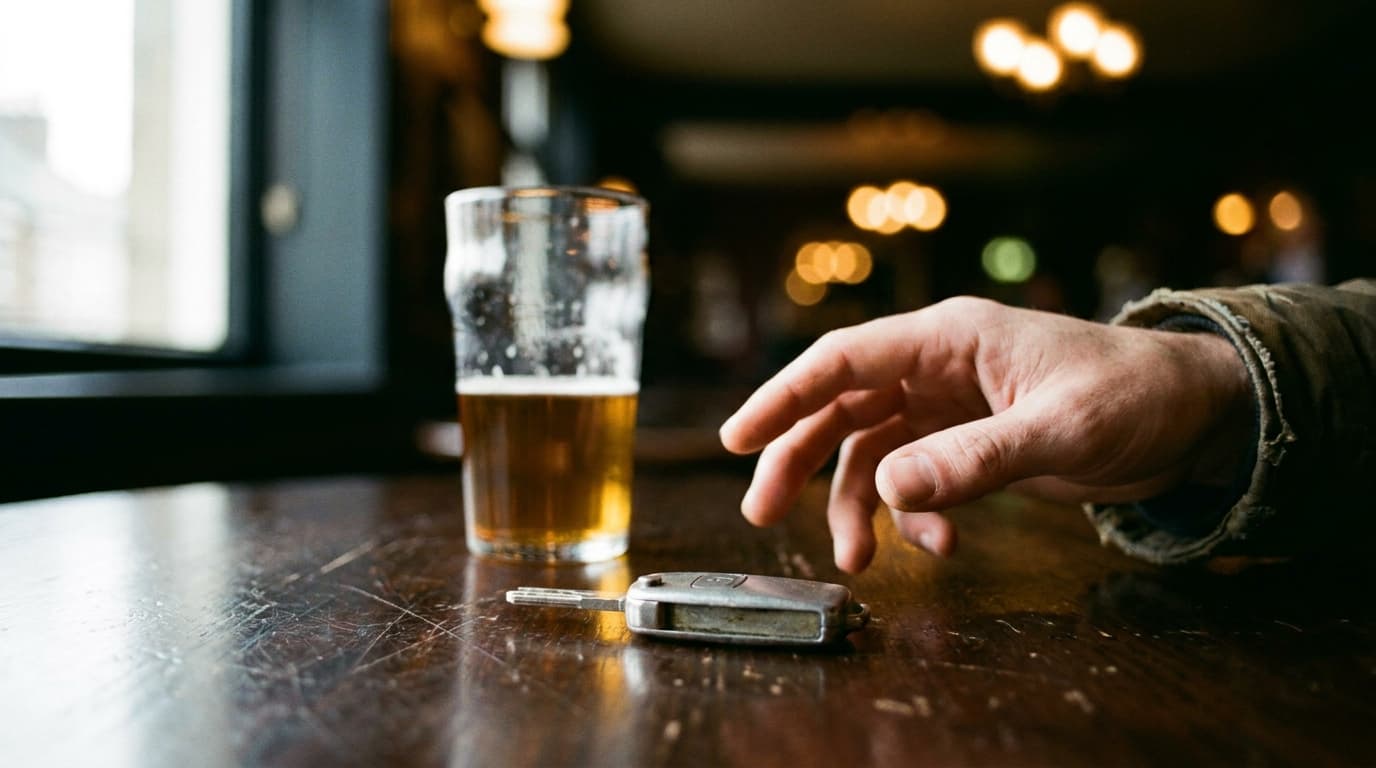
Alkohol am Steuer, drink driving, sits at the center of Swiss traffic enforcement, and searchers using that exact German phrase are usually trying to work out one of two things: what the actual blood alcohol limits are, or what happens after a roadside stop. Both questions have precise statutory answers under the SVG, the Strassenverkehrsgesetz, and a companion ordinance most drivers never hear about until it applies to them.
This page works through Art. 91 SVG, the offence structure that separates an ordinary drink driving case from a qualified one, the exact promille and milligram thresholds behind that split, and a separate zero tolerance rule that catches far more people than just novice and professional drivers. It also explains why a criminal fine or sentence is not the end of the matter.
It is part of our wider Swiss traffic law coverage, itself part of the broader guide to Swiss law.
Information last verified on 21 July 2026. This page provides general legal information about Swiss law and does not constitute legal advice in an individual case.
Two tiers, not three: how Art. 91 SVG is built
Art. 91 SVG is the offence most people mean when they search alkohol am steuer, and it is built as two tiers rather than the three some summaries suggest. Abs. 1 punishes the ordinary case with a Busse, a fine, and nothing more severe. Abs. 2 punishes a qualified case with a Freiheitsstrafe, a custodial sentence of up to three years, or a Geldstrafe, a monetary penalty.
The ordinary case under Abs. 1 covers three situations: driving a Motorfahrzeug while angetrunken, intoxicated, below the qualified concentration; breaching the separate zero tolerance prohibition in Art. 2a VRV without any other violation; or driving a non-motor vehicle, a bicycle is the obvious example, while unfit to do so. All three sit in the fine only tier.
The qualified case under Abs. 2 covers two situations instead: reaching the qualified breath or blood alcohol concentration, or being unfit to drive for a different reason entirely, medication, drugs or illness among them. Only these two situations carry the custodial or monetary penalty exposure.
The ordinary case: Angetrunkenheit at 0,5 promille
The word Angetrunkenheit describes the point Swiss law treats as proven alcohol impairment, and Art. 1 SR 741.13 fixes it at three alternative markers: a blood alcohol concentration of 0,5 promille or more, a breath alcohol concentration of 0,25 mg of alcohol or more per liter of breath, or an amount of alcohol in the body that would produce a blood concentration under the first marker. Any one of the three is sufficient on its own.
Reaching Angetrunkenheit puts a driver into Art. 91 Abs. 1 SVG, the fine only tier, as long as nothing else applies. It does not, on its own, expose a driver to the custodial or monetary penalty tier in Abs. 2. That escalation depends on crossing a second, higher line.
The qualified case: 0,8 promille and the escalation to Art. 91 Abs. 2
Art. 2 SR 741.13 defines the qualified concentration as a blood alcohol level of 0,8 promille or more, or a breath alcohol level of 0,4 mg per liter or more. Crossing either figure moves a case from Art. 91 Abs. 1 to Art. 91 Abs. 2 SVG, exposing the driver to a custodial sentence of up to three years or a monetary penalty instead of a fine alone.
A federal roadside enforcement page from ASTRA describes the same two figures in practical terms. Below 0,25 mg/l a driver may generally continue, subject to the zero tolerance exceptions below. Between 0,25 and 0,39 mg/l a driver can accept the breath result by signature or demand the evidentiary device, and at 0,4 mg/l or above the evidentiary breath test becomes mandatory.
The same ASTRA page confirms the conversion in plain language: what used to require a blood draw at 0,8 promille now corresponds to 0,4 mg/l on the evidentiary breath device, and 0,5 promille corresponds to 0,25 mg/l. Both thresholds sit inside a single ordinance, SR 741.13, that Art. 55 Abs. 6 SVG delegates the figures to.
SR 741.13 took effect on 1 October 2016 and, as of this page's verification date, has not been amended since. A driver relying on this page for the numeric line should still confirm nothing has changed between then and now, since a figure this consequential is worth reconfirming rather than assuming stays fixed forever.
Art. 2a VRV: a separate, zero tolerance rule for eight groups
A second and entirely separate rule sits outside SR 741.13, in Art. 2a of the VRV, the Verkehrsregelnverordnung. It does not lower the general 0,5 or 0,8 promille lines described above. It replaces them with a much stricter standalone threshold, 0,10 promille or 0,05 mg/l, for eight specific categories of driver, and in one case, passenger.
The eight categories, drawn directly from Art. 2a Abs. 1 VRV, are: licensed or cross border passenger transport by road; professional passenger transport more broadly; trucks, heavy semi trailers and tractors over 3,5 tonnes; the transport of hazardous goods requiring placarding; driving instructors while working; drivers on learner or practice drives; the accompanying person on a learner's drive; and holders of a Führerausweis auf Probe, the probationary licence, except on certain special category vehicles.
Two of those categories surprise people who assume this rule only concerns professional or novice drivers. A driving instructor sitting alongside a student during a lesson is covered, and so is the ordinary adult accompanying someone practicing on a learner's permit, even though neither of them is the one being tested or paid to drive commercially. Anyone in either role should treat the zero tolerance line as their own, not just the learner's.
The 0,10 promille and 0,05 mg/l figures are written directly into Art. 2a Abs. 2 VRV itself, not borrowed from SR 741.13. That distinction matters for anyone trying to look the number up, since searching the general alcohol ordinance alone will not surface the zero tolerance figure. It lives in a different instrument entirely, reached through a different delegation chain running through Art. 31 Abs. 2bis and 2ter SVG.
What breaching the zero tolerance rule actually triggers
Breaching Art. 2a VRV by itself, with no other violation, is a fine only offence under Art. 91 Abs. 1 lit. b SVG. This is worth stating plainly, since it runs against the intuition that a special, stricter rule aimed at professional and learner drivers must also carry harsher criminal exposure. It does not, unless the driver independently also reaches the general qualified concentration described above, or is unfit to drive for some other reason.
The zero tolerance breach still matters administratively, even where it stays in the fine only tier criminally. On its own it is classified as a leichte Widerhandlung, a minor violation, for licence purposes under Art. 16a SVG, and combined with any other minor violation it can escalate to a mittelschwere Widerhandlung, a medium violation. Both classifications feed into the separate administrative process described below.
A worked example: two roadside readings, two different outcomes
Consider a driver stopped at a routine checkpoint who blows 0,30 mg/l. That figure sits above the 0,25 mg/l Angetrunkenheit line in Art. 1 SR 741.13, so the driver is legally intoxicated, but it sits well below the 0,4 mg/l qualified line in Art. 2. The case falls under Art. 91 Abs. 1 SVG, a fine, and nothing more severe on the criminal side.
Now consider a driving instructor, on duty, who blows 0,06 mg/l after a single drink at lunch. That figure is far below the general 0,25 mg/l Angetrunkenheit line and would not concern an ordinary driver at all. It exceeds the 0,05 mg/l zero tolerance line in Art. 2a VRV that applies specifically to driving instructors while working, so the instructor has still committed an offence under Art. 91 Abs. 1 lit. b SVG, even though an ordinary driver with the identical reading would have committed nothing.
Neither example predicts what an actual authority would do with a specific case, since individual circumstances, prior history and local practice all affect the outcome. They illustrate only how the thresholds themselves sort a reading into one tier of Art. 91 SVG or the other.
A criminal case is not the whole story
Art. 91 SVG sits in Titel V of the SVG, the Strafbestimmungen, the penal provisions. The licence withdrawal system sits in an entirely different part of the same statute, Titel II, and runs as its own administrative proceeding under Art. 16 SVG and following. Art. 16 Abs. 2 SVG makes the relationship explicit: a licence withdrawal or a formal warning follows a traffic violation for which the fixed penalty procedure is excluded, independent of whatever the criminal case does with the same conduct.
Practically, this means a driver who pays a fine, or is sentenced under Art. 91 Abs. 2 SVG, and treats the matter as closed can still receive a separate notice from the cantonal licence authority afterward. That authority runs its own assessment against the classification tiers explained in full on our licence withdrawal page, and it can withdraw a licence, or issue a formal warning, regardless of what happened on the criminal side.
This is the single most common misunderstanding readers bring to a drink driving search, assuming the criminal case is the whole story. It is one of two, and the administrative track usually matters more to daily life, since it is the one that decides whether a person can keep driving at all.
What this page does not predict
Nothing here should be read as predicting how a specific case will be classified, charged or resolved. The tier a real incident falls into depends on the actual measured concentration, whether any enumerated aggravating circumstance in Art. 91 SVG applies, and the driver's own prior record, none of which this general page can assess.
A person facing an actual drink driving matter, criminal or administrative, should treat the figures and structure above as background for understanding an official notice or professional advice, not as a substitute for either.
Frequently Asked Questions
What is the legal blood alcohol limit for driving in Switzerland?
Ordinary Angetrunkenheit starts at 0,5 promille or 0,25 mg/l of breath alcohol under Art. 1 SR 741.13. A separate qualified threshold of 0,8 promille or 0,4 mg/l, set out in Art. 2 of the same ordinance, escalates a case into the more serious tier of Art. 91 SVG.
What happens if I am caught driving at a qualified blood alcohol level in Switzerland?
Reaching 0,8 promille or 0,4 mg/l moves the case into Art. 91 Abs. 2 SVG, which carries a custodial sentence of up to three years or a monetary penalty, rather than the fine only tier that applies below that line.
Does the zero tolerance rule for alcohol apply to every driver in Switzerland?
No. The zero tolerance rule in Art. 2a VRV, set at 0,10 promille or 0,05 mg/l, applies only to eight specific categories, including professional and heavy vehicle drivers, driving instructors, learner drivers and the person accompanying a learner, not to drivers generally.
Can a driving instructor or a learner's accompanying passenger be caught by the zero tolerance rule?
Yes. Both are named directly in Art. 2a Abs. 1 VRV alongside professional and heavy vehicle drivers, so a driving instructor working with a student, or an adult accompanying someone on a learner's permit, is held to the stricter 0,10 promille line rather than the general limit.
Is breaching the zero tolerance alcohol rule automatically a more serious criminal offence?
Not automatically. A zero tolerance breach on its own is a fine only offence under Art. 91 Abs. 1 SVG, and only escalates into the custodial tier if the driver independently also reaches the general qualified concentration or is otherwise unfit to drive.
If I pay a fine for drink driving in Switzerland, is that the end of the matter?
Not necessarily. A criminal fine or sentence under Art. 91 SVG resolves only the criminal side. A separate administrative proceeding under Art. 16 SVG and following can still withdraw a driving licence for the same incident, and it runs independently of the criminal case.
Has the Swiss alcohol threshold ordinance changed recently?
No. SR 741.13 took effect on 1 October 2016 and, as of this page's last verification, has not been amended since, so the 0,5 and 0,8 promille figures remain the current standard.
Is riding a bicycle while intoxicated a criminal offence in Switzerland?
Yes. Art. 91 Abs. 1 lit. c SVG covers driving a non-motor vehicle, a bicycle among them, while unfit to drive, and the provision is not limited to unfitness caused by alcohol. It sits in the fine only tier alongside ordinary Angetrunkenheit and a standalone zero tolerance breach.
Sources and References
- Art. 91 SVG, Fahren in fahrunfähigem Zustand und Missachtung des Verbots, unter Alkoholeinfluss zu fahren(fedlex.admin.ch).gov
- Art. 16 Abs. 2 SVG, Entzug nach Widerhandlungen ausserhalb des Ordnungsbussenverfahrens(fedlex.admin.ch).gov
- Art. 55 Abs. 6 SVG, Delegation der Alkoholgrenzwerte an die Bundesversammlung(fedlex.admin.ch).gov
- Art. 1 SR 741.13, Angetrunkenheit(fedlex.admin.ch).gov
- Art. 2 SR 741.13, Qualifizierte Alkoholkonzentrationen(fedlex.admin.ch).gov
- Art. 2a Abs. 1 VRV, Verbot des Fahrens unter Alkoholeinfluss für acht Personengruppen(fedlex.admin.ch).gov
- Art. 2a Abs. 2 VRV, Alkoholeinfluss ab 0,10 Promille beziehungsweise 0,05 mg/l(fedlex.admin.ch).gov
- ASTRA, Atem-Alkoholkontrolle, häufige Fragen(astra.admin.ch).gov
- ASTRA, Alkoholkontrolle im Strassenverkehr(astra.admin.ch).gov
- Art. 16a SVG, leichte Widerhandlung(fedlex.admin.ch).gov