
New Hampshire
New Hampshire Laws on Recording Police
Independently fact-checked against primary sources (last audited August 22, 2026). · Reviewed by the RecordingLaw editorial team. · Law checked current as of August 22, 2026. · 7 primary sources cited on this page. How we verify our legal content
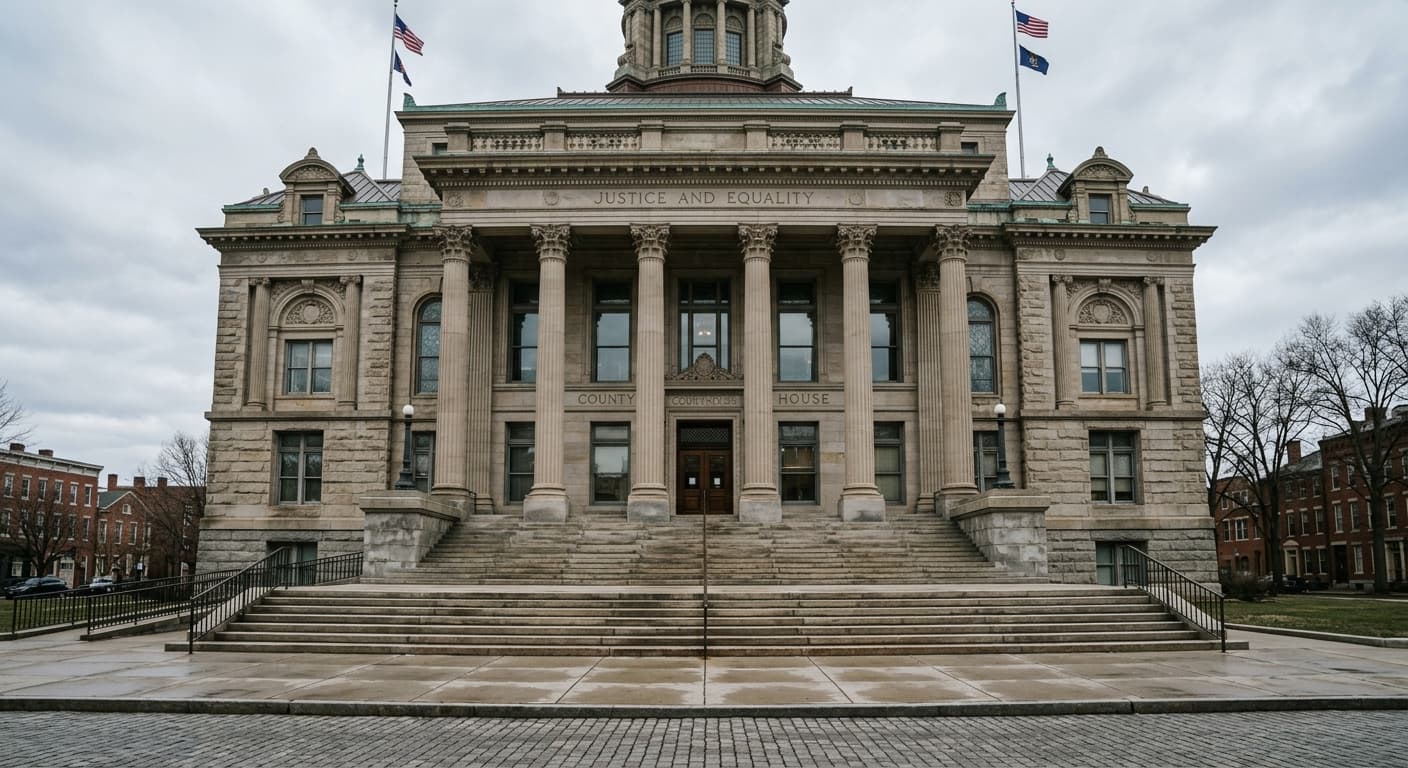
In New Hampshire, recording on-duty police officers in public is generally protected by the First Amendment. Although RSA 570-A:2 requires all-party consent for private communications, courts have held that officers performing public duties have no reasonable expectation of privacy, making such recordings constitutionally protected.
Recording police officers in New Hampshire involves a unique intersection of First Amendment rights, the state's strict all-party consent wiretapping law, and federal court precedent. While the Granite State generally requires consent from all parties before recording a conversation, constitutional protections and public accountability principles create important exceptions when it comes to documenting law enforcement activity.
This guide covers your rights when recording police, the legal framework that supports those rights, limitations you should be aware of, police body camera regulations, and what to do if an officer tells you to stop recording.
Your Constitutional Right to Record Police
First Amendment Protections
The First Amendment to the United States Constitution protects the right of citizens to record police officers performing their official duties in public. This right has been recognized by federal courts across the country, and it applies in New Hampshire.
The First Circuit Court of Appeals, which has jurisdiction over New Hampshire, issued a landmark ruling in Glik v. Cunniffe, 655 F.3d 78 (1st Cir. 2011). In that case, the court held that:
- Citizens have a First Amendment right to film police officers carrying out their duties in public
- This right extends to audio and video recording of police activity
- Officers who arrest or retaliate against people exercising this right may be held liable under 42 U.S.C. Section 1983 for violating civil rights
- The right to record is not limited to credentialed journalists but extends to all members of the public
This precedent is binding in New Hampshire. Police officers in the Granite State cannot lawfully order you to stop recording their public activities simply because you are recording.
How This Interacts With New Hampshire's All-Party Consent Law
New Hampshire's wiretapping statute (RSA 570-A:2) requires all-party consent for recording oral communications where the speaker has a reasonable expectation of privacy. The key question when recording police is whether the officer has such an expectation.
Courts have generally found that police officers performing public duties in public spaces do not have a reasonable expectation of privacy in their communications made during those duties. This means:
- Recording an officer conducting a traffic stop on a public road is generally protected
- Recording an officer making an arrest on a public sidewalk is generally protected
- Recording officers at a public protest or demonstration is generally protected
- Recording conversations between officers in a public setting where they could be overheard by passersby is generally protected
However, private conversations between officers conducted away from public view (such as inside a police station or in a private office) may still carry a reasonable expectation of privacy and be subject to the all-party consent rule.
Project Veritas and First Amendment Limits on RSA 570-A
The First Circuit extended First Amendment protection to SECRET recording of police in Project Veritas Action Fund v. Rollins, 982 F.3d 813 (1st Cir. 2020), which held that Massachusetts' all-party consent wiretapping statute, as applied to the secret, nonconsensual recording of police performing their duties in public, violated the First Amendment. Open recording of police was already protected under the earlier Glik line of cases; Rollins addressed the harder question of covert recording. Because the First Circuit governs both Massachusetts and New Hampshire federal courts, Rollins is controlling precedent in the U.S. District Court for the District of New Hampshire alongside Glik v. Cunniffe, 655 F.3d 78 (1st Cir. 2011). Any attempt to apply RSA 570-A to prosecute open OR secret public recording of police performing their duties is subject to First Amendment challenge under both decisions.
2024-2025 RSA 570-A Suppression Rulings
In State v. Clark, 2024 N.H. 64 (N.H. Nov. 13, 2024), the New Hampshire Supreme Court held that the suppression remedy under RSA 570-A:6 applies only to felony violations of RSA 570-A:2, I, not to misdemeanor participant recordings under RSA 570-A:2, I-a. In State v. Hersom, No. 2023-0352 (N.H. Jan. 24, 2025), the court held that the State must prove NH jurisdiction and willful mental state before the suppression framework applies.
Practical Guidelines for Recording Police

How to Record Safely and Legally
When recording police in New Hampshire, follow these guidelines to protect both your rights and your safety:
-
Record openly. While there is no legal requirement to announce your recording, open recording is less likely to provoke a confrontation and strengthens your legal position.
-
Maintain a safe distance. Stand far enough from the encounter that you do not interfere with police operations. A distance of 15 to 25 feet is generally reasonable, though circumstances vary.
-
Do not interfere with police activity. Under RSA 642:2, it is a misdemeanor to obstruct a government official, including police officers, in performing their duties. Recording alone is not interference, but physically blocking an officer, refusing to move when lawfully ordered, or inserting yourself into an active scene could be.
-
Do not touch officers or their equipment. Keep your hands visible and avoid any physical contact with officers, their vehicles, or their gear.
-
Remain calm and respectful. If an officer asks you to stop recording, calmly state that you believe you have a legal right to record. Do not argue or become confrontational.
-
Do not resist if detained or arrested. If an officer arrests you for recording, comply with the arrest and challenge it later through legal channels. Resisting arrest can result in additional charges.
What to Do If an Officer Orders You to Stop Recording
If a police officer in New Hampshire tells you to stop recording:
- Calmly state your rights. You may say something like "I believe the First Amendment protects my right to record police activity in public."
- Do not physically resist if the officer insists or attempts to take your device
- Do not delete any recordings at the officer's request. Doing so may destroy evidence of potential civil rights violations.
- Note the officer's name, badge number, and department as soon as safely possible
- File a complaint with the police department's internal affairs unit or civilian oversight board
- Consult a civil rights attorney about potential claims under 42 U.S.C. Section 1983
When Recording May Be Limited
Your right to record police is not absolute. Recording may be lawfully restricted when:
- You are interfering with police operations or obstructing an active scene
- You are on private property and the property owner or authorized person asks you to leave
- A court has issued a specific order limiting recording in a particular case or proceeding
- You are in a secure area of a police station, jail, or correctional facility where recording is prohibited for security reasons
- The recording would compromise an active undercover operation (though this is a narrow exception)
Recording at Public Meetings
The Right-to-Know Law
New Hampshire's Right-to-Know Law (RSA 91-A:2, II) provides a clear statutory right to record at public meetings of government bodies. This includes:
- State legislative sessions and committee hearings
- County commission meetings
- Municipal meetings including selectboard, city council, and town council
- School board meetings
- Police commission meetings and public hearings
- Planning and zoning board meetings
Under RSA 91-A:2, II, any person may use tape recorders, cameras, videotape equipment, and other recording devices at public meetings. Government bodies cannot prohibit this recording. This applies even if the meeting involves law enforcement officials, police budgets, or disciplinary matters discussed in public session.
The New Hampshire Attorney General's Office provides guidance on the Right-to-Know Law, including information about recording rights at public meetings.
Law Enforcement Recording Exceptions
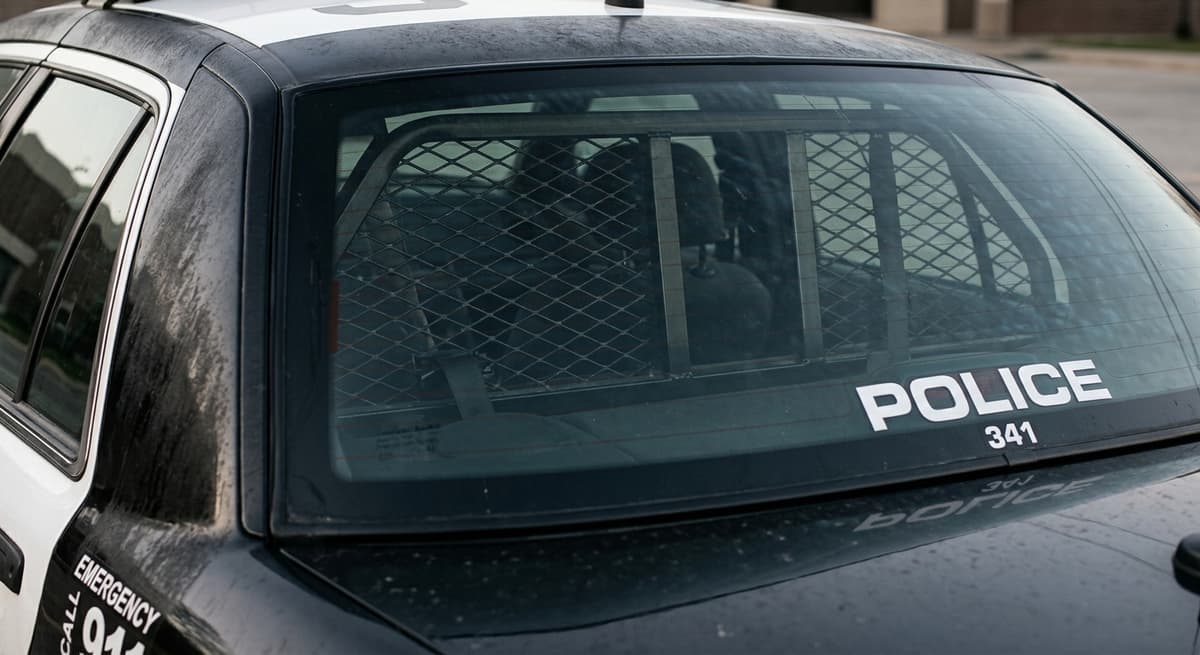
One-Party Consent for Officers (RSA 570-A:2, II(d))
While private citizens in New Hampshire must obtain all-party consent to record, law enforcement officers have a narrow exception under RSA 570-A:2, II(d). An officer may record with only one party's consent when all of the following conditions are met:
- The officer is acting in the ordinary course of duties
- The investigation involves organized crime, offenses listed in RSA 570-A, solid waste violations under RSA 149-M:9, or harassing/obscene telephone calls
- The officer is a party to the communication, or one party has given prior consent
- The Attorney General, Deputy Attorney General, or a designated Assistant Attorney General has determined there is reasonable suspicion that evidence of criminal conduct will result
- A written memorandum of the authorization and its basis is prepared within 72 hours
This exception is limited to specific categories of crime. It does not authorize police to make one-party consent recordings in routine investigations, traffic stops, or general patrol activities.
Warrant-Based Wiretapping
For investigations not covered by the one-party consent exception, New Hampshire law enforcement must obtain a court order (wiretap warrant) to intercept communications. The procedures for obtaining such orders are governed by both state law and the federal Wiretap Act (18 U.S.C. Sections 2510-2522).
Police Body Cameras and Dashcams
Body Camera Policies
New Hampshire enacted RSA 105-D, the Body Worn Cameras Act, establishing standards for departments that choose to deploy body-worn cameras. RSA 105-D does not mandate statewide adoption but sets requirements for policies, data retention, and public records access when cameras are used.
New Hampshire does not have a comprehensive statewide body camera mandate for all law enforcement agencies. Individual police departments establish their own body camera policies. However, several principles apply:
- Departments that use body cameras typically require officers to activate cameras during encounters with the public
- Body camera footage is generally considered a government record subject to the Right-to-Know Law (RSA 91-A)
- Footage may be withheld if it falls under recognized exemptions, such as active criminal investigations or internal personnel matters
- Officers who fail to activate their body cameras when required by department policy may face internal discipline
Dashcam Footage
Police dashcam footage follows similar rules:
- Dashcam recordings made during the performance of public duties are generally public records under RSA 91-A
- Requests for dashcam footage should be directed to the police department under the Right-to-Know Law
- Departments may redact or withhold portions that could compromise investigations or reveal confidential informants
Accessing Police Recordings
To request body camera or dashcam footage in New Hampshire:
- Submit a written Right-to-Know request under RSA 91-A to the relevant police department
- Identify the footage as specifically as possible (date, time, location, officers involved)
- Allow reasonable time for the department to review and respond
- If the request is denied, you may appeal to the New Hampshire Superior Court
- The NH Attorney General's Office provides guidance on the Right-to-Know request process
Penalties Related to Police Recording Issues
Penalties for Obstructing an Officer
Under RSA 642:2, obstructing a government official is a misdemeanor. If your recording activity crosses the line into interference:
| Offense | Classification | Maximum Penalty |
|---|---|---|
| Obstructing a government official (RSA 642:2) | Misdemeanor (Class B by default) | No jail, up to $1,200 fine (Class B); up to 1 year jail and $2,000 fine if the State elects Class A |
| Resisting arrest (RSA 642:2) | Misdemeanor (Class B by default) | No jail, up to $1,200 fine (Class B); up to 1 year jail and $2,000 fine if the State elects Class A |
Penalties for Police Violating Recording Rights
Officers who unlawfully arrest, detain, or retaliate against a person for recording may face:
- Internal discipline through the department's chain of command
- Civil rights lawsuits under 42 U.S.C. Section 1983 for violation of First Amendment rights
- Qualified immunity limitations: Courts have increasingly found that the right to record police is "clearly established," making it harder for officers to claim qualified immunity
Civil Remedies for Unlawful Interference
If a police officer in New Hampshire unlawfully interferes with your recording, you may have civil claims for:
- First Amendment violations under 42 U.S.C. Section 1983 (damages, injunctive relief, attorney fees)
- Fourth Amendment violations if your recording device was seized without a warrant
- State tort claims including false arrest, false imprisonment, and intentional infliction of emotional distress
Police Recording During Protests and Demonstrations
Your Rights at Protests
Recording police activity during protests and demonstrations receives strong First Amendment protection. In New Hampshire:
- You may record police from public sidewalks, parks, and other public spaces
- Officers cannot order you to stop recording unless you are actively interfering with their operations
- "Kettling" or corralling protesters to prevent them from recording is constitutionally suspect
- Mass confiscation of phones or cameras from protest participants raises serious Fourth Amendment concerns
Police Surveillance of Protesters
New Hampshire residents should also be aware that police may record protesters:
- Officers may use body cameras and dashcams during crowd control operations
- Surveillance cameras in public spaces may capture protest activity
- The Right-to-Know Law may provide access to police recordings of protest events
- First Amendment protections limit the government's ability to use surveillance to chill protected speech and assembly
More New Hampshire Recording Laws
Audio Recording | Video Recording | Voyeurism | Workplace Recording | Recording Police | Phone Call Recording | Security Cameras | Recording in Public | Landlord-Tenant | Dashcam Laws | Schools | Medical Recording
Back to New Hampshire Recording Laws
More New Hampshire Recording Topics
More New Hampshire Laws
Frequently Asked Questions
Can I legally record police officers in New Hampshire?
Yes. The First Amendment protects your right to record police officers performing their public duties, as confirmed by the First Circuit Court of Appeals in Glik v. Cunniffe (2011). Officers performing duties in public generally have no reasonable expectation of privacy. Record openly, maintain a safe distance, and do not interfere with police operations.
Can a police officer order me to stop recording in New Hampshire?
Generally no. Officers cannot order you to stop recording their public activities simply because you are recording. However, they may lawfully direct you to move if you are interfering with operations, obstructing a scene, or posing a safety risk. If ordered to stop recording, calmly state your rights, comply if detained, and challenge the action through legal channels afterward.
Can police in New Hampshire record me without my consent?
Law enforcement has a narrow one-party consent exception under RSA 570-A:2, II(d), but only for specific crimes (organized crime, wiretapping offenses, solid waste violations, harassing calls) and only with Attorney General authorization. For routine interactions, officers must follow the all-party consent rule. Body cameras and dashcams in public are generally permissible.
How do I get police body camera or dashcam footage in New Hampshire?
Submit a written Right-to-Know request under RSA 91-A to the police department that has the footage. Identify the recording as specifically as possible by date, time, and location. The department must respond within five business days. If denied, you can appeal to the New Hampshire Superior Court.
What happens if I am arrested for recording police in New Hampshire?
Do not resist the arrest. Comply with officers and challenge the arrest afterward through legal channels. An unlawful arrest for recording may give rise to civil rights claims under 42 U.S.C. Section 1983 for First Amendment violations. You may be entitled to damages, injunctive relief, and attorney fees. Consult a civil rights attorney promptly.
Updates
Corrected an inverted case holding: Project Veritas Action Fund v. Rollins protects secret recording of police, not open recording (open recording was already settled under Glik). Also fixed a repeated wrong-neighbor citation for the public-meeting recording right (RSA 91-A:2, II, not 91-A:2-a) and the TAKE IT DOWN Act's signing date.
Independently fact-checked against the cited primary sources; governing law re-checked for recent changes
Corrected the obstructing-a-government-official/resisting-arrest penalty rows to reflect RSA 625:9's Class-B-by-default rule (no jail, up to $1,200) instead of stating the Class A figures (1 year, $2,000) as a flat maximum.
Governing law re-checked for recent changes
Governing law re-checked for recent changes
Propagated State v. Clark (2024 N.H. 64, Nov. 13, 2024) and State v. Hersom (No. 2023-0352, Jan. 24, 2025) two-tier suppression framework from parent hub; confirmed RSA 570-A:2, I-a misdemeanor framing; updated federal overlay (NLRB GC Memo 25-07, [TAKE IT DOWN Act](/us-laws/take-it-down-act) May 19 2025); RSA 105-D body cam reference added where applicable.
Reviewed and approved by an editor
The Law Behind This Article
This article rests on the statutory provisions below, held in our own legal record and retrieved from the official source. Tap a section to read the operative text.
New Hampshire Revised Statutes Annotated, TITLE LVIII PUBLIC JUSTICE, CHAPTER 570-A WIRETAPPING AND EAVESDROPPING
§ 570-A:2Interception and Disclosure of Telecommunication or Oral Communications Prohibited.In forcecited in 25 of our articles
I. A person is guilty of a class B felony if, except as otherwise specifically provided in this chapter or without the consent of all parties to the communication, the person: (a) Wilfully intercepts, endeavors to intercept, or procures any other person to intercept or endeavor to intercept, any telecommunication or oral communication; (b) Wilfully uses, endeavors to use, or procures any other person to use or endeavor to use any electronic, mechanical, or other device to intercept any oral communication when: (1) Such device is affixed to, or otherwise transmits a signal through, a wire, cable, or other like connection used in telecommunication, or (2) Such device transmits communications by radio, or interferes with the transmission of such communication, or (3) Such use or endeavor to use (A) takes place on premises of any business or other commercial establishment, or (B) obtains or is for the purpose of obtaining information relating to the operations of any business or other commercial establishment; or (c) Wilfully discloses, or endeavors to disclose, to any other person the contents of any telecommunication or oral communication, knowing or having reason to know that…
Official text (excerpt) · last checked 2026-08-31 · Read the full text in our law library · Verify at gc.nh.gov
Cited in 35 court opinions in our collectionLatest citing opinion in our collection: 2025
In the courts (editorial summary, independently checked):New Hampshire courts read the felony offense in RSA 570-A:2, I as requiring more than intent to record. Fischer v. Hooper (1999) held wilfully means intentional or reckless disregard for the lawfulness of the conduct, so a good faith belief is a defense. State of New Hampshire v. Adam Mueller (2014) reversed on that mens rea.
Opinions citing this section in our collection:
- State v. Kilgus (Supreme Court of New Hampshire 1986, 128 N.H. 577)✓A murder-for-hire middleman agreed to wear a hidden recorder and got the defendant to confirm paying $1,000 to have a man killed; the court held the taping was lawful under RSA 570-A:2, II(d) because one party consented and homicide is an enumerated offense.
- Fischer v. Hooper (Supreme Court of New Hampshire 1999, 143 N.H. 585)✓A father secretly taped his ex-wife's calls with their daughter though a guardian ad litem had said both parents must agree; the court held wilfully in RSA 570-A:2, I requires intentional or reckless disregard for the lawfulness of the conduct, and reversed for a new trial.
- State of New Hampshire v. Adam Mueller (Supreme Court of New Hampshire 2014, 166 N.H. 65)✓A police-accountability activist recorded three phone calls with a police captain and two school officials without telling them; the court held that instructing the jury on purposely rather than the statute's wilfully was plain error and reversed his wiretapping convictions.
Identified automatically from the court opinions citing this section — not a ranking of which case controls.
Also relied on in: New Hampshire Security Camera Laws, New Hampshire Video Recording Laws, New Hampshire Voyeurism Laws
New Hampshire Revised Statutes Annotated, TITLE LXII CRIMINAL CODE, CHAPTER 625 PRELIMINARY
§ 625:9Classification of Crimes.In forcecited in 13 of our articles
I. The provisions of this section govern the classification of every offense, whether defined within this code or by any other statute. II. Every offense is either a felony, misdemeanor or violation. (a) Felonies and misdemeanors are crimes. (b) A violation does not constitute a crime and conviction of a violation shall not give rise to any disability or legal disadvantage based on conviction of a criminal offense. III. A felony is murder or a crime so designated by statute within or outside this code or a crime defined by statute outside of this code where the maximum penalty provided is imprisonment in excess of one year; provided, however, that a crime defined by statute outside of this code is a felony when committed by a corporation or an unincorporated association if the maximum fine therein provided is more than $200. (a) Felonies other than murder are either class A felonies or class B felonies when committed by an individual. Felonies committed by a corporation or an unincorporated association are unclassified.
Official text (excerpt) · last checked 2026-07-29 · Read the full text in our law library · Verify at gc.nh.gov
Cited in 65 court opinions in our collectionLatest citing opinion in our collection: 2026
Opinions citing this section in our collection:
- State v. Samuel Pennock (Supreme Court of New Hampshire 2015, 168 N.H. 294)“…shall not include incarceration or probation”); see also RSA 625:9, IV(b) (2007) (defining a class B misde…”
- State v. Morrill (Supreme Court of New Hampshire 1983, 123 N.H. 707)“…ed the sum of $500. In 1971, the legislature enacted RSA 625:9, under which every offense defined with…”
- State v. Woods (Supreme Court of New Hampshire 1995, 139 N.H. 399)“…es that his violation is not a “criminal” act because under RSA 625:9, 11(b) (1986), a violation is not a “cr…”
Identified automatically from the court opinions citing this section — not a ranking of which case controls.
Also relied on in: New Hampshire Audio Recording Laws, New Hampshire Dashcam Laws, New Hampshire Landlord-Tenant Recording Laws
New Hampshire Revised Statutes Annotated, TITLE LXII CRIMINAL CODE, CHAPTER 642 OBSTRUCTING GOVERNMENTAL OPERATIONS
§ 642:2Resisting Arrest or Detention.In force
A person is guilty of a misdemeanor when the person knowingly or purposely physically interferes with a person recognized to be a law enforcement official, including a probation or parole officer, seeking to effect an arrest or detention of the person or another regardless of whether there is a legal basis for the arrest. A person is guilty of a class B felony if the act of resisting arrest or detention causes serious bodily injury, as defined in RSA 625:11, VI, to another person. Verbal protestations alone shall not constitute resisting arrest or detention.
Official text (excerpt) · last checked 2026-07-29 · Read the full text in our law library · Verify at gc.nh.gov
Cited in 54 court opinions in our collectionLatest citing opinion in our collection: 2026
Opinions citing this section in our collection:
- State v. Beauchesne (Supreme Court of New Hampshire 2005, 151 N.H. 803)“…see RSA 318-B:26 (2004), and resisting detention, see RSA 642:2 (1996). On appeal, he challenges his co…”
- State v. Haas (Supreme Court of New Hampshire 1991, 134 N.H. 480)“…enses of simple assault, RSA 631:2-a, and resisting arrest, RSA 642:2. The defendant raises three issues on a…”
- State v. Kelley (Supreme Court of New Hampshire 2006, 153 N.H. 481)“…est or detention and one count of disorderly conduct. See RSA 642:2 (1996); RSA 644:2 (Supp. 2005). He move…”
Identified automatically from the court opinions citing this section — not a ranking of which case controls.
New Hampshire Revised Statutes Annotated, TITLE LXII CRIMINAL CODE, CHAPTER 651 SENTENCES
§ 651:2Sentences and Limitations.In forcecited in 14 of our articles
I. A person convicted of a felony or a Class A misdemeanor may be sentenced to imprisonment, probation, conditional or unconditional discharge, or a fine. II. If a sentence of imprisonment is imposed, the court shall fix the maximum thereof which is not to exceed: (a) Fifteen years for a class A felony, (b) Seven years for a class B felony, (c) One year for a class A misdemeanor, (d) Life imprisonment for murder in the second degree, and, in the case of a felony only, a minimum which is not to exceed 1/2 of the maximum, or if the maximum is life imprisonment, such minimum term as the court may order. II-a. A person convicted of murder in the first degree shall be sentenced as provided in RSA 630:1-a. II-b. A person convicted of a second or subsequent offense for the felonious use of a firearm, as provided in RSA 650-A:1, shall, in addition to any punishment provided for the underlying felony, be given a minimum mandatory sentence of 3 years imprisonment.
Official text (excerpt) · last checked 2026-07-29 · Read the full text in our law library · Verify at gc.nh.gov
Cited in 147 court opinions in our collectionLatest citing opinion in our collection: 2025
In the courts (editorial summary, independently checked):State v. Russell (2009) found plain error where the jury was never asked whether the deadly weapon was a firearm, as RSA 651:2, II-g requires, but affirmed the extended term because that evidence was overwhelming. State v. Elbert (1984) held the minimum and maximum term rule of RSA 651:2, II applies only if a defendant is parole eligible.
Opinions citing this section in our collection:
- State v. Kousounadis (Supreme Court of New Hampshire 2009, 159 N.H. 413)“…rder, see RSA 173-B:9, III (2002). He was sentenced under RSA 651:2, II-g (2007). We affirm in part, revers…”
- State v. Russell (Supreme Court of New Hampshire 2009, 159 N.H. 475)✓A jury convicted Russell of armed robbery but was never instructed it had to find the deadly weapon was a firearm; the court called the resulting RSA 651:2, II-g enhanced sentence plain error yet declined to disturb it given overwhelming, undisputed firearm evidence.
- Duquette v. Warden, New Hampshire State Prison (Supreme Court of New Hampshire 2007, 154 N.H. 737)✓A prisoner serving consecutive sexual assault terms argued no statute allowed them; the court found RSA 651:2 silent on consecutive sentences except its firearm provision in II-b, but held trial courts retain common law authority to impose them and rejected a vagueness challenge.
Identified automatically from the court opinions citing this section — not a ranking of which case controls.
Also relied on in: New Hampshire Medical Recording Laws, New Hampshire Phone Call Recording Laws, New Hampshire Laws on Recording in Public
United States Code Title 42
§ 1983Civil action for deprivation of rightsIn forcecited in 50 of our articles
Every person who, under color of any statute, ordinance, regulation, custom, or usage, of any State or Territory or the District of Columbia, subjects, or causes to be subjected, any citizen of the United States or other person within the jurisdiction thereof to the deprivation of any rights, privileges, or immunities secured by the Constitution and laws, shall be liable to the party injured in an action at law, suit in equity, or other proper proceeding for redress, except that in any action brought against a judicial officer for an act or omission taken in such officer’s judicial capacity, injunctive relief shall not be granted unless a declaratory decree was violated or declaratory relief was unavailable. For the purposes of this section, any Act of Congress applicable exclusively to the District of Columbia shall be considered to be a statute of the District of Columbia.
Official text (excerpt) · last checked 2026-09-16 · Read the full text in our law library · Verify at uscode.house.gov
Cited in 282,365 court opinions in our collectionLatest citing opinion in our collection: 2026
Opinions citing this section in our collection:
- Ashcroft v. Iqbal (Supreme Court of the United States 2009, 556 U.S. 662)“…its brought against state officials under Rev. Stat. §1979, 42 U. S. C. §1983.” Hartman, 547 U. S., at 254, n. 2. Cf.…”
- Celotex Corp. v. Catrett, Administratrix of the Estate of Catrett (Supreme Court of the United States 1986, 477 U.S. 317)“…policeman as she left. Petitioner brought an action under 42 U. S. C. § 1983 claiming that the refusal of service a…”
- Monell v. New York City Dept. of Social Servs. (Supreme Court of the United States 1978, 436 U.S. 658)“…decided less than two decades ago. Focusing new light on 42 U. S. C. § 1983 , that decision widened access to the f…”
Identified automatically from the court opinions citing this section — not a ranking of which case controls.
Also relied on in: Alabama Laws on Recording Police: Your Rights and Limits, Alaska Laws on Recording Police: Your Rights and Limits (2026), Arkansas Laws on Recording Police: Your Rights and Limits (2026)
Search our full record of US law — 2.1 million sections, every state + federal →
Sources and References
- RSA 570-A:2 - Interception Prohibited(gc.nh.gov).gov
- RSA 91-A - Right-to-Know Law(gc.nh.gov).gov
- RSA 642:2 - Obstructing Government(gc.nh.gov).gov
- NH AG - Right to Know(doj.nh.gov).gov
- NH Right-to-Know Presentation(governor.nh.gov).gov
- RSA 625:9 - Classification of Crimes(gc.nh.gov).gov
- 42 U.S.C. Section 1983 - Civil Action for Deprivation of Rights(law.cornell.edu)
- RSA 651:2 - Sentences and Limitations(gc.nh.gov).gov
- 18 U.S.C. Sections 2510-2522 - Federal Wiretap Act(law.cornell.edu)