
New Hampshire
New Hampshire Security Camera Laws
Independently fact-checked against primary sources (last audited August 22, 2026). · Reviewed by the RecordingLaw editorial team. · Law checked current as of August 22, 2026. · 8 primary sources cited on this page. How we verify our legal content
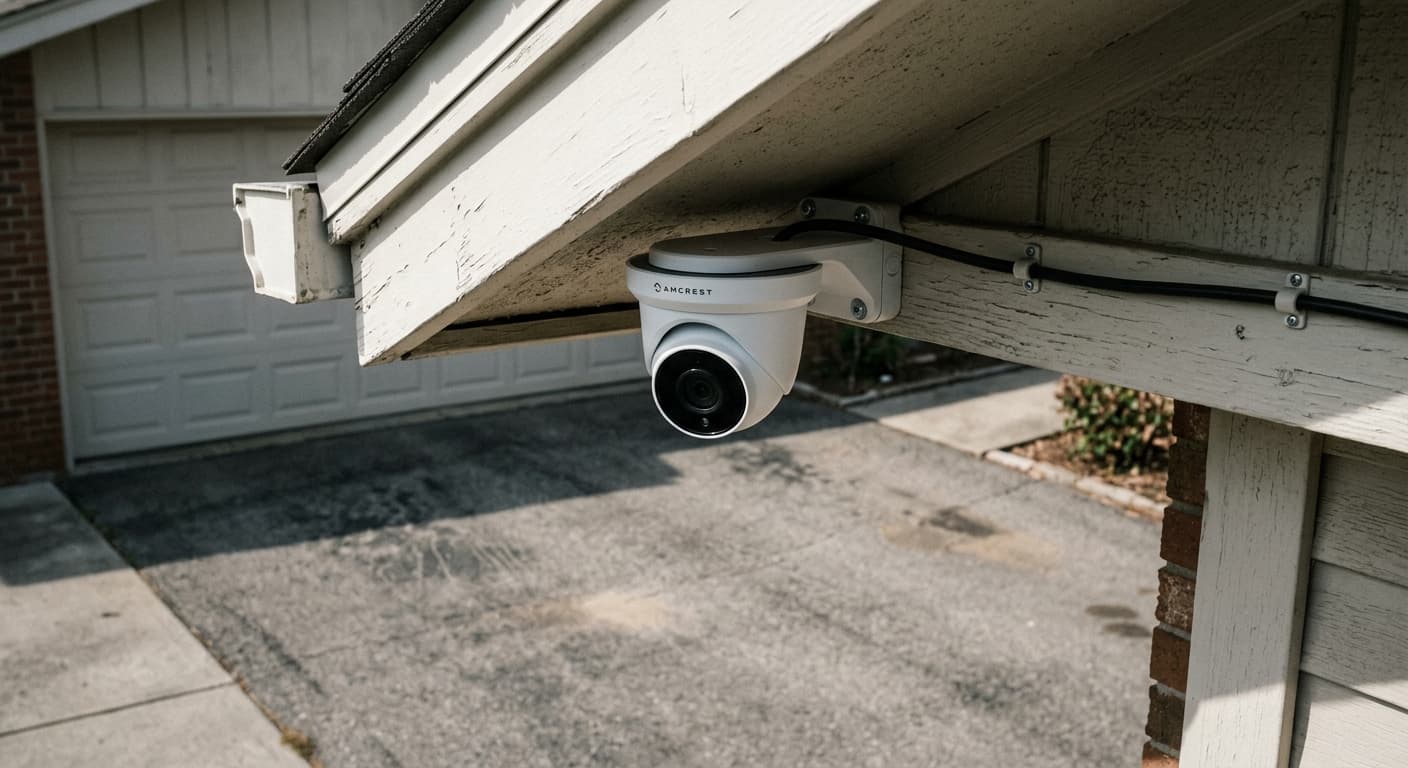
In New Hampshire, silent video security cameras are generally legal on your own property, but cameras that record audio require all-party consent under RSA 570-A:2. RSA 644:9 bars cameras from bathrooms, bedrooms, and other private spaces regardless of audio capability.
Security cameras are a standard part of modern life in New Hampshire, installed in homes, businesses, government buildings, and public spaces. However, the Granite State's strict all-party consent wiretapping law creates important legal considerations that security camera owners must understand. The legality of any particular camera installation depends largely on two factors: whether the camera records audio, and where it is placed.
This guide covers the legal framework for security cameras in New Hampshire, including residential systems, business surveillance, audio recording restrictions, privacy limitations, and best practices for compliance.
The Legal Framework for Security Cameras
Two Statutes That Apply
Security camera legality in New Hampshire is governed by two primary statutes:
RSA 570-A:2 (Wiretapping and Eavesdropping): This statute prohibits the interception of telecommunications, oral communications, and electronic communications without all-party consent. It applies to security cameras that record audio. If your camera captures conversations, the all-party consent requirement is triggered.
RSA 644:9 (Violation of Privacy): This statute prohibits installing recording devices in private places such as bathrooms, bedrooms, and changing rooms. It applies to all cameras regardless of whether they record audio.
Together, these statutes create a framework where the audio capability and placement of a security camera determine whether it is legal.
Silent Cameras vs. Audio-Enabled Cameras
| Camera Type | Legal in Public Areas? | Legal in Private Areas? | Consent Required? |
|---|---|---|---|
| Silent video only | Generally yes | No (RSA 644:9 applies) | No, unless in private place |
| Video with audio | Conditional | No | Yes, all-party consent (RSA 570-A:2) |
| Audio only | Conditional | No | Yes, all-party consent (RSA 570-A:2) |
The critical distinction is audio. A silent security camera in a retail store captures video of customers but does not intercept their conversations. This is generally lawful. The same camera with a microphone enabled captures oral communications and triggers the wiretapping statute.
Residential Security Cameras
Exterior Cameras
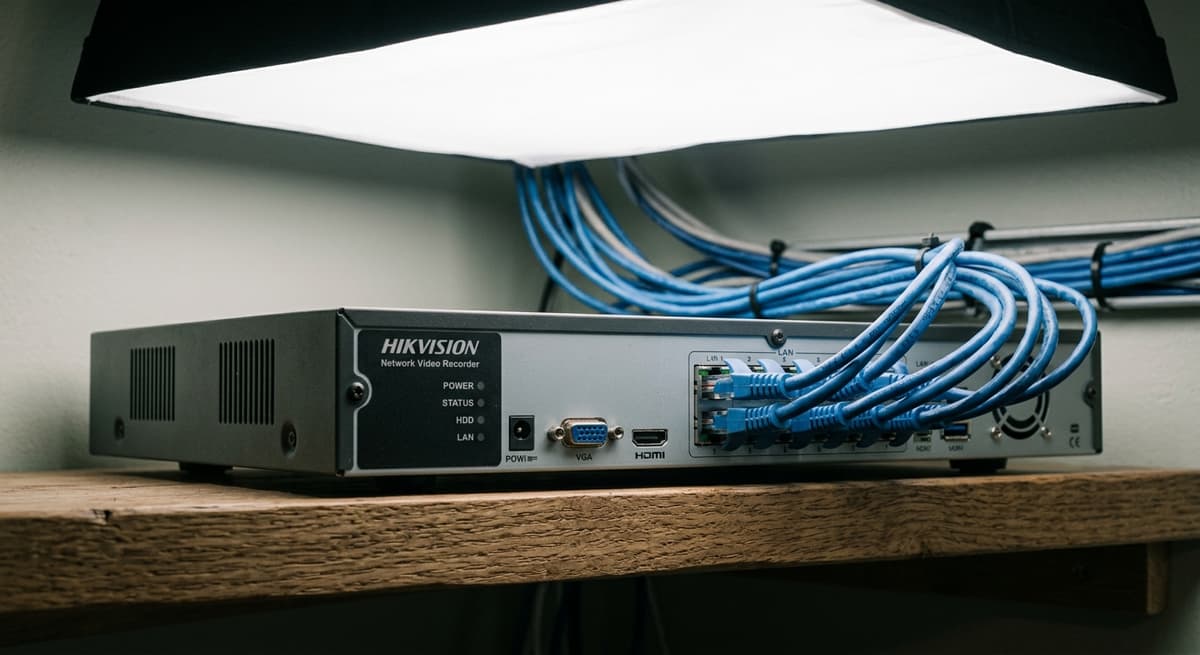
New Hampshire homeowners may install exterior security cameras on their own property. Common legal placements include:
- Front door and doorbell cameras (Ring, Nest, Arlo, etc.)
- Driveway cameras monitoring vehicle access
- Backyard cameras pointed at your own property
- Garage and shed cameras for security purposes
Audio considerations: Many modern doorbell cameras and outdoor security cameras have built-in microphones. If these devices capture conversations between visitors, neighbors, delivery workers, or passersby, the audio component may trigger the all-party consent requirement under RSA 570-A:2. The key question is whether the recorded individuals had a reasonable expectation of privacy in their conversations.
Conversations on your front porch between visitors who know a camera is present likely carry less expectation of privacy than a quiet conversation between neighbors at a property line who do not realize they are being recorded.
Best practices for exterior cameras:
- Consider disabling audio recording on exterior cameras to avoid wiretapping concerns
- Post visible signs indicating that video and/or audio recording is in progress
- Point cameras primarily at your own property rather than neighbors' homes or public sidewalks
- Review footage periodically and delete recordings you do not need
Interior Cameras
Homeowners may install interior security cameras with these limitations:
- Common areas (living rooms, kitchens, hallways) are generally permissible for silent video
- Bathrooms, bedrooms, and changing areas are off-limits under RSA 644:9, even in your own home when guests or household members have a reasonable expectation of privacy
- Audio-enabled interior cameras capture household conversations and may violate RSA 570-A:2 if occupants or visitors are not informed and do not consent
- Nanny cams are generally legal for silent video in common areas, but audio-enabled nanny cams raise consent issues
Neighbor Disputes
Security cameras can create friction between neighbors. In New Hampshire:
- You may point cameras at your own property, even if they incidentally capture a portion of a neighbor's property
- Deliberately aiming cameras at a neighbor's windows, backyard, or private areas may give rise to harassment claims or privacy tort actions
- Audio-enabled cameras that capture a neighbor's private conversations may violate RSA 570-A:2
- New Hampshire courts may consider whether camera placement constitutes harassment or intentional infliction of emotional distress
Business Security Cameras
Retail and Commercial Surveillance
Businesses in New Hampshire commonly use security cameras for theft prevention, employee safety, and liability protection. Lawful business camera use includes:
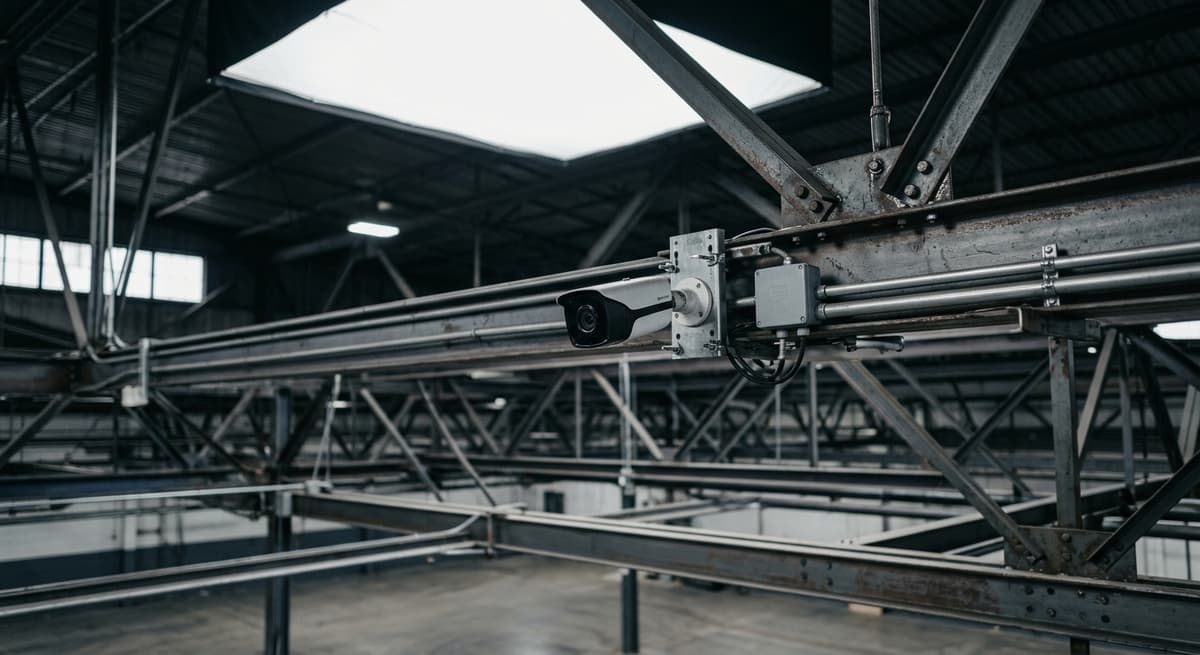
- Silent video cameras in retail areas, lobbies, hallways, warehouses, and parking lots
- Point-of-sale cameras monitoring cash registers and checkout areas
- Loading dock and inventory area cameras for loss prevention
- Parking lot cameras for vehicle and pedestrian safety
What businesses must avoid:
- Cameras in employee bathrooms, locker rooms, or changing areas (RSA 644:9)
- Audio-enabled cameras that capture employee conversations without all-party consent (RSA 570-A:2)
- Hidden cameras in areas where employees or customers have a reasonable expectation of privacy
- Cameras positioned to record private areas of neighboring properties
Employee Notification
While New Hampshire does not have a specific statute requiring employers to notify employees about video surveillance, best practices include:
- Written notification in employee handbooks or policy documents
- Visible signage in areas monitored by cameras
- Consent forms if cameras record audio
- Clear communication about the scope and purpose of surveillance
- Consistent application of surveillance policies across all employees
Audio in Business Settings
RSA 570-A:2 specifically prohibits using electronic, mechanical, or other devices to intercept oral communications in business or commercial settings. If a business wants to record audio through security cameras, it must:
- Inform all employees, customers, and visitors about audio recording
- Obtain consent from everyone whose conversations will be captured
- Post conspicuous notices about audio recording
- Provide individuals with the option to avoid recorded areas
In practice, most New Hampshire businesses disable audio on their security cameras to avoid these complications.
Government and Public Building Cameras
Surveillance in Government Buildings
Government agencies in New Hampshire may install security cameras in public buildings, subject to the same legal framework:
- Silent video in public areas of government buildings is generally permissible
- Audio recording in government buildings triggers RSA 570-A:2 consent requirements
- Cameras in private areas (restrooms, changing rooms) are prohibited under RSA 644:9
- The Right-to-Know Law (RSA 91-A) may make government security camera footage subject to public records requests
Public Space Surveillance
Municipal cameras in public spaces (parks, downtown areas, traffic intersections) present unique considerations:
- Silent video surveillance of public spaces does not typically raise wiretapping concerns
- Individuals in truly public spaces generally have a diminished expectation of privacy
- Audio capture in public spaces remains subject to RSA 570-A:2 if speakers have a reasonable expectation of privacy
- Traffic enforcement cameras are governed by specific traffic statutes
Smart Home Security Devices
Doorbell Cameras
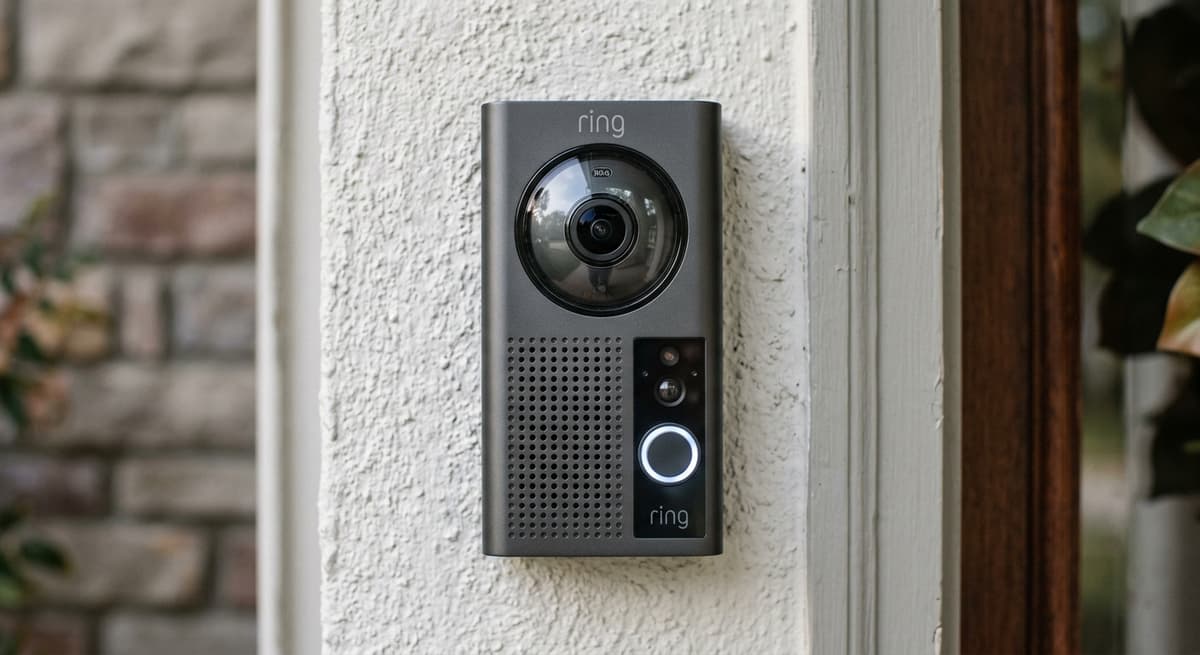
Internet-connected doorbell cameras (Ring, Nest Hello, Arlo, etc.) have become extremely common in New Hampshire. These devices raise specific legal considerations:
- Most doorbell cameras record both video and audio by default
- Audio recordings capture conversations between visitors, delivery workers, and passersby
- The all-party consent requirement under RSA 570-A:2 may apply to captured conversations
- Posting a visible sign stating that audio and video recording is in progress can reduce legal risk
- Consider disabling audio recording if legal compliance is a concern
- Sharing doorbell camera footage that includes private conversations could create additional liability
Smart Home Hubs and Voice Assistants
Devices like Amazon Echo, Google Home, and Apple HomePod are not traditional security cameras but do record audio. While these devices are primarily activated by voice commands:
- Recordings captured by these devices may be subject to RSA 570-A:2 if they capture private conversations
- Informing household members and guests about the presence and recording capabilities of these devices is a best practice
- Clips of accidental recordings shared publicly could create civil liability
Wireless Camera Systems
Wireless security cameras that connect to home Wi-Fi networks must comply with the same rules as wired systems. Additional considerations include:
- Cloud storage of footage should use encrypted connections
- Cybersecurity measures should protect against unauthorized access to camera feeds
- Neighbor notification is a best practice when wireless cameras may capture activity on adjacent properties
- Data retention policies should limit how long footage is stored
Penalties for Illegal Security Camera Use
Criminal Penalties
| Offense | Classification | Maximum Prison | Maximum Fine |
|---|---|---|---|
| Audio-enabled camera without consent, willful (RSA 570-A:2, I) | Class B Felony | 7 years | $4,000 |
| Audio-enabled camera, knowing participant (RSA 570-A:2, I-a) | Misdemeanor (Class B by default) | None (Class B); up to 1 year if State elects Class A | $1,200 (Class B); up to $2,000 (Class A) |
| Camera in private place (RSA 644:9) | Class A Misdemeanor | 1 year | $2,000 |
| Camera capturing intimate body parts (RSA 644:9, I(a)) | Class A Misdemeanor | 1 year | $2,000 |
2024-2025 Court Rulings
In State v. Clark, 2024 N.H. 64 (N.H. Nov. 13, 2024), the New Hampshire Supreme Court held that the suppression remedy under RSA 570-A:6 applies only to felony violations of RSA 570-A:2, I, not to misdemeanor participant recordings under RSA 570-A:2, I-a. In State v. Hersom, No. 2023-0352 (N.H. Jan. 24, 2025), the court held that the State must prove NH jurisdiction and willful mental state before the suppression framework applies. Audio-enabled camera use that violates only RSA 570-A:2, I-a is not subject to automatic suppression as evidence.
Civil Liability
Victims of illegal security camera surveillance may pursue:
- RSA 570-A:11 damages: $100 per day or $1,000 minimum, plus punitive damages and attorney fees (for audio recording violations)
- Privacy tort claims: Intrusion upon seclusion, public disclosure of private facts
- Trespass claims: If cameras are physically placed on another's property
- Harassment claims: If cameras are used to intimidate or stalk
Best Practices for Security Camera Compliance
For Homeowners
- Disable audio recording on outdoor cameras unless you have a specific need and plan to obtain consent
- Post visible signs indicating video surveillance is in progress
- Point cameras at your own property and minimize capture of neighboring properties
- Never install cameras in bathrooms, guest bedrooms, or other private areas
- Inform household members and regular visitors about camera locations and capabilities
- Review and delete footage regularly to minimize data retention risks
- Secure your camera systems against unauthorized access with strong passwords and encryption
For Businesses
- Use silent video cameras in public and common areas
- Post conspicuous notices about video surveillance throughout the premises
- Include surveillance disclosures in employee handbooks and onboarding materials
- Never place cameras in bathrooms, locker rooms, or changing areas
- Obtain written consent from employees if any cameras record audio
- Establish a data retention policy and delete footage on a regular schedule
- Limit access to camera feeds and recordings to authorized personnel
- Consult legal counsel about compliance with state and federal privacy laws
More New Hampshire Recording Laws
Audio Recording | Video Recording | Voyeurism | Workplace Recording | Recording Police | Phone Call Recording | Security Cameras | Recording in Public | Landlord-Tenant | Dashcam Laws | Schools | Medical Recording
Back to New Hampshire Recording Laws
More New Hampshire Recording Topics
See Also
- New Hampshire Surveillance Camera Laws covers home, HOA, neighbor, workplace, and landlord camera rules in New Hampshire.
More New Hampshire Laws
Frequently Asked Questions
Are security cameras legal in New Hampshire?
Yes, but with important limitations. Silent video cameras are generally legal in public and common areas. Cameras that record audio trigger the all-party consent requirement under RSA 570-A:2. Cameras are prohibited in private places like bathrooms and changing rooms under RSA 644:9. Disable audio on security cameras to avoid wiretapping concerns.
Can I have a Ring doorbell camera in New Hampshire?
Yes. Doorbell cameras are legal for video recording at your front door. However, most doorbell cameras also record audio by default, which may trigger RSA 570-A:2 consent requirements when capturing visitors' conversations. Consider disabling audio or posting a visible sign indicating audio and video recording is in progress.
Can my employer install security cameras at work in New Hampshire?
Employers may install silent video cameras in common work areas such as lobbies, warehouses, and retail floors. Cameras are prohibited in bathrooms, locker rooms, and changing areas under RSA 644:9. Audio-enabled cameras require all-party consent under RSA 570-A:2. Employees should be notified about surveillance through written policies.
Can my neighbor point a security camera at my house in New Hampshire?
Neighbors may install cameras on their own property that incidentally capture portions of your property. However, deliberately aiming cameras at your windows, backyard, or private areas may constitute harassment or give rise to privacy tort claims. Audio-enabled cameras capturing your conversations may violate RSA 570-A:2.
Do I need to post signs about security cameras in New Hampshire?
New Hampshire does not have a specific statute requiring security camera signage. However, posting visible signs is strongly recommended as a best practice. Signs help establish that individuals in the area have been notified about recording, which reduces privacy expectations and supports consent arguments for audio-enabled cameras.
Updates
Corrected the penalty table so the default Class B misdemeanor (no jail, $1,200 max) for a participant's knowing recording is shown alongside the State-elected Class A figures, matching every other page in this cluster, and fixed the TAKE IT DOWN Act's signing date to May 19, 2025.
Independently fact-checked against the cited primary sources; governing law re-checked for recent changes
Re-attributed the intimate-body-parts camera offense to RSA 644:9, I(a) (the device/capture provision); paragraph III is the dissemination/revenge-porn provision, not the capture offense.
Governing law re-checked for recent changes
Governing law re-checked for recent changes
Propagated State v. Clark (2024 N.H. 64, Nov. 13, 2024) and State v. Hersom (No. 2023-0352, Jan. 24, 2025) two-tier suppression framework from parent hub; confirmed RSA 570-A:2, I-a misdemeanor framing; updated federal overlay (NLRB GC Memo 25-07, [TAKE IT DOWN Act](/us-laws/take-it-down-act) May 19 2025); RSA 105-D body cam reference added where applicable.
Reviewed and approved by an editor
The Law Behind This Article
This article rests on the statutory provisions below, held in our own legal record and retrieved from the official source. Tap a section to read the operative text.
New Hampshire Revised Statutes Annotated, TITLE LXII CRIMINAL CODE, CHAPTER 644 BREACHES OF THE PEACE AND RELATED OFFENSES
§ 644:9Violation of Privacy.In forcecited in 12 of our articles
I. A person is guilty of a class A misdemeanor if such person unlawfully and without the consent of the persons entitled to privacy therein, installs or uses: (a) Any device for the purpose of observing, photographing, recording, amplifying, broadcasting, or in any way transmitting images or sounds of the private body parts of a person including the genitalia, buttocks, or female breasts, or a person's body underneath that person's clothing; or (b) In any private place, any device for the purpose of observing, photographing, recording, amplifying or broadcasting, or in any way transmitting images or sounds in such place; or (c) Outside a private place, any device for the purpose of hearing, recording, amplifying, broadcasting, observing, or in any way transmitting images, location, movement, or sounds originating in such place which would not ordinarily be audible, visible, or comprehensible outside such place. II.
Official text (excerpt) · last checked 2026-08-31 · Read the full text in our law library · Verify at gc.nh.gov
Cited in 4 court opinions in our collectionLatest citing opinion in our collection: 2023
Opinions citing this section in our collection:
- State v. McLellan (Supreme Court of New Hampshire 1999, 144 N.H. 602)“…pposite. Finally, we reject the defendant’s argument that RSA 644:9 (1996) supports his claim that he had a…”
- State of New Hampshire v. Justin M. Lamontagne (Supreme Court of New Hampshire 2023)“…assault and a case involving dissemination of an image. See RSA 644:9- a, II(c). We fail to see such a distin…”
- State v. Richard Lucas (Supreme Court of New Hampshire 2018)“…(1) an intent to commit a violation of privacy pursuant to RSA 644:9, III-a or IV (2016) does not satisfy th…”
Identified automatically from the court opinions citing this section — not a ranking of which case controls.
Also relied on in: New Hampshire Landlord-Tenant Recording Laws, New Hampshire Medical Recording Laws, New Hampshire Laws on Recording in Public
New Hampshire Revised Statutes Annotated, TITLE LVIII PUBLIC JUSTICE, CHAPTER 570-A WIRETAPPING AND EAVESDROPPING
§ 570-A:1Definitions.In forcecited in 11 of our articles
As used in this chapter: I. "Telecommunication" means the transfer of any form of information in whole or in part through the facilities of a communications common carrier. "Telecommunication" does not include any communication made through a tone-only paging system or from a tracking device. II. "Oral communication" means any verbal communication uttered by a person who has a reasonable expectation that the communication is not subject to interception, under circumstances justifying such expectation. III. "Intercept" means the aural or other acquisition of, or the recording of, the contents of any telecommunication or oral communication through the use of any electronic, mechanical, or other device. IV.
Official text (excerpt) · last checked 2026-07-29 · Read the full text in our law library · Verify at gc.nh.gov
Cited in 12 court opinions in our collectionLatest citing opinion in our collection: 2025
Opinions citing this section in our collection:
- State v. Lamontagne (Supreme Court of New Hampshire 1992, 136 N.H. 575)“…State contends that there was no “intercept” as defined by RSA 570-A:1, III (1986 & Supp. 1992), while the def…”
- State v. Lott (Supreme Court of New Hampshire 2005, 152 N.H. 436)“…g.” State v. Townsend, 57 P.3d 255, 260 n.2 (Wash. 2002). RSA 570-A:1, IV states that an intercept is the rec…”
- State v. MacMillan (Supreme Court of New Hampshire 2005, 152 N.H. 67)“…rial court’s ruling that the interception was illegal under RSA 570-A:1 (2001), the only issue before us is whe…”
Identified automatically from the court opinions citing this section — not a ranking of which case controls.
Also relied on in: New Hampshire Audio Recording Laws, New Hampshire Dashcam Laws, New Hampshire Phone Call Recording Laws
§ 570-A:11Recovery of Civil Damages Authorized.In forcecited in 14 of our articles
Any person whose telecommunication or oral communication is intercepted, disclosed, or used in violation of this chapter shall have a civil cause of action against any person who intercepts, discloses, or uses, or procures any other person to intercept, disclose or use such communications, and be entitled to recover from any such person: (a) actual damages but not less than liquidated damages computed at the rate of $100 a day for each day of violation or $1,000, whichever is higher; (b) punitive damages; and (c) a reasonable attorney's fee and other litigation costs reasonably incurred. Good faith reliance on a court order or on a representation made by the attorney general, deputy attorney general or a county attorney shall constitute a complete defense to any civil or criminal action brought under this chapter.
Official text (excerpt) · last checked 2026-07-29 · Read the full text in our law library · Verify at gc.nh.gov
Cited in 6 court opinions in our collectionLatest citing opinion in our collection: 2021
In the courts (editorial summary, independently checked):Courts have applied RSA 570-A:11 as the chapter's private damages remedy. Desilets v. Wal-Mart Stores (1997) awarded fees and costs under 570-A:11(c) after a jury found statutory damages for secret workplace recording; Lath v. Manchester PD, et al. (2017) entered judgment for the defendant where no interception was shown.
Opinions citing this section in our collection:
- Karen Warrington, individually, and as m/n/f of J.W. v. P John Edward Warrington (District Court, D. New Hampshire 2021, 2021 DNH 070)✓A father secretly recorded a call with his son at a New Hampshire boarding school and later used it in divorce proceedings; the court dismissed the mother's 570-A:11 damages claim because the complaint never alleged he was in New Hampshire when he recorded.
- Sanjeev Lath v. Oak Brook Condominium Owners’ Association, Gerard Dufresne, and Betty Mullen (District Court, D. New Hampshire 2018, 2018 DNH 013)“…upport dogs. Count 9: an eavesdropping claim under RSA 570-A:11 against Mullen, for installing came…”
- Lath v. Manchester PD, et al. (District Court, D. New Hampshire 2017, 2017 DNH 164)✓A condominium owner claimed a neighbor drilled holes in their shared wall and installed listening devices in his unit; on her unrebutted affidavit denying it, the court granted summary judgment against his 570-A:11 eavesdropping claim.
Identified automatically from the court opinions citing this section — not a ranking of which case controls.
Also relied on in: New Hampshire School Recording Laws, New Hampshire Video Recording Laws, New Hampshire Voyeurism Laws
§ 570-A:2Interception and Disclosure of Telecommunication or Oral Communications Prohibited.In forcecited in 25 of our articles
I. A person is guilty of a class B felony if, except as otherwise specifically provided in this chapter or without the consent of all parties to the communication, the person: (a) Wilfully intercepts, endeavors to intercept, or procures any other person to intercept or endeavor to intercept, any telecommunication or oral communication; (b) Wilfully uses, endeavors to use, or procures any other person to use or endeavor to use any electronic, mechanical, or other device to intercept any oral communication when: (1) Such device is affixed to, or otherwise transmits a signal through, a wire, cable, or other like connection used in telecommunication, or (2) Such device transmits communications by radio, or interferes with the transmission of such communication, or (3) Such use or endeavor to use (A) takes place on premises of any business or other commercial establishment, or (B) obtains or is for the purpose of obtaining information relating to the operations of any business or other commercial establishment; or (c) Wilfully discloses, or endeavors to disclose, to any other person the contents of any telecommunication or oral communication, knowing or having reason to know that…
Official text (excerpt) · last checked 2026-08-31 · Read the full text in our law library · Verify at gc.nh.gov
Cited in 35 court opinions in our collectionLatest citing opinion in our collection: 2025
In the courts (editorial summary, independently checked):New Hampshire courts read the felony offense in RSA 570-A:2, I as requiring more than intent to record. Fischer v. Hooper (1999) held wilfully means intentional or reckless disregard for the lawfulness of the conduct, so a good faith belief is a defense. State of New Hampshire v. Adam Mueller (2014) reversed on that mens rea.
Opinions citing this section in our collection:
- State v. Kilgus (Supreme Court of New Hampshire 1986, 128 N.H. 577)✓A murder-for-hire middleman agreed to wear a hidden recorder and got the defendant to confirm paying $1,000 to have a man killed; the court held the taping was lawful under RSA 570-A:2, II(d) because one party consented and homicide is an enumerated offense.
- Fischer v. Hooper (Supreme Court of New Hampshire 1999, 143 N.H. 585)✓A father secretly taped his ex-wife's calls with their daughter though a guardian ad litem had said both parents must agree; the court held wilfully in RSA 570-A:2, I requires intentional or reckless disregard for the lawfulness of the conduct, and reversed for a new trial.
- State of New Hampshire v. Adam Mueller (Supreme Court of New Hampshire 2014, 166 N.H. 65)✓A police-accountability activist recorded three phone calls with a police captain and two school officials without telling them; the court held that instructing the jury on purposely rather than the statute's wilfully was plain error and reversed his wiretapping convictions.
Identified automatically from the court opinions citing this section — not a ranking of which case controls.
Also relied on in: New Hampshire Smart Glasses Recording Laws (2026), US Recording Laws by State (2026): All 50 States Explained, New Hampshire Recording Laws (2026): All-Party Consent Rules
New Hampshire Revised Statutes Annotated, TITLE LXII CRIMINAL CODE, CHAPTER 625 PRELIMINARY
§ 625:9Classification of Crimes.In forcecited in 13 of our articles
I. The provisions of this section govern the classification of every offense, whether defined within this code or by any other statute. II. Every offense is either a felony, misdemeanor or violation. (a) Felonies and misdemeanors are crimes. (b) A violation does not constitute a crime and conviction of a violation shall not give rise to any disability or legal disadvantage based on conviction of a criminal offense. III. A felony is murder or a crime so designated by statute within or outside this code or a crime defined by statute outside of this code where the maximum penalty provided is imprisonment in excess of one year; provided, however, that a crime defined by statute outside of this code is a felony when committed by a corporation or an unincorporated association if the maximum fine therein provided is more than $200. (a) Felonies other than murder are either class A felonies or class B felonies when committed by an individual. Felonies committed by a corporation or an unincorporated association are unclassified.
Official text (excerpt) · last checked 2026-07-29 · Read the full text in our law library · Verify at gc.nh.gov
Cited in 65 court opinions in our collectionLatest citing opinion in our collection: 2026
Opinions citing this section in our collection:
- State v. Samuel Pennock (Supreme Court of New Hampshire 2015, 168 N.H. 294)“…shall not include incarceration or probation”); see also RSA 625:9, IV(b) (2007) (defining a class B misde…”
- State v. Morrill (Supreme Court of New Hampshire 1983, 123 N.H. 707)“…ed the sum of $500. In 1971, the legislature enacted RSA 625:9, under which every offense defined with…”
- State v. Woods (Supreme Court of New Hampshire 1995, 139 N.H. 399)“…es that his violation is not a “criminal” act because under RSA 625:9, 11(b) (1986), a violation is not a “cr…”
Identified automatically from the court opinions citing this section — not a ranking of which case controls.
Also relied on in: New Hampshire Laws on Recording Police, New Hampshire AI Meeting Recording Laws (2026), New Hampshire Surveillance Camera Laws (2026 Guide)
New Hampshire Revised Statutes Annotated, TITLE LXII CRIMINAL CODE, CHAPTER 651 SENTENCES
§ 651:2Sentences and Limitations.In forcecited in 14 of our articles
I. A person convicted of a felony or a Class A misdemeanor may be sentenced to imprisonment, probation, conditional or unconditional discharge, or a fine. II. If a sentence of imprisonment is imposed, the court shall fix the maximum thereof which is not to exceed: (a) Fifteen years for a class A felony, (b) Seven years for a class B felony, (c) One year for a class A misdemeanor, (d) Life imprisonment for murder in the second degree, and, in the case of a felony only, a minimum which is not to exceed 1/2 of the maximum, or if the maximum is life imprisonment, such minimum term as the court may order. II-a. A person convicted of murder in the first degree shall be sentenced as provided in RSA 630:1-a. II-b. A person convicted of a second or subsequent offense for the felonious use of a firearm, as provided in RSA 650-A:1, shall, in addition to any punishment provided for the underlying felony, be given a minimum mandatory sentence of 3 years imprisonment.
Official text (excerpt) · last checked 2026-07-29 · Read the full text in our law library · Verify at gc.nh.gov
Cited in 147 court opinions in our collectionLatest citing opinion in our collection: 2025
In the courts (editorial summary, independently checked):State v. Russell (2009) found plain error where the jury was never asked whether the deadly weapon was a firearm, as RSA 651:2, II-g requires, but affirmed the extended term because that evidence was overwhelming. State v. Elbert (1984) held the minimum and maximum term rule of RSA 651:2, II applies only if a defendant is parole eligible.
Opinions citing this section in our collection:
- State v. Kousounadis (Supreme Court of New Hampshire 2009, 159 N.H. 413)“…rder, see RSA 173-B:9, III (2002). He was sentenced under RSA 651:2, II-g (2007). We affirm in part, revers…”
- State v. Russell (Supreme Court of New Hampshire 2009, 159 N.H. 475)✓A jury convicted Russell of armed robbery but was never instructed it had to find the deadly weapon was a firearm; the court called the resulting RSA 651:2, II-g enhanced sentence plain error yet declined to disturb it given overwhelming, undisputed firearm evidence.
- Duquette v. Warden, New Hampshire State Prison (Supreme Court of New Hampshire 2007, 154 N.H. 737)✓A prisoner serving consecutive sexual assault terms argued no statute allowed them; the court found RSA 651:2 silent on consecutive sentences except its firearm provision in II-b, but held trial courts retain common law authority to impose them and rejected a vagueness challenge.
Identified automatically from the court opinions citing this section — not a ranking of which case controls.
Also relied on in: New Hampshire Workplace Recording Laws, New Hampshire Ring Doorbell Laws: What You Need to Know in 2026
Search our full record of US law — 2.1 million sections, every state + federal →
Sources and References
- RSA 570-A:2 - Interception Prohibited(gc.nh.gov).gov
- RSA 644:9 - Violation of Privacy(gc.nh.gov).gov
- RSA 570-A:1 - Definitions(gc.nh.gov).gov
- RSA 570-A:11 - Civil Damages(gencourt.state.nh.us).gov
- RSA 91-A - Right-to-Know Law(gc.nh.gov).gov
- RSA 625:9 - Classification of Crimes(gc.nh.gov).gov
- RSA 651:2 - Sentences and Limitations(gc.nh.gov).gov
- RSA Chapter 570-A - Wiretapping and Eavesdropping (Full Chapter)(gc.nh.gov).gov