
New Hampshire
New Hampshire School Recording Laws
Independently fact-checked against primary sources (last audited August 22, 2026). · Reviewed by the RecordingLaw editorial team. · Law checked current as of August 22, 2026. · 7 primary sources cited on this page. How we verify our legal content
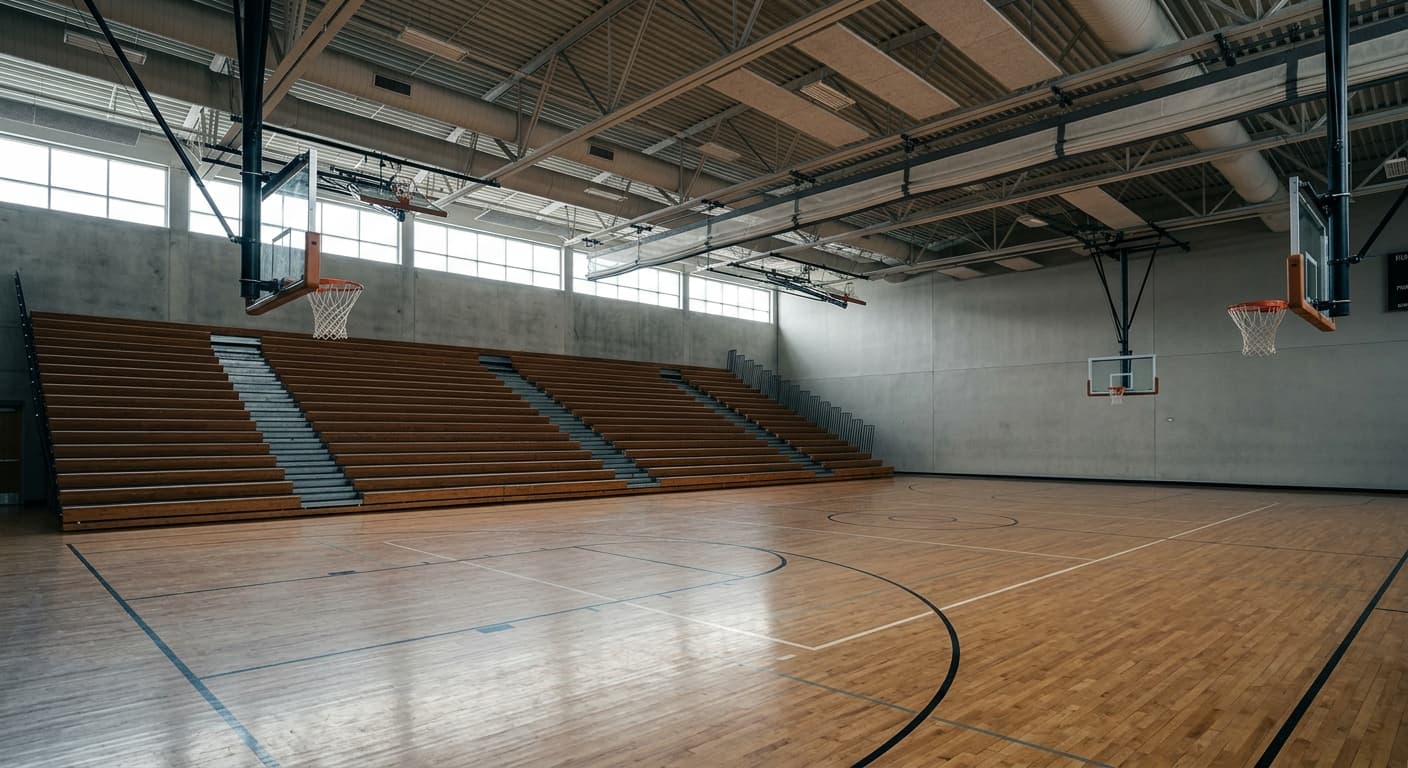
New Hampshire's all-party consent law, RSA 570-A:2, applies inside schools, making secret audio recording by students, parents, or staff a criminal offense. School board meetings may be recorded freely under the Right-to-Know Law, and FERPA governs how schools handle recordings that identify individual students.
Recording in New Hampshire schools involves a complex intersection of the state's strict wiretapping law, student privacy protections under federal law, the Right-to-Know Law for public school board meetings, and practical safety considerations. Parents, students, teachers, and administrators all face specific legal rules about when and how recording may occur on school grounds.
This guide covers the legal framework for recording in schools, including school surveillance systems, parent recording of meetings, student recording rights, school board meeting recording, and the interplay between state and federal privacy laws.
The All-Party Consent Rule in Schools
How RSA 570-A:2 Applies to Schools
New Hampshire's wiretapping statute does not contain a school-specific exception. The all-party consent requirement under RSA 570-A:2 applies on school grounds just as it does everywhere else:
- Students cannot secretly record conversations with teachers, counselors, administrators, or other students
- Parents cannot secretly record conversations with school staff during meetings, conferences, or phone calls
- Teachers and staff cannot secretly record conversations with students, parents, or colleagues
- **Administrators cannot record** meetings, disciplinary hearings, or parent conferences without consent from all participants
The two-tier criminal liability applies. A participant who knowingly records their own conversation without consent faces a misdemeanor under RSA 570-A:2, I-a. A person who willfully intercepts a conversation they are not part of faces a Class B felony under RSA 570-A:2, I.
Why Parents Want to Record
Parents frequently want to record interactions with schools for several reasons:
- IEP (Individualized Education Program) meetings for students with disabilities
- Parent-teacher conferences to review discussion points later
- Disciplinary hearings where their child faces suspension or expulsion
- Conversations about bullying or safety concerns
- Documentation of school responses to complaints or requests
While these motivations are understandable, secret recording is not a legal option in New Hampshire. Parents must either obtain consent or use alternative documentation methods.
Recording at School Board Meetings
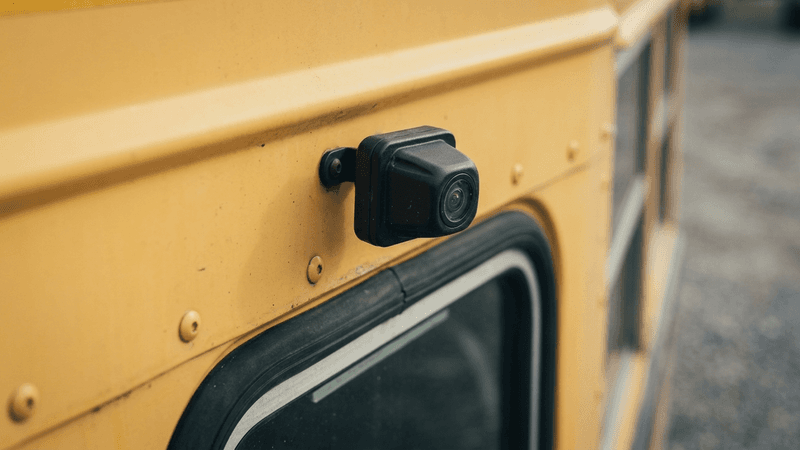
Right-to-Know Law Protections
New Hampshire's Right-to-Know Law (RSA 91-A:2, II) provides the clearest exception to the general consent requirement in the school context. Under this statute:
- Any person may use tape recorders, cameras, videotape equipment, and other recording devices at public school board meetings
- School boards cannot prohibit the use of recording devices during public sessions
- This includes regular school board meetings, budget hearings, and any other public session
School board meetings that are conducted in public session are fully open to recording. The Right-to-Know Law supersedes any school district policy that might attempt to prohibit recording at public sessions.
Nonpublic Sessions
School boards may enter nonpublic session under RSA 91-A:3 to discuss confidential matters such as:
- Personnel matters involving the dismissal, promotion, compensation, or discipline of specific employees
- Matters that could adversely affect the reputation of a person other than the board itself, which may include a specific student's situation depending on the circumstances
- Legal strategy for pending claims or litigation
- Student or pupil tuition contracts under RSA 91-A:3, II(k)
Recording is not permitted during nonpublic sessions unless the board specifically authorizes it. Parents attending a nonpublic session regarding their child should not assume they may record.
School Surveillance Systems
Where Schools Can Install Cameras
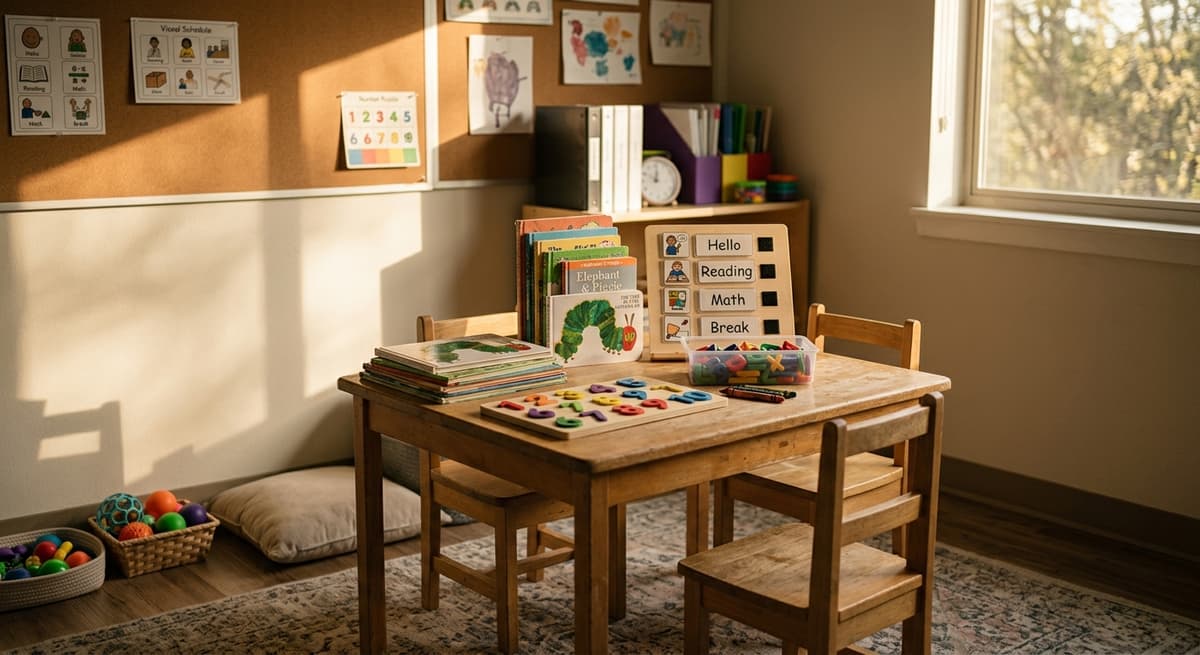
New Hampshire schools commonly use security cameras for safety purposes. Lawful camera placements include:
- Hallways and corridors for student safety monitoring
- Building entrances and exits for access control
- Cafeterias and common areas for behavior monitoring
- Parking lots and bus loading zones for transportation safety
- Gymnasium and athletic facilities common areas (not locker rooms or changing areas)
- School grounds including playgrounds and athletic fields
Where Cameras Are Prohibited
Under RSA 644:9, cameras are prohibited in private places regardless of the educational context:
- Student bathrooms and restrooms
- Locker rooms and changing areas
- Shower facilities
- Staff bathrooms
- Any area where students or staff have a reasonable expectation of complete privacy from visual observation
Violations of RSA 644:9 in a school setting are a Class A misdemeanor, and the involvement of minors may result in enhanced penalties.
Audio Recording in Schools
School surveillance systems that record audio are subject to the all-party consent requirement:
- Cameras with microphones that capture student and teacher conversations in classrooms would require consent from all parties, which is impractical
- Audio-only monitoring of classrooms is generally prohibited without all-party consent
- Intercom systems that allow administrators to listen to classrooms raise wiretapping concerns if used for surveillance purposes
- Most schools disable audio on their security camera systems to avoid RSA 570-A:2 complications
Parent Recording at School Meetings

IEP and Special Education Meetings
Parents of students with disabilities often want to record IEP meetings to ensure they accurately capture the team's recommendations and decisions. In New Hampshire:
- You must request consent from all meeting participants before recording an IEP meeting
- The school may decline your request, in which case you cannot legally record
- Federal IDEA law does not create a right to record IEP meetings; recording rights are determined by state law
- Some school districts have policies addressing recording requests, which may allow recording with advance notice
- If the school refuses recording, you may bring a support person or advocate to take detailed notes
Parent-Teacher Conferences
The same rules apply to parent-teacher conferences and other school meetings:
- Obtain consent from the teacher and any other participants before recording
- If consent is denied, take detailed written notes during and after the meeting
- Send a follow-up email summarizing what was discussed to create a written record
- Bring a support person who can take notes and serve as a witness
Tips for Requesting Recording Permission
- Make the request in writing before the meeting, giving the school time to respond
- Explain your reason (e.g., "I would like to record so I can review the discussion about my child's reading goals")
- Be prepared for a refusal and have alternative documentation plans ready
- If the school agrees, record the consent on the recording itself
- Offer to share the recording with all participants
Student Recording Rights and Restrictions
Can Students Record in Class?
New Hampshire's all-party consent law generally prohibits students from secretly recording in the classroom:
- Recording teacher lectures without the teacher's consent violates RSA 570-A:2
- Recording conversations with classmates without their consent is also prohibited
- Cell phone policies in many New Hampshire schools further restrict student use of recording devices
Student Disability Accommodations
In limited circumstances, a student's disability-related needs may support a recording accommodation:
- A student with a learning disability may benefit from recording lectures for later review
- Such accommodations would typically be documented in an IEP or Section 504 plan
- The accommodation requires school agreement and is determined on a case-by-case basis
- Teachers must be informed that recording is an approved accommodation
- The recording should be used only for the student's educational benefit
Student Journalism
Student journalists at New Hampshire schools face the same all-party consent requirements as other citizens:
- Interviews must be conducted with the subject's consent before recording
- Recording school events such as assemblies and performances may require consent from speakers
- School-sanctioned journalism projects should include training on New Hampshire recording laws
- Recording at public school board meetings is protected under the Right-to-Know Law
FERPA and Student Privacy
Federal Privacy Protections
The Family Educational Rights and Privacy Act (FERPA, 20 U.S.C. Section 1232g) imposes strict requirements on how schools handle student records, including recordings:
- School surveillance footage that identifies individual students is considered an education record if maintained by the school
- Schools cannot share such recordings with third parties without parental consent (or student consent if age 18+) except under specific FERPA exceptions
- Recordings made during disciplinary proceedings involving specific students are subject to FERPA protections
- Law enforcement may access school recordings under FERPA's law enforcement exception
The U.S. Department of Education provides guidance on FERPA compliance, including how it applies to school surveillance systems.
FERPA and Parent Recordings
If a parent legally records a school meeting with consent from all participants:
- The parent's recording is not subject to FERPA because it was not created or maintained by the school
- However, the recording may contain personally identifiable information about other students that should not be shared publicly
- Parents should use such recordings only for personal reference and avoid posting them publicly
- If the recording involves another student's disciplinary or educational information, sharing it publicly could raise privacy concerns
Teachers and Staff Recording Rights
Teacher Recording of Students
Teachers in New Hampshire cannot secretly record students:
- Audio recording of classroom activities without student (and parent) consent violates RSA 570-A:2
- Video recording with audio follows the same rule
- Silent video of classroom activities is less clearly regulated but raises student privacy and FERPA concerns
- Schools may establish policies regarding teacher use of recording in educational settings
Staff Recording for Safety
When staff members need to document safety concerns:
- Written incident reports are the standard documentation method
- Silent video from school security cameras can be reviewed for evidence
- Witness statements from other staff members provide additional documentation
- Consulting school administration before any recording activity is recommended
Penalties for Illegal Recording in Schools
| Offense | Classification | Maximum Penalty |
|---|---|---|
| Secret audio recording at school (participant) (RSA 570-A:2, I-a) | Misdemeanor (Class B by default) | No jail, up to $1,200 fine (Class B); up to 1 year, $2,000 fine if the State elects Class A |
| Planting hidden recording device (RSA 570-A:2, I) | Class B Felony | 7 years, $4,000 |
| Camera in student bathroom/locker room (RSA 644:9) | Class A Misdemeanor | 1 year, $2,000 |
| FERPA violation (federal) | Loss of federal funding | N/A |
2024-2025 Court Rulings: In State v. Clark, 2024 N.H. 64 (N.H. Nov. 13, 2024), the New Hampshire Supreme Court held that the suppression remedy under RSA 570-A:6 applies only to felony violations of RSA 570-A:2, I, not to misdemeanor participant recordings under RSA 570-A:2, I-a. In State v. Hersom, No. 2023-0352 (N.H. Jan. 24, 2025), the court held that the State must prove NH jurisdiction and willful mental state before the suppression framework applies.
Civil damages under RSA 570-A:11 of $100 per day or $1,000 minimum, plus punitive damages and attorney fees, also apply.
More New Hampshire Recording Laws
Audio Recording | Video Recording | Voyeurism | Workplace Recording | Recording Police | Phone Call Recording | Security Cameras | Recording in Public | Landlord-Tenant | Dashcam Laws | Schools | Medical Recording
Back to New Hampshire Recording Laws
More New Hampshire Recording Topics
More New Hampshire Laws
Frequently Asked Questions
Can I record my child's IEP meeting in New Hampshire?
Only with consent from all participants. New Hampshire's all-party consent law requires every person at the meeting to agree before recording begins. Request permission in writing before the meeting. If the school declines, bring a support person to take notes and send a follow-up email summarizing the discussion.
Can I record a school board meeting in New Hampshire?
Yes. New Hampshire's Right-to-Know Law (RSA 91-A:2, II) explicitly permits recording at public school board meetings. Any person may use cameras, tape recorders, and video equipment at public sessions. School boards cannot prohibit this recording. However, nonpublic sessions are not open to recording.
Can schools have security cameras in hallways in New Hampshire?
Yes. Schools may install silent video security cameras in hallways, cafeterias, common areas, entrances, and parking lots. Cameras are prohibited in bathrooms, locker rooms, and changing areas under RSA 644:9. Audio-enabled cameras in schools would trigger the all-party consent requirement, which is impractical in educational settings.
Can a student record a teacher's lecture in New Hampshire?
Not without the teacher's consent. RSA 570-A:2 requires all-party consent for audio recording, which includes teacher lectures. A student with a disability may have recording as an IEP or Section 504 accommodation, but this must be formally approved by the school and documented in the student's plan.
Does FERPA affect school recordings in New Hampshire?
Yes. School surveillance footage that identifies individual students is considered an education record under FERPA. Schools cannot share such recordings with third parties without parental consent except under specific FERPA exceptions. This affects how schools handle, store, and release security camera footage.
Updates
Fixed a wrong-neighbor citation for the right to record at public school board meetings (RSA 91-A:2, II, not 91-A:2-a) and corrected the TAKE IT DOWN Act's signing date to May 19, 2025.
Independently fact-checked against the cited primary sources; governing law re-checked for recent changes
Corrected the participant-recording misdemeanor row to reflect RSA 625:9's Class-B-by-default rule (no jail, up to $1,200) instead of stating the Class A figures (1 year, $2,000) as a flat maximum.
Governing law re-checked for recent changes
Corrected the list of RSA 91-A:3 nonpublic-session grounds: 'student disciplinary cases involving identifiable students' is not an enumerated category (only discipline of public employees is); replaced with the statute's actual enumerated grounds.
Governing law re-checked for recent changes
Propagated State v. Clark (2024 N.H. 64, Nov. 13, 2024) and State v. Hersom (No. 2023-0352, Jan. 24, 2025) two-tier suppression framework from parent hub; confirmed RSA 570-A:2, I-a misdemeanor framing; updated federal overlay (NLRB GC Memo 25-07, [TAKE IT DOWN Act](/us-laws/take-it-down-act) May 19 2025); RSA 105-D body cam reference added where applicable.
Reviewed and approved by an editor
The Law Behind This Article
This article rests on the statutory provisions below, held in our own legal record and retrieved from the official source. Tap a section to read the operative text.
New Hampshire Revised Statutes Annotated, TITLE LVIII PUBLIC JUSTICE, CHAPTER 570-A WIRETAPPING AND EAVESDROPPING
§ 570-A:2Interception and Disclosure of Telecommunication or Oral Communications Prohibited.In forcecited in 25 of our articles
I. A person is guilty of a class B felony if, except as otherwise specifically provided in this chapter or without the consent of all parties to the communication, the person: (a) Wilfully intercepts, endeavors to intercept, or procures any other person to intercept or endeavor to intercept, any telecommunication or oral communication; (b) Wilfully uses, endeavors to use, or procures any other person to use or endeavor to use any electronic, mechanical, or other device to intercept any oral communication when: (1) Such device is affixed to, or otherwise transmits a signal through, a wire, cable, or other like connection used in telecommunication, or (2) Such device transmits communications by radio, or interferes with the transmission of such communication, or (3) Such use or endeavor to use (A) takes place on premises of any business or other commercial establishment, or (B) obtains or is for the purpose of obtaining information relating to the operations of any business or other commercial establishment; or (c) Wilfully discloses, or endeavors to disclose, to any other person the contents of any telecommunication or oral communication, knowing or having reason to know that…
Official text (excerpt) · last checked 2026-08-31 · Read the full text in our law library · Verify at gc.nh.gov
Cited in 35 court opinions in our collectionLatest citing opinion in our collection: 2025
In the courts (editorial summary, independently checked):New Hampshire courts read the felony offense in RSA 570-A:2, I as requiring more than intent to record. Fischer v. Hooper (1999) held wilfully means intentional or reckless disregard for the lawfulness of the conduct, so a good faith belief is a defense. State of New Hampshire v. Adam Mueller (2014) reversed on that mens rea.
Opinions citing this section in our collection:
- State v. Kilgus (Supreme Court of New Hampshire 1986, 128 N.H. 577)✓A murder-for-hire middleman agreed to wear a hidden recorder and got the defendant to confirm paying $1,000 to have a man killed; the court held the taping was lawful under RSA 570-A:2, II(d) because one party consented and homicide is an enumerated offense.
- Fischer v. Hooper (Supreme Court of New Hampshire 1999, 143 N.H. 585)✓A father secretly taped his ex-wife's calls with their daughter though a guardian ad litem had said both parents must agree; the court held wilfully in RSA 570-A:2, I requires intentional or reckless disregard for the lawfulness of the conduct, and reversed for a new trial.
- State of New Hampshire v. Adam Mueller (Supreme Court of New Hampshire 2014, 166 N.H. 65)✓A police-accountability activist recorded three phone calls with a police captain and two school officials without telling them; the court held that instructing the jury on purposely rather than the statute's wilfully was plain error and reversed his wiretapping convictions.
Identified automatically from the court opinions citing this section — not a ranking of which case controls.
Also relied on in: New Hampshire Security Camera Laws, New Hampshire Video Recording Laws, New Hampshire Voyeurism Laws
§ 570-A:11Recovery of Civil Damages Authorized.In forcecited in 14 of our articles
Any person whose telecommunication or oral communication is intercepted, disclosed, or used in violation of this chapter shall have a civil cause of action against any person who intercepts, discloses, or uses, or procures any other person to intercept, disclose or use such communications, and be entitled to recover from any such person: (a) actual damages but not less than liquidated damages computed at the rate of $100 a day for each day of violation or $1,000, whichever is higher; (b) punitive damages; and (c) a reasonable attorney's fee and other litigation costs reasonably incurred. Good faith reliance on a court order or on a representation made by the attorney general, deputy attorney general or a county attorney shall constitute a complete defense to any civil or criminal action brought under this chapter.
Official text (excerpt) · last checked 2026-07-29 · Read the full text in our law library · Verify at gc.nh.gov
Cited in 6 court opinions in our collectionLatest citing opinion in our collection: 2021
In the courts (editorial summary, independently checked):Courts have applied RSA 570-A:11 as the chapter's private damages remedy. Desilets v. Wal-Mart Stores (1997) awarded fees and costs under 570-A:11(c) after a jury found statutory damages for secret workplace recording; Lath v. Manchester PD, et al. (2017) entered judgment for the defendant where no interception was shown.
Opinions citing this section in our collection:
- Karen Warrington, individually, and as m/n/f of J.W. v. P John Edward Warrington (District Court, D. New Hampshire 2021, 2021 DNH 070)✓A father secretly recorded a call with his son at a New Hampshire boarding school and later used it in divorce proceedings; the court dismissed the mother's 570-A:11 damages claim because the complaint never alleged he was in New Hampshire when he recorded.
- Sanjeev Lath v. Oak Brook Condominium Owners’ Association, Gerard Dufresne, and Betty Mullen (District Court, D. New Hampshire 2018, 2018 DNH 013)“…upport dogs. Count 9: an eavesdropping claim under RSA 570-A:11 against Mullen, for installing came…”
- Lath v. Manchester PD, et al. (District Court, D. New Hampshire 2017, 2017 DNH 164)✓A condominium owner claimed a neighbor drilled holes in their shared wall and installed listening devices in his unit; on her unrebutted affidavit denying it, the court granted summary judgment against his 570-A:11 eavesdropping claim.
Identified automatically from the court opinions citing this section — not a ranking of which case controls.
Also relied on in: New Hampshire Audio Recording Laws, New Hampshire Dashcam Laws, New Hampshire Landlord-Tenant Recording Laws
New Hampshire Revised Statutes Annotated, TITLE LXII CRIMINAL CODE, CHAPTER 625 PRELIMINARY
§ 625:9Classification of Crimes.In forcecited in 13 of our articles
I. The provisions of this section govern the classification of every offense, whether defined within this code or by any other statute. II. Every offense is either a felony, misdemeanor or violation. (a) Felonies and misdemeanors are crimes. (b) A violation does not constitute a crime and conviction of a violation shall not give rise to any disability or legal disadvantage based on conviction of a criminal offense. III. A felony is murder or a crime so designated by statute within or outside this code or a crime defined by statute outside of this code where the maximum penalty provided is imprisonment in excess of one year; provided, however, that a crime defined by statute outside of this code is a felony when committed by a corporation or an unincorporated association if the maximum fine therein provided is more than $200. (a) Felonies other than murder are either class A felonies or class B felonies when committed by an individual. Felonies committed by a corporation or an unincorporated association are unclassified.
Official text (excerpt) · last checked 2026-07-29 · Read the full text in our law library · Verify at gc.nh.gov
Cited in 65 court opinions in our collectionLatest citing opinion in our collection: 2026
Opinions citing this section in our collection:
- State v. Samuel Pennock (Supreme Court of New Hampshire 2015, 168 N.H. 294)“…shall not include incarceration or probation”); see also RSA 625:9, IV(b) (2007) (defining a class B misde…”
- State v. Morrill (Supreme Court of New Hampshire 1983, 123 N.H. 707)“…ed the sum of $500. In 1971, the legislature enacted RSA 625:9, under which every offense defined with…”
- State v. Woods (Supreme Court of New Hampshire 1995, 139 N.H. 399)“…es that his violation is not a “criminal” act because under RSA 625:9, 11(b) (1986), a violation is not a “cr…”
Identified automatically from the court opinions citing this section — not a ranking of which case controls.
Also relied on in: New Hampshire Medical Recording Laws, New Hampshire Laws on Recording Police, New Hampshire Laws on Recording in Public
New Hampshire Revised Statutes Annotated, TITLE LXII CRIMINAL CODE, CHAPTER 644 BREACHES OF THE PEACE AND RELATED OFFENSES
§ 644:9Violation of Privacy.In forcecited in 12 of our articles
I. A person is guilty of a class A misdemeanor if such person unlawfully and without the consent of the persons entitled to privacy therein, installs or uses: (a) Any device for the purpose of observing, photographing, recording, amplifying, broadcasting, or in any way transmitting images or sounds of the private body parts of a person including the genitalia, buttocks, or female breasts, or a person's body underneath that person's clothing; or (b) In any private place, any device for the purpose of observing, photographing, recording, amplifying or broadcasting, or in any way transmitting images or sounds in such place; or (c) Outside a private place, any device for the purpose of hearing, recording, amplifying, broadcasting, observing, or in any way transmitting images, location, movement, or sounds originating in such place which would not ordinarily be audible, visible, or comprehensible outside such place. II.
Official text (excerpt) · last checked 2026-08-31 · Read the full text in our law library · Verify at gc.nh.gov
Cited in 4 court opinions in our collectionLatest citing opinion in our collection: 2023
Opinions citing this section in our collection:
- State v. McLellan (Supreme Court of New Hampshire 1999, 144 N.H. 602)“…pposite. Finally, we reject the defendant’s argument that RSA 644:9 (1996) supports his claim that he had a…”
- State of New Hampshire v. Justin M. Lamontagne (Supreme Court of New Hampshire 2023)“…assault and a case involving dissemination of an image. See RSA 644:9- a, II(c). We fail to see such a distin…”
- State v. Richard Lucas (Supreme Court of New Hampshire 2018)“…(1) an intent to commit a violation of privacy pursuant to RSA 644:9, III-a or IV (2016) does not satisfy th…”
Identified automatically from the court opinions citing this section — not a ranking of which case controls.
Also relied on in: New Hampshire Workplace Recording Laws, New Hampshire Drone Laws: RSA 644:23 & Privacy Rules (2026), New Hampshire Employee Monitoring Laws: Workplace Surveillance and Social Media (2026)
New Hampshire Revised Statutes Annotated, TITLE VI PUBLIC OFFICERS AND EMPLOYEES, CHAPTER 91-A ACCESS TO GOVERNMENTAL RECORDS AND MEETINGS
§ 91-A:3Nonpublic Sessions.In force
I. (a) Public bodies shall not meet in nonpublic session, except for one of the purposes set out in paragraph II. No session at which evidence, information, or testimony in any form is received shall be closed to the public, except as provided in paragraph II. No public body may enter nonpublic session, except pursuant to a motion properly made and seconded. (b) Any motion to enter nonpublic session shall state on its face the specific exemption under paragraph II which is relied upon as foundation for the nonpublic session. The vote on any such motion shall be by roll call, and shall require the affirmative vote of the majority of members present. (c) All discussions held and decisions made during nonpublic session shall be confined to the matters set out in the motion. II. Only the following matters shall be considered or acted upon in nonpublic session: (a) The dismissal, promotion, or compensation of any public employee or the disciplining of such employee, or the investigation of any charges against him or her, unless the employee affected (1) has a right to a meeting and (2) requests that the meeting be open, in which case the request shall be granted.
Official text (excerpt) · last checked 2026-07-29 · Read the full text in our law library · Verify at gc.nh.gov
Cited in 27 court opinions in our collectionLatest citing opinion in our collection: 2025
Opinions citing this section in our collection:
- Appeal of Plantier (Supreme Court of New Hampshire 1985, 126 N.H. 500)“…of John’s counsel to meet in executive session pursuant to RSA 91-A:3,11(c) (Supp. 1983). The doctor then ren…”
- Herron v. Northwood (Supreme Court of New Hampshire 1971, 111 N.H. 324)“…ison, C.J. The principal question in this case is whether RSA 91-A:3( I) ( supp.) as amended by Laws 1969, 4…”
- Lambert v. Belknap County Convention (Supreme Court of New Hampshire 2008, 157 N.H. 375)“…oted to enter nonpublic session. See generally RSA 91-A:3 (Supp. 2007). The minutes of that sessi…”
Identified automatically from the court opinions citing this section — not a ranking of which case controls.
United States Code Title 20
§ 1232gFamily educational and privacy rightsIn forcecited in 29 of our articles
No funds shall be made available under any applicable program to any educational agency or institution which has a policy of denying, or which effectively prevents, the parents of students who are or have been in attendance at a school of such agency or at such institution, as the case may be, the right to inspect and review the education records of their children. If any material or document in the education record of a student includes information on more than one student, the parents of one of such students shall have the right to inspect and review only such part of such material or document as relates to such student or to be informed of the specific information contained in such part of such material. Each educational agency or institution shall establish appropriate procedures for the granting of a request by parents for access to the education records of their children within a reasonable period of time, but in no case more than forty-five days after the request has been made.
Official text (excerpt) · last checked 2026-09-03 · Read the full text in our law library · Verify at uscode.house.gov
Cited in 981 court opinions in our collectionLatest citing opinion in our collection: 2026
In the courts (editorial summary, independently checked):Courts have held Section 1232g is enforced by the Secretary of Education, not by suit. Gonzaga University v. Doe (2002) held FERPA's nondisclosure provisions create no personal rights enforceable under 42 U.S.C. 1983. Kate Frazier v. Fairhaven School Committee (2002) held FERPA confers no private right of action, express or implied.
Opinions citing this section in our collection:
- Goss v. Lopez (Supreme Court of the United States 1975, 419 U.S. 565)“…ucation Amendments of 1974, Pub. L. 93-380, 88 Stat. 571, 20 U. S. C. § 1232g (1970 ed., Supp. IV), adding § 438 to t…”
- Gonzaga University v. Doe (Supreme Court of the United States 2002, 536 U.S. 273)✓A university official told the state teacher-licensing agency about sexual misconduct allegations against a student, who then lost the affidavit he needed to teach; the Supreme Court held FERPA's nondisclosure provisions create no personal rights enforceable under section 1983.
- Foster Children v. Jeb Bush, Kathleen Kearney, Chuck Bates, Robert Williams, Ester Tibbs (Court of Appeals for the Eleventh Circuit 2003, 329 F.3d 1255)“…Family Educational Rights and Privacy Act of 1974 (FERPA), 20 U.S.C. § 1232g. In FERPA Congress directed the Secreta…”
Identified automatically from the court opinions citing this section — not a ranking of which case controls.
Also relied on in: Alaska School Recording Laws: Student Privacy, FERPA, and Classroom Rules (2026), Arkansas School Recording Laws: Student Privacy, FERPA, and Classroom Rules (2026), DC School Recording Laws: Student Privacy, FERPA, and Classroom Rules (2026)
Search our full record of US law — 2.1 million sections, every state + federal →
Sources and References
- RSA 570-A:2 - Interception Prohibited(gc.nh.gov).gov
- RSA 91-A - Right-to-Know Law(gc.nh.gov).gov
- RSA 644:9 - Violation of Privacy(gc.nh.gov).gov
- RSA 570-A:11 - Civil Damages(gencourt.state.nh.us).gov
- U.S. Dept of Education - Student Privacy(studentprivacy.ed.gov).gov
- RSA 91-A:3 - Nonpublic Sessions(gc.nh.gov).gov
- FERPA - 20 U.S.C. Section 1232g(law.cornell.edu)
- RSA 625:9 - Classification of Crimes(gc.nh.gov).gov