Supreme Court Tosses Conviction Over a Secretly Recorded FaceTime Call (2026)
Independently fact-checked against primary sources (last audited June 23, 2026). · 2 primary sources cited on this page. How we verify our legal content
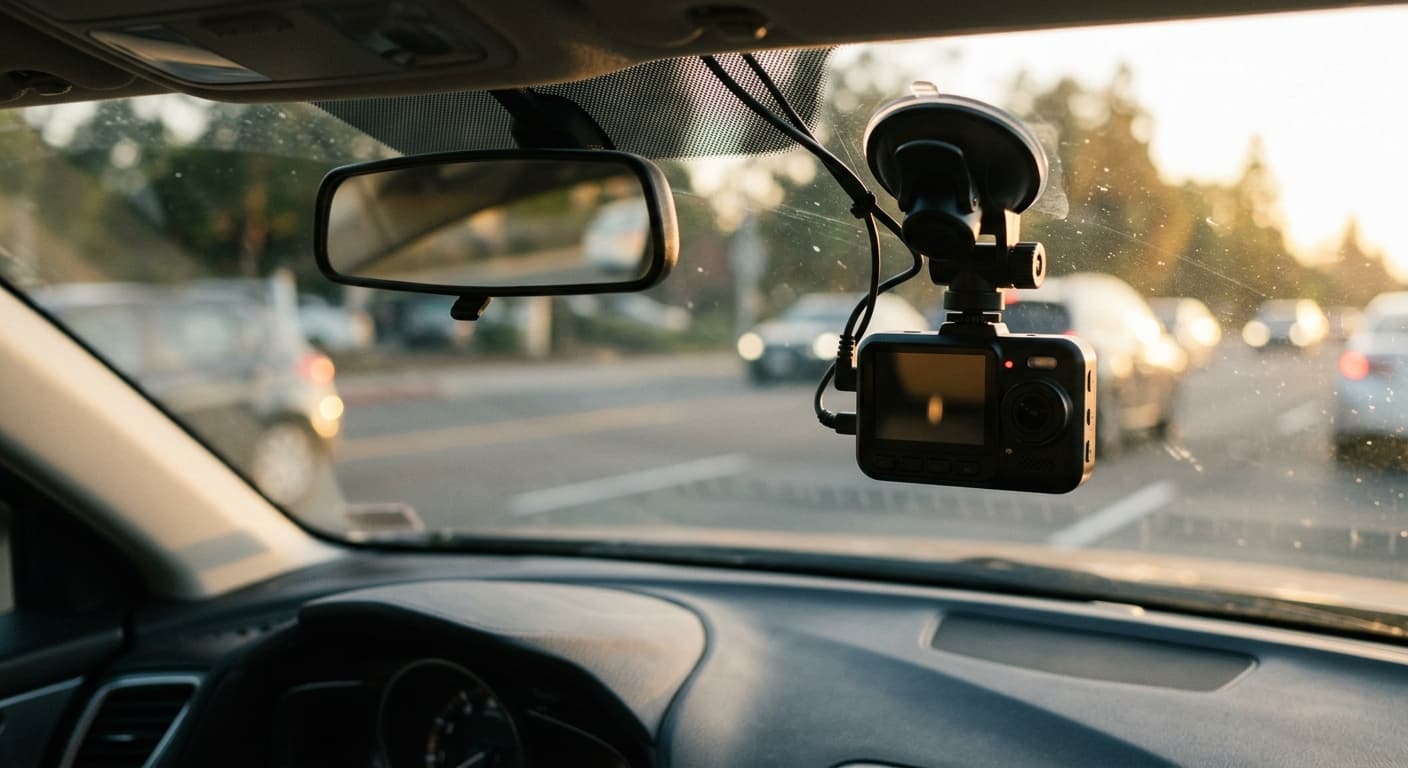
Supreme Court Vacates a Conviction Built on a Secretly Recorded FaceTime Call, Reviving a Wiretap Act Fight
On June 22, 2026, the U.S. Supreme Court vacated the Sixth Circuit's decision upholding Ashley Grayson's murder-for-hire-related conviction and sent the case back for a new look at whether a secretly recorded FaceTime call was admissible. The Court decided nothing on the merits; the Wiretap Act question returns to the lower court.
Information last verified on June 23, 2026. This is a developing story; we update it as the record changes.
Status: Grant, vacate, and remand (GVR) entered June 22, 2026 (No. 25-851). The Supreme Court vacated the Sixth Circuit's judgment and remanded; it did not decide whether 18 U.S.C. 2515 bars the recording. The underlying legal question is unresolved.
Jurisdiction scope: This article addresses a federal procedural action under the Federal Wiretap Act and its suppression rule, 18 U.S.C. 2515. It does not resolve admissibility, and it does not address state two-party-consent statutes, which differ and impose their own rules. For the underlying law, see the Federal Wiretap Act and ECPA guide, the one-party consent states guide, and the two-party consent states guide.
What Happened
In Grayson v. United States, No. 25-851, the Supreme Court issued a grant, vacate, and remand on its order list dated Monday, June 22, 2026. The Court granted the petition for a writ of certiorari, vacated the judgment of the U.S. Court of Appeals for the Sixth Circuit, and remanded the case for further consideration in light of the position the Solicitor General set out in a brief filed May 12, 2026. A GVR is a completed action by the Court, but it is not a merits ruling. The Court did not interpret the Wiretap Act and did not decide whether the recording can be used against Grayson; it returned that question to the Sixth Circuit.
The underlying case arose in the U.S. District Court for the Western District of Tennessee, where a jury convicted Ashley Grayson, a Dallas social media influencer, of conspiracy to commit murder-for-hire. The government's evidence included a FaceTime call that the other participant, Olivia Johnson of the Memphis area, recorded without Grayson's knowledge. Johnson later turned the recording over to the FBI, and prosecutors used it at trial. Grayson moved to suppress the recording under the Federal Wiretap Act, arguing that 18 U.S.C. 2515 barred its use because the interception was unlawful.
The district court admitted the recording under the Sixth Circuit's "clean-hands exception," recognized in United States v. Murdock, 63 F.3d 1391 (6th Cir. 1995), which permits the government to use an unlawfully intercepted communication when the government itself played no part in the interception. The Sixth Circuit affirmed. Grayson then sought Supreme Court review of whether 2515 contains any such exception.
Justice Samuel Alito dissented from the order. As reported by SCOTUSblog and Courthouse News, he took the view that admitting the recording, even if it was error, was harmless because other evidence of guilt was strong. The dissent did not resolve the statutory question either; it disagreed with the decision to send the case back.
What the Law Actually Says
The Federal Wiretap Act, part of Title III of the Omnibus Crime Control and Safe Streets Act of 1968, has two provisions at the center of this case. The first is 18 U.S.C. 2511, which makes it unlawful to intercept wire, oral, or electronic communications, subject to exceptions. The most familiar exception is the one-party-consent rule in section 2511(2)(d): a person who is a party to a communication, or who has the consent of one party, may generally record it. That federal baseline is why much of the country treats one-party consent as the default for recording your own calls.
That same one-party-consent provision carries an important limit. Section 2511(2)(d) does not protect an interception made "for the purpose of committing any criminal or tortious act." When a participant records a call to commit a crime or a tort, such as extortion, the consent exception can fall away and the interception becomes unlawful. That criminal-or-tortious-purpose clause is what put Johnson's recording in dispute, because the record describes her using the video in an attempt to extort Grayson before it reached the FBI.
The second provision is the suppression rule. 18 U.S.C. 2515 states that when a wire or oral communication "has been intercepted, no part of the contents" and "no evidence derived therefrom may be received in evidence" in any trial or proceeding "if the disclosure of that information would be in violation of this chapter." Read literally, that is a broad bar on using unlawfully intercepted communications as evidence, and it applies to private recordings, not just government wiretaps. The remedy for an unlawful interception is found in the civil-liability provision, 18 U.S.C. 2520.
The "clean-hands exception" is an outlier reading of 2515. Under United States v. Murdock, the Sixth Circuit held that suppression is not required where the government played no part in the unlawful interception. Other courts disagree: the Fourth Circuit has rejected that reading, finding no gap in the statute's text for such an exception. That disagreement is what made Grayson's petition a candidate for review and is why the question matters well beyond this case. Whether a privately recorded call counts as a permitted recording or an unlawful interception is, at bottom, a question about types of evidence and when courts will let the jury hear them.
Analysis: Why This Matters
The following is analysis from the Recording Law Editorial Team.
A GVR is easy to misread. The Supreme Court did real work here: it wiped out the Sixth Circuit's judgment and ordered a fresh look. But it answered none of the questions a reader might care about most. It did not say the recording is inadmissible, did not interpret 2515, and did not endorse or reject the clean-hands exception. The action signals that the Court wanted the lower court to reconsider with the Solicitor General's May 12, 2026 brief in view, and nothing more.
The doctrinal stakes are clearer than the outcome. Section 2515's text is sweeping, and it reaches private recordings, which is why the case touches an everyday question: when can a secretly recorded call be used in court. The Sixth Circuit's answer, the clean-hands exception, narrows that bar by focusing on who did the intercepting rather than on the words of the statute. The Fourth Circuit reads the same text the opposite way. That split is the engine of this dispute, and it is precisely the kind of disagreement that draws the Court's attention.
We are not predicting how the Sixth Circuit will rule on remand or how the statutory question ultimately resolves. The durable point is narrower. Federal law treats interception and admissibility as two separate steps. The one-party-consent rule governs whether a recording was lawful in the first place, and its criminal-or-tortious-purpose limit can turn a seemingly permitted recording into an unlawful one. Section 2515 then governs whether an unlawful recording can be used as evidence. Grayson lives at the seam between those steps, and for now that seam is unsettled.
How This Affects You
For most readers, the practical question is simple: can someone secretly record a call and use it against you, or can you use such a recording. The honest answer after June 22, 2026 is that it depends, and that the federal rule on admissibility is contested. Courts are split on whether 2515 bars the use of an unlawfully intercepted communication when the government had clean hands, and the Supreme Court has not resolved it.
Two general points hold regardless of this case. First, the federal one-party-consent baseline does not protect a recording made to commit a crime or a tort; a recording used for extortion or fraud can lose that protection. Second, state law often sets a higher bar. If your state is an all-party, or two-party consent, jurisdiction, recording a private conversation without everyone's consent can be unlawful on its own terms, separate from the federal analysis. None of this is advice about your situation. Whether a particular recording is lawful, and whether a court would admit it, depends on facts a court must weigh and on which jurisdiction's law applies.
What Happens Next
The case now returns to the U.S. Court of Appeals for the Sixth Circuit. On remand, that court will reconsider Grayson's challenge in light of the Solicitor General's May 12, 2026 brief. It could reaffirm the conviction on the same or different reasoning, it could rule for Grayson, or it could address the clean-hands exception head-on. Because the Supreme Court vacated the prior judgment without deciding the statutory question, the Sixth Circuit is not bound by its earlier decision.
What would convert this into settled law is a definitive ruling on whether 18 U.S.C. 2515 contains a clean-hands exception, either from the Sixth Circuit on remand in a way that the Supreme Court later leaves in place, or from a future Supreme Court merits decision. The live circuit split, with the Sixth Circuit recognizing the exception and the Fourth Circuit rejecting it, means the question may well return to the Court. Until then, the admissibility of a privately and unlawfully recorded call under federal law remains genuinely open.
This is general legal information, not legal advice. It covers a federal procedural action under the Federal Wiretap Act and its suppression rule, 18 U.S.C. 2515, and it reflects sources verified on June 23, 2026. Laws change and this story is developing; consult a lawyer licensed in your jurisdiction about your specific situation.
Sources
- Grayson v. United States, No. 25-851, Supreme Court order (June 22, 2026): https://www.supremecourt.gov/opinions/25pdf/25-851_ed9f.pdf
- Supreme Court Order List, Monday, June 22, 2026: https://www.supremecourt.gov/orders/courtorders/062226zor_g314.pdf
- 18 U.S.C. 2511, Interception and disclosure of communications (Cornell Legal Information Institute): https://www.law.cornell.edu/uscode/text/18/2511
- 18 U.S.C. 2515, Prohibition of use as evidence (Cornell Legal Information Institute): https://www.law.cornell.edu/uscode/text/18/2515
- 18 U.S.C. 2520, Recovery of civil damages (Cornell Legal Information Institute): https://www.law.cornell.edu/uscode/text/18/2520
- SCOTUSblog, Grayson v. United States case page (corroboration): https://www.scotusblog.com/cases/grayson-v-united-states/
- Courthouse News Service, coverage of the June 22, 2026 order (corroboration): https://www.courthousenews.com/justices-give-influencer-do-over-against-murder-for-hire-conviction-after-wiretapping-concerns/
Related articles
- the Federal Wiretap Act and ECPA
- one-party consent states
- two-party consent states
- types of evidence in law
Last updated: 2026-06-23. This is a developing story; details verified as of 2026-06-23.
Frequently Asked Questions
Did the Supreme Court rule that secret recordings are inadmissible?
No. The June 22, 2026 action was a grant, vacate, and remand (GVR) in Grayson v. United States, No. 25-851. The Court vacated the Sixth Circuit's judgment and sent the case back. It did not decide whether the recording is admissible and did not interpret 18 U.S.C. 2515. The merits are unresolved.
What is a GVR?
A grant, vacate, and remand is a completed Supreme Court order that grants review, throws out the lower court's judgment, and returns the case for reconsideration, usually in light of a new development. It is not a merits ruling and does not decide the underlying legal question.
What is 18 U.S.C. 2515?
It is the Federal Wiretap Act's suppression rule. It provides that the contents of an intercepted wire or oral communication, and evidence derived from it, may not be received in evidence in any trial or proceeding if disclosure would violate the wiretap statute. It can reach private recordings, not just government wiretaps.
What is the 'clean-hands exception'?
It is the Sixth Circuit's reading, from United States v. Murdock, 63 F.3d 1391 (6th Cir. 1995), that suppression under 2515 is not required when the government played no part in the unlawful interception. Other courts, including the Fourth Circuit, have rejected that reading, creating a circuit split.
Why was Johnson's FaceTime recording arguably unlawful?
Federal one-party-consent under 18 U.S.C. 2511(2)(d) does not protect an interception made for a criminal or tortious purpose. The record describes Johnson using the recording in an attempt to extort Grayson, which is why its lawfulness, and its admissibility, were disputed.
Can a secretly recorded call be used as evidence?
It depends, and federal law on this point is contested. Courts are split on whether 2515 bars an unlawfully intercepted recording when the government had clean hands. State two-party-consent laws can add a separate bar. Whether any specific recording is admissible turns on the facts and the governing jurisdiction.
What did Justice Alito say?
Justice Alito dissented from the order. As reported by SCOTUSblog and Courthouse News, he took the view that admitting the recording was harmless given the other evidence of guilt. His dissent did not resolve the statutory question.
What happens to Grayson's conviction now?
The case returns to the Sixth Circuit, which will reconsider it in light of the Solicitor General's May 12, 2026 brief. The conviction is not automatically reversed, and the lower court could reach a range of outcomes on remand.
Updates
Independently fact-checked against the cited primary sources
The Law Behind This Article
This article rests on the statutory provisions below, held in our own legal record and retrieved from the official source. Tap a section to read the operative text.
United States Code Title 18
§ 2511Interception and disclosure of wire, oral, or electronic communications prohibitedIn forcecited in 422 of our articles
Except as otherwise specifically provided in this chapter any person who— intentionally intercepts, endeavors to intercept, or procures any other person to intercept or endeavor to intercept, any wire, oral, or electronic communication; intentionally uses, endeavors to use, or procures any other person to use or endeavor to use any electronic, mechanical, or other device to intercept any oral communication when— such device is affixed to, or otherwise transmits a signal through, a wire, cable, or other like connection used in wire communication; or such device transmits communications by radio, or interferes with the transmission of such communication; or such person knows, or has reason to know, that such device or any component thereof has been sent through the mail or transported in interstate or foreign commerce; or such use or endeavor to use (A) takes place on the premises of any business or other commercial establishment the operations of which affect interstate or foreign commerce; or (B) obtains or is for the purpose of obtaining information relating to the operations of any business or other commercial establishment the operations of which affect interstate or foreign…
Official text (excerpt) · last checked 2026-09-17 · Read the full text in our law library · Verify at uscode.house.gov
Cited in 2,045 court opinions in our collectionLatest citing opinion in our collection: 2026
In the courts (editorial summary, independently checked):Griggs-Ryan v. Smith (1990) applied the Section 2511(2)(d) prior-consent exception, treating a tenant repeatedly told that all incoming calls were taped as having impliedly consented. United States v. United States District Court (1972) read the then-current Section 2511(3) as conferring no presidential surveillance power.
Opinions citing this section in our collection:
- Mitchell v. Forsyth (Supreme Court of the United States 1985, 472 U.S. 511)✓The Attorney General authorized a warrantless 1970 national security wiretap that caught the plaintiff's calls; the Court held the since-repealed Section 2511(3) disclaimer left the tap lawful under Title III, and that Mitchell had qualified immunity.
- United States v. United States District Court for the Eastern District of Michigan (Supreme Court of the United States 1972, 407 U.S. 297)✓The Attorney General approved warrantless wiretaps on members of a domestic group accused of bombing a CIA office; the Court read Section 2511(3) as a congressional disclaimer conferring no surveillance power, then held the Fourth Amendment required prior judicial approval.
- Forsyth v. Barr (Court of Appeals for the Fifth Circuit 1994, 19 F.3d 1527)✓Dallas police used, in an internal affairs probe of an officer, calls private parties allegedly intercepted illegally; assuming that was unlawful, the Fifth Circuit held Section 2517(1) and (2) allowed the disclosure and use, defeating the Section 2511(1)(c) and (d) claims.
Identified automatically from the court opinions citing this section — not a ranking of which case controls.
Also relied on in: Connecticut Recording Laws (2026): Hybrid Consent Rules Explained, Oregon Recording Laws (2026): Hybrid One-Party and All-Party Rules, US Recording Laws by State (2026): All 50 States Explained
§ 2515Prohibition of use as evidence of intercepted wire or oral communicationsIn forcecited in 4 of our articles
Whenever any wire or oral communication has been intercepted, no part of the contents of such communication and no evidence derived therefrom may be received in evidence in any trial, hearing, or other proceeding in or before any court, grand jury, department, officer, agency, regulatory body, legislative committee, or other authority of the United States, a State, or a political subdivision thereof if the disclosure of that information would be in violation of this chapter.
Official text (excerpt) · last checked 2026-07-28 · Read the full text in our law library · Verify at uscode.house.gov
Cited in 622 court opinions in our collectionLatest citing opinion in our collection: 2026
Opinions citing this section in our collection:
- United States v. Calandra (Supreme Court of the United States 1974, 414 U.S. 338)“…ilverthorne holding was clearly evidenced in enactment of 18 U. S. C. § 2515 , providing that "[w]henever any wire o…”
- United States v. Giordano (Supreme Court of the United States 1974, 416 U.S. 505)“…r and any “evidence derived therefrom” must be suppressed. 18 U. S. C. §§ 2515 and 2518 (10) (a). The authorization…”
- Gelbard v. United States (Supreme Court of the United States 1972, 408 U.S. 41)“…f that information would be in violation of this chapter." 18 U. S. C. § 2515 . [2] The question presented is whethe…”
Identified automatically from the court opinions citing this section — not a ranking of which case controls.
Also relied on in: Supreme Court Rejects "Clean-Hands" Wiretap Loophole, Sends Influencer's Case Back to Sixth Circuit, Recordings as Evidence: US Court Rules by State
§ 2520Recovery of civil damages authorizedIn forcecited in 115 of our articles
Except as provided in section 2511(2)(a)(ii), any person whose wire, oral, or electronic communication is intercepted, disclosed, or intentionally used in violation of this chapter may in a civil action recover from the person or entity, other than the United States, which engaged in that violation such relief as may be appropriate. In an action under this section, appropriate relief includes— such preliminary and other equitable or declaratory relief as may be appropriate; damages under subsection (c) and punitive damages in appropriate cases; and a reasonable attorney’s fee and other litigation costs reasonably incurred.
Official text (excerpt) · last checked 2026-07-28 · Read the full text in our law library · Verify at uscode.house.gov
Cited in 860 court opinions in our collectionLatest citing opinion in our collection: 2026
In the courts (editorial summary, independently checked):Walker v. Darby (1990) held a 2520 plaintiff need not prove the contents of intercepted conversations, only interception and a justified expectation against it. Bartnicki v. Vopper (2001) barred 2520 damages against defendants who took no part in the interception, obtained the tape lawfully, and disclosed a matter of public concern.
Opinions citing this section in our collection:
- Jessie Walker v. Thomas E. Darby, Hugh L. Robinson, Jr., and Kenneth Day (Court of Appeals for the Eleventh Circuit 1990, 911 F.2d 1573)✓A postal letter carrier said three supervisors wired an intercom near his workstation to listen in. Reversing summary judgment, the Eleventh Circuit held a section 2520 plaintiff can show interception without proving the contents of specific conversations.
- Gelbard v. United States (Supreme Court of the United States 1972, 408 U.S. 41)“…disclosure, or use is entitled to recover civil damages, 18 U. S. C. § 2520 . Title III also bars the use as eviden…”
- DirecTV, Inc. v. Hoa Huynh (Court of Appeals for the Ninth Circuit 2007, 503 F.3d 847)“…7 U.S.C. § 605 (e)(4), or alternatively, for violations of 18 U.S.C. § 2520 (a), or alternatively, for violations o…”
Identified automatically from the court opinions citing this section — not a ranking of which case controls.
Also relied on in: Alabama Audio Recording Laws: Consent Rules and Penalties, Alabama Phone Call Recording Laws: What You Need to Know, Alaska Phone Call Recording Laws: Rules for Landline, Cell, and VoIP (2026)
Search our full record of US law — 2.1 million sections, every state + federal →
Sources and References
- Grayson v. United States, No. 25-851, Supreme Court order (June 22, 2026)(supremecourt.gov).gov
- Supreme Court Order List, June 22, 2026(supremecourt.gov).gov
- 18 U.S.C. 2511 (interception; one-party consent)(law.cornell.edu)
- 18 U.S.C. 2515 (suppression rule)(law.cornell.edu)
- 18 U.S.C. 2520 (civil damages)(law.cornell.edu)
- SCOTUSblog case page (corroboration)(scotusblog.com)