
Belgium
Recording a Conversation in Belgium: The Participant Rule, Antigoon and the 2026 Penal Code

Belgium's criminal law on recording a private conversation turns on one question: are you part of the conversation or not. Article 314bis of the Strafwetboek, called the Code pénal in French, punishes someone who intercepts, takes note of or records a private communication they do not participate in, without the consent of everyone taking part. It does not punish a participant who records a conversation they are actually having.
That distinction is the starting point for almost every real dispute this page covers, from a parent recording a phone call with an ex partner to an employee recording a difficult meeting with a manager. But being allowed to make a recording is only the first question. What happens next, whether the recording is shown to someone else, posted online or handed to a court, is governed by a separate set of rules, and confusing the two questions is where most of the genuine legal risk sits.
This page also carries a forward look. A wholesale replacement of the Belgian Penal Code enters into force on 1 September 2026 and renumbers every article discussed here. Where that matters, the new article number is given alongside the current one.
Information last verified on 21 July 2026. This page provides general legal information and does not constitute legal advice in an individual case.
The participant rule: article 314bis, section 1
Article 314bis, section 1 of the Strafwetboek/Code pénal punishes a person who, intentionally and using a device, intercepts, takes note of or records a private communication in which they do not participate, without the consent of every participant. The penalty is imprisonment of 6 months to 2 years and a fine of 200 to 10,000 euro, or one of the two.
Notice what the article requires: the person doing the recording has to be a stranger to the conversation. Since a ruling of the Hof van Cassatie/Cour de cassation of 9 January 2001, Belgian courts have consistently read this to mean that a participant, someone actually taking part in the conversation, falls outside section 1 entirely. A person can record a phone call they are having, a meeting they are attending, or a conversation at their own front door, without committing this offense, because they are not the outsider the article is aimed at.
This is why Belgium is sometimes described, loosely, as a one party state for recording conversations. The description is useful shorthand but incomplete, because it answers only the question of whether making the recording is a crime. It says nothing about whether using it afterward is safe, which the next two sections address.
Two separate questions: making the recording and using it
Keep two questions apart when thinking about a recording in Belgium.
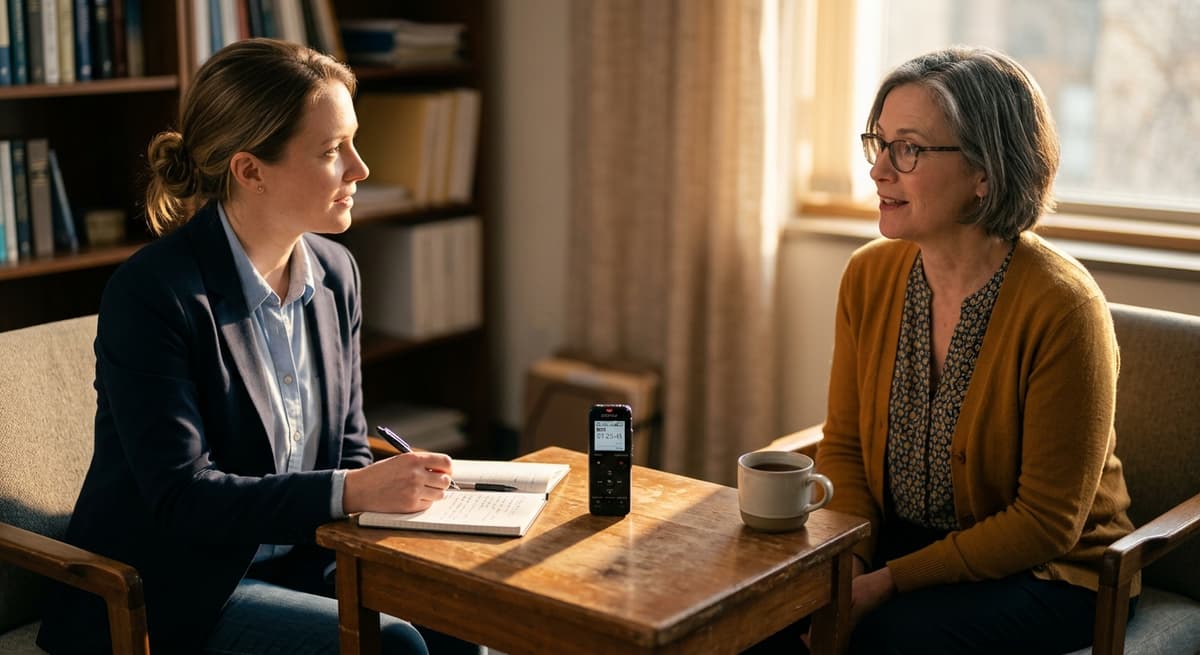
The first question is whether making the recording was itself lawful. For a participant, under article 314bis section 1, the answer is generally yes.
The second question is whether using, sharing or publishing that recording is lawful, and this is a separate legal problem entirely. A lawfully made recording can still cause legal trouble once it is played to someone else, posted on social media, or handed over as evidence. That is where privacy law, principally article 8 of the European Convention on Human Rights and the GDPR, enforced in Belgium by the Gegevensbeschermingsautoriteit/Autorité de protection des données (the GBA/APD), starts to matter, because recording someone's voice and words is processing their personal data regardless of who was allowed to press record.
It is also where the criminal law can reach back in through a different door. Article 314bis section 2 does not only punish holding or disclosing an unlawfully obtained recording. Its second limb separately punishes someone who uses a lawfully made recording of a private communication with fraudulent intent or intent to harm. A recording that was perfectly legal to make can still expose the person who made it to prosecution over what they did with it afterward, covered in more detail below.
Holding, disclosing or using an unlawful recording: article 314bis, sections 2, 2bis, 3 and 4
Section 2 of article 314bis punishes someone who knowingly holds, discloses, disseminates or uses the content of a private communication that was unlawfully intercepted or recorded. The penalty is imprisonment of 6 months to 3 years and a fine of 500 to 20,000 euro, or one of the two, both again subject to the opdecimes multiplier described above.
The same section, in its second limb, punishes a different situation: using a recording that was lawfully made, most often by a participant, with fraudulent intent or the intent to cause harm. This is the clause that catches someone who was entitled to record a conversation but then weaponizes it against the other person.
Section 2bis punishes the mere possession of equipment intended for unlawful interception. Section 3 treats an attempt to commit any of these offenses as if it were the completed offense, so there is no lesser penalty for trying and failing. Section 4 doubles every one of these penalties where the offense is repeated within five years of an earlier conviction for the same or a related offense.
A separate provision, article 259bis, applies broadly the same conduct to public officers, public officials and agents of the public force acting in that capacity, as an aggravated version of the offense reflecting the greater trust placed in someone acting with public authority.
The Antigoon doctrine: can an unlawfully obtained recording still be used in court
Belgian courts do not treat an unlawfully obtained recording as automatically unusable. The relevant rule is known as the Antigoon doctrine (Antigone in French), born in criminal law in a ruling of the Hof van Cassatie/Cour de cassation in 2003. Under Antigoon, unlawfully obtained evidence is excluded only where a specific legal rule requires exclusion, where the irregularity taints the reliability of the evidence, or where using the evidence would be contrary to the right to a fair trial. Outside those situations, admissibility is the default, and exclusion is the exception.
The doctrine did not stay confined to criminal cases. It was extended to tax disputes and to social security matters over the following years, and then, in a ruling of 14 June 2021 (AR C.20.0418.N), the Hof van Cassatie/Cour de cassation extended the same reasoning to purely civil disputes between private parties. Belgium reached this point in its civil procedure well before its neighbors moved their own case law in a similar direction.
None of this should be read as a green light. Antigoon means an unlawfully made recording is not automatically thrown out, not that making it was lawful in the first place, and not that a court will necessarily accept it. A judge still weighs how the recording was obtained, how serious the irregularity was, and how much admitting it would offend a fair trial. Someone considering recording a conversation they are not part of, hoping to rely on Antigoon afterward, is relying on a doctrine that excuses some unlawfully obtained evidence in litigation, not one that excuses the underlying criminal offense of having recorded it in the first place.
What changes on 1 September 2026
A wholesale new Penal Code, published on 8 April 2024 and originally due to take effect on 8 April 2026, was postponed and now enters into force on 1 September 2026. It replaces the old three way split between misdaad, wanbedrijf and overtreding with eight penalty levels, called niveaus, each carrying its own defined menu of possible sentences stated in real euro amounts rather than historical figures multiplied by an opdecimes factor.
The new code also renumbers everything this page has described. Article 314bis section 1, together with the holding and disclosing conduct in section 2, becomes article 342. Article 259bis splits in two: the aggravated interception and holding offense becomes article 343, while the aggravated version of the fraudulent-use offense becomes article 345. The fraudulent use of a lawfully made recording, currently the second limb of article 314bis section 2, becomes its own article 344. Possession of interception equipment, currently article 314bis section 2bis, becomes article 346.
If you are reading this after 1 September 2026, use the new article numbers above. The rest of this page addresses the law as it stands under the current numbering, in force until that date. For how a lawfully made but weaponized statement plays out in reputation law rather than recording law, see Belgium Laws.
This page describes the criminal law and evidentiary doctrine in Belgium around recording a private conversation and does not amount to legal advice for an individual situation. Whether a specific recording is lawful to make, use or rely on in a dispute depends on the exact facts, and the relevant law changes, most immediately on 1 September 2026. Check the current text on ejustice.just.fgov.be, or consult a lawyer, before acting on anything here.
Frequently Asked Questions
Can I record a phone call I am part of in Belgium?
Generally yes. Article 314bis, section 1 of the Strafwetboek/Code pénal only punishes recording a private communication you do not participate in. Since a 2001 ruling of the Hof van Cassatie/Cour de cassation, a participant recording their own conversation falls outside that offense. What you then do with the recording is a separate question.
Is it illegal to record someone without telling them?
It depends on whether you are part of the conversation. Recording a conversation you are having, without telling the other participant, is not by itself the offense in article 314bis. Recording a private conversation between other people, one you are not part of, without the consent of everyone in it, is.
What is the penalty for recording a conversation I am not part of?
Imprisonment of 6 months to 2 years and a fine of 200 to 10,000 euro, or one of the two, under article 314bis, section 1. Because of the opdecimes multiplier, currently ten, the fine actually imposed is 2,000 to 100,000 euro.
Can a recording made without consent still be used as evidence in a Belgian court?
Possibly. Under the Antigoon doctrine, unlawfully obtained evidence is excluded only if a specific rule requires it, the irregularity taints its reliability, or using it would be contrary to the right to a fair trial. A court still weighs the circumstances, and the doctrine does not make the underlying recording lawful to have made.
Can I get in trouble for sharing a recording I was allowed to make?
Yes, in certain circumstances. Article 314bis, section 2 separately punishes using a lawfully made recording of a private communication with fraudulent intent or intent to harm, with imprisonment of 6 months to 3 years and a fine of 500 to 20,000 euro before the opdecimes multiplier.
Are public officials treated differently under this law?
Yes. Article 259bis applies an aggravated version of the same offense to public officers, public officials and agents of the public force acting in that capacity.
Is this law changing soon?
Yes. A new Penal Code enters into force on 1 September 2026 and renumbers this area of law: article 314bis becomes articles 342, 344 and 346, and article 259bis splits into articles 343 and 345.
Does recording someone always require the consent of everyone in the conversation?
No, not if you are a participant. Consent of every participant matters only for someone recording a conversation they are not part of. A participant does not need the other person's consent to make the recording itself, though using it afterward can still raise separate legal issues.
Sources and References
- Code pénal, texte coordonné (articles 259bis et 314bis, interception et enregistrement de communications)(ejustice.just.fgov.be).gov
- Strafwetboek / Code pénal van 8 juni 1867, officiële geconsolideerde tekst (art. 314bis en 259bis)(ejustice.just.fgov.be).gov
- Loi du 29 février 2024 introduisant le Livre II du Code pénal(etaamb.openjustice.be).gov
- SPF Justice, Nouveau Code pénal : entrée en vigueur reportée au 1er septembre 2026(justice.belgium.be).gov
- SPF Justice, Réforme du Code pénal(justice.belgium.be).gov
- Autorité de protection des données, Conversations téléphoniques professionnelles(autoriteprotectiondonnees.be).gov
- Autorité de protection des données, Quels sont mes droits ?(autoriteprotectiondonnees.be).gov