
Austria
Betriebskosten in Austria: What Landlords Can Legally Charge Tenants
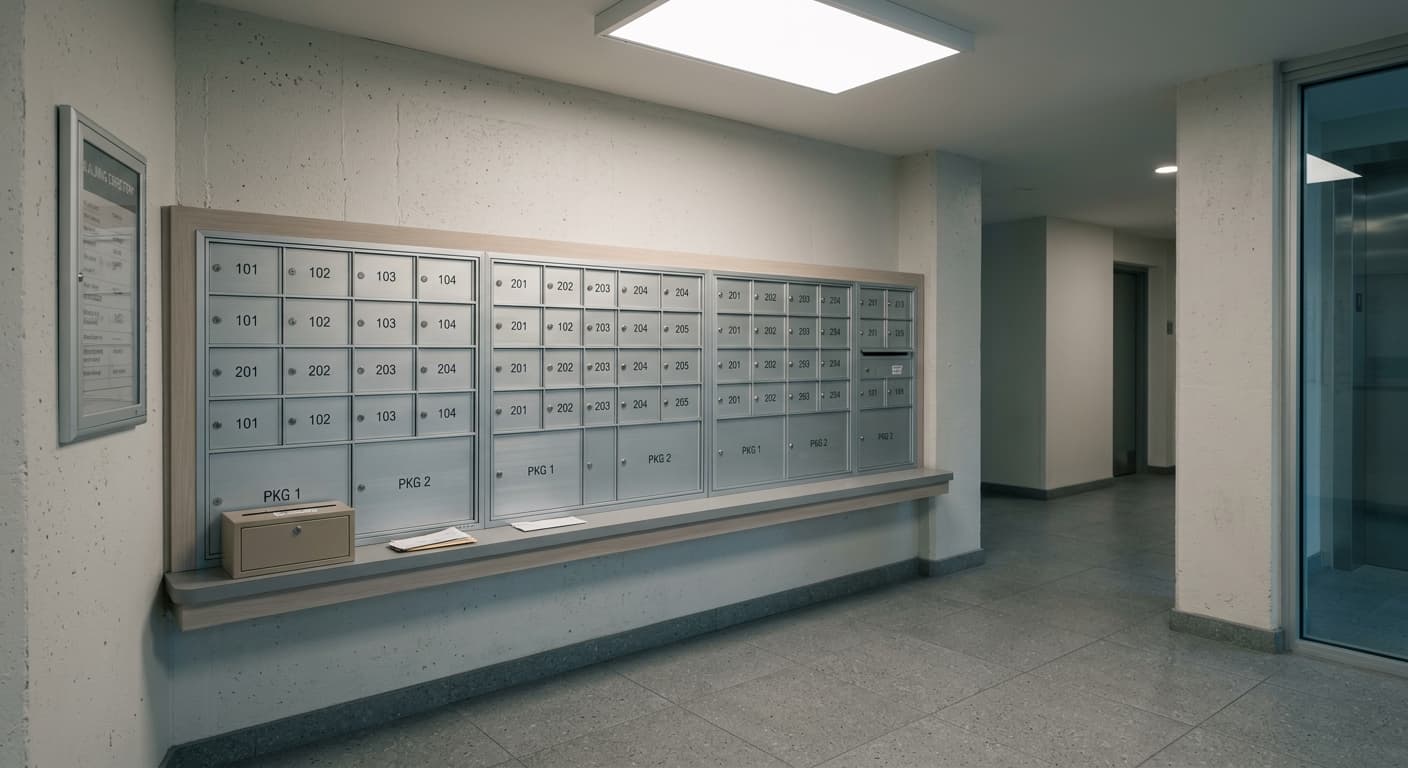
Betriebskosten is the Austrian legal term for the operating costs a landlord may add on top of the base rent (Hauptmiete) in a residential or commercial tenancy. Anyone renting a flat in Vienna, Graz or elsewhere in Austria will see a Betriebskosten line on their monthly statement, usually billed as a fixed monthly instalment and reconciled once a year against the landlord's actual spending.
What makes Austrian law distinctive here is § 21 Abs 1 of the Mietrechtsgesetz (MRG), the Tenancy Act. That paragraph lists exactly which costs qualify as Betriebskosten, and the list is exhaustive (taxativ). If a cost does not appear on it, it is not a valid Betriebskosten charge, no matter how routine or reasonable it might sound on an invoice.
Information last verified on 22 July 2026. This page provides general legal information about Austrian law and does not constitute legal advice in an individual case.
What Counts as Betriebskosten in Austria
Betriebskosten cover the day to day running costs of a rented building rather than the cost of the flat itself. They are distinct from the Hauptmiete (base rent) and from a separate, capped administration fee that is billed alongside them.
§ 21 Abs 1 MRG names the categories of chargeable cost, numbered Z 1 through Z 8 with an inserted Z 1a. Because the list is exhaustive, a landlord cannot invent a ninth category, however reasonable it might look. Tenants checking a Betriebskostenabrechnung (annual operating cost statement) should treat every line item as needing to match one of these eight entries.
The § 21 Abs 1 MRG List: What a Landlord May Pass On
The table below sets out each of the Ziffern (items, abbreviated Z) in § 21 Abs 1 MRG, in the order the statute lists them.
| § 21 Abs 1 | Item | What it covers |
|---|---|---|
| Z 1 | Water supply | Water charges from the public network, or upkeep of a private well or non-public supply, plus mandated checks of the water pipes |
| Z 1a | Meter costs | Calibration, maintenance and reading of consumption meters used to measure individual usage |
| Z 2 | Sweeping, drains, waste, pests | Chimney sweeping (Rauchfangkehrung), drain clearing (Kanalräumung), refuse collection (Unratabfuhr) and pest control (Schädlingsbekämpfung) required under local rules |
| Z 3 | Common area lighting | Lighting of the building's generally accessible areas, and where needed the courtyard and any passage to a rear building |
| Z 4 | Fire insurance | An adequate fire insurance policy (Feuerversicherung) for the building |
| Z 5 | Liability and water damage insurance | Liability insurance (Haftpflichtversicherung) and insurance against water leakage damage, including corrosion damage |
| Z 6 | Glass breakage or storm insurance | Insurance against other damage, such as glass breakage or storm damage, but only where a majority of the Hauptmieter consented to the policy |
| Z 7 | Administration | The administration expenses set out separately in § 22 MRG |
| Z 8 | Caretaking | Reasonable Hausbetreuung (caretaking) costs as set out in § 23 MRG |
Z 6 deserves a closer look because it works differently from the rest of the list. Glass breakage and storm damage cover is not automatically chargeable. It becomes a valid Betriebskosten item only once a majority of the Hauptmieter in the building have agreed to the policy. Without that consent, a landlord who takes out the cover anyway cannot bill it to tenants as a Betriebskosten.
Z 7 and Z 8 work by cross reference rather than by stating a figure. Z 7 points to § 22 MRG for the administration fee, and Z 8 points to § 23 MRG for caretaking costs, so both categories are chargeable in principle but capped or defined by those separate paragraphs.
Grundsteuer: Allowed, But Under a Different Paragraph
Property tax (Grundsteuer) is a cost tenants commonly see on a Betriebskostenabrechnung, and it is a valid charge, but it does not come from the § 21 Abs 1 list at all. It sits in § 21 Abs 2, which covers the laufende öffentliche Abgaben, the recurring public charges owed on the property, subject to any state law that specifically bars passing a particular charge on to tenants.
The distinction matters mainly for how a Betriebskostenabrechnung should be read. A line for Grundsteuer is legitimate, but it belongs to a separate category from the eight Betriebskosten items in Abs 1, even though both categories appear together under the same § 21 heading of "Betriebskosten und laufende öffentliche Abgaben."
What Landlords Cannot Charge as Betriebskosten
Because the § 21 Abs 1 list is exhaustive, several cost types that landlords sometimes bill are not valid Betriebskosten at all.
The largest category is maintenance and repair. Erhaltungs- and Instandhaltungskosten, meaning the structural upkeep and repair of the building, are the landlord's own responsibility under § 3 MRG. They are not a Betriebskosten item, and a repair invoice folded into an annual operating cost statement is one of the most frequent errors tenants find when they check their Betriebskostenabrechnung line by line.
Renovation, improvement work and new equipment purchases (Sanierung, Verbesserung, Neuanschaffungen) fall into the same non-chargeable category, as do the landlord's own financing or loan costs for the building. An administration fee charged above the § 22 cap, discussed below, is also not valid, and glass breakage or storm insurance billed without the required majority tenant consent falls outside § 21 Abs 1 Z 6 for the same reason described above.
Lift and Heating Costs: A Separate Regime
Two of the most commonly billed line items, lift costs and shared heating or hot water costs, do not appear anywhere in the § 21 Abs 1 catalogue. That does not make them illegitimate charges, it means they are governed by different rules entirely.
Lift and other shared facilities are addressed under § 24 MRG, which treats them as a distinct category billed only to the tenants who actually use the facility in question, on a different legal basis from the general Betriebskosten list. Shared heating and hot water costs are governed separately again, under the Heizkostenabrechnungsgesetz (HeizKG), Austria's dedicated heating cost billing law.
The practical point for a tenant reading a Betriebskostenabrechnung is not to expect these two very common charges to be justified by pointing at § 21. They rest on their own separate statutory basis, and a full assessment of how they must be billed calls for looking at § 24 MRG and the HeizKG directly rather than at the Betriebskosten catalogue covered on this page.
The Verwaltungshonorar Under § 22 MRG
Separately from the eight item Betriebskosten list, a landlord may charge a capped administration fee, the Verwaltungshonorar, under § 22 MRG. The statute sets the cap per square meter of the building's usable floor area (Nutzfläche) per calendar year, split into twelve equal monthly instalments.
The cap is tied to the same valorised figure used for the Ausstattungskategorie A rent ceiling under § 15a Abs 3 Z 1 MRG, but charged annually rather than monthly. From 1 April 2026 that figure is 4.51 euros per square meter per year, up from 4.47 euros in the period before. It is reviewed and adjusted again at each future valorisation date, so the figure should be re-checked against the current Statistik Austria publication before relying on it for a specific accounting period.
Divided across twelve months, 4.51 euros per year works out to roughly 0.38 euros per square meter per month. For a 70 square meter flat, the yearly administration fee is 4.51 euros multiplied by 70, or about 315.70 euros, which spread over twelve months comes to roughly 26.31 euros per month. A landlord billing more than the capped figure for administration is overcharging, regardless of the actual cost of managing the building.
How the Annual Betriebskostenabrechnung Works
Most landlords bill Betriebskosten as a Jahrespauschalverrechnung, a fixed monthly instalment calculated from the previous calendar year's actual costs. The landlord may set the instalment up to 10 percent above the prior year's costs without needing tenant agreement first.
Once the year closes, the landlord must present the full annual accounting (Abrechnung) by 30 June of the following year, and must make the underlying receipts and invoices available for tenants to inspect. If the instalments collected during the year did not match the actual costs, the difference is settled once the Abrechnung is finalised.
There is also a time limit on what a landlord can claim. A cost that fell due more than a year before the accounting cannot be included, so an old invoice cannot resurface in a much later Betriebskostenabrechnung.
Where These Rules Apply
The § 21 to 23 MRG Betriebskosten rules apply to tenancies that fall under full application (Vollanwendung) of the MRG, broadly multi-unit buildings under a building permit issued on or before 30 June 1953, plus certain publicly subsidised housing. § 1 MRG sets out the full applicability structure.
A flat that is entirely excluded from the MRG, such as a house with no more than two independent units or a short-term leisure let, is instead governed by the ABGB, where the landlord and tenant are free to agree operating cost terms by contract. Tenants who are unsure which category their tenancy falls into should check their lease and building permit date before assuming the § 21 list applies to their situation.
Checking Your Own Betriebskostenabrechnung
A useful way to read a Betriebskostenabrechnung is to go line by line and ask whether each charge matches one of the eight § 21 Abs 1 items, sits properly under § 21 Abs 2 as a public charge, or falls under the separately capped § 22 administration fee or § 23 caretaking provision. Anything else, most often a maintenance, renovation or financing cost, does not belong on the statement at all.
The Betriebskosten-Checkliste tool on this site walks through that same check item by item. For the separate question of how much rent itself can be charged and when it can rise, see rent control under the MRG.
Frequently Asked Questions
What are Betriebskosten in Austria?
Betriebskosten are the running costs of a rented building that a landlord may add to the base rent (Hauptmiete). Under § 21 Abs 1 MRG the list of costs that qualify is exhaustive, so a landlord may only bill items that appear on that list and nothing else.
Is Grundsteuer (property tax) part of the Betriebskosten?
Property tax is passable to tenants, but it is not one of the listed items in § 21 Abs 1. It falls under § 21 Abs 2 as a laufende öffentliche Abgabe (a recurring public charge), a related but separate category within the same paragraph.
Can a landlord charge tenants for building repairs as Betriebskosten?
No. Maintenance, repair and improvement costs are not Betriebskosten under § 21 MRG. The landlord bears these under § 3 MRG. A repair or renovation line item on a Betriebskostenabrechnung is one of the most common wrongful charges tenants encounter.
How much is the Verwaltungshonorar (administration fee) in Austria?
From 1 April 2026 the § 22 MRG administration fee is 4.51 euros per square meter of usable floor area per year, up from 4.47 euros previously. It is charged once per calendar year but split into twelve equal monthly amounts.
Are lift and heating costs Betriebskosten under § 21 MRG?
Not under § 21. Lift and other shared facility costs run under § 24 MRG as a separate category billed only to tenants who use the facility, and shared heating and hot water costs run under the Heizkostenabrechnungsgesetz. Both are real charges tenants may see, but they follow different rules from the general Betriebskosten list.
Can a landlord charge for glass breakage or storm damage insurance?
Only if a majority of the Hauptmieter in the building agreed to take out that insurance. Without that majority consent, § 21 Abs 1 Z 6 MRG does not allow the cost to be passed on as a Betriebskosten.
When must a landlord provide the annual Betriebskostenabrechnung?
The landlord must present the annual accounting for the previous calendar year by 30 June of the following year, and must make the underlying receipts available for the tenants to inspect. Costs that fell due more than a year earlier can no longer be claimed.
Do the § 21 Betriebskosten rules apply to every rental in Austria?
They apply to tenancies in full application (Vollanwendung) of the MRG. A flat that is fully excluded from the MRG, such as a one or two unit house or a short-term leisure let, is governed by the ABGB instead, where the landlord and tenant can agree operating cost terms freely.
Sources and References
- § 1 MRG, Anwendungsbereich (Vollanwendung, Teilanwendung, Vollausnahme)(ris.bka.gv.at).gov
- § 21 Abs 1 Z 1 bis Z 3 MRG, Wasser, Eichung und Wartung von Messvorrichtungen, Rauchfangkehrung, Kanalräumung, Unratabfuhr, Schädlingsbekämpfung, Beleuchtung(ris.bka.gv.at).gov
- § 21 Abs 1 Z 4 und Z 5 MRG, Feuerversicherung, Haftpflicht- und Leitungswasserversicherung(ris.bka.gv.at).gov
- § 21 Abs 1 Z 6 MRG, Glasbruch- und Sturmschadenversicherung nur mit Zustimmung der Mehrheit der Hauptmieter(ris.bka.gv.at).gov
- § 21 Abs 1 Z 7 und Z 8 MRG, Verweis auf § 22 (Verwaltung) und § 23 (Hausbetreuung)(ris.bka.gv.at).gov
- § 21 Abs 2 MRG, anrechenbare laufende öffentliche Abgaben(ris.bka.gv.at).gov
- § 21 Abs 3 und Abs 4 MRG, Jahrespauschalverrechnung und Frist für die Abrechnung(ris.bka.gv.at).gov
- § 22 MRG, Verwaltungshonorar je Kalenderjahr und Quadratmeter Nutzfläche(ris.bka.gv.at).gov
- § 15a Abs 3 Z 1 MRG, valorisierter Ausstattungskategorie A Betrag als Bemessungsgrundlage für das Verwaltungshonorar(ris.bka.gv.at).gov
- Statistik Austria, Richtwerte und Kategoriebeträge, valorisiert ab 1 April 2026(statistik.at).gov