
Austria
Räumungsklage in Austria: How Eviction of a Tenant Actually Works
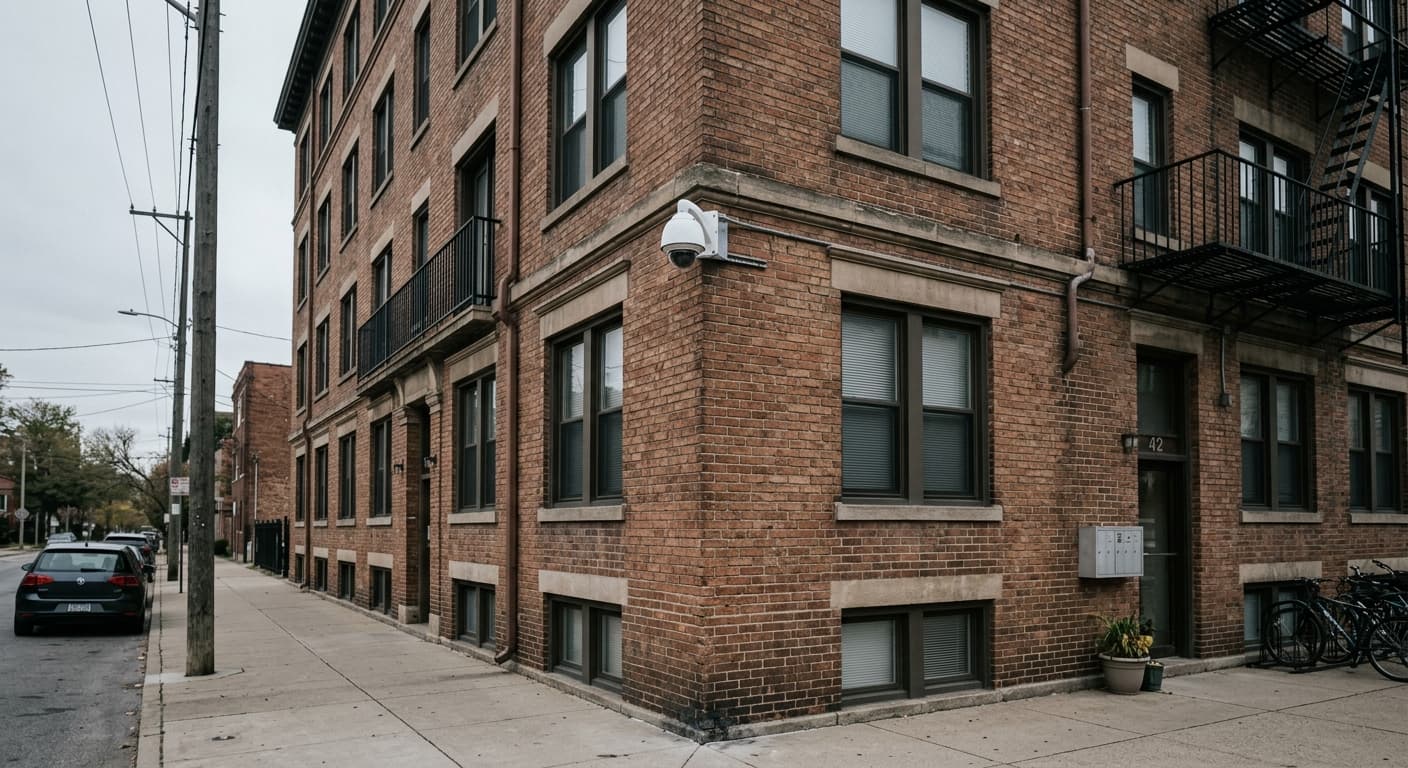
A Räumungsklage, an eviction lawsuit, is the legal action a landlord in Austria brings to remove a tenant or occupant who no longer has a right to stay. It is not the same thing as a termination letter or a gerichtliche Aufkündigung, though the two are closely linked: a successful Aufkündigung is one of the two routes to the court judgment that makes an eviction possible.
Nothing about eviction in Austria happens automatically or by the landlord's own hand. A tenant cannot lawfully be locked out, have their belongings removed, or be told to leave without a court process behind it. This page explains how that process runs, the protection a tenant in arrears actually has under § 33 MRG, how much extra time a court can grant to move out, and what remains genuinely open at the final enforcement stage.
Information last verified on 22 July 2026. This page provides general legal information about Austrian law and does not constitute legal advice in an individual case.
From termination to eviction: the Räumungstitel
Before a Räumungsexekution, the physical enforcement stage, can ever happen, the landlord needs a Räumungstitel, an enforceable court decision ordering the occupant to vacate. There is no shortcut around this. A landlord who changes the locks, removes a tenant's belongings, or otherwise forces someone out without a title is acting outside the law, regardless of how much rent is owed or how serious the tenant's conduct has been.
Whether a tenancy carries the MRG's statutory termination protection in the first place depends on which § 1 MRG tier the flat falls into. In a Vollanwendung or Teilanwendung tenancy, the landlord needs one of the 16 grounds listed in § 30 MRG and can only terminate through the court. In a Vollausnahme tenancy, such as a building with no more than two independent flats or housing tied to an employment relationship, those grounds and the court-only rule do not apply, and the general ABGB rules on ending a lease and on dissolution under § 1118 ABGB govern instead.
The two paths to a Räumungstitel
A landlord in a protected tenancy reaches a Räumungstitel in one of two ways.
The first is a gerichtliche Aufkündigung under § 33 MRG. The landlord terminates the lease through the court, stating the § 30 MRG ground relied on. If the tenant does not object, or the objection fails, the Aufkündigung becomes final and enforceable and functions as the Räumungstitel.
The second is a Räumungsklage in the narrower sense, a standalone eviction lawsuit. This is the route used for a § 1118 ABGB dissolution, most often serious rent arrears or gravely damaging use of the property, and it is also how a landlord proceeds against an occupant who was never a proper tenant at all, for example someone who stayed on after a lease already ended. Both paths end in the same place: a judgment the landlord can enforce.
| Gerichtliche Aufkündigung (§ 33 MRG) | Räumungsklage / § 1118 ABGB | |
|---|---|---|
| Applies to | Vollanwendung and Teilanwendung tenancies | Any occupancy, including Vollausnahme tenancies and occupants with no valid title |
| Grounds | One of the 16 § 30 MRG Kündigungsgründe | Arrears or gravely damaging use, or simple absence of any right to occupy |
| Tenant's defense | Einwendungen against the Aufkündigung | Ordinary defense in the civil action |
| Result if unopposed or lost | Enforceable Aufkündigung | Enforceable judgment |
Because the tenant can raise Einwendungen against a gerichtliche Aufkündigung, the landlord then has to prove the ground actually applies. A disputed case does not resolve quickly or automatically, whichever route the landlord uses.
The arrears cure under § 33 MRG: a tenant's strongest protection
The single most important protection for a tenant facing eviction over unpaid rent sits in § 33 Abs 2 MRG. Where a landlord has terminated for rent arrears under § 30 Abs 2 Z 1 MRG, and the tenant was not grossly at fault for falling behind, the tenant can still save the tenancy by paying everything owed before the first-instance hearing closes. If the full amount is paid in time, the termination is set aside and the lease continues, although the tenant still has to bear the costs of the proceeding.
Under § 33 Abs 3 MRG, that same cure applies by analogy to a § 1118 ABGB Räumungsklage brought for arrears, not only to a § 33 MRG Aufkündigung. In practice this means a tenant sued for eviction over unpaid rent, through either route, has one real chance to fix the problem before the case is decided, provided the arrears were not run up out of gross fault.
As an illustration, not a fixed figure from the statute: suppose a tenant falls two months behind on rent, is sent a Mahnung, and the landlord then files a gerichtliche Aufkündigung once the arrears exceed eight days overdue under § 30 Abs 2 Z 1 MRG. If the tenant pays the full outstanding amount before the hearing closes, and the arrears were the result of, say, a late paycheck rather than deliberate non-payment, the court sets the termination aside. The tenant keeps the flat but pays the court costs generated by the case.
This cure is not unlimited. It requires paying the whole arrears, not a partial amount, and it is not available where the arrears resulted from grobes Verschulden, gross fault, on the tenant's part. A tenant who has used this cure once should not assume it is available indefinitely on repeated defaults.
The Räumungsfrist: up to nine months to move out
Losing the case is not automatically the end of the timeline. Under § 34 MRG, a court may grant a Räumungsfrist, an extended period before the eviction must be carried out, beyond the ordinary statutory period, where the tenant applies for it, shows an important reason, and the extension does not disproportionately prejudice the landlord. The maximum extension the court can grant is nine months.
This is a discretionary extension, decided case by case on the tenant's circumstances and the landlord's countervailing interest, not an automatic right to the full nine months in every case. A tenant who needs more time to find alternative housing, for instance because of age, health, or school-age children, is the kind of situation this provision is meant to address, but the outcome still depends on what the court finds reasonable given the landlord's position.
Räumungsexekution: enforcing the Räumungstitel
Once the Räumungstitel is enforceable and any Räumungsfrist has run out, and the occupant still has not left voluntarily, the landlord enforces the judgment through the Exekutionsordnung, Austria's enforcement law, in a process known as Räumungsexekution. This stage is handled by the enforcement court and its officers rather than by the landlord directly.
The exact procedural detail of a Räumungsexekution, including scheduling and any notice given before the enforcement date, is a matter of enforcement law that this page does not set out in full, since procedural rules of this kind can change and should be confirmed against the current Exekutionsordnung or with a lawyer before relying on them. What is settled is the sequence: a Räumungstitel first, then the Räumungsfrist, then enforcement if the occupant still has not left.
There is no fixed statutory figure for how long the whole process, from Aufkündigung or Räumungsklage to actual vacant possession, takes in practice. It depends on whether the tenant raises Einwendungen or defends the case, how long the particular court takes to decide, whether a Räumungsfrist is granted and for how long, and how the enforcement stage is then scheduled. Anyone facing either side of an eviction should treat any specific timeframe they are quoted as an estimate for their case, not a guarantee set by statute.
What a tenant facing eviction can do
A tenant served with an Aufkündigung or a Räumungsklage has real options, and the timing of each one matters.
- Check the § 1 MRG tier of the flat first. Whether § 30 and § 33 MRG apply at all depends on it, and a Vollausnahme tenancy is defended on different grounds than a protected one.
- If the ground is rent arrears, pay the full amount owed before the first-instance hearing closes wherever that is possible. This is the § 33 Abs 2 MRG cure and it can end the case outright.
- Raise Einwendungen against a gerichtliche Aufkündigung within the time limit set in the court's notice, rather than letting it become final unopposed.
- If the case is lost, apply for a Räumungsfrist under § 34 MRG and set out the concrete reason more time is needed.
- Get advice from a Rechtsanwalt or from the Mietervereinigung or arbeiterkammer.at early, since the arrears cure and the Einwendungen deadline both depend on acting before, not after, the hearing date.
For how a tenancy can end in the first place, see ending a tenancy in Austria. For whether a flat's rent is capped and which MRG tier it sits in, see rent control in Austria under the MRG.
Frequently Asked Questions
What does Räumungsklage mean in Austria?
A Räumungsklage is a lawsuit asking a court to order a tenant, or a former occupant with no valid title to stay, to vacate a property. It results in a Räumungstitel, the judgment a landlord needs before an eviction can be enforced. It is a separate action from a gerichtliche Aufkündigung, though both can lead to eviction.
Can a landlord in Austria evict a tenant without going to court?
No. A landlord cannot lawfully remove a tenant, change the locks, or clear out belongings without a court-issued Räumungstitel and, where the tenant does not leave voluntarily, an enforcement step through the courts. Self-help eviction carries civil and potentially criminal exposure for the landlord.
What happens if I fall behind on rent and get an eviction notice in Austria?
Rent arrears is a statutory ground under § 30 Abs 2 Z 1 MRG in protected tenancies, and also a basis for a § 1118 ABGB Räumungsklage. In both cases, § 33 MRG lets a tenant who is not grossly at fault set the termination aside by paying the full arrears before the first-instance hearing closes, though the tenant still bears the costs of the proceeding.
How much time does a court give a tenant to move out after an eviction judgment?
The MRG sets a baseline Räumungsfrist, and § 34 MRG allows the court to extend it up to a maximum of nine months where the tenant shows an important reason and the extension does not unfairly prejudice the landlord. The court decides case by case; there is no automatic entitlement to the full nine months.
Does the MRG eviction protection apply to every rental in Austria?
No. It depends on the § 1 MRG tier. Vollanwendung and Teilanwendung tenancies get the § 30 statutory grounds and the § 33 court-only termination procedure. A Vollausnahme tenancy, such as a house with no more than two independent flats or employer-tied housing, falls outside those protections and is governed by the general ABGB rules instead.
What is a Räumungsexekution?
It is the enforcement stage that follows an enforceable Räumungstitel and an expired Räumungsfrist, carried out through the Exekutionsordnung once a tenant has not vacated voluntarily. The procedural detail of this stage is set by enforcement law and can change, so a person facing it should check the current procedure with the enforcement court or a lawyer rather than assume a fixed process.
Can a tenant contest a gerichtliche Aufkündigung?
Yes. A tenant served with a gerichtliche Aufkündigung under § 33 MRG can file Einwendungen against it. Once Einwendungen are raised, the landlord has to prove the termination ground was valid, and the case proceeds as ordinary litigation rather than becoming automatically enforceable.
How long does an eviction take in Austria from start to finish?
There is no fixed statutory timeline. The overall duration depends on whether the tenant contests the Aufkündigung or Räumungsklage, how long the court takes to decide, whether a Räumungsfrist of up to nine months under § 34 MRG is granted, and the scheduling of the Räumungsexekution if the tenant still does not leave.
Sources and References
- § 1 MRG, Anwendungsbereich: Vollanwendung, Teilanwendung und Vollausnahme(ris.bka.gv.at).gov
- § 29 MRG, befristete Mietverträge und ihr Ende(ris.bka.gv.at).gov
- § 30 MRG, die Kündigungsgründe des Vermieters im Überblick(ris.bka.gv.at).gov
- § 30 Abs 2 Z 1 MRG, Mietzinsrückstand als Kündigungsgrund(ris.bka.gv.at).gov
- § 33 Abs 1 MRG, gerichtliche Aufkündigung durch den Vermieter(ris.bka.gv.at).gov
- § 33 Abs 2 und Abs 3 MRG, Heilung des Zahlungsrückstands vor Schluss der Verhandlung(ris.bka.gv.at).gov
- § 34 MRG, Verlängerung der Räumungsfrist um bis zu neun Monate(ris.bka.gv.at).gov
- § 1118 ABGB, Auflösung des Bestandvertrags wegen Zahlungsrückstands oder erheblich nachteiligen Gebrauchs(ris.bka.gv.at).gov
- § 1090 ABGB, allgemeine Bestimmungen zum Bestandvertrag (Miete und Pacht)(ris.bka.gv.at).gov