
Austria
Noise Complaints and Neighbor Disputes in Austria: Lärmbelästigung and Nachbarrecht
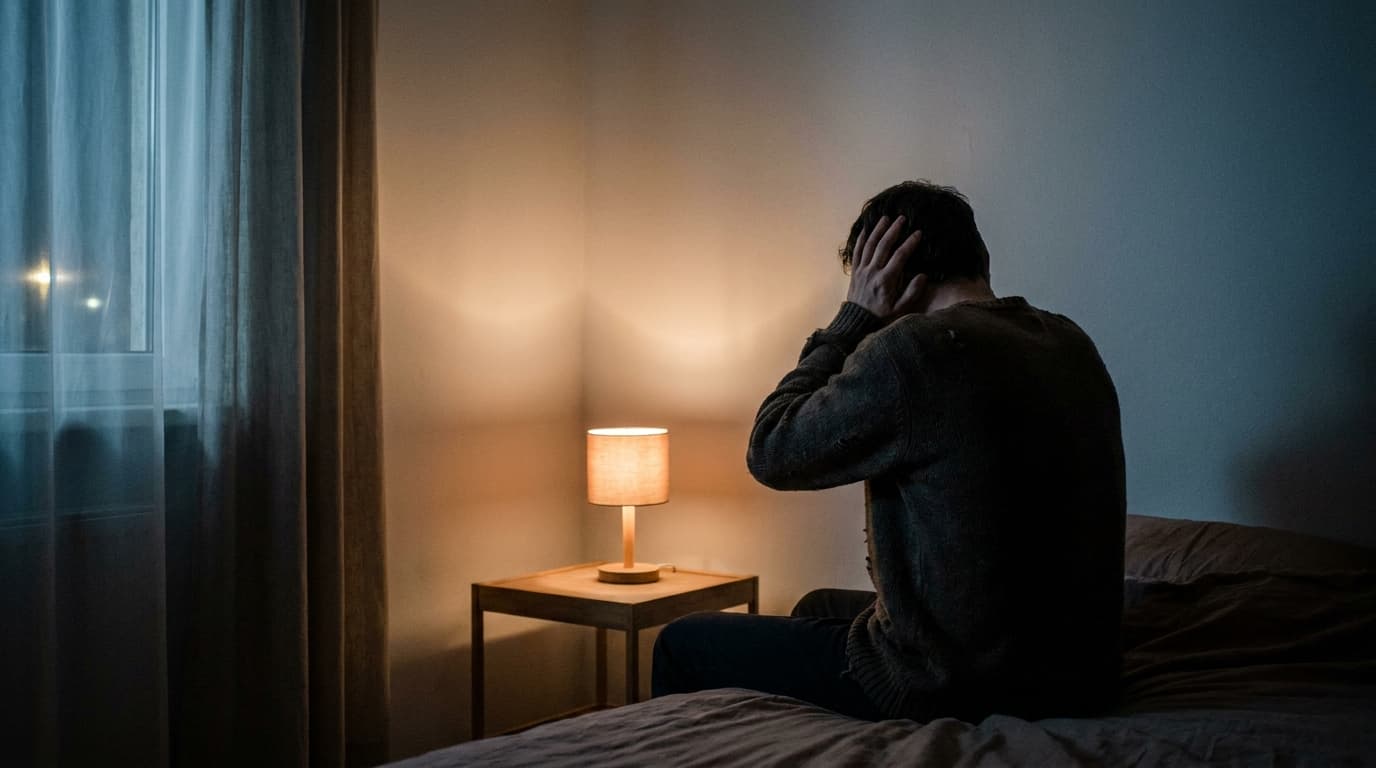
Loud music from an upstairs apartment, a barking dog, and a barbecue that drifts smoke over the fence are among the most common neighbor disputes in Austria. These situations are handled through civil law rules that are separate from Austria's administrative rules on noise as a public order matter.
This page explains the core neighbor law provision in the ABGB, Austria's civil code, and the two part legal test Austrian courts use to decide whether a neighbor's noise or other interference is unlawful. It also covers what happens when the source is an officially licensed facility, the rules on overhanging branches and roots, and how quiet hours actually work in Austria.
Information last verified on 22 July 2026. This page provides general legal information about Austrian law and does not constitute legal advice in an individual case.
The Legal Basis: § 364 ABGB and the Two Prong Immissions Test
Austria's core rule for neighbor disputes over noise, smoke, odor, and similar nuisances sits in § 364 of the ABGB, the general civil code dating back to 1811. The relevant paragraph was last substantively updated by BGBl. I Nr. 91/2003, in force since 1 July 2004.
§ 364 Abs 2 ABGB lets a landowner prohibit a neighbor's Einwirkungen, meaning wastewater, smoke, gases, heat, odor, noise, vibration, and similar effects. But this right only exists when two conditions are both met at once.
First, the interference must exceed the ortsübliches Maß, the level that is customary given the local circumstances. A property near a working farm has a different baseline than an apartment in central Vienna. Second, the interference must wesentlich beeinträchtigen, meaning materially impair, the customary use of the affected property. Both prongs are required; satisfying only one is not enough on its own.
Consider a single evening of amplified music at a wedding reception on an otherwise quiet street. That noise level might exceed what the street is used to, yet a court could still find it does not materially impair the neighbor's ordinary use of the property, since it is a one off event. A home studio running amplified rehearsals most evenings for months, well beyond anything neighbors on that street are accustomed to, is far more likely to satisfy both prongs.
One category of interference is treated as unlawful without any balancing test at all. § 364 Abs 2 ABGB states that unmittelbare Zuleitung, meaning a direct physical conduction of something onto the neighbor's land, such as a drainage pipe discharging wastewater straight onto the neighbor's plot, is impermissible under all circumstances. No ortsüblich analysis applies to that category.
Light and Air From Trees: The Stricter Abs 3 Standard
§ 364 Abs 3 ABGB addresses a related but distinct situation: a neighbor's trees or other plants blocking light or air. The threshold here is stricter than the general noise and odor test. The interference must still clear the Abs 2 ortsübliches Maß ceiling, but it must additionally amount to an unzumutbare Beeinträchtigung, an unreasonable impairment, of the affected property's use.
Rules on tree protection at the federal and Land level are expressly preserved alongside this civil claim. A tall hedge blocking a neighbor's sunlight may also fall under a municipal Baumschutz ordinance separate from the ABGB claim.
Bringing a Civil Claim: The Unterlassungsklage
When a neighbor's interference clears the two prong test, § 364 Abs 2 ABGB gives the affected owner the right to untersagen it, meaning to prohibit it. In practice, this right is enforced through an Unterlassungsklage, a civil lawsuit asking the court to order the neighbor to stop the offending activity going forward.
These disputes are generally brought before the Bezirksgericht, the district court that handles neighbor law and property matters of this kind. The claimant carries the burden of showing both that the interference exceeds the locally customary level and that it materially impairs the customary use of the property, and expert evidence on sound levels or comparable local conditions is often needed to establish both elements.
A successful Unterlassungsklage results in a court order requiring the neighbor to stop or limit the specific interference going forward. It does not, by itself, award money for past harm; a separate claim would be needed for that, subject to the ordinary rules of fault based liability.
When the Source Is an Officially Authorized Installation
§ 364a ABGB carves out an important exception. If the excessive interference comes from a Bergwerksanlage, a mining installation, or any behördlich genehmigte Anlage, an officially authorized facility such as a licensed factory or workshop, the affected owner loses the right to sue to stop it. The Unterlassungsklage is not available against a lawfully permitted installation operating within its authorization.
Instead, the owner may bring a claim for Ersatz des Schadens, compensation for the damage caused, before the civil courts. This is a no fault claim. § 364a ABGB specifically allows recovery even where the harm arises from circumstances that were not considered during the original authorization proceeding.
The trade off reflects a familiar balance in Austrian civil law. Some authorized industrial or commercial activity is accepted even where it exceeds the ordinary neighbor law threshold, but the affected party is still made financially whole through the compensation claim rather than left without any remedy at all.
Overhanging Branches and Intruding Roots
Trees near a property boundary raise their own set of rules. § 421 ABGB determines ownership by the trunk, the Stamm, not the roots. A tree whose trunk stands directly on the boundary between two properties belongs to both neighbors jointly, gemein.
§ 422 ABGB gives a landowner a genuine self help right. An owner may remove roots from a neighbor's tree or plant that have grown into their own soil, and may cut off or otherwise use branches hanging into their own airspace, without going to court first. This right comes with two conditions: the work must be done fachgerecht, meaning in a professionally competent manner, and the owner must spare the plant as far as possible.
Municipal and Land tree protection rules, Baumschutz, are expressly preserved, so a protected tree may still require a permit before branches are cut, even where § 422 would otherwise allow it. A separate carve out under § 14 ForstG 1975 also restricts this self help right against an adjoining forest.
Cost allocation under § 422 Abs 2 ABGB defaults to the affected owner: the owner who removes roots or cuts branches normally pays for that work. If the roots or branches have caused damage, or damage is clearly imminent, the tree's owner must reimburse half of the necessary cost. For example, if a neighbor's overgrown hedge roots crack a patio's paving stones, the affected owner may remove the roots and can recover half of the reasonable removal cost from the hedge's owner, once that damage is shown.
Excavation and Loss of Support
A related rule, § 364b ABGB, applies when construction work rather than noise or plants is the source of friction. Land may not be excavated in a way that deprives the neighbor's soil or building of its necessary support, unless the party doing the excavation provides adequate alternative reinforcement first. This comes up most often with basement work or retaining wall removal near a shared boundary.
Quiet Hours in Austria: Local Rules, Not a National Clock
A common misconception is that Austria has one nationwide law fixing quiet hours. It does not. Austria's official citizen information portal, oesterreich.gv.at, states plainly that there is no legally fixed rest period, keine gesetzlich festgelegte Ruhezeit, at the federal level.
Even during the period most people assume is protected, whether a disturbance is unlawful still has to be assessed case by case. The standard is whether the noise amounts to an ungebührliche Lärmerregung, an improper disturbance, rather than a simple check of the clock.
In practice, night rest rules come from each Bundesland's own legislation and from municipal ordinances, including building house rules and local police regulations, and they can vary from place to place. Most follow a customary window of roughly 22:00 to 06:00, sometimes with an additional midday rest, Mittagsruhe, or separate rules for Sundays and public holidays.
The precise hours depend on the applicable Land and Gemeinde rule where the property is located. Anyone who needs the exact hours for a specific address should check that municipality's own ordinance rather than relying on a single figure for the whole country.
The Administrative Track: Fines for Disturbing the Peace
Separate from the civil Unterlassungsklage, Austria also has an administrative enforcement track for noise as a matter of public order. In Vienna, for example, the Wiener Landes-Sicherheitsgesetz makes it a Verwaltungsübertretung, an administrative offense, to cause ungebührlicherweise störenden Lärm, improperly disturbing noise. The fine can reach 700 euros, or, if the fine cannot be collected, up to one week of substitute detention. This provision expressly leaves room for other, stricter or different Land level noise rules to apply as well.
This administrative track is independent of the civil claim under § 364 ABGB. A person disturbed by a neighbor's noise can, in principle, pursue both at once. Where the disturbing neighbor is a tenant rather than an owner, persistent noise can carry a further consequence: it can qualify as erheblich nachteiliger Gebrauch, one of the statutory grounds a landlord can rely on to end a tenancy under the MRG. Reporting the disturbance to the local authority or police can lead to an administrative fine, while a separate civil Unterlassungsklage can be brought or threatened where the interference meets the ortsüblich and wesentlich test.
For example, a tenant whose upstairs neighbor regularly hosts loud late night parties could file a complaint with the local Magistrat under the applicable Landes-Sicherheitsgesetz, which might result in a fine for the host. That same tenant could separately pursue a civil claim aimed at a lasting court order requiring the parties to stop.
Practical Steps When Facing a Noisy Neighbor
Documentation matters for either track. Keeping a log of dates, times, duration, and the nature of the disturbance supports both an administrative complaint and a civil claim, since both ultimately turn on comparing the interference to what is customary in that location.
Speaking to the neighbor directly, or through the building's Hausverwaltung, the property management, where one exists, resolves many disputes without any formal process. Where informal resolution fails, the choice between the administrative and civil track is not exclusive.
Renters and owners frequently start with a complaint to the local authority, since filing one costs nothing, and reserve the Unterlassungsklage for situations where the disturbance is persistent and a lasting court order is needed. For other areas of Austrian law affecting tenants and property owners, see the Austria overview.
Frequently Asked Questions
Is there a law in Austria that fixes quiet hours at 22:00 to 06:00?
No single federal law fixes that window. Austria's citizen portal, oesterreich.gv.at, confirms there is no legally fixed rest period at the national level. Night rest hours are set by each Bundesland and municipality, and 22:00 to 06:00 is only a common, locally variable custom, not a nationwide statute.
What is the legal test for whether a neighbor's noise is unlawful in Austria?
Under § 364 Abs 2 ABGB, a neighbor's noise or other interference can only be prohibited if it both exceeds the ortsübliches Maß, the level customary for that location, and materially impairs the customary use of the affected property. Meeting only one of those two conditions is not enough.
Can I sue my neighbor directly to stop noise, or do I have to involve the police first?
These are two separate tracks. A civil Unterlassungsklage under § 364 ABGB is generally brought before the Bezirksgericht and does not require a police report first. A complaint about ungebührliche Lärmerregung under Landes police law is a separate administrative process, and both can be pursued at the same time.
What happens if the noise comes from a licensed factory or authorized facility next door?
§ 364a ABGB removes the right to sue to stop an interference coming from a Bergwerksanlage or any officially authorized installation. Instead, the affected owner can claim compensation for the resulting damage, even where the harm involves circumstances the original authorization did not consider.
Can I cut branches that hang over my property from my neighbor's tree?
Yes. § 422 ABGB gives a self help right to cut branches hanging into your airspace and remove roots that have grown into your soil, provided the work is done professionally and the plant is spared where possible. A local tree protection ordinance may still require a permit for a protected tree.
Who pays for removing a neighbor's tree roots or branches?
The owner carrying out the removal normally pays for it. The tree's owner only has to reimburse half of the necessary cost if the roots or branches have caused damage or clearly threaten to.
What fine can I face for disturbing neighbors with noise in Vienna?
Under the Wiener Landes-Sicherheitsgesetz, causing ungebührlicherweise störenden Lärm is an administrative offense punishable with a fine of up to 700 euros, or up to a week of substitute detention if the fine cannot be collected. Other Bundesländer have their own comparable rules.
Does the noise rule differ between an apartment building and a detached house?
The same § 364 ABGB two prong test applies to both, but the ortsübliches Maß it is measured against reflects the customary conditions at that specific location, so a dense apartment building and an isolated rural house will not share the same baseline for what is customary.
Sources and References
- § 364 Abs 2 ABGB, the two prong immissions test: exceeding the ortsübliches Maß and wesentliche Beeinträchtigung of the customary use(ris.bka.gv.at).gov
- § 364 Abs 3 ABGB, the stricter unzumutbare Beeinträchtigung standard for light and air withheld by a neighbor's trees or plants(ris.bka.gv.at).gov
- § 364a ABGB, no injunction against a behördlich genehmigte Anlage, only a no fault claim for Ersatz des Schadens(ris.bka.gv.at).gov
- § 364b ABGB, a neighbor's excavation may not deprive an adjoining building or soil of its necessary support(ris.bka.gv.at).gov
- § 421 ABGB, ownership of a boundary tree follows the trunk, not the roots(ris.bka.gv.at).gov
- § 422 ABGB, the self help right to remove intruding roots and cut overhanging branches, done fachgerecht, with half cost reimbursement only where damage arises(ris.bka.gv.at).gov
- oesterreich.gv.at, Störungen durch Nachbarn: keine gesetzlich festgelegte Ruhezeit in Austria(oesterreich.gv.at).gov
- Wiener Landes-Sicherheitsgesetz (WLSG) § 1, ungebührlicherweise störender Lärm as a Verwaltungsübertretung punishable with a fine up to 700 euros(ris.bka.gv.at).gov