
Austria
Neighbour Law in Austria: An Overview of the ABGB Nachbarrecht Framework
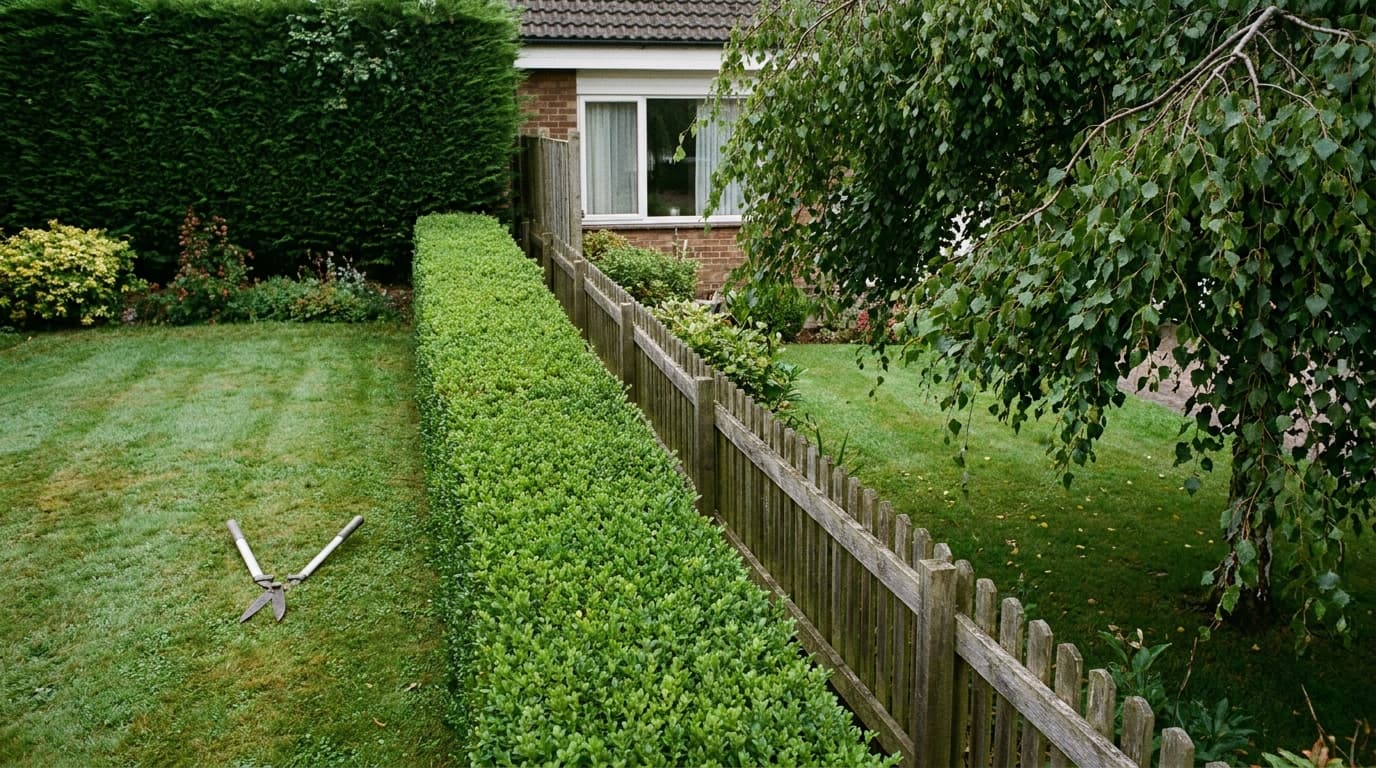
Austria's neighbour law sits mainly in the ABGB, the General Civil Code first enacted in 1811 and still in force today with periodic amendments. A compact cluster of paragraphs, primarily §§ 364 to 364b and §§ 421 to 422, governs most disputes between adjoining property owners: noise and other nuisances, damage from an authorised installation next door, excavation that undermines a neighbour's building, and trees or branches that cross a boundary.
This page orients you to that framework and to the two separate tracks Austrian law uses to resolve a neighbour dispute, a civil claim between the parties and an administrative process run by the state or municipality. For the detailed rules on noise complaints specifically, including the exact two part legal test and how quiet hours actually work, see noise and neighbour disputes.
Information last verified on 22 July 2026. This page provides general legal information about Austrian law and does not constitute legal advice in an individual case.
Austria's Neighbour Law Framework: The ABGB
Most disputes between neighbouring landowners in Austria are resolved under the ABGB (Allgemeines bürgerliches Gesetzbuch), Austria's general civil code. The core provisions sit in a compact cluster: §§ 364 to 364b address interferences that cross a property boundary, while §§ 421 and 422 address trees and vegetation at or near that boundary.
§ 364 ABGB is the anchor provision. It limits how far an owner's use of their own land may interfere with a neighbouring property through noise, smoke, gases, heat, odour, vibration and similar effects, and it sets the two part legal test Austrian courts apply to decide when such an interference becomes unlawful. That test, together with worked examples and the related rules on light and air withheld by a neighbour's trees, is covered in detail in noise and neighbour disputes.
§ 364a ABGB addresses a narrower situation: interference that comes from a mining operation or another officially authorised installation, such as a licensed factory. In that case the affected owner cannot obtain a court order stopping the activity, and the remedy is limited to a claim for compensation for the resulting damage.
§ 364b ABGB covers excavation. A landowner may not dig in a way that deprives a neighbour's soil or building of the support it needs, unless adequate alternative reinforcement is provided first. This provision comes up most often with basement construction and retaining wall work near a shared boundary.
§ 421 ABGB determines who owns a tree standing at a property boundary. Ownership follows the trunk, not the roots, so a trunk growing directly on the boundary line makes the tree common to both neighbours. § 422 ABGB then gives a landowner a genuine self help right to remove roots that have grown into their own soil and to cut branches hanging into their own airspace, without going to court, provided the work is done professionally and the plant is spared where reasonably possible.
Two Tracks: Civil Claims and Administrative Enforcement
A dispute over noise, smoke, or another nuisance between neighbours in Austria can run on two separate tracks at the same time, and it helps to understand the difference before deciding how to respond.
The first track is civil. Under § 364 Abs 2 ABGB, an affected owner can bring an Unterlassungsklage, a civil lawsuit asking a court to order the neighbour to stop the offending activity going forward. These claims are generally brought before the Bezirksgericht, the district court, and turn on the two part test explained in the companion page on noise disputes.
The second track is administrative. Causing a disturbance that affects public order, such as excessively loud noise, can be an administrative offence under the applicable Land's police law, enforced by the local authority with a fine rather than a court judgment. This track does not require the affected neighbour to prove the same civil law test, and it runs independently of any private lawsuit.
These two tracks are not mutually exclusive. A person disturbed by a neighbour's noise can file an administrative complaint with the local authority and, separately, pursue or threaten a civil Unterlassungsklage aimed at a lasting court order.
Noise Disputes at a Glance
Noise is the most common trigger for a neighbour dispute in Austria, whether from loud music, a barking dog, renovation work, or a rowdy gathering. The governing test comes from § 364 Abs 2 ABGB: an interference can only be prohibited if it both exceeds the ortsübliches Maß, the level customary for that location, and materially impairs the customary use of the affected property.
That test, the stricter standard that applies to light and air blocked by a neighbour's trees, and the administrative fine that can apply under a statute such as Vienna's Landes-Sicherheitsgesetz, are all explained with worked examples in noise and neighbour disputes. That page is the place to go for the exact legal test, sample scenarios, and the practical steps to take before and after filing a complaint.
Quiet Hours Are Set Locally, Not Nationally
A frequent misunderstanding is that Austria has one nationwide law fixing quiet hours at a specific time. It does not. Austria's official citizen portal, oesterreich.gv.at, states plainly that there is no legally fixed rest period at the federal level.
Night rest rules instead come from each Bundesland's own legislation and from municipal ordinances, including building house rules, and they can vary from one municipality to the next. A commonly followed customary range is roughly 22:00 to 06:00, but the exact hours, and any additional midday or holiday rules, depend on the applicable local ordinance. The companion page on noise disputes explains this in more detail, including how the two enforcement tracks apply to a quiet hours complaint.
Related Austrian Law Topics
Neighbour law is one of many areas covered across this site's Austria coverage. For other topics relevant to residents, employees, tenants, and property owners in Austria, see the Austria overview.
Frequently Asked Questions
What is the main law governing neighbour disputes in Austria?
Most neighbour disputes in Austria are governed by the ABGB, the general civil code, primarily paragraphs 364 through 364b for interferences such as noise and excavation and paragraphs 421 and 422 for trees and boundary vegetation. There is no separate, standalone neighbour law statute.
Is there one law that decides noise disputes between neighbours?
The core rule is § 364 ABGB, which asks whether the interference exceeds the locally customary level and materially impairs the customary use of the affected property. The detailed test, with examples, is covered in the companion page on noise and neighbour disputes.
Can I sue my neighbour directly, or must I go through the local authority first?
These are two separate, independent tracks. A civil claim under § 364 ABGB is generally brought before the Bezirksgericht and does not require an administrative complaint first, while a report to the local authority about a public order disturbance is a separate administrative process.
Do I have any right to trim my neighbour's tree if it hangs over my property?
Yes. § 422 ABGB gives a landowner a self help right to cut branches hanging into their own airspace and remove roots grown into their own soil, provided the work is done professionally and the plant is spared where possible. Local tree protection rules can still require a permit for a protected tree.
Does Austria have a single quiet hours law that applies everywhere?
No. Austria's official citizen portal confirms there is no legally fixed rest period at the federal level. Quiet hours are set by each Bundesland and municipality, and a customary range of roughly 22:00 to 06:00 is common but not universal.
What happens if the disturbance comes from a licensed factory or authorised facility next door?
§ 364a ABGB removes the right to sue to stop an interference coming from an officially authorised installation. The affected owner can instead claim compensation for the resulting damage.
Where can I find the detailed legal test for a noise complaint against a neighbour?
See the companion page on noise and neighbour disputes for the full two part test under § 364 ABGB, the stricter standard for light and air from trees, and the administrative fine track available in addition to a civil claim.
Sources and References
- § 364 ABGB, the two prong immissions test for a neighbor's noise, smoke, odor and similar interferences(ris.bka.gv.at).gov
- § 364a ABGB, no injunction against a behordlich genehmigte Anlage, only a no fault claim for Ersatz des Schadens(ris.bka.gv.at).gov
- § 364b ABGB, a neighbor's excavation may not deprive an adjoining building or soil of its necessary support(ris.bka.gv.at).gov
- § 421 ABGB, ownership of a boundary tree follows the trunk, not the roots(ris.bka.gv.at).gov
- § 422 ABGB, the self help right to remove intruding roots and cut overhanging branches, done fachgerecht, with half cost reimbursement only where damage arises(ris.bka.gv.at).gov
- oesterreich.gv.at, Störungen durch Nachbarn: keine gesetzlich festgelegte Ruhezeit in Austria(oesterreich.gv.at).gov
- Wiener Landes-Sicherheitsgesetz (WLSG) § 1, ungebührlicherweise störender Lärm as a Verwaltungsübertretung punishable with a fine up to 700 euros(ris.bka.gv.at).gov