
Australia
Recording Colleagues and Managers at Work in the ACT
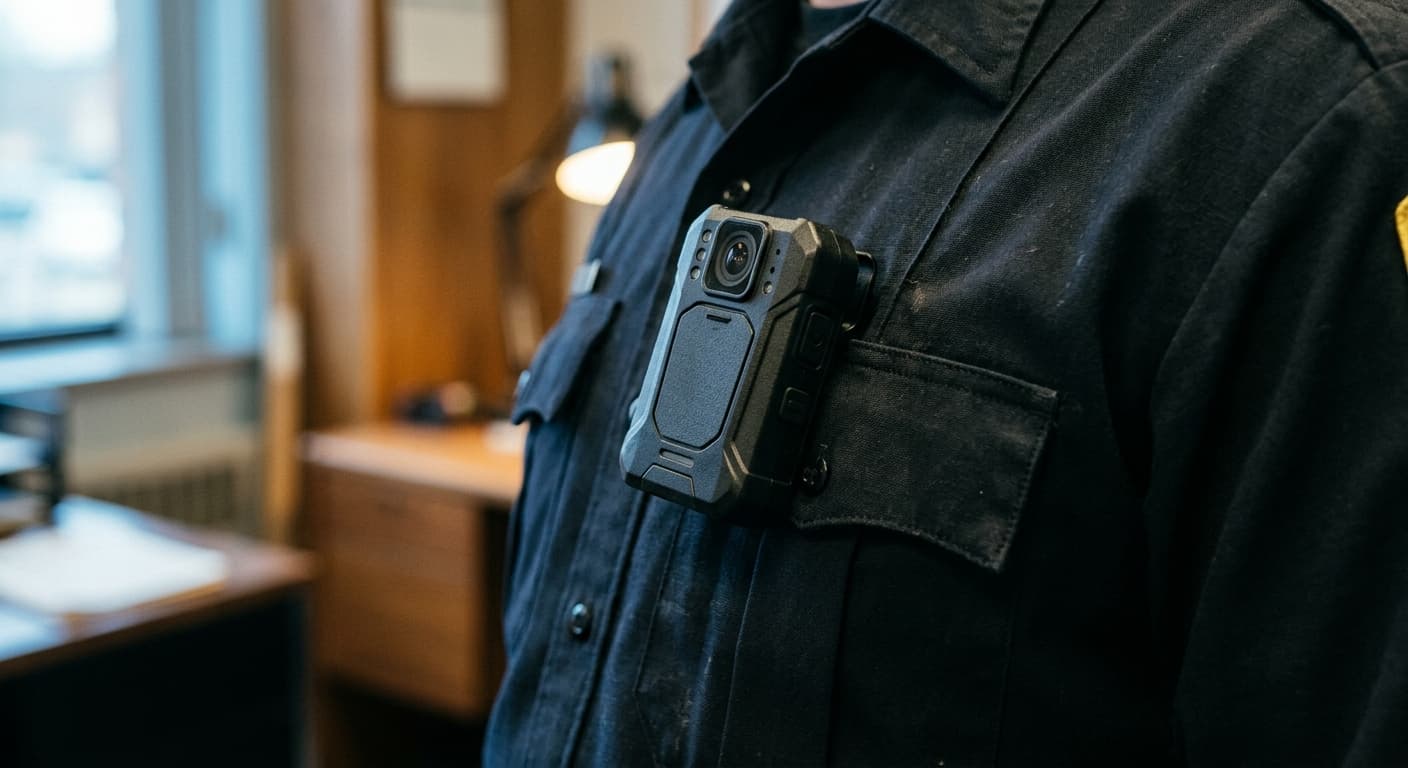
The Australian Capital Territory is one of only two jurisdictions in this cluster with a dedicated workplace surveillance statute. The Workplace Privacy Act 2011 (ACT) requires at least 14 days written notice before an employer conducts optical, tracking or data surveillance of a worker, and covert surveillance needs a court-issued authority. Workplace audio, notably, is not covered by this Act at all; it stays under the general Listening Devices Act 1992 (ACT).
The ACT's Dedicated Workplace Surveillance Statute
Unlike Tasmania and the Northern Territory, the ACT has enacted a statute specifically for workplace surveillance: the Workplace Privacy Act 2011 (ACT). Its coverage is narrower than its name suggests. Section 11 defines "surveillance" for the Act as surveillance using a "surveillance device," and that term is defined as a data surveillance device, an optical surveillance device or a tracking device, expressly excluding a listening device. In practice this means the Act governs cameras, GPS trackers and computer-monitoring software at work, while audio recording of a workplace conversation, whether by an employer or an employee, is governed by the separate Listening Devices Act 1992 (ACT) s.4, described below.
Jurisdiction scope: This article addresses workplace recording in the ACT under the Workplace Privacy Act 2011 (ACT), the Listening Devices Act 1992 (ACT), the federal Fair Work Act 2009 (Cth), and the federal Privacy Act 1988 (Cth). It does not address workplace surveillance law in other Australian states or territories; for the national picture, see workplace surveillance and monitoring in Australia. For the ACT's general recording rules outside the workplace, see Australian Capital Territory recording laws.
Notified Surveillance: The 14-Day Rule
Section 13 of the Workplace Privacy Act 2011 provides that an employer may only conduct surveillance of a worker in a workplace if written notice is given and the surveillance is conducted in accordance with it. The notice must be given at least 14 days before the surveillance starts, unless the worker agrees to a shorter period, or a new worker starts at a workplace where surveillance already exists or will begin less than 14 days after they start, in which case notice must be given before the new worker starts work. The notice must state the kind of device to be used, how the surveillance will be conducted, who will regularly be the subject of it, when it starts, whether it is continuous or intermittent, its duration, the purpose for which records may be used and disclosed, and that the worker may consult the employer about it. An employer need not give notice for an optical device used somewhere that is not the worker's usual workplace. A notice can take the form of a general policy rather than an individual letter.
Covert Surveillance: A Magistrates Court Authority
Where an employer wants to conduct surveillance without notice, the Act requires a covert surveillance authority issued by the ACT Magistrates Court. Under section 28, the Court may issue an authority on application if satisfied there are reasonable grounds, after considering the seriousness of the suspected unlawful activity, the extent to which the proposed surveillance might intrude on a worker's privacy, any heightened expectation of privacy in a non-work area, whether other appropriate investigative methods exist, whether a law enforcement agency would be more appropriate to investigate, and the suitability of the person nominated to supervise the surveillance. Under section 30, an authority may be issued for a maximum of 30 days. This is a materially more structured process than the general lawful-interests exception that governs most other Australian workplaces, and it applies to camera, tracking and data surveillance only, not to a manager or employee simply recording a spoken conversation.
Absolutely Prohibited Areas
Section 41 makes it an offence, carrying a maximum of 50 penalty units, for an employer to conduct surveillance of a worker in a "prohibited non-work area": a toilet facility, a change room, a shower or other bathing facility, a parent or nursing room, a prayer room, a sick bay, a first-aid room, or any other area prescribed by regulation. This prohibition is absolute; no amount of notice or a covert surveillance authority can authorise surveillance in these areas.
Where the Listening Devices Act Still Applies
Because the Workplace Privacy Act excludes listening devices from its coverage, recording a spoken conversation at work, whether a performance review, a disciplinary meeting, or a casual conversation with a colleague, is governed by the general Listening Devices Act 1992 (ACT) s.4, exactly as it would be outside the workplace. Section 4(1)(b) prohibits recording your own conversation, but section 4(3) excuses it where every principal party consents, or where you consent and either the recording protects your own lawful interests, or, independently, is simply not made to be shared with anyone outside the conversation. An employee who records a meeting purely for their own reference, with no intention to share it, is generally covered by this second, no-publication basis without needing to establish a lawful interest at all. Section 4(4) separately provides that the ACT government itself cannot rely on the lawful-interests basis when using a listening device, though it can rely on consent or the no-publication basis.
The Privacy Act's Employee-Records Exemption
The federal Privacy Act 1988 (Cth) applies to ACT employers with annual turnover exceeding $3 million, and to all health service providers and Commonwealth agencies. Section 7B(3) of that Act exempts an APP entity's handling of an existing employee's own employment records from most Australian Privacy Principles, but the exemption does not cover job applicants, contractors, or volunteers, and does not authorise surveillance that would otherwise breach the Workplace Privacy Act or the Listening Devices Act. ACT government agencies are separately subject to the Territory Privacy Principles under the Information Privacy Act 2014 (ACT).
Covert Recording and Your Job: The Fair Work Risk
A recording can be entirely lawful under both ACT statutes and still put an employee's job at risk. The Fair Work Commission has repeatedly treated covert recording of workplace conversations as damaging to the trust an employment relationship requires. In Karen Altham-Wooding v PKDK Adventures Pty Ltd [2024] FWC 2753, the Commission held that secretly recording workplace conversations is "highly inappropriate, irrespective of whether it constitutes an offence in the relevant jurisdiction." An ACT employee should treat the criminal-law question and the employment-law question as two separate risks.
The New Civil Layer: The Statutory Tort at Work
Since 10 June 2025, Schedule 2 to the Privacy Act 1988 (Cth) creates a federal statutory tort for serious invasions of privacy, actionable without proof of damage, alongside the state and territory criminal offences. A colleague covertly recorded or surveilled in a genuinely private setting, with no consent and no lawful basis, may have a civil claim as well as a possible criminal complaint. The tort is new and untested in workplace fact patterns specifically; this article does not predict how a court would decide any particular case.
Disclaimer: This article presents general legal information about workplace recording law in the Australian Capital Territory. It does not constitute legal advice. The information covers the Workplace Privacy Act 2011 (ACT), the Listening Devices Act 1992 (ACT) and applicable Commonwealth legislation as in force as of 2026-07-22. Laws can change. If you have a specific legal situation, consult a legal practitioner admitted in the Australian Capital Territory or the relevant Australian state or territory.
For the ACT's general consent rules, see Australian Capital Territory recording laws. For recording your own phone calls in the ACT, see phone call recording in the ACT. For security cameras and CCTV in the ACT, see security camera laws in the ACT. For the national picture on workplace monitoring, see workplace surveillance and monitoring in Australia.
Last updated: 2026-07-22. Statutes cited reflect their in-force versions as of 2026-07-22.
Frequently Asked Questions
Does my employer have to give me notice before installing workplace cameras in the ACT?
Yes, in most cases. Section 13 of the Workplace Privacy Act 2011 (ACT) requires at least 14 days' written notice before optical, tracking or data surveillance begins, unless a shorter period is agreed or a new worker starts at a workplace with existing surveillance. Audio recording of workplace conversations is not covered by this notice requirement; it is governed separately by the Listening Devices Act 1992 (ACT).
Can my employer secretly install cameras at work in the ACT?
Only with a covert surveillance authority issued by the ACT Magistrates Court under section 28 of the Workplace Privacy Act 2011 (ACT), which the Court can grant only after weighing the seriousness of the suspected unlawful activity, the privacy intrusion involved, and whether other investigative methods exist. Any authority is limited to a maximum of 30 days under section 30.
Can I record a conversation with my manager in the ACT without telling them?
Often yes, if you keep it private. Section 4(3)(b)(ii) of the Listening Devices Act 1992 (ACT), which governs spoken conversations rather than the Workplace Privacy Act, excuses a participant's recording that is not made for the purpose of sharing it with anyone outside the conversation. If you plan to share it, you need consent or a genuine lawful-interests justification instead.
Can my employer put a camera in the staff bathroom or change room in the ACT?
No. Section 41 of the Workplace Privacy Act 2011 (ACT) absolutely prohibits surveillance in toilets, change rooms, showers or bathing facilities, parent or nursing rooms, prayer rooms, sick bays and first-aid rooms, regardless of any notice given or court authority obtained. The maximum penalty for breaching this is 50 penalty units.
Can I be fired for secretly recording a colleague in the ACT?
Yes, this is possible even where the recording did not breach either ACT statute. In Karen Altham-Wooding v PKDK Adventures Pty Ltd [2024] FWC 2753, the Fair Work Commission held that secretly recording workplace conversations is highly inappropriate regardless of whether it is a criminal offence. The criminal-law and employment-law questions are assessed separately.
Does the Privacy Act protect my personal information at work in the ACT?
Only partly, and only for private employers with turnover over $3 million, health service providers, or Commonwealth agencies. Section 7B(3) of the Privacy Act 1988 (Cth) exempts an employer's handling of an existing employee's own employment records from most Australian Privacy Principles. ACT government agencies are separately subject to the Territory Privacy Principles under the Information Privacy Act 2014 (ACT).
The Law Behind This Article
This article rests on the statutory provisions below, held in our own legal record and retrieved from the official source. Tap a section to read the operative text.
Listening Devices Act 1992 (ACT)
s 4Use of listening devicesIn forcecited in 10 of our articles
(1) A person must not use a listening device with the intention of— (a) listening to or recording a private conversation to which the person is not a party; or (b) recording a private conversation to which the person is a party. Maximum penalty: 50 penalty units. (2) Subsection (1) does not apply to— (a) the use of a listening device under an authority granted by or under a law in force in the ACT; or (b) the unintentional hearing of a private conversation by means of a listening device. (3) Subsection (1) (b) does not apply to the use of a listening device by, or on behalf of, a party to a private conversation if— (a) each principal party to the conversation consents to that use of the listening device; or (b) a principal party to the conversation consents to the listening device being so used, and— (i) the recording of the conversation is considered by that principal party, on reasonable grounds, to be necessary for the protection of that principal party’s lawful interests; or (ii) the recording is not made for the purpose of communicating or publishing the conversation, or a report of the conversation, to any person who is not a party to the conversation.
Official text (excerpt) · last checked 2026-09-28 · Read the full text in our law library · Verify at legislation.act.gov.au
Also relied on in: Dash Cam Laws in Australia: What's Legal to Record, Is It Illegal to Record Someone Without Consent in Australia?, Recording Phone Calls in the ACT: What the Law Requires
Workplace Privacy Act 2011 (ACT)
s 11Meaning of surveillance etcIn force
(1) In this Act: conduct surveillance—a person conducts surveillance if the person— (a) conducts the surveillance personally; or (b) causes someone else to conduct the surveillance. data surveillance device— (a) means a device or program capable of being used to record or monitor the input of information into or the output of information from a computer; but (b) does not include an optical surveillance device. optical surveillance device— (a) means a device capable of being used to record visually or observe an activity; but (b) does not include spectacles, contact lenses or a similar device used by a person with impaired sight to overcome that impairment. surveillance means surveillance using a surveillance device. surveillance device means— (a) a data surveillance device, an optical surveillance device or a tracking device; or (b) a device that is a combination of any 2 or more of the devices mentioned in paragraph (a); or (c) a device of a kind prescribed by regulation. tracking device means an electronic device capable of being used to work out or monitor the location of a person or an object or the status of an object.
Official text (excerpt) · last checked 2026-09-28 · Read the full text in our law library · Verify at legislation.act.gov.au
s 13Notice of surveillance requiredIn force
(1) An employer may only conduct surveillance of a worker in a workplace if— (a) the employer gives written notice to the worker under this section; and Note For how documents may be given, see the Legislation Act, pt 19.5. (b) the surveillance is conducted in accordance with the notice. (2) However, an employer need not give written notice to a worker for surveillance using an optical surveillance device in a workplace if the workplace is not a usual workplace of the worker. (3) The notice must be given— (a) at least 14 days before the surveillance starts; or (b) if the worker agrees to a period of less than 14 days for giving the notice—within the agreed lesser period; or (c) if a new worker starts work with an employer that already conducts surveillance or will start conducting surveillance in less than 14 days after the new worker starts work—before the new worker starts work.
Official text (excerpt) · last checked 2026-09-28 · Read the full text in our law library · Verify at legislation.act.gov.au
s 28Issuing covert surveillance authorityIn force
(1) The Magistrates Court may, on application, issue a covert surveillance authority if satisfied that there are reasonable grounds to issue the authority. Note If a form is approved under the Court Procedures Act 2004, s 8 for the order, the form must be used. (2) In considering whether there are reasonable grounds to issue the covert surveillance authority, the Magistrates Court must consider— (a) the seriousness of the suspected unlawful activity; and (b) whether and the extent to which the proposed surveillance might intrude on the worker’s or someone else’s privacy; and (c) if the proposed surveillance may be conducted in a non-work area—a worker’s heightened expectation of privacy in the area; and Note 1 Surveillance is prohibited in some non-work areas (see s 41). Note 2 Non-work area—see the dictionary. (d) whether there are other appropriate ways to find out if the worker is engaged in an unlawful activity in the workplace; and (e) whether it is more appropriate for the suspected unlawful activity to be investigated by a law enforcement agency; and (f) whether the person nominated to be the surveillance supervisor in the application is suitable.
Official text (excerpt) · last checked 2026-09-28 · Read the full text in our law library · Verify at legislation.act.gov.au
s 30Duration of covert surveillance authorityIn force
A covert surveillance authority may be issued for not longer than 30 days or another period prescribed by regulation.
Official text (excerpt) · last checked 2026-09-28 · Read the full text in our law library · Verify at legislation.act.gov.au
s 41Offence—surveillance of private areas etcIn force
(1) An employer commits an offence if the employer conducts surveillance of a worker in a prohibited non-work area. Maximum penalty: 50 penalty units. (2) In this section: prohibited non-work area means 1 of the following non-work areas in a workplace: (a) a toilet facility; (b) a change room; (c) a shower or other bathing facility; (d) a parent or nursing room; (e) a prayer room; (f) a sick bay; (g) a first-aid room; (h) any other area in a workplace prescribed by regulation.
Official text (excerpt) · last checked 2026-09-28 · Read the full text in our law library · Verify at legislation.act.gov.au
Search our full record of US law — 2.1 million sections, every state + federal →
Sources and References
- Listening Devices Act 1992 (ACT), ss.4-10(legislation.act.gov.au).gov
- Workplace Privacy Act 2011 (ACT)(legislation.act.gov.au).gov
- Workplace Privacy Act 2011 (ACT) s 11, Meaning of Surveillance, AustLII(classic.austlii.edu.au)
- Workplace Privacy Act 2011 (ACT) s 13, Notice of Surveillance Required, AustLII(classic.austlii.edu.au)
- Workplace Privacy Act 2011 (ACT) s 28, Issuing Covert Surveillance Authority, AustLII(classic.austlii.edu.au)
- Workplace Privacy Act 2011 (ACT) s 30, Duration of Covert Surveillance Authority, AustLII(classic.austlii.edu.au)
- Workplace Privacy Act 2011 (ACT) s 41, Offence: Surveillance of Private Areas, AustLII(classic.austlii.edu.au)
- OAIC, Workplace Monitoring and Surveillance(oaic.gov.au).gov
- OAIC, Statutory Tort for Serious Invasions of Privacy (commenced 10 June 2025)(oaic.gov.au).gov
- Karen Altham-Wooding v PKDK Adventures Pty Ltd [2024] FWC 2753(fwc.gov.au).gov