Texas Medical Recording Laws: Patient Rights, HIPAA, and Provider Rules
Independently fact-checked against primary sources (last audited August 15, 2026). · Reviewed by the RecordingLaw editorial team. · Law checked current as of August 15, 2026. · 6 primary sources cited on this page. How we verify our legal content
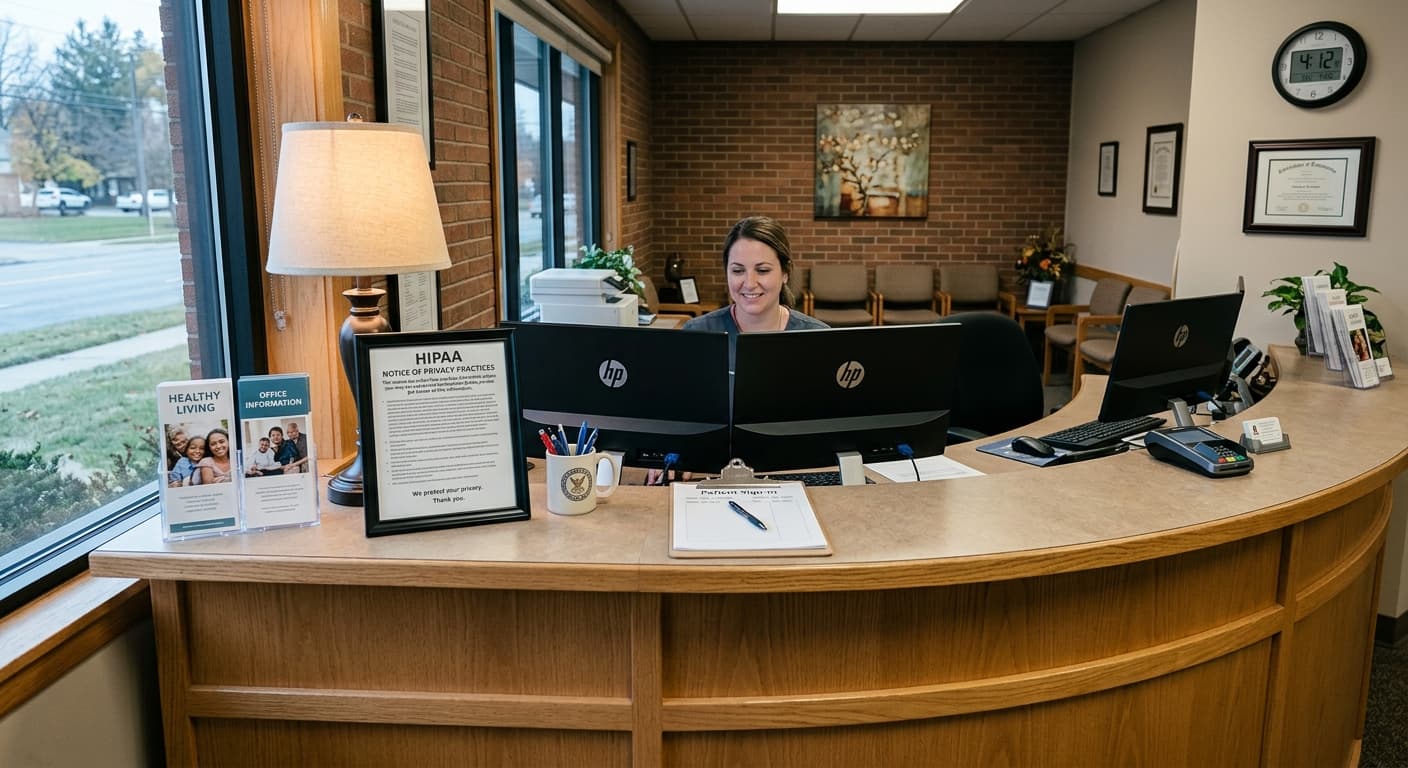
Under Tex. Penal Code Section 16.02, Texas patients may record their own medical appointments without notifying the provider because they are a party to the conversation. HIPAA places obligations on healthcare providers, not patients, so it does not prevent patient recording.
Overview of Texas Medical Recording Laws
Recording medical appointments and healthcare interactions in Texas involves the intersection of state recording law, federal health privacy regulations, and individual provider policies. Texas one-party consent law provides the legal foundation, while HIPAA and the Texas Medical Records Privacy Act create the framework for how healthcare providers handle recorded information.
The Texas Attorney General's office provides guidance on patient privacy rights, and the Texas State Law Library maintains resources on medical records privacy law.
Patient Right to Record Medical Appointments

One-Party Consent in Medical Settings
Under Tex. Penal Code Section 16.02, Texas follows a one-party consent framework for audio recording. A patient who attends a medical appointment is a party to the conversation with their healthcare provider. The patient's own consent satisfies the one-party requirement, making the recording legal without notifying the doctor, nurse, or other medical professional.
This right applies to:
- In-person office visits and consultations
- Telehealth appointments and video calls
- Phone calls with medical offices, nurses, and billing departments
- Emergency room visits and hospital interactions
- Physical therapy and rehabilitation sessions
- Mental health and counseling appointments
- Pharmacy consultations
Why Patients Record Medical Visits
Patients record medical appointments for many legitimate and practical reasons:
- Remembering complex information: Medical instructions, medication names, dosages, and treatment plans are difficult to remember after an appointment. A recording provides an accurate reference.
- Sharing with family caregivers: Patients who have family members involved in their care can share recordings to ensure everyone has the same information.
- Documenting informed consent: Recordings preserve the discussion about risks, benefits, and alternatives before procedures and surgeries.
- Second opinions: A recording of a diagnosis or treatment recommendation allows another provider to hear the original assessment firsthand.
- Malpractice documentation: If a patient suspects medical negligence, recordings preserve the provider's statements at the time of treatment.
- Insurance disputes: Recordings of conversations about medical necessity, coverage decisions, and treatment authorization can support insurance appeals.
Legal Protections for Patient Recording
Several key legal points support a patient's right to record in Texas:
- HIPAA does not restrict patient recording: HIPAA (the Health Insurance Portability and Accountability Act) governs how covered entities handle protected health information. It places obligations on healthcare providers and insurers, not on patients. A patient recording their own appointment is not subject to HIPAA restrictions.
- State wiretapping law permits it: Texas one-party consent law explicitly allows a party to a conversation to record it. The patient is a party.
- No Texas statute specifically prohibits it: Texas has no law that specifically restricts patients from recording medical encounters.
Healthcare Provider Recording Policies
Office Policies on Recording
While Texas law permits patients to record medical appointments, healthcare providers can establish office policies that restrict or prohibit recording on their premises. These policies operate as conditions of service, not as criminal law.
A provider's no-recording policy may state:
- Recording is prohibited in examination rooms and treatment areas
- Patients who wish to record must obtain prior permission
- Recording of other patients or staff is prohibited
- Violation of the recording policy may result in dismissal from the practice
Provider Authority to Refuse Service
In non-emergency situations, a healthcare provider who discovers a patient recording in violation of an office policy can:
- Ask the patient to stop recording and continue the appointment
- Pause the appointment until the recording device is turned off
- Decline to continue the appointment (if not an emergency)
- Dismiss the patient from the practice with appropriate notice for continuity of care
In emergency situations, a provider cannot refuse to treat a patient based on recording. The Emergency Medical Treatment and Active Labor Act (EMTALA) requires emergency departments to provide stabilizing treatment regardless of other circumstances.
Provider Recording of Patients
When a healthcare provider records a patient (for research, training, or documentation purposes), the provider must obtain the patient's informed consent. This consent requirement comes from multiple sources:
- HIPAA Privacy Rule: Requires patient authorization for uses of protected health information beyond treatment, payment, and healthcare operations
- Texas Medical Records Privacy Act: Health and Safety Code Chapter 181 imposes additional privacy obligations on Texas covered entities
- Medical ethics standards: The American Medical Association and Texas Medical Board expect providers to obtain consent before recording patients
- Informed consent principles: Recording a patient for purposes beyond the immediate clinical encounter requires separate informed consent
HIPAA and Medical Recording

What HIPAA Covers
HIPAA applies to "covered entities" (healthcare providers, health plans, and healthcare clearinghouses) and their "business associates." The law governs how these entities collect, use, store, and disclose protected health information (PHI).
Key HIPAA provisions relevant to recording include:
- Privacy Rule: Restricts how covered entities use and disclose PHI
- Security Rule: Requires safeguards for electronic PHI
- Breach Notification Rule: Requires notification when unsecured PHI is compromised
HIPAA and Patient-Made Recordings
A recording made by a patient during their own medical appointment is created by the patient, not by the covered entity. HIPAA obligations fall on the covered entity, not the patient. This means:
- A patient can record their appointment without HIPAA authorization
- A patient can share their own recording with family, friends, or attorneys
- A patient can post their own recording online (though doing so may have other legal consequences)
- HIPAA does not require the provider to allow recording, but it does not prohibit the patient from doing so
When Recordings Become PHI
If a healthcare provider records a patient encounter, that recording becomes protected health information subject to HIPAA requirements. The provider must:
- Store the recording securely
- Limit access to authorized personnel
- Include the recording in the patient's designated record set if requested
- Provide the patient access to the recording upon request
- Retain and dispose of the recording in accordance with HIPAA retention requirements
Texas Medical Records Privacy Act
Health and Safety Code Chapter 181
The Texas Medical Records Privacy Act, codified in Health and Safety Code Chapter 181, provides additional protections beyond HIPAA for medical records in Texas. This state law applies to a broader category of "covered entities" than HIPAA, including any person who assembles, collects, analyzes, uses, evaluates, stores, or transmits protected health information.
Key Provisions
Chapter 181 includes several provisions relevant to medical recording:
- Prohibition on PHI sales: The sale of protected health information is prohibited except for treatment, payment, healthcare operations, or maintenance operations permitted by the Insurance Code
- Consumer access: Covered entities must respond to patient access requests within 15 business days when records are stored in electronic health records
- Electronic disclosure notice: Covered entities must provide notice of electronic disclosure practices and obtain patient consent before electronically disclosing PHI
- Training requirements: Employees who handle PHI must receive privacy training
Penalties for Violations
Violations of the Texas Medical Records Privacy Act carry significant penalties:
- Civil penalties are tiered: up to $5,000 per violation if committed negligently, up to $25,000 per violation if committed knowingly or intentionally, and up to $250,000 per violation if the covered entity knowingly or intentionally used the information for financial gain
- A pattern or practice of violations can bring civil penalties of up to $1.5 million annually
- These state penalties apply in addition to federal HIPAA penalties
- The Texas Attorney General can bring enforcement actions and refer violations to state licensing agencies for disciplinary action
- Chapter 181 does not create a private right of action for individuals; enforcement is limited to the attorney general and licensing agencies
Recording in Specific Medical Settings
Hospitals and Inpatient Facilities
Recording in hospitals presents unique considerations:
- Private rooms: A patient in a private room can record conversations with their care team
- Shared rooms: Recording in a shared hospital room may capture conversations involving other patients, raising privacy concerns for those patients
- Operating rooms: Patients are typically unconscious and cannot consent to or make recordings during surgery. Provider recording of procedures requires separate consent.
- Intensive care units: Family members visiting ICU patients can record their own conversations with medical staff
Telehealth Appointments
Telehealth visits conducted over video or phone follow the same one-party consent rules as in-person visits. A patient participating in a telehealth appointment can record the session without notifying the provider.
Many telehealth platforms include built-in recording features that notify all participants. Using an external recording device or screen recording software captures the appointment without triggering platform notifications. Texas law does not require notification.
Mental Health Settings
Recording mental health appointments raises additional considerations beyond general medical recording:
- Patient recording: A patient can legally record their own therapy or counseling sessions under one-party consent
- Therapist concerns: Mental health providers may have particular concerns about recording due to the sensitive nature of therapy discussions
- Therapeutic relationship: Recording can affect the dynamic between therapist and patient, potentially limiting open communication
- Court-ordered treatment: Recordings of court-ordered mental health treatment sessions may have specific restrictions
Nursing Homes and Long-Term Care
Family members who visit relatives in nursing homes and long-term care facilities can record conversations they participate in with staff. These recordings can document:
- Care quality and treatment discussions
- Medication administration practices
- Reports of neglect or abuse
- Communications about condition changes
Texas does not have a specific "granny cam" statute that explicitly authorizes or regulates cameras in nursing home rooms, though the general recording and privacy laws apply.
Using Medical Recordings as Evidence
Admissibility in Texas Courts
Recordings of medical conversations made under one-party consent are generally admissible in Texas courts. Common uses include:
- Medical malpractice cases: Recordings that capture a provider's statements about diagnosis, treatment, or prognosis
- Informed consent disputes: Recordings that document (or fail to document) the informed consent discussion before a procedure
- Insurance appeals: Recordings of conversations about medical necessity, coverage decisions, and denial reasons
- Elder abuse cases: Recordings documenting neglect, abuse, or inadequate care in nursing facilities
- Disability claims: Recordings of provider statements about a patient's functional limitations and work capacity
Authentication Requirements
Medical recordings must meet the same authentication standards under Texas Rules of Evidence Rule 901 as other audio recordings. The patient or person who made the recording must testify that it is genuine and unaltered.
More Texas Recording Laws
Audio Recording | Video Recording | Voyeurism & Hidden Cameras | Workplace Recording | Recording Police | Phone Call Recording | Security Cameras | Recording in Public | Landlord-Tenant | Dashcam Laws | Schools | Medical Recording
← Back to Texas Recording Laws
More Texas Recording Topics
More Texas Laws
Frequently Asked Questions
Can a patient record a doctor's appointment in Texas?
Yes. Texas is a one-party consent state under Penal Code Section 16.02. A patient who attends a medical appointment is a party to the conversation and can record it without notifying the healthcare provider. HIPAA does not prevent patient recording, as HIPAA obligations fall on the provider, not the patient.
Can a doctor refuse to treat a patient who is recording?
In non-emergency situations, a provider can establish office policies that prohibit recording and can decline to continue treatment if the patient refuses to comply. In emergencies, EMTALA requires stabilizing treatment regardless of recording. A provider dismissing a patient from their practice must provide appropriate notice for continuity of care.
Does HIPAA prevent patients from recording medical appointments?
No. HIPAA governs how covered entities (healthcare providers, insurers, clearinghouses) handle protected health information. It places obligations on providers, not patients. A patient recording their own appointment is not subject to HIPAA restrictions and can share the recording as they choose.
Can a recording of a doctor's appointment be used in a malpractice case?
Yes. Recordings made lawfully under one-party consent are generally admissible in Texas courts. In medical malpractice cases, recordings can document provider statements about diagnosis, treatment, and prognosis. The recording must be authenticated as genuine and unaltered under Texas Rules of Evidence Rule 901.
Can a family member record a nursing home visit in Texas?
A family member who visits a relative in a nursing home can record conversations they participate in with staff under the one-party consent rule. These recordings can document care quality, medication practices, and reports of neglect or abuse. Texas does not have a specific statute governing cameras in nursing home rooms.
Updates
Corrected the Texas Medical Records Privacy Act penalty description from a flat $250,000 figure to the statute's actual tiered structure ($5,000 negligent, $25,000 knowing, $250,000 for knowing financial-gain misuse, up to $1.5 million for a pattern of violations), removed a false claim that patients have a private right to sue under Chapter 181 (enforcement is limited to the attorney general and licensing agencies), fixed a dead Texas Rules of Evidence citation, and clarified the patient records access deadline is 15 business days, not 15 calendar days.
Independently fact-checked against the cited primary sources; governing law re-checked for recent changes
Governing law re-checked for recent changes
Added note on [TAKE IT DOWN Act](/us-laws/take-it-down-act) (S. 146, signed May 19, 2025; platform compliance May 19, 2026) and H.B. 1465 § 21.15 expanded location definition (eff. Sept. 1, 2025). Core recording rules under § 16.02 and relevant primary law unchanged.
Reviewed and approved by an editor
The Law Behind This Article
This article rests on the statutory provisions below, held in our own legal record and retrieved from the official source. Tap a section to read the operative text.
Texas Penal Code
§ 16.02UNLAWFUL INTERCEPTION, USE, OR DISCLOSURE OF WIRE, ORAL, OR ELECTRONIC COMMUNICATIONSIn forcecited in 17 of our articles
(a) In this section: (1) "Communication common carrier," "computer trespasser," "contents," "covert entry," "electronic communication," "intercept," "interception device," "investigative or law enforcement officer," "oral communication," "protected computer," and "wire communication" have the meanings assigned by Article 18A.001, Code of Criminal Procedure. (2) "Immediate life-threatening situation" and "member of a law enforcement unit specially trained to respond to and deal with life-threatening situations" have the meanings assigned by Article 18A.201, Code of Criminal Procedure.
Official text (excerpt) · last checked 2026-08-31 · Read the full text in our law library · Verify at statutes.capitol.texas.gov
Cited in 39 court opinions in our collectionLatest citing opinion in our collection: 2026
In the courts (editorial summary, independently checked):Texas courts have applied Section 16.02 to contested recordings. Long v. State (2017) held the oral communication definition carries a reasonable expectation of privacy test, sustaining a conviction over a covert locker room recording. Banargent v. State (2007) held a jail inmate impliedly consented, so no Section 16.02 violation.
Opinions citing this section in our collection:
- Banargent v. State (Texas Court of Appeals, 14th District (Houston) 2007, 228 S.W.3d 393)✓Jail phone prompts and posted notices warned that calls could be recorded, and a recorded call captured the defendant admitting he stabbed the victim; the court held he impliedly consented, so the recording did not violate Section 16.02.
- Long v. State (Court of Criminal Appeals of Texas 2017, 535 S.W.3d 511)✓A school board member had her daughter hide a phone in a visiting locker room to record the coach's halftime speech and sent it to the board; the court held Section 16.02's 'oral communication' incorporates the expectation of privacy test, which the coach met.
- Siddiq v. State (Court of Appeals of Texas 2016, 502 S.W.3d 387)✓Police automatically recorded a DWI arrestee's call to his father from the jail book-in desk, capturing him saying he was drunk; the court applied the law enforcement exception to hold the recording did not violate Section 16.02, so admitting it was not error.
Identified automatically from the court opinions citing this section — not a ranking of which case controls.
Also relied on in: Texas Recording Laws (2026): One-Party Consent Rules, One-Party Consent States: Complete 2026 Guide, Texas Security Camera Laws: Residential, Commercial, and Privacy Rules
Explore the law
This article also draws on these acts and chapters (opening at their first section): Texas Health and Safety Code § 181.001 (DEFINITIONS)
Related law for further reading — not part of this article’s citations.
Search our full record of US law — 2.1 million sections, every state + federal →
Sources and References
- Tex. Penal Code Section 16.02(statutes.capitol.texas.gov).gov
- Texas Health and Safety Code Chapter 181(statutes.capitol.texas.gov).gov
- Texas AG - Patient Privacy(texasattorneygeneral.gov).gov
- Texas State Law Library - Medical Records(guides.sll.texas.gov).gov
- HHS - HIPAA(hhs.gov).gov
- Texas Rules of Evidence Rule 901(txcourts.gov).gov