North Dakota
North Dakota Laws on Recording Police: Your Constitutional Rights (2026)
Independently fact-checked against primary sources (last audited August 15, 2026). · Reviewed by the RecordingLaw editorial team. · Law checked current as of August 15, 2026. · 4 primary sources cited on this page. How we verify our legal content
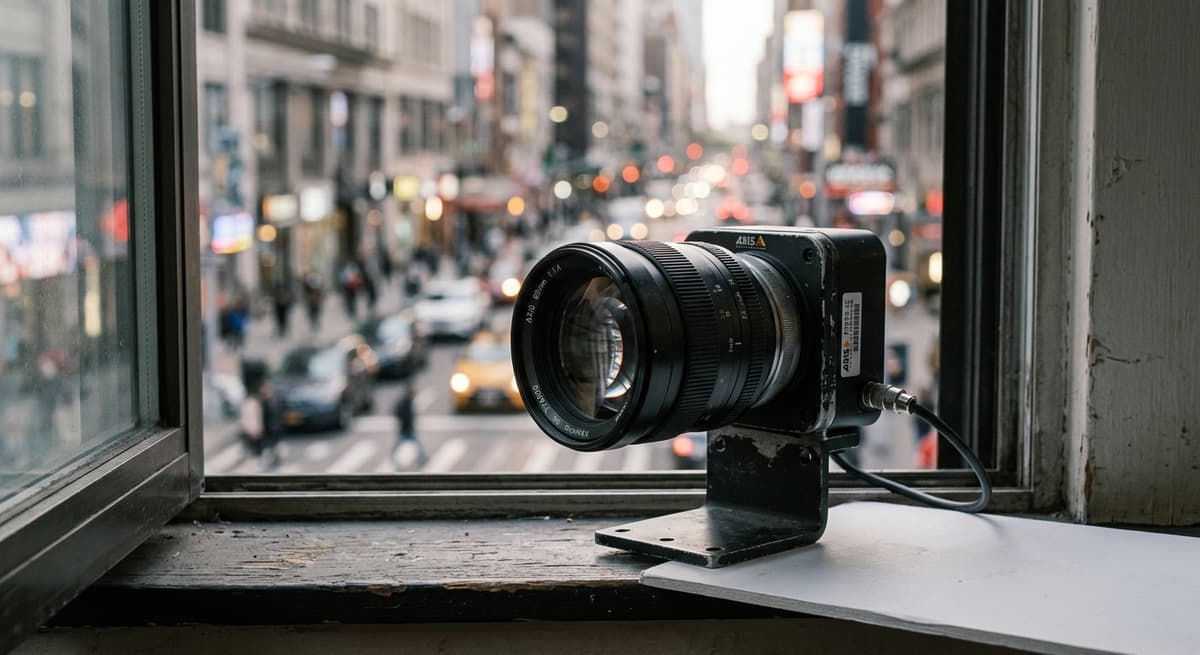
In North Dakota, you have the right to record police officers performing their duties in public under First Amendment principles recognized by federal courts. North Dakota's one-party consent law, N.D. Cent. Code § 12.1-15-02, also permits audio recording of any police encounter you participate in without officer consent.
North Dakota residents can record police officers performing their duties in public. The U.S. Court of Appeals for the Eighth Circuit, which covers North Dakota, has not recognized a clearly established First Amendment right to record police. In Chestnut v. Wallace, 947 F.3d 1085 (8th Cir. 2020), the court held that only passive observation of police in public was clearly established as protected; active recording was not. Molina v. Book, No. 21-1830 (8th Cir. Feb. 2, 2023), and Robbins v. Des Moines, 984 F.3d 673 (8th Cir. 2021), applied the same cautious framing. Other circuits (First, Third, Fifth, Seventh, Ninth, Tenth, Eleventh) have recognized the right more broadly, and those rulings are strongly persuasive in North Dakota courts. Combined with North Dakota's one-party consent law under N.D.C.C. § 12.1-15-02, residents have strong protections for recording law enforcement interactions.
This guide covers your rights to record police, what officers can and cannot do, how to exercise your rights safely, body camera policies, and legal remedies if your rights are violated.
The Constitutional Right to Record Police
Federal Court Recognition
Multiple federal circuit courts have recognized a First Amendment right to record police officers performing duties in public, including the First, Third, Fifth, Seventh, Ninth, Tenth, and Eleventh Circuits. The Eighth Circuit, which covers North Dakota, has been more cautious. In Chestnut v. Wallace, 947 F.3d 1085 (8th Cir. Jan. 21, 2020), the court found that only passive observation of police from a public location was clearly established as protected. Active recording and documenting of police activity had not yet been clearly established as of that decision. Molina v. Book, No. 21-1830 (8th Cir. Feb. 2, 2023, cert. denied Feb. 20, 2024), and Robbins v. Des Moines, 984 F.3d 673 (8th Cir. Jan. 5, 2021), followed the same cautious approach. This means that while a constitutional right to record is strongly supported by persuasive authority, officers in North Dakota may not face personal liability under Section 1983 if they interfere with recording, because the right was not clearly established at the time of their conduct.
What You Can Record
You can record police activity in North Dakota including:
- Traffic stops (including your own)
- Arrests in public spaces
- Police interactions with community members
- Protests and crowd control operations
- Police misconduct and use of force
- Conversations you participate in with officers
State Law Protections
North Dakota's one-party consent law provides additional protection. As a participant in a conversation with a police officer, you satisfy the consent requirement for audio recording. For bystander video recording without audio of a private conversation, the wiretap statute does not apply to silent video.
What Officers Can and Cannot Do
Officers CANNOT:
- Order you to stop recording
- Delete your recordings
- Search the contents of your device without a warrant, per Riley v. California (2014) — though the device itself may be seized without a warrant under recognized exceptions such as plain view or exigent circumstances
- Arrest you solely for recording
- Retaliate against you for filming
Officers CAN:
- Order you to step back to a safe distance
- Restrict access to active crime scenes
- Ask you to move if you block traffic
- Arrest you for separate offenses committed while recording
- Obtain recordings through proper legal process with a warrant
How to Safely Record Police
- Stay on public property at a safe distance
- Do not physically interfere with police operations
- Remain calm and respectful
- Enable cloud backup for your recordings
- State your First Amendment right if challenged
- Note officer names, badge numbers, and patrol car numbers
Body Camera Policies

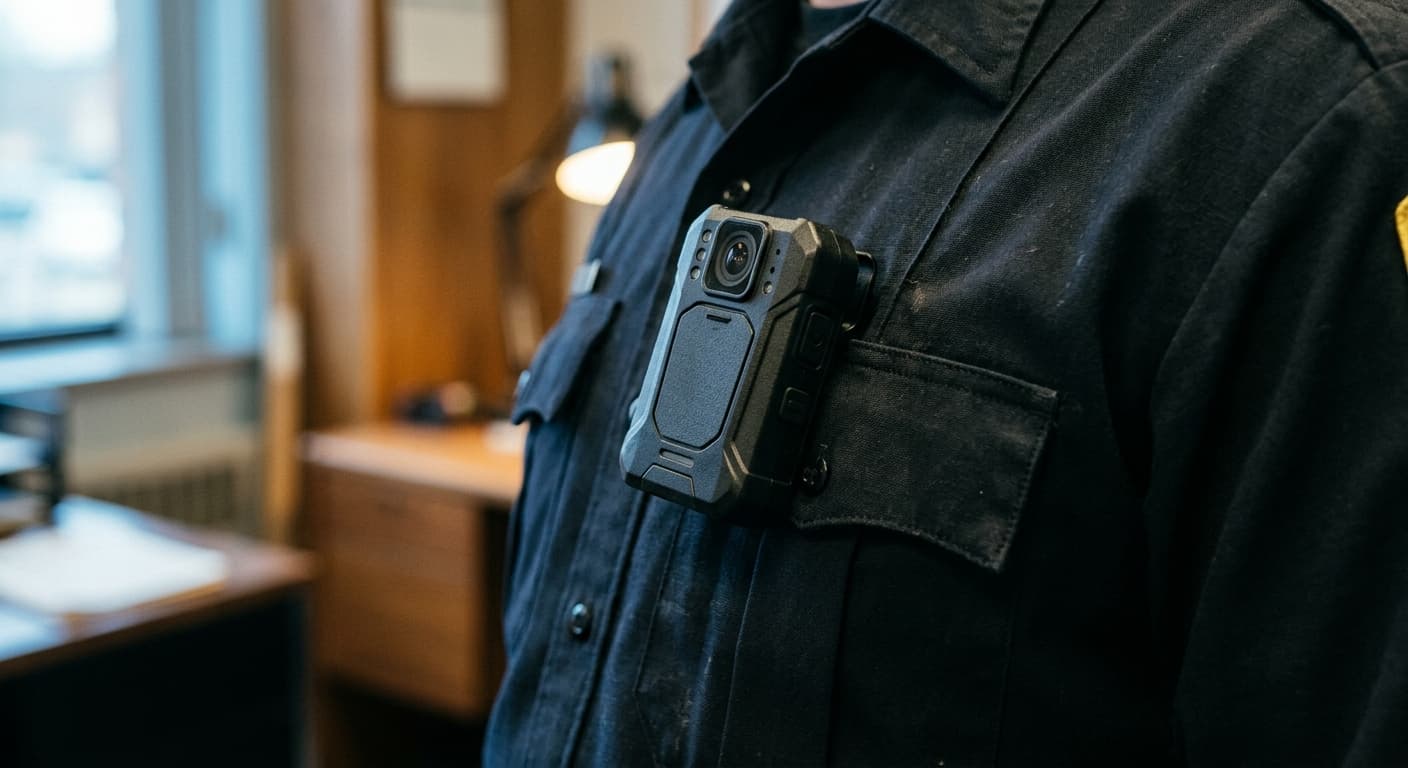
Several North Dakota law enforcement agencies have adopted body-worn camera programs. Under N.D.C.C. § 44-04-18.7(9), recordings made in a private place are exempt from mandatory public disclosure under the open-records law. Footage from public encounters is generally available through the North Dakota Open Records Law. The public-meeting right under N.D.C.C. § 44-04-19 separately guarantees your right to attend and record open government meetings. The North Dakota Attorney General's office provides guidance on public records requests for body camera footage.
Legal Remedies for Violations
If an officer violates your recording rights, you can:
- File a 42 U.S.C. § 1983 lawsuit for civil rights violations
- File complaints with the officer's department
- Contact the ACLU of North Dakota
- Report to the U.S. Department of Justice Civil Rights Division
More North Dakota Recording Laws
Audio Recording | Video Recording | Voyeurism & Hidden Cameras | Workplace Recording | Recording Police | Phone Call Recording | Security Cameras | Recording in Public | Landlord-Tenant | Dashcam Laws | Schools | Medical Recording
Back to North Dakota Recording Laws
More North Dakota Recording Topics
More North Dakota Laws
Frequently Asked Questions
Can I record police officers in North Dakota?
Yes, recording police in a public space is not a crime under North Dakota law. However, the Eighth Circuit, which covers North Dakota, has not recognized a clearly established First Amendment right to record police, only to passively observe them, so an officer who retaliates may still be shielded by qualified immunity in a federal civil-rights suit. You can generally film from any public location without needing officer consent.
Can a police officer tell me to stop recording in North Dakota?
No. An officer cannot order you to stop recording unless you are physically interfering with police operations. Calmly state your First Amendment right and continue recording from a safe distance.
Can police seize my phone for recording them in North Dakota?
An officer can seize the physical device without a warrant under recognized exceptions such as plain view or exigent circumstances, but reviewing or searching the footage stored on it generally requires a warrant under Riley v. California. State clearly that you do not consent to any search.
Can I request police body camera footage in North Dakota?
Yes. Body camera footage may be available through the North Dakota Open Records Law. Submit a written request to the law enforcement agency identifying the specific incident.
What should I do if police violate my recording rights in North Dakota?
Document the encounter, file a complaint with the department, and contact a civil rights attorney. You may file a Section 1983 lawsuit for constitutional rights violations.
Updates
Corrected the FAQ answer and a KeyTakeaways bullet that claimed the Eighth Circuit has favorably recognized a right to record police, which contradicted the page's own accurate body text (the right is not clearly established in this circuit per Molina v. Book). Also corrected three statements that overstated Riley v. California as barring device seizure; the case actually requires a warrant to search a device's contents, while seizure of the device itself can occur without one under recognized exceptions.
Independently fact-checked against the cited primary sources; governing law re-checked for recent changes
Governing law re-checked for recent changes
Governing law re-checked for recent changes
Reviewed and approved by an editor
The Law Behind This Article
This article rests on the statutory provisions below, held in our own legal record and retrieved from the official source. Tap a section to read the operative text.
North Dakota Century Code
§ 12.1-15-02Interception of wire or oral communications - EavesdroppingIn forcecited in 17 of our articles
A person is guilty of a class C felony if he: Intentionally intercepts any wire or oral communication by use of any electronic, mechanical, or other device; or Intentionally discloses to any other person or intentionally uses the contents of any wire or oral communication, knowing that the information was obtained through the interception of a wire or oral communication. A person is guilty of a class A misdemeanor if he secretly loiters about any building with intent to overhear discourse or conversation therein and to repeat or publish the same with intent to vex, annoy, or injure others. It is a defense to a prosecution under subsection 1 that: The actor was authorized by law to intercept, disclose, or use, as the case may be, the wire or oral communication. The actor was: A person acting under color of law to intercept a wire or oral communication, and He was a party to the communication or one of the parties to the communication had given prior consent to such interception.
Official text (excerpt) · last checked 2026-08-31 · Read the full text in our law library · Verify at ndlegis.gov
Cited in 5 court opinions in our collectionLatest citing opinion in our collection: 2023
In the courts (editorial summary, independently checked):Fargo Women's Health Organization, Inc. v. Larson (1986) applied the subsection 3(c) defense to this section and held that recordings of calls were properly admitted because the callers knew of and consented to the recording of their own conversations.
Opinions citing this section in our collection:
- Fargo Women's Health Organization, Inc. v. Larson (North Dakota Supreme Court 1986, 391 N.W.2d 627)✓A private investigator hired by an abortion clinic recruited callers to phone a rival anti-abortion clinic and recorded the calls with the callers' consent; the court held that consent triggered the defense in section 12.1-15-02(3)(c), so the tapes were admitted.
- Bartnicki v. Vopper (Supreme Court of the United States 2001, 532 U.S. 514)“…Ann. § 30-12-1 (1994); N. C. Gen. Stat. § 15A-287 (1999); N. D. Cent. Code § 12.1-15-02 (1997); Ohio Rev. Code Ann. § 2933.52…”
- American Civil Liberties Union of Ill. v. Alvarez (Court of Appeals for the Seventh Circuit 2012, 679 F.3d 583)“…55 § 750.539c; N.D. Cent. Code. Ann. § 12.1-15-02. The Cali- fornia statute is illustrat…”
Identified automatically from the court opinions citing this section — not a ranking of which case controls.
Also relied on in: North Dakota Recording Laws (2026): One-Party Consent Rules, North Dakota Smart Glasses Recording Laws (2026), North Dakota AI Meeting Recording Laws (2026)
§ 44-04-18.7Criminal intelligence information and criminal investigative information - Nondisclosure - Record of information maintainedIn forcecited in 4 of our articles
Active criminal intelligence information and active criminal investigative information are not subject to section 44-04-18 and section 6 of article XI of the Constitution of North Dakota. A criminal justice agency shall maintain a list of all files containing active criminal intelligence and investigative information which have been in existence for more than one year. With respect to each file, the list must contain the file's number or other identifying characteristic and the date the file was established. The list required under this subsection is subject to section 44-04-18. Personal information of any person contained in an active or nonactive file is an exempt record as defined in subsection 5 of section 44-04-17.1. "Criminal intelligence and investigative information" does not include: Arrestee description, including name, date of birth, address, race, sex, physical description, and occupation of arrestee. Facts concerning the arrest, including the cause of arrest and the name of the arresting officer. Conviction information, including the name of any person convicted of a criminal offense.
Official text (excerpt) · last checked 2026-08-31 · Read the full text in our law library · Verify at ndlegis.gov
Cited in 4 court opinions in our collectionLatest citing opinion in our collection: 2016
Opinions citing this section in our collection:
- Riemers v. City of Grand Forks (North Dakota Supreme Court 2006, 723 N.W.2d 518)“…t concerns law enforcement records. See, e.g., N.D.C.C. § 44-04-18.7 (exempting criminal intelligence and in…”
- State v. Davis (North Dakota Supreme Court 2006, 2006 ND 222)“…when it concerns law enforcement records. See, e.g. , N.D.C.C. § 44-04-18.7 (exempting criminal intelligence and in…”
- Detroit Free Press Inc. v. United States Department of Justice (Court of Appeals for the Sixth Circuit 2016, 829 F.3d 478)“…ss et al. 7; see, e.g., Minn. Stat. § 13.82, subdiv. 26(b); N.D. Cent. Code § 44-04-18.7(2)(i); Neb. Rev. Stat. § 29-3521; Okla.…”
Identified automatically from the court opinions citing this section — not a ranking of which case controls.
Also relied on in: North Dakota Warrant Search: How to Check If You Have a Warrant (2026), North Dakota Police Body Camera Laws: Access & Public Records, North Dakota Police Reports: How to Get a Crash or Incident Report
United States Code Title 42
§ 1983Civil action for deprivation of rightsIn forcecited in 50 of our articles
Every person who, under color of any statute, ordinance, regulation, custom, or usage, of any State or Territory or the District of Columbia, subjects, or causes to be subjected, any citizen of the United States or other person within the jurisdiction thereof to the deprivation of any rights, privileges, or immunities secured by the Constitution and laws, shall be liable to the party injured in an action at law, suit in equity, or other proper proceeding for redress, except that in any action brought against a judicial officer for an act or omission taken in such officer’s judicial capacity, injunctive relief shall not be granted unless a declaratory decree was violated or declaratory relief was unavailable. For the purposes of this section, any Act of Congress applicable exclusively to the District of Columbia shall be considered to be a statute of the District of Columbia.
Official text (excerpt) · last checked 2026-09-16 · Read the full text in our law library · Verify at uscode.house.gov
Cited in 282,365 court opinions in our collectionLatest citing opinion in our collection: 2026
Opinions citing this section in our collection:
- Ashcroft v. Iqbal (Supreme Court of the United States 2009, 556 U.S. 662)“…its brought against state officials under Rev. Stat. §1979, 42 U. S. C. §1983.” Hartman, 547 U. S., at 254, n. 2. Cf.…”
- Celotex Corp. v. Catrett, Administratrix of the Estate of Catrett (Supreme Court of the United States 1986, 477 U.S. 317)“…policeman as she left. Petitioner brought an action under 42 U. S. C. § 1983 claiming that the refusal of service a…”
- Monell v. New York City Dept. of Social Servs. (Supreme Court of the United States 1978, 436 U.S. 658)“…decided less than two decades ago. Focusing new light on 42 U. S. C. § 1983 , that decision widened access to the f…”
Identified automatically from the court opinions citing this section — not a ranking of which case controls.
Also relied on in: Alabama Laws on Recording Police: Your Rights and Limits, Alaska Laws on Recording Police: Your Rights and Limits (2026), Arkansas Laws on Recording Police: Your Rights and Limits (2026)
Search our full record of US law — 2.1 million sections, every state + federal →
Sources and References
- N.D.C.C. § 12.1-15-02(ndlegis.gov).gov
- ND AG Open Records(attorneygeneral.nd.gov).gov
- DOJ Civil Rights(justice.gov).gov
- N.D.C.C. § 44-04-18.7 - Body Camera and Open Records Exemptions(ndlegis.gov).gov
- 42 U.S.C. § 1983 - Civil Rights Actions(law.cornell.edu)
- Chestnut v. Wallace, 947 F.3d 1085 (8th Cir. 2020)(law.cornell.edu)