North Dakota
North Dakota Police Body Camera Laws: Access & Public Records
Independently fact-checked against primary sources (last audited August 20, 2026). · Reviewed by the RecordingLaw editorial team. · Law checked current as of August 20, 2026. · 2 primary sources cited on this page. How we verify our legal content
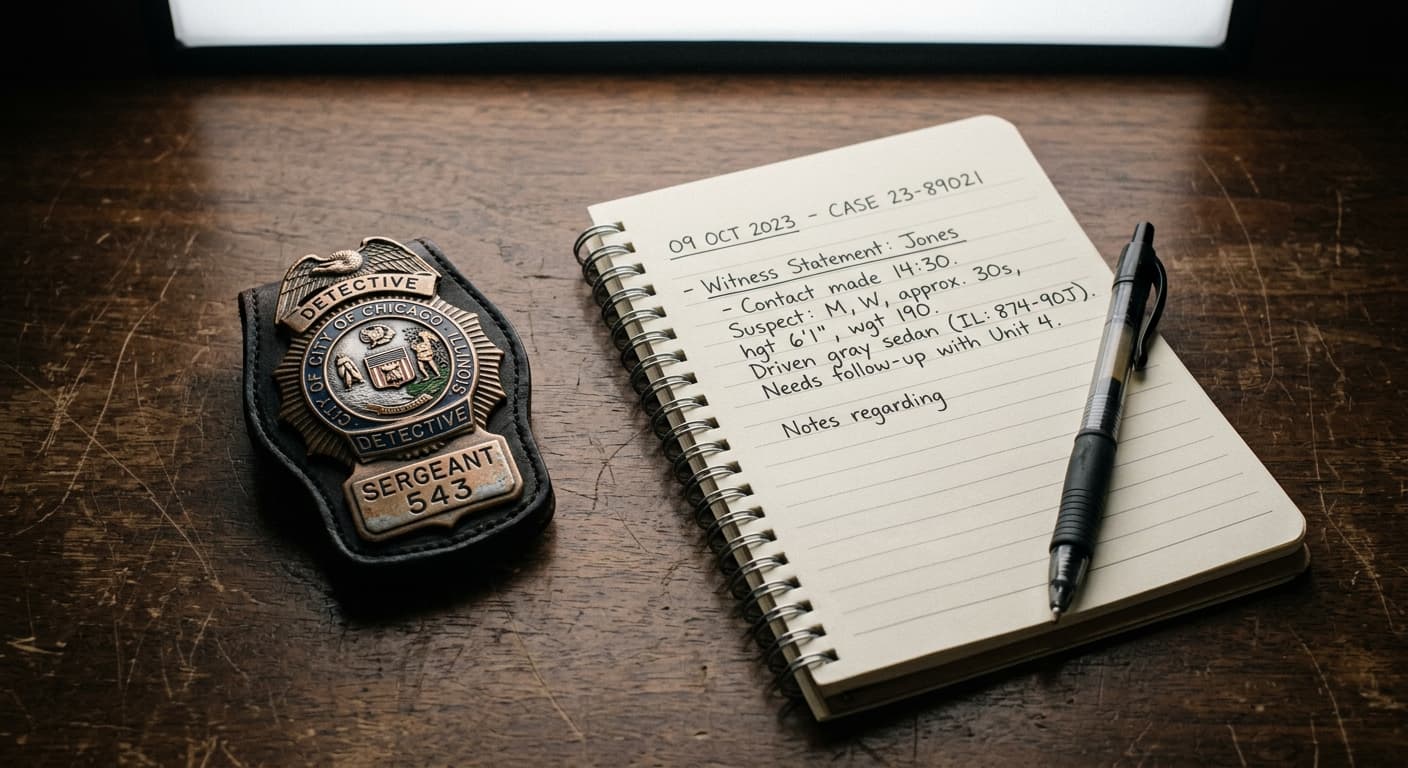
North Dakota treats police bodycam footage differently depending on where it was recorded. N.D. Cent. Code § 44-04-18.7(9) makes an image taken with a body camera in a private place an exempt record the agency may still choose to release. Footage recorded in a public place is not covered by that exemption and remains subject to North Dakota's general presumption that government records are open under N.D.C.C. ch. 44-04.
This guide is part of our Police Bodycam Laws by State series.
Jurisdiction scope: This article addresses North Dakota state law governing police body cameras: the private-place exemption under N.D. Cent. Code § 44-04-18.7(9), the general open-records presumption that governs public-place footage, the interaction with the state's criminal investigative information exemption, and the absence of a statewide use mandate. It does not address a civilian's right to record law enforcement, which is covered separately in our guide to recording laws.
Is North Dakota police bodycam footage a public record?
It depends on where the camera was pointed. N.D. Cent. Code § 44-04-18.7(9) provides that "an image taken with a body camera or similar device and which is taken in a private place is an exempt record." The provision was added by House Bill 1264 in the 2015 legislative session and took effect August 1, 2015, drafted at the request of law enforcement and firefighters specifically to protect the privacy of people recorded inside homes and other private settings, according to O'Keeffe O'Brien Lyson Attorneys' summary of the law. The subsection says nothing about footage recorded in a public place, and because it says nothing, that footage is not pulled out of North Dakota's general open-records law, codified at N.D.C.C. ch. 44-04, which presumes a record held by a public entity is open unless a specific statute exempts or makes it confidential, according to the North Dakota Attorney General's Open Records Guide. The practical result is a location-based rule: footage of a traffic stop, an arrest on a sidewalk, or an encounter in a store is presumptively open, while footage recorded inside a residence or another private space is not.
What does "exempt" actually mean under North Dakota law?
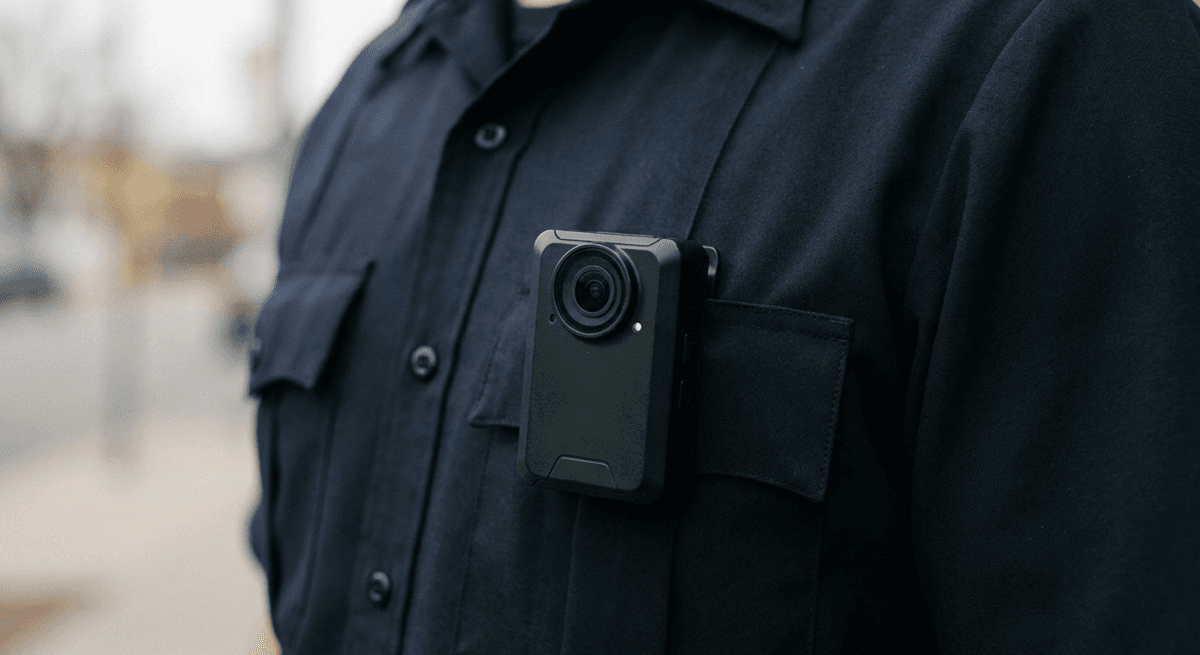
An exempt classification is weaker than it sounds. North Dakota's open records framework separates records into three buckets: open records, which any agency must produce on request; confidential records, which an agency is legally barred from releasing outside a specific exception; and exempt records, which an agency is not required to release but retains discretion to release anyway. Body camera footage recorded in a private place falls into the exempt category, not the confidential one, according to the Attorney General's Open Records Guide. That means a police chief or sheriff can choose to release private-place footage, for example to correct public misinformation about an incident or to support an officer's account of events, even though nothing in the statute forces that release. A requester who is denied private-place footage has no statutory right to force disclosure the way they could for a wrongfully withheld open record.
Does North Dakota require police to wear body cameras?
No. Unlike states such as South Carolina, Illinois, or Colorado, North Dakota has never enacted a statewide mandate requiring law enforcement agencies to purchase or issue body cameras, and § 44-04-18.7 itself only addresses what happens to footage once it exists, not whether an agency must record in the first place. Adoption has been left to individual departments and their budgets. Cities including Devils Lake, Grand Forks, and West Fargo have equipped patrol officers with body cameras as a matter of local policy, while smaller and rural agencies vary in whether and how extensively they use the technology. Because there is no state mandate, there is also no statewide activation trigger or retention floor written into § 44-04-18.7; agencies that use cameras set their own activation rules and retention periods through internal policy and applicable state or local government records retention schedules.
Can an active investigation keep public-place footage closed anyway?
Yes, and this is where North Dakota's rules get less intuitive. The exemption in § 44-04-18.7(9) reaches only private-place footage; it does not make public-place footage automatically producible the moment a request is filed. North Dakota's broader criminal investigative information provisions allow an agency to withhold records, including public-place bodycam video, for as long as a related prosecution remains pending, because the footage is treated as active investigative information regardless of where it was recorded. Once the case concludes, whether through a plea, a dismissal, or a final judgment, that basis for withholding disappears and the general open-records presumption reasserts itself for public-place footage.
| Scenario | Status | Basis |
|---|---|---|
| Footage recorded in a public place, no pending case | Open record | General open-records presumption, ch. 44-04 |
| Footage recorded in a public place, case still pending | May be withheld | Criminal investigative information exemption |
| Footage recorded in a private place | Exempt, discretionary release | § 44-04-18.7(9) |
| Footage the agency chooses to release despite an exemption | Permitted | Exempt (not confidential) classification |
A real dispute: the Grand Forks DUI arrest
A 2024 case shows how the active-investigation exemption operates even for a straightforward, public traffic stop. On May 7, 2024, Grand Forks police arrested then-state representative Claire Cory on suspicion of driving under the influence. The Grand Forks Herald requested the arresting officers' bodycam footage right away, and the department declined, citing the ongoing criminal case rather than the private-place exemption, according to the Grand Forks Herald's reporting on the dispute. After Cory pleaded guilty to reckless driving on July 2, 2024, the department released the footage promptly. The Herald's publisher asked Attorney General Drew Wrigley to issue a formal opinion on whether the earlier denial was lawful; Wrigley's office ruled on March 23, 2026, in open-records opinion 2026-O-08, that it was, reasoning that a prosecution is not complete simply because an arrest has occurred, so the footage remained active criminal investigative information at the time of the original request. A separate 2022 incident illustrates the same dynamic on a more serious case: after Fargo police officer Adam O'Brien fatally shot 28-year-old Shane Netterville, Attorney General Wrigley declined to release the bodycam video while the investigation and any related proceedings were ongoing, according to KFYR-TV's coverage.
Is it illegal to record police in North Dakota?
That is a different question from the one this page answers. North Dakota generally recognizes a person's right to record an on-duty officer performing public duties in a public place, as covered in our separate guide to recording laws linked above. The rules on this page apply only to footage the police themselves record and to the public's ability to obtain a copy of it afterward.
More North Dakota Laws
Frequently Asked Questions
Is North Dakota police bodycam footage a public record?
It depends on location. Footage recorded in a public place is generally an open record under North Dakota's general open-records law. Footage recorded in a private place is classified as an exempt record under N.D. Cent. Code 44-04-18.7(9).
Can a North Dakota police department release private-place bodycam footage if it wants to?
Yes. An exempt record is not the same as a confidential one. The agency has discretion to release private-place footage even though nothing requires it to.
Does North Dakota require every police department to use body cameras?
No. North Dakota has no statewide body camera mandate. Adoption is a local decision, and cities such as Devils Lake, Grand Forks, and West Fargo have equipped officers while other departments have not.
Why did Grand Forks police withhold bodycam footage of a lawmaker's DUI arrest?
The department cited the ongoing criminal case, not the location-based exemption. North Dakota's Attorney General ruled in March 2026 that withholding public-place footage while a prosecution is pending did not violate the open records law.
What is the difference between an exempt record and a confidential record in North Dakota?
An exempt record may be withheld, but the agency can still choose to release it. A confidential record cannot be released outside a specific legal exception. Private-place bodycam footage is exempt, not confidential.
How long must North Dakota agencies keep bodycam footage?
State law does not set a fixed retention period for body camera recordings. Agencies that use cameras set their own retention rules through internal policy and applicable government records retention schedules.
Is it illegal to record on-duty police in North Dakota?
No, recording an on-duty officer performing public duties in a public place is generally protected. That is a separate question from public access to police-recorded bodycam footage covered on this page.
Updates
Corrected the attribution of the private-place body camera exemption in N.D.C.C. 44-04-18.7(9), which does not itself make public-place footage an open record, and corrected the date of the Attorney General opinion on the Grand Forks case to March 23, 2026 (opinion 2026-O-08).
Independently fact-checked against the cited primary sources; governing law re-checked for recent changes
Governing law re-checked for recent changes
Reviewed and approved by an editor
The Law Behind This Article
This article rests on the statutory provisions below, held in our own legal record and retrieved from the official source. Tap a section to read the operative text.
North Dakota Century Code
§ 44-04-18.7Criminal intelligence information and criminal investigative information - Nondisclosure - Record of information maintainedIn forcecited in 5 of our articles
Active criminal intelligence information and active criminal investigative information are not subject to section 44-04-18 and section 6 of article XI of the Constitution of North Dakota. A criminal justice agency shall maintain a list of all files containing active criminal intelligence and investigative information which have been in existence for more than one year. With respect to each file, the list must contain the file's number or other identifying characteristic and the date the file was established. The list required under this subsection is subject to section 44-04-18. Personal information of any person contained in an active or nonactive file is an exempt record as defined in subsection 5 of section 44-04-17.1. "Criminal intelligence and investigative information" does not include: Arrestee description, including name, date of birth, address, race, sex, physical description, and occupation of arrestee. Facts concerning the arrest, including the cause of arrest and the name of the arresting officer. Conviction information, including the name of any person convicted of a criminal offense.
Official text (excerpt) · last checked 2026-08-31 · Read the full text in our law library · Verify at ndlegis.gov
Cited in 4 court opinions in our collectionLatest citing opinion in our collection: 2016
Opinions citing this section in our collection:
- Riemers v. City of Grand Forks (North Dakota Supreme Court 2006, 723 N.W.2d 518)“…t concerns law enforcement records. See, e.g., N.D.C.C. § 44-04-18.7 (exempting criminal intelligence and in…”
- State v. Davis (North Dakota Supreme Court 2006, 2006 ND 222)“…when it concerns law enforcement records. See, e.g. , N.D.C.C. § 44-04-18.7 (exempting criminal intelligence and in…”
- Detroit Free Press Inc. v. United States Department of Justice (Court of Appeals for the Sixth Circuit 2016, 829 F.3d 478)“…ss et al. 7; see, e.g., Minn. Stat. § 13.82, subdiv. 26(b); N.D. Cent. Code § 44-04-18.7(2)(i); Neb. Rev. Stat. § 29-3521; Okla.…”
Identified automatically from the court opinions citing this section — not a ranking of which case controls.
Also relied on in: North Dakota Laws on Recording Police: Your Constitutional Rights (2026), North Dakota Warrant Search: How to Check If You Have a Warrant (2026), North Dakota Police Reports: How to Get a Crash or Incident Report
Search our full record of US law — 2.1 million sections, every state + federal →
Sources and References
- N.D. Cent. Code § 44-04-18.7, criminal intelligence and investigative information provisions incorporating the body camera subsection(ndlegis.gov).gov
- North Dakota Attorney General, Open Records Guide, definitions of open, exempt, and confidential records(attorneygeneral.nd.gov).gov
- Grand Forks Herald, AG: Herald wrong on video interpretation; Grand Forks Police Department didn't violate records law in 2024(grandforksherald.com)
- KFYR-TV, North Dakota AG rejects calls for police body camera video of fatal shooting (Shane Netterville, Fargo)(kfyrtv.com)
- O'Keeffe O'Brien Lyson Attorneys, Police Are Wearing Body Cameras. What is North Dakota's Stance on the Trend?(okeeffeattorneys.com)
- North Dakota Attorney General, open records opinion 2026-O-08 issued to the Grand Forks Police Department, March 23, 2026(attorneygeneral.nd.gov)