
Oregon
Oregon Dashcam Laws: Mounting, Recording, and Legal Use
Independently fact-checked against primary sources (last audited August 22, 2026). · Reviewed by the RecordingLaw editorial team. · Law checked current as of August 22, 2026. · 5 primary sources cited on this page. How we verify our legal content
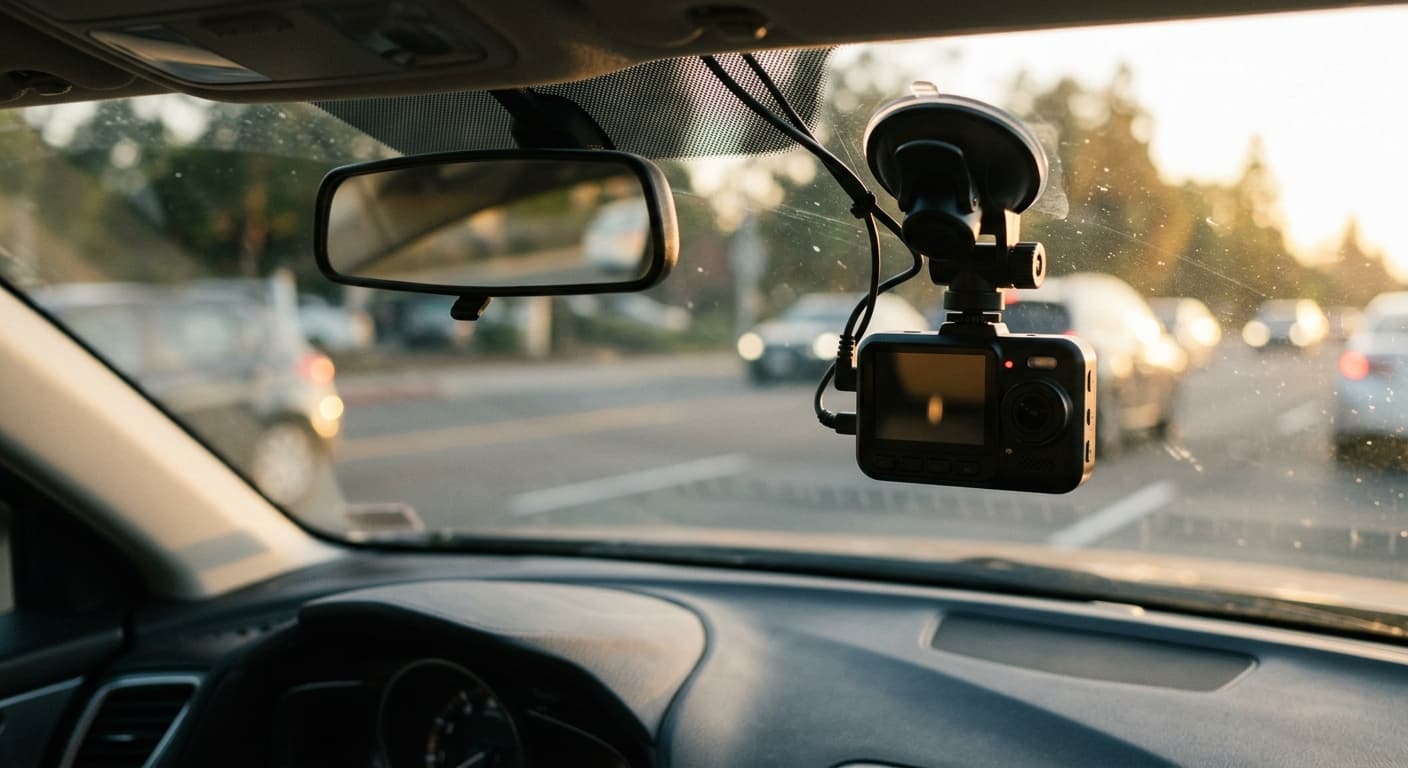
Dashcams are legal in Oregon. Silent video recording raises no consent issues, but if your dashcam captures audio of in-person conversations inside the vehicle, ORS 165.540 requires you to notify all occupants before recording. Mount the device so it does not obstruct your view under ORS 815.270.
Dashcams are legal in Oregon, and they serve as valuable tools for documenting accidents, insurance claims, and road incidents. However, Oregon's split consent framework under ORS 165.540 applies to dashcam audio, and vehicle equipment laws under ORS 815.270 govern how and where you can mount the device.
This guide covers Oregon dashcam laws in 2026, including legal mounting positions, audio recording rules, using dashcam footage as evidence, and special considerations for commercial vehicles.
Dashcam Legality in Oregon
No Specific Dashcam Statute
Oregon does not have a statute specifically addressing dashboard cameras. Instead, dashcam use is governed by:
- ORS 815.270: Prohibits operating a vehicle that is loaded or equipped in a way that obstructs the driver's view
- ORS 165.540: Recording consent laws (for audio features)
- General traffic safety laws: Requirements that drivers maintain an unobstructed view
Because there is no specific prohibition, dashcams are legal in Oregon as long as they comply with these general laws.
Windshield Mounting Rules
Oregon law under ORS 815.270 prohibits operating a vehicle that is loaded or equipped in a way that obstructs the driver's view or interferes with the driving mechanism. This means:
- Your dashcam must not block or significantly reduce your forward field of vision
- Mount the camera in the lower corner of the windshield or behind the rearview mirror
- The camera should be as small and unobtrusive as possible
- Suction-cup mounts should be secure to prevent the camera from falling and creating a distraction
Recommended Mounting Positions
| Position | Legal Status | Notes |
|---|---|---|
| Behind rearview mirror | Best option | Minimal view obstruction |
| Upper passenger corner | Acceptable | Keep camera compact |
| Lower driver corner | Acceptable | Must not block critical sight lines |
| Center of windshield | Not recommended | Most likely to obstruct view |
| Dashboard mount (not on glass) | Good alternative | Avoids windshield obstruction entirely |
Dashcam Audio Recording and Oregon's Split Consent

The Audio Question
Many dashcams include a microphone that records audio inside the vehicle cabin. This is where Oregon's split consent framework matters:
Conversations inside the vehicle (in-person): If your dashcam records audio of conversations between passengers in the car, the all-party notification requirement under ORS 165.540(1)(c) applies. Every person in the vehicle must be specifically informed that audio recording is taking place.
Phone calls through the car's Bluetooth or speaker: If your dashcam picks up audio from a phone call you are participating in, the one-party consent standard under ORS 165.540(1)(a) applies. You can record your own phone calls without telling the other party.
Audio of your own voice only: If you are alone in the car and narrating or talking to yourself, there is no other participant to notify. The notification requirement applies only when a conversation involves multiple people.
Practical Recommendations for Dashcam Audio
Given Oregon's notification requirement for in-person conversations:
- Disable audio recording if you regularly have passengers and do not want to deal with the notification requirement
- Inform passengers before starting a trip that the dashcam records audio. A simple statement like "My dashcam records audio and video" satisfies the notification requirement
- A posted notice alone is legally uncertain. No Oregon appellate case has held that a static sign by itself satisfies the notification requirement. Oregon courts have required an unequivocal warning for this kind of notice (State v. Bichsel, 101 Or App 257 (1990)), so treat a posted sign as a supplement to a verbal statement rather than a substitute for one.
- Keep audio enabled for solo driving since there is no in-person conversation to trigger the notification rule
Using Dashcam Footage as Evidence
Traffic Accidents
Dashcam footage is one of the most valuable forms of evidence after a traffic accident. In Oregon:
- Footage showing the other driver's negligence can support your insurance claim
- Video evidence can help establish fault, speed, traffic signals, and road conditions
- Multiple angles (front and rear cameras) provide comprehensive documentation
- Footage can counter false claims about who caused the accident
Insurance Claims
Oregon insurance companies commonly accept dashcam footage to evaluate claims. Benefits include:
- Faster claim processing when video clearly shows what happened
- Protection against fraudulent claims
- Documentation of hit-and-run incidents where the other driver's license plate may be captured
- Evidence of road conditions, weather, and visibility
Court Admissibility
Dashcam footage is generally admissible in Oregon courts if:
- The recording was made legally (compliant with ORS 165.540 for any audio component)
- The footage is authentic and has not been altered or edited
- A witness can testify about when and where the recording was made
- The footage is relevant to the issues in the case
Under ORS 41.910, if the dashcam's audio component was recorded in violation of ORS 165.540, the audio portion is inadmissible. However, the video portion may still be admissible if it can be separated from the audio.
Police Reports and Traffic Citations
If you are involved in a traffic stop or accident:
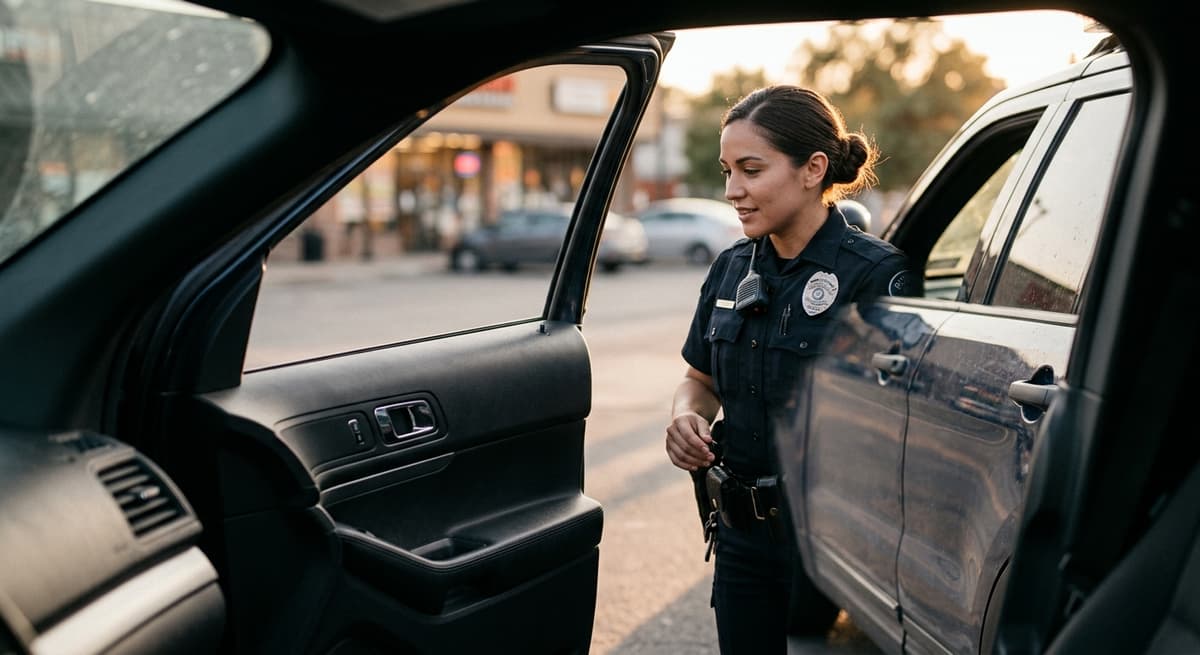
- You can voluntarily share dashcam footage with police officers
- Police generally cannot compel you to produce dashcam footage without a warrant during a routine traffic stop
- Footage that shows you were not at fault can help prevent unfair traffic citations
- Footage that shows you committed a violation could be used against you
Commercial Vehicle Dashcams
Employer-Installed Dashcams
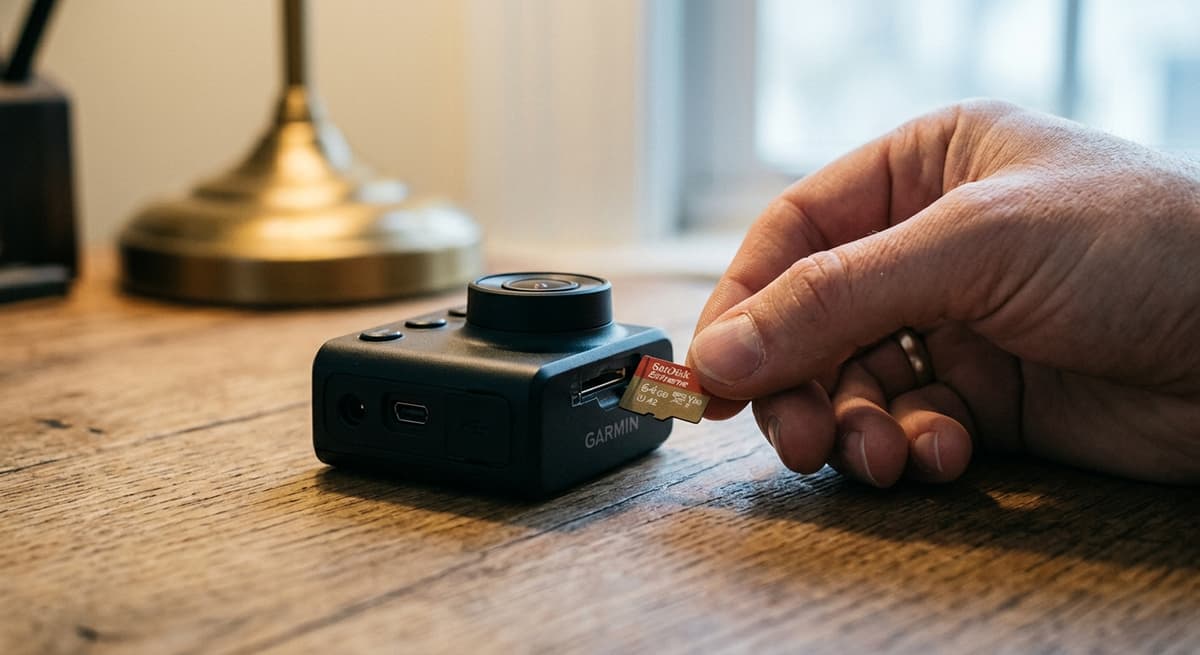
Many Oregon commercial vehicle operators use employer-installed dashcams for fleet management, safety monitoring, and liability protection. Key considerations:
- Employers can install forward-facing dashcams on company vehicles
- Interior-facing cameras (driver-facing) are increasingly common for monitoring driver behavior
- Audio recording on commercial vehicle dashcams follows the same split consent framework
- Drivers should be informed in writing about dashcam capabilities as part of employment documentation
Federal Motor Carrier Safety Administration (FMCSA) Considerations
Commercial motor vehicles operating in Oregon must comply with FMCSA regulations. While the FMCSA does not mandate dashcams, it encourages their use for safety purposes. Some relevant points:
- Dashcam footage can be used in FMCSA safety audits
- Electronic logging devices (ELDs) required by FMCSA are separate from dashcams
- Dashcams should not distract the commercial driver or obstruct their view
Ride-Share and Delivery Drivers
Oregon ride-share drivers (Uber, Lyft) and delivery drivers who use dashcams must consider:
- Passengers in the vehicle constitute an in-person conversation setting, so audio notification is required
- Posting a visible notice in the vehicle about recording is recommended
- Ride-share companies may have their own policies regarding dashcam use
- Footage of rider behavior can be valuable for dispute resolution
Rear-Facing and Multi-Camera Systems
Rear Dashcams
Rear-facing dashcams that record the area behind your vehicle are legal in Oregon under the same rules as front-facing cameras:
- Rear cameras mounted on the windshield must not obstruct the driver's view
- Cameras mounted on the rear window or other positions avoid the windshield obstruction issue
- Audio from rear cameras captures cabin conversations and requires the same all-party notification
Interior Cameras
Interior cameras that face the cabin raise the same concerns as any audio recording device in the car:
- Video only (no audio): Legal
- Video with audio: All-party notification required for in-person conversations in the vehicle
Parking Mode
Many dashcams include a "parking mode" that records when the vehicle is parked and detects motion or impact. In Oregon:
- Video-only parking mode recording does not trigger ORS 165.540
- Audio recording during parking mode could capture conversations of passersby, potentially triggering the notification requirement
- Consider disabling audio during parking mode to avoid compliance issues
Penalties for Dashcam-Related Violations
Windshield Obstruction
Violating ORS 815.270 by mounting a dashcam that obstructs the driver's view can result in a traffic citation.
Audio Recording Violations
If your dashcam's audio component violates ORS 165.540:
| Penalty | Maximum |
|---|---|
| Jail time | Up to 364 days |
| Fine | Up to $6,250 |
| Civil damages | Actual damages (min. $100/day or $1,000) + punitive + attorney fees |
Oregon Recording Laws by Topic
Phone Call Recording | Audio Recording | Video Recording | Workplace Recording | Recording Police | Security Cameras | Recording in Public | Landlord-Tenant | Dashcam Laws | Schools | Medical Recording | Voyeurism & Hidden Cameras
More Oregon Recording Topics
More Oregon Laws
Frequently Asked Questions
Are dashcams legal in Oregon?
Yes. Dashcams are legal in Oregon. There is no specific statute prohibiting them. You must mount the dashcam so it does not obstruct your view of the road under ORS 815.270. The best mounting positions are behind the rearview mirror or in the lower corner of the windshield.
Can my dashcam record audio in Oregon?
Your dashcam can record audio, but Oregon's split consent framework applies. Audio of in-person conversations with passengers requires all-party notification under ORS 165.540(1)(c). Audio of your own phone calls follows one-party consent. If you drive alone, audio recording of your own voice does not require notification.
Can I use dashcam footage in court in Oregon?
Yes. Dashcam video footage is generally admissible in Oregon courts if it was legally obtained, is authentic, and is relevant to the case. If the audio component was recorded in violation of ORS 165.540, the audio may be inadmissible under ORS 41.910, but the video portion may still be used.
Do I have to tell passengers about my dashcam in Oregon?
If your dashcam records audio, you must specifically inform all passengers that recording is taking place under ORS 165.540(1)(c). A verbal statement made directly to your passengers at the start of the trip is the clearest way to satisfy this requirement. Oregon courts have required an unequivocal warning for this kind of notice (State v. Bichsel, 101 Or App 257, 1990), and no Oregon appellate case has held that a posted sign by itself is enough, so a static notice carries more legal uncertainty than telling your passengers out loud. For video-only dashcams, no notification is required.
Can I share dashcam footage with police after an accident in Oregon?
Yes. You can voluntarily share dashcam footage with police officers. They generally cannot compel you to produce it without a warrant during a routine stop. Sharing footage that shows you were not at fault can help protect you from unfair citations or liability.
Updates
Corrected the statute cited for dashcam mounting rules: Oregon's device-obstruction statute is ORS 815.270, not ORS 815.220 (which governs window tint and materials, not mounted devices).
Independently fact-checked against the cited primary sources; governing law re-checked for recent changes
Added a caveat on dashcam audio notification: no Oregon appellate case has held that a static posted sign alone satisfies ORS 165.540(1)(c)'s 'specifically informed' requirement, and Oregon courts have required an unequivocal warning (State v. Bichsel), so a verbal statement to passengers is now framed as the clearer compliance path rather than a sign being presented as an equal alternative.
Governing law re-checked for recent changes
Reviewed and approved by an editor
The Law Behind This Article
This article rests on the statutory provisions below, held in our own legal record and retrieved from the official source. Tap a section to read the operative text.
Oregon Revised Statutes, Chapter 165: Offenses Involving Fraud or Deception
§ 165.540Obtaining contents of communicationsIn forcecited in 19 of our articles
(1) Except as otherwise provided in ORS 133.724 or 133.726 or subsections (2) to (8) of this section, a person may not: (a) Obtain or attempt to obtain the whole or any part of a telecommunication or a radio communication to which the person is not a participant, by means of any device, contrivance, machine or apparatus, whether electrical, mechanical, manual or otherwise, unless consent is given by at least one participant. (b) Tamper with the wires, connections, boxes, fuses, circuits, lines or any other equipment or facilities of a telecommunication or radio communication company over which messages are transmitted, with the intent to obtain unlawfully the contents of a telecommunication or radio communication to which the person is not a participant. (c) Obtain or attempt to obtain the whole or any part of a conversation by means of any device, contrivance, machine or apparatus, whether electrical, mechanical, manual or otherwise, if not all participants in the conversation are specifically informed that their conversation is being obtained.
Official text (excerpt) · last checked 2026-08-31 · Read the full text in our law library · Verify at oregonlegislature.gov
Cited in 76 court opinions in our collectionLatest citing opinion in our collection: 2026
In the courts (editorial summary, independently checked):State v. Fleetwood (2000) applied ORS 165.540 to body wire evidence, holding that words spoken into a telephone are a telecommunication under subsection (1)(a) and that the (5)(a)(B) exception fails unless the officer or the officer's agent shares reciprocally in the conversation, so the recordings were inadmissible.
Opinions citing this section in our collection:
- State v. Klein (Oregon Supreme Court 2012, 352 Or. 302)“…eing 3 recorded. Conversations recorded in violation of ORS 165.540 are not admissible in 4 court excep…”
- North Pacific Lumber Co. v. Oliver (Oregon Supreme Court 1979, 286 Or. 639)✓A lumber wholesaler secretly monitored traders' calls; on de novo review the court said the practice may have violated ORS 165.540 but refused to rest unclean hands on it, since the ex-employee's calls were never monitored. The employer's noncompete suit failed on other grounds.
- State v. Fleetwood (Oregon Supreme Court 2000, 331 Or. 511)✓A detective wired an informant and recorded the suspect's side of a phone call and his talks with his mother and a juvenile seller; the court held those interceptions violated ORS 165.540(1)(a) and (1)(c) because the informant was not a participant, and upheld suppression.
Identified automatically from the court opinions citing this section — not a ranking of which case controls.
Also relied on in: Oregon Recording Laws (2026): Hybrid One-Party and All-Party Rules, Oregon Voyeurism and Hidden Camera Laws: Offenses, Penalties, and Protections, Oregon Audio Recording Laws: Split Consent Rules for Conversations and Calls
Oregon Revised Statutes, Chapter 815: Vehicle Equipment Generally
§ 815.220Obstruction of vehicle windows; penaltyIn forcecited in 2 of our articles
(1) A person commits the offense of obstruction of vehicle windows if the person drives or moves on any highway or owns and causes or knowingly permits to be driven or moved on any highway any vehicle with windows obstructed in a manner prohibited under this section. (2) The windows of a vehicle are obstructed in a manner prohibited by this section if any material that prevents or impairs the ability to see into or out of the vehicle is upon any vehicle window described in this subsection. This subsection applies to any sign, poster, one-way glass, adhesive film, glaze application or other material if the material prevents or impairs the ability to see into or out of the vehicle. This subsection only applies to the following windows of the vehicle: (a) The front windshield. (b) The side-wings. (c) The side windows on either side forward of or adjacent to the operator’s seat. (3) Nothing in this section prohibits safety glazing materials of a type that conforms to standards established under ORS 815.040.
Official text (excerpt) · last checked 2026-09-08 · Read the full text in our law library · Verify at oregonlegislature.gov
Cited in 10 court opinions in our collectionLatest citing opinion in our collection: 2013
Opinions citing this section in our collection:
- State v. Stookey (Court of Appeals of Oregon 2013, 255 Or. App. 489)“…or impairs the ability to see into or out of the vehicle,” ORS 815.220 (Class D traffic violation). Finally, d…”
- State v. Hovies (Oregon Supreme Court 1994, 320 Or. 414)“…f having “obstructed vehicle windows” in violation of *417 ORS 815.220. Defendant appealed pro se to the Cou…”
- State v. Elmore (Court of Appeals of Oregon 2011, 241 Or. App. 419)“…bable cause to stop him for a traffic violation pursuant to ORS 815.220. As pertinent here, that statute prohib…”
Identified automatically from the court opinions citing this section — not a ranking of which case controls.
Also relied on in: Oregon Windshield Mounting Laws (2026 Guide)
§ 815.270Operating vehicle that is loaded or equipped to obstruct driver; penaltyIn force
(1) A person commits the offense of operating a vehicle that is loaded or equipped to obstruct the driver if the person is operating a vehicle that is loaded or equipped or where baggage or an encumbrance does any of the following: (a) Substantially obstructs the driver’s views to the rear, through one or more mirrors and otherwise. (b) Obstructs the driver’s view to the front or sides. (c) Interferes with control of the driving mechanism. (d) Prevents the free, unhampered operation of the vehicle by the driver. (2) The offense described in this section, vehicle loaded or equipped to obstruct driver, is a Class C traffic violation.
Official text (excerpt) · last checked 2026-07-29 · Read the full text in our law library · Verify at oregonlegislature.gov
Cited in 4 court opinions in our collectionLatest citing opinion in our collection: 2013
Opinions citing this section in our collection:
- State v. Anderson (Court of Appeals of Oregon 2013, 259 Or. App. 448)“…rack placed defendant in violation of either ORS 815.020 or ORS 815.270. For the following reasons, we reverse…”
- State v. Zigler (Court of Appeals of Oregon 1990, 100 Or. App. 700)“…rized to stop defendant when he observed a traffic offense. ORS 815.270; ORS 810.410(3)(b); State v. Ola…”
- State v. Elmore (Court of Appeals of Oregon 2011, 241 Or. App. 419)“…iolated other *424 statutes — viz., ORS 815.270 (operating a vehicle that is loaded or…”
Identified automatically from the court opinions citing this section — not a ranking of which case controls.
Search our full record of US law — 2.1 million sections, every state + federal →
Sources and References
- ORS 165.540 - Obtaining Contents of Communications(oregonlegislature.gov).gov
- ORS 815.270 - Operating Vehicle Loaded or Equipped to Obstruct Driver(oregonlegislature.gov).gov
- ORS 41.910 - Intercepted Communications Inadmissible(oregonlegislature.gov).gov
- FMCSA - Federal Motor Carrier Safety Administration(fmcsa.dot.gov).gov
- ORS 133.739 - Civil Remedies for Willful Interception(oregonlegislature.gov).gov