
Oregon
Oregon Workplace Recording Laws: Employee and Employer Rights Under Split Consent
Independently fact-checked against primary sources (last audited August 22, 2026). · Reviewed by the RecordingLaw editorial team. · Law checked current as of August 22, 2026. · 5 primary sources cited on this page. How we verify our legal content

Oregon's split consent rule under ORS 165.540 governs workplace recording. Employees may record their own work phone calls without notice, but must specifically inform all participants before recording any in-person conversation, including meetings, performance reviews, and break room discussions.
Workplace recording in Oregon is governed by the same split consent framework that applies everywhere else in the state. Under ORS 165.540, recording a work phone call requires only one-party consent, while recording an in-person workplace conversation requires that every participant be specifically informed before the recording begins.
This guide explains how Oregon's recording laws apply to employees, employers, and workplace situations in 2026, including surveillance cameras, meeting recordings, HR conversations, and whistleblower protections.
How Oregon's Split Consent Framework Applies at Work
Phone Calls at Work: One-Party Consent
Under ORS 165.540(1)(a), you can record any phone call you participate in at work without telling the other person. This covers:
- Calls with supervisors, managers, and HR representatives
- Client and customer calls
- Calls with coworkers
- Conference calls where you are a participant
- VoIP calls through business communication platforms
Your participation in the call satisfies the one-party consent requirement. You do not need your employer's permission to record a phone call you are on, though company policy may impose additional restrictions (discussed below).
In-Person Conversations at Work: All-Party Notification
Recording face-to-face conversations at work requires that every participant be specifically informed under ORS 165.540(1)(c). This applies to:
- One-on-one meetings with your supervisor
- HR meetings and performance reviews
- Conference room meetings
- Break room conversations
- Hallway discussions
- Any in-person workplace interaction
You cannot secretly record an in-person conversation with a coworker, manager, or HR representative. Before pressing record, you must specifically inform everyone present that you are recording.
Video Conferencing at Work: The Platform Exception
Oregon treats a video conferencing call as a "conversation" under ORS 165.540(1)(c), not a one-party-consent telecommunication. This means:
- Recording a Zoom, Teams, or Google Meet call, even through the platform's built-in feature, requires notifying every participant before you start; a secret recording risks a Class A misdemeanor
- A narrow exception under ORS 165.540(6)(b) allows recording without notifying every participant only if you intend to capture alleged unlawful activity and are a law enforcement officer, are coordinating with law enforcement, an attorney, or a regulator, or reasonably believe the recording may be used as evidence in a judicial or administrative proceeding
- Platform-native transcription features do not change the underlying notification requirement
This distinction matters for hybrid workplaces. If three colleagues are in a conference room and two others join by Zoom, the entire meeting is a single conversation for purposes of ORS 165.540(1)(c). Recording it, whether from the room or through the platform, requires notifying everyone in the meeting, in-person and remote, before you begin.
Employee Recording Rights in Oregon
When Can Employees Record at Work?
Oregon law gives employees the right to record in specific circumstances:
Phone calls: You can always record work phone calls you participate in. This is one of the clearest rights employees have under ORS 165.540(1)(a).
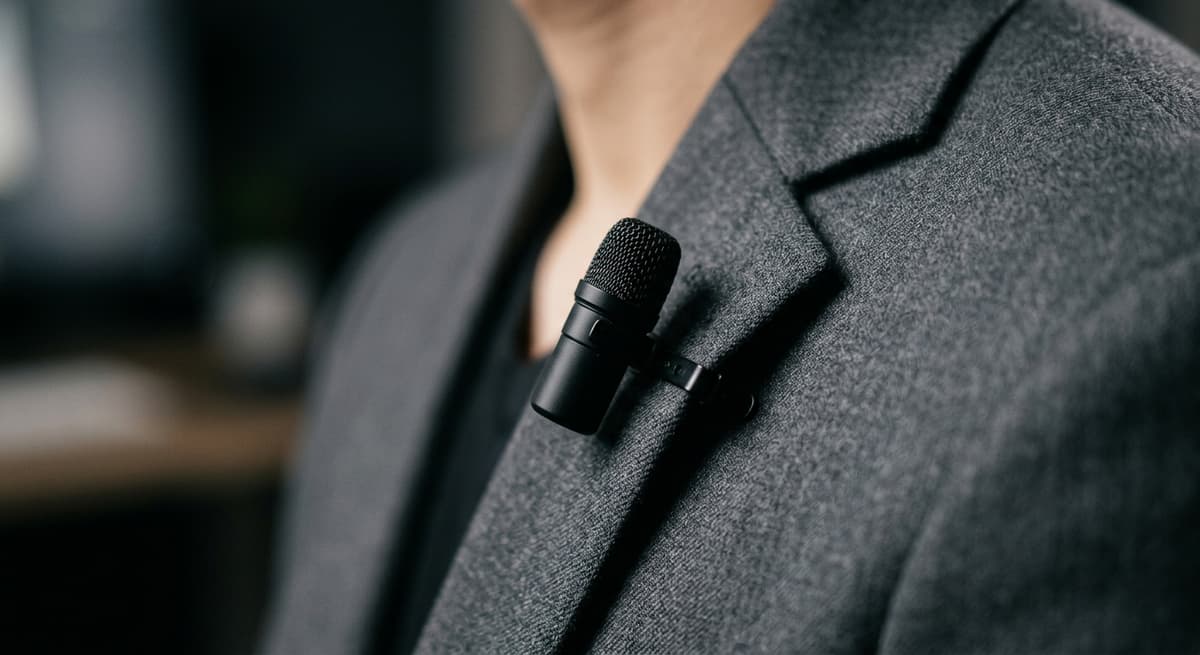
In-person conversations: You can record if you notify all participants first. If you walk into a meeting and say "I am going to record this conversation," you have satisfied the statutory requirement. Whether the other participants agree to continue is their choice.
Video calls: Oregon treats a video conference as a conversation under ORS 165.540(1)(c), so you must specifically inform every participant before recording, even when using the platform's built-in recording feature. The platform's own recording notice does not, by itself, satisfy Oregon's notification requirement.
Recording for Whistleblower Purposes
Oregon has strong whistleblower protections. Under ORS 659A.199, employers cannot retaliate against employees who report violations of law. If you need to document illegal activity in the workplace, the recording rules still apply:
- Phone calls discussing illegal activity: One-party consent allows you to record
- In-person conversations about illegal activity: You must still notify all participants, unless the narrow felony exception under ORS 165.540(5)(a) applies (requires a felony endangering human life)
- Video conferencing discussions: All-party notification is required, the same as an in-person conversation, unless the narrow felony exception under ORS 165.540(5)(a) applies
The felony exception does not cover most workplace violations such as wage theft, discrimination, safety violations, or fraud. Those situations require following the standard notification rules for in-person recording.
Oregon's whistleblower statute protects you from retaliation for reporting violations through proper channels, but it does not override the recording consent requirements.
Recording to Document Harassment or Discrimination
Employees who experience workplace harassment or discrimination often want to record evidence. Oregon's recording rules apply the same way regardless of the reason for recording:
- Record phone calls where harassment occurs: Legal under one-party consent
- Record in-person harassment: Must notify all participants first
- Record video calls: You must notify the harasser and other participants before recording, the same as an in-person conversation
If you cannot notify the harasser that you are recording (because doing so would escalate the situation or cause retaliation), consider documenting the incident in writing immediately afterward, reporting to HR or management, and consulting with an employment attorney about other evidence-gathering options.
Employer Surveillance and Monitoring

Video Surveillance Cameras
Oregon employers can install video surveillance cameras in the workplace with certain limits:
Permitted locations:
- Common work areas, hallways, and lobbies
- Sales floors and retail spaces
- Parking lots and building exteriors
- Warehouses, loading docks, and storage areas
Prohibited locations:
- Bathrooms and restrooms
- Changing rooms and locker rooms
- Private areas where employees have a reasonable expectation of privacy
- Any location where recording intimate areas would violate ORS 163.700
Audio on surveillance cameras: If workplace cameras capture audio of in-person conversations, the all-party notification requirement under ORS 165.540(1)(c) applies. Employers must specifically inform employees and visitors that audio is being recorded. Simply posting a sign saying "This area is under surveillance" may not be sufficient for audio recording, as the statute requires that participants be "specifically informed."
Computer and Phone Monitoring
Employers can monitor company-owned devices and networks. This may include:
- Monitoring emails sent through company email systems
- Tracking internet usage on company networks
- Recording calls made on company phone systems (with one-party consent from the employer or employee)
- Monitoring software installed on company computers
Oregon law encourages employers to provide clear written notice of monitoring policies. While no Oregon statute specifically requires employers to disclose electronic monitoring, best practices and federal guidance from the Electronic Communications Privacy Act support transparency.
Employee Consent and Notice
Best practices for Oregon employers regarding workplace recording and surveillance:
- Distribute a written surveillance and recording policy to all employees
- Include recording policies in employee handbooks
- Require employees to acknowledge receipt of the policy
- Clearly identify which areas are monitored by video and/or audio
- Update policies when surveillance systems change
- Train managers on the difference between phone recording (one-party consent) and in-person recording (all-party notification)
Company Recording Policies

Can Employers Ban Recording?
Yes. Oregon employers can implement policies that restrict or ban workplace recording beyond what the law requires. Even though Oregon law permits recording phone calls under one-party consent, an employer can adopt a policy that prohibits employees from recording any calls without supervisor approval.
Violating a company recording policy can result in:
- Verbal or written warnings
- Suspension
- Termination
The recording itself may still be legal under state law, but the employer can discipline the employee for violating company policy. This creates a practical tension: the recording may be admissible in court, but making it may cost you your job.
NLRA Protections
The National Labor Relations Act provides some limits on employer recording bans. The NLRB applies the Stericycle, Inc., 372 NLRB No. 113 (2023) standard when evaluating employer recording policies: a rule that could reasonably be interpreted to interfere with Section 7 rights is presumptively unlawful unless the employer can show a legitimate business justification that outweighs the harm to protected activity. NLRB General Counsel Memorandum GC 25-05 (Feb. 14, 2025) rescinded dozens of prior GC memos, including GC 23-02 on electronic monitoring of employees, signaling a narrower enforcement posture on recording-related charges. The Board's Stericycle precedent itself remains formally undisturbed, since a GC memo cannot overrule Board precedent, but the GC's current charging posture favors employers. Examples of protected recording activity include:
- Recording evidence of workplace safety hazards
- Documenting wage and hour violations
- Capturing evidence supporting collective bargaining efforts
An employer's no-recording policy must be narrowly tailored to legitimate business interests and cannot be used to suppress employee organizing or evidence gathering related to labor rights.
Recording HR Meetings and Disciplinary Proceedings
Can You Record an HR Meeting?
Under Oregon law, you can record a phone-based HR meeting under one-party consent. For an in-person HR meeting, you must notify everyone present before recording.
Practical considerations:
- Announcing that you want to record may change the tone of the meeting
- HR may refuse to continue the meeting if you insist on recording
- Your employer may have a policy prohibiting recording of HR proceedings
- An attorney can advise on whether recording is strategically wise in your situation
Can HR Record You?
HR representatives and managers are subject to the same rules. They can record phone calls under one-party consent. For in-person meetings, they must notify you before recording. If HR announces at the start of a meeting that the conversation will be recorded, you have been specifically informed as required by statute.
Penalties for Illegal Workplace Recording
Criminal Penalties
Violating ORS 165.540 in the workplace carries the same penalties as any other context:
| Penalty | Maximum |
|---|---|
| Jail time | Up to 364 days |
| Fine | Up to $6,250 |
| Probation | Up to 5 years |
Civil Liability
Under ORS 133.739, a coworker or manager whose conversation you illegally record can sue for actual damages (minimum $100/day or $1,000), punitive damages, and attorney fees.
Employment Consequences
Beyond legal penalties, illegal workplace recording can result in immediate termination, damage to professional reputation, loss of unemployment benefits if terminated for cause, and difficulty finding future employment.
Oregon Recording Laws by Topic
Phone Call Recording | Audio Recording | Video Recording | Workplace Recording | Recording Police | Security Cameras | Recording in Public | Landlord-Tenant | Dashcam Laws | Schools | Medical Recording | Voyeurism & Hidden Cameras
More Oregon Recording Topics
More Oregon Laws
Frequently Asked Questions
Can I record a conversation with my boss in Oregon?
It depends on how the conversation happens. If you are on a phone call with your boss, you can record under one-party consent without telling them. If you are meeting in person or on a video call, Oregon treats the conversation as subject to ORS 165.540(1)(c), so you must specifically inform your boss before recording.
Can my employer record me at work in Oregon?
Your employer can use video surveillance cameras in common work areas but not in bathrooms, changing rooms, or other private spaces. For audio recording, the split consent framework applies. Phone calls follow one-party consent. In-person conversations require all-party notification. Your employer must also inform you of monitoring policies.
Can I be fired for recording at work in Oregon?
Yes. Even though recording a phone call is legal under Oregon's one-party consent rule, your employer can have a policy that prohibits recording. Violating that policy can result in termination. The NLRA provides some protection when recording relates to protected concerted activity like documenting safety hazards or wage violations.
Can I record an HR meeting in Oregon?
For a phone-based HR meeting, you can record under one-party consent. For an in-person HR meeting, you must notify everyone present before recording. Your employer may also have a policy restricting recording of HR proceedings, and violating that policy can result in discipline.
Can I secretly record evidence of workplace harassment in Oregon?
You can secretly record phone calls where harassment occurs under one-party consent. For in-person harassment, Oregon law requires you to notify all participants before recording. The narrow felony exception only applies during felonies endangering human life. Consider documenting incidents in writing and consulting an employment attorney.
Updates
Corrected the description of NLRB General Counsel Memorandum GC 25-05: it substantively reinstated the employer-friendly Boeing-era standard for no-recording policies, not a routine housekeeping update, though the Board's underlying Stericycle precedent is unchanged.
Independently fact-checked against the cited primary sources; governing law re-checked for recent changes
Corrected six restatements of a fabricated blanket one-party-consent exemption for workplace video calls; Oregon treats a video call as a conversation requiring all-party notification, and the actual ORS 165.540(6)(b) exception is a narrow evidence-gathering carve-out.
Governing law re-checked for recent changes
Reviewed and approved by an editor
The Law Behind This Article
This article rests on the statutory provisions below, held in our own legal record and retrieved from the official source. Tap a section to read the operative text.
Oregon Revised Statutes, Chapter 165: Offenses Involving Fraud or Deception
§ 165.540Obtaining contents of communicationsIn forcecited in 19 of our articles
(1) Except as otherwise provided in ORS 133.724 or 133.726 or subsections (2) to (8) of this section, a person may not: (a) Obtain or attempt to obtain the whole or any part of a telecommunication or a radio communication to which the person is not a participant, by means of any device, contrivance, machine or apparatus, whether electrical, mechanical, manual or otherwise, unless consent is given by at least one participant. (b) Tamper with the wires, connections, boxes, fuses, circuits, lines or any other equipment or facilities of a telecommunication or radio communication company over which messages are transmitted, with the intent to obtain unlawfully the contents of a telecommunication or radio communication to which the person is not a participant. (c) Obtain or attempt to obtain the whole or any part of a conversation by means of any device, contrivance, machine or apparatus, whether electrical, mechanical, manual or otherwise, if not all participants in the conversation are specifically informed that their conversation is being obtained.
Official text (excerpt) · last checked 2026-08-31 · Read the full text in our law library · Verify at oregonlegislature.gov
Cited in 76 court opinions in our collectionLatest citing opinion in our collection: 2026
In the courts (editorial summary, independently checked):State v. Fleetwood (2000) applied ORS 165.540 to body wire evidence, holding that words spoken into a telephone are a telecommunication under subsection (1)(a) and that the (5)(a)(B) exception fails unless the officer or the officer's agent shares reciprocally in the conversation, so the recordings were inadmissible.
Opinions citing this section in our collection:
- State v. Klein (Oregon Supreme Court 2012, 352 Or. 302)“…eing 3 recorded. Conversations recorded in violation of ORS 165.540 are not admissible in 4 court excep…”
- North Pacific Lumber Co. v. Oliver (Oregon Supreme Court 1979, 286 Or. 639)✓A lumber wholesaler secretly monitored traders' calls; on de novo review the court said the practice may have violated ORS 165.540 but refused to rest unclean hands on it, since the ex-employee's calls were never monitored. The employer's noncompete suit failed on other grounds.
- State v. Fleetwood (Oregon Supreme Court 2000, 331 Or. 511)✓A detective wired an informant and recorded the suspect's side of a phone call and his talks with his mother and a juvenile seller; the court held those interceptions violated ORS 165.540(1)(a) and (1)(c) because the informant was not a participant, and upheld suppression.
Identified automatically from the court opinions citing this section — not a ranking of which case controls.
Also relied on in: Oregon Recording Laws (2026): Hybrid One-Party and All-Party Rules, Oregon Voyeurism and Hidden Camera Laws: Offenses, Penalties, and Protections, Oregon Audio Recording Laws: Split Consent Rules for Conversations and Calls
Oregon Revised Statutes, Chapter 163: Offenses Against Persons
§ 163.700Invasion of personal privacy in the second degreeIn forcecited in 11 of our articles
(1) Except as provided in ORS 163.702, a person commits the crime of invasion of personal privacy in the second degree if: (a)(A) For the purpose of arousing or gratifying the sexual desire of the person, the person is in a location to observe another person in a state of nudity without the consent of the other person; and (B) The other person is in a place and circumstances where the person has a reasonable expectation of personal privacy; or (b)(A) The person knowingly makes or records a photograph, motion picture, videotape or other visual recording of another person’s intimate area without the consent of the other person; and (B) The person being recorded has a reasonable expectation of privacy concerning the intimate area. (2) As used in this section and ORS 163.701: (a) “Intimate area” means nudity, or undergarments that are being worn by a person and are covered by clothing.
Official text (excerpt) · last checked 2026-08-31 · Read the full text in our law library · Verify at oregonlegislature.gov
Cited in 16 court opinions in our collectionLatest citing opinion in our collection: 2023
In the courts (editorial summary, independently checked):State v. McQueen (2020) held that a person who intentionally exposes an intimate area to another has no reasonable expectation of privacy as to that person under ORS 163.700(1)(b)(B), reversing a conviction for secretly recording consensual sex. State v. Mayes (2008) read the nudity definition as reaching only post-pubescent people.
Opinions citing this section in our collection:
- State v. Parra-Sanchez (Court of Appeals of Oregon 2023, 324 Or. App. 712)“…wrong, and likely a criminal invasion of her privacy under ORS 163.700. To the extent that our case law regard…”
- State v. Rodriguez-Ganegar (Court of Appeals of Oregon 2003, 186 Or. App. 530)“…hat people were making love in it, the person would violate ORS 163.700(1)(b) by looking into the room in the m…”
- State v. Mayes (Court of Appeals of Oregon 2008, 220 Or. App. 385)✓A man hid cameras in workplace and office restrooms and secretly recorded women and two girls, ages nine and seven. The court held the nudity definition in ORS 163.700 reaches only post-pubescent people, measured from the onset of puberty, and reversed the seven-year-old's count.
Identified automatically from the court opinions citing this section — not a ranking of which case controls.
Also relied on in: Oregon Landlord-Tenant Recording Laws: Surveillance, Privacy, and Consent, Oregon Medical Recording Laws: Patient Rights, HIPAA, and Consent, Oregon School Recording Laws: Student, Parent, and Teacher Rights
Oregon Revised Statutes, Chapter 659A: Unlawful Discrimination in Employment, Public Accommodations and Real Property Transactions; Administrative and Civil Enforcement
§ 659A.199Prohibited conduct by employerIn forcecited in 2 of our articles
(1) It is an unlawful employment practice for an employer to discharge, demote, suspend or in any manner discriminate or retaliate against an employee with regard to promotion, compensation or other terms, conditions or privileges of employment for the reason that the employee has in good faith reported information that the employee believes is evidence of a violation of a state or federal law, rule or regulation. (2) The remedies provided by this chapter are in addition to any common law remedy or other remedy that may be available to an employee for the conduct constituting a violation of this section. [2009 c.524 §2] (Disclosures by Public and Nonprofit Employees)
Official text (excerpt) · last checked 2026-09-16 · Read the full text in our law library · Verify at oregonlegislature.gov
Cited in 108 court opinions in our collectionLatest citing opinion in our collection: 2026
Opinions citing this section in our collection:
- Burley v. Clackamas Cnty. (Court of Appeals of Oregon 2019, 298 Or. App. 462)“…nt Clackamas County. The main question on appeal is whether ORS 659A.199, which makes it unlawful for an "employ…”
- Summerfield v. OLCC (Oregon Supreme Court 2020, 366 Or. 763)“…od faith report of what he believed was a violation of law, ORS 659A.199. The trial court granted defendant’s mo…”
- Ossanna v. Nike, Inc. (Court of Appeals of Oregon 2018, 290 Or. App. 16)“…under ORS 654.062(5) ; (2) whistleblower retaliation under ORS 659A.199 ; (3) common law wrongful discharge; an…”
Identified automatically from the court opinions citing this section — not a ranking of which case controls.
Also relied on in: Oregon Whistleblower Laws: Protections and How to Report
Search our full record of US law — 2.1 million sections, every state + federal →
Sources and References
- ORS 165.540 - Obtaining Contents of Communications(oregonlegislature.gov).gov
- ORS 659A.199 - Oregon Whistleblower Protections(oregonlegislature.gov).gov
- ORS 163.700 - Invasion of Personal Privacy(oregonlegislature.gov).gov
- ORS 133.739 - Civil Remedies for Willful Interception(oregonlegislature.gov).gov
- National Labor Relations Act(nlrb.gov).gov
- Electronic Communications Privacy Act(law.cornell.edu)