
Italy
Security Cameras in an Italian Condominio: Rules for Common-Area CCTV
Independently fact-checked against primary sources (last audited July 20, 2026). · 9 primary sources cited on this page. How we verify our legal content
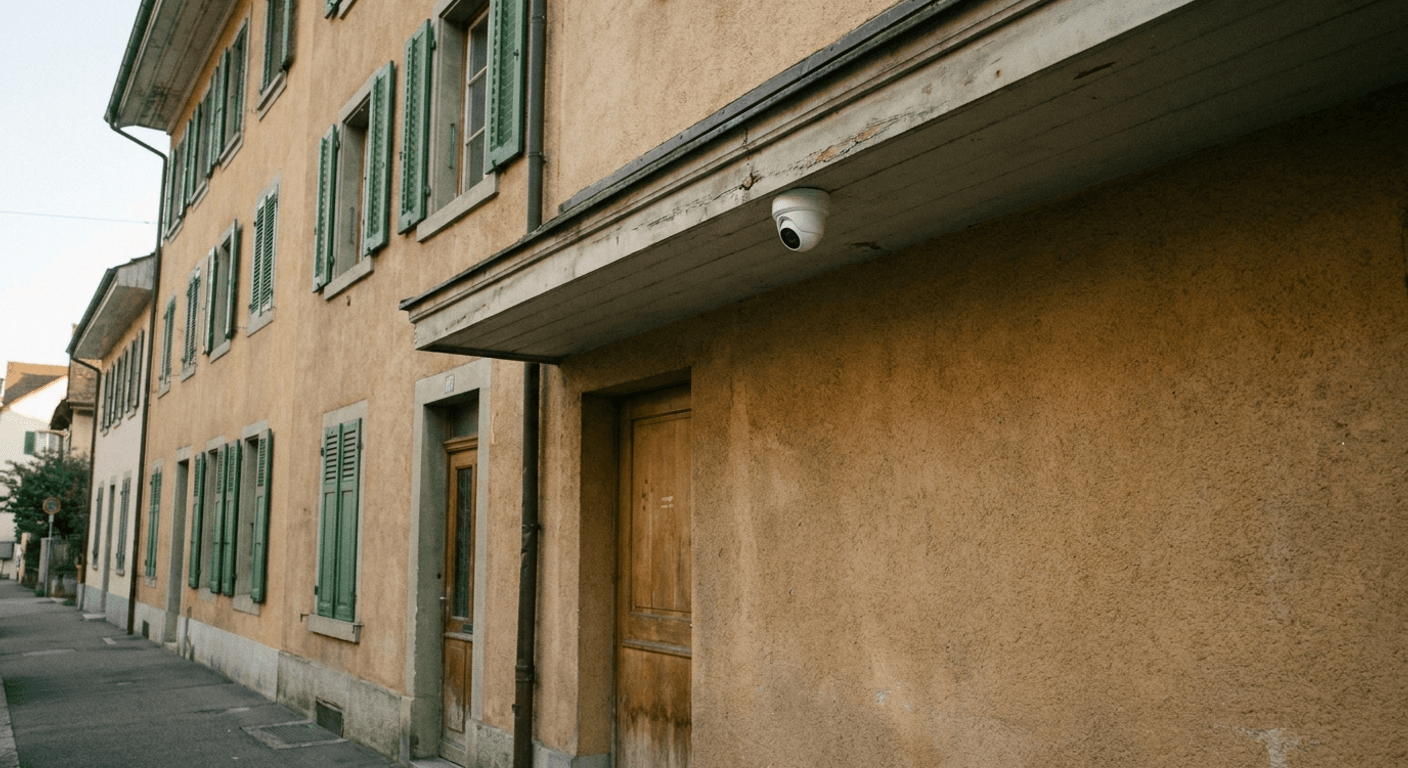
A camera pointed at a condominio's entrance, courtyard or parking area is a common request in Italian buildings, and requests for one tend to spike after even a single break-in. Installing that camera is not, however, something one owner, or even the amministratore (building manager), can simply decide to do on their own.
Italian law gives that decision to the assembly, sets a specific voting majority for it, and gives the Garante per la protezione dei dati personali (the data protection authority) the power to fine an administrator who skips the vote. This guide covers cameras aimed at common parts only. A single owner's own camera, pointed at their own door or balcony, follows a different set of rules, covered in our guide to home security cameras in Italy.
Information verified on 20 July 2026. This page provides general legal information and does not constitute legal advice for an individual situation.
Three questions that get run together, and should not be
Searches for telecamere condominio usually land on one of three separate legal questions, and treating them as one is the most common mistake on this topic: a condominio installing a camera on its own common parts (this page); a single owner installing their own camera on their own property, which follows the household exemption described in our home security cameras in Italy guide; and the criminal offence at art. 615-bis c.p., which can apply to either situation if a camera improperly captures someone's private life in a protected place.
This page focuses on the first question, and touches the third only where it is directly relevant to a common-area camera.
The art. 1122-ter vote: who decides, and how
Art. 1122-ter c.c., inserted by the 2012 condominium reform and in force since 18 June 2013, is direct on this point. Deliberations concerning the installation, on the building's common parts, of equipment enabling video surveillance of them must be approved by the assembly, with the majority set out in the second comma of art. 1136 c.c.
Common parts, for this purpose, include the entrance hall, courtyard, stairwell, lift, garden, parking areas and similar spaces the building's owners share (art. 1117 c.c.), not any individual owner's own apartment, balcony or private garage box.
No other route substitutes for that vote. Not a decision by the amministratore acting alone, not an informal agreement among a few residents, and not an email notifying everyone after installation has already happened, a pattern the enforcement case below shows the Garante specifically rejecting.
The majority the assembly must reach
The second comma of art. 1136 c.c. sets the bar: a resolution is valid when approved by a number of votes representing a majority of those attending the meeting (maggioranza degli intervenuti) and at least half the value of the building (almeno la metà del valore dell'edificio), a meaningfully higher bar than many routine condominio decisions need.
The fourth comma of art. 1136 c.c. lists art. 1122-ter expressly among a short set of decisions that must always clear this majority, so the requirement holds even at a second convocation, where most ordinary matters pass with a lower threshold.
| Convocazione | Ordinary matters | Art. 1122-ter camera resolution |
|---|---|---|
| Prima convocazione | Majority attending, at least half the building's value | Same threshold, always required |
| Seconda convocazione | Majority attending, at least one third of the building's value | Still needs majority attending and at least half the value |
A vote valid for ordinary business at a second convocation is not automatically valid for a camera resolution.
Scenario: can one condòmino install a camera in the entrance alone?
An owner on the ground floor, worried about parcel theft, installs two cameras covering the entrance hall and mailboxes without raising it at an assembly meeting. This is not lawful on its own: the common parts belong to all the owners together, and art. 1122-ter c.c. gives the decision to the assembly, not to any single owner acting on their own initiative.
The enforcement case below involves an amministratore, who has considerably more standing over day-to-day management than an individual owner, and the Garante still found the installation unlawful without a delibera. An owner acting alone is on weaker ground still.
The Garante enforcement case: 1.000 euro for skipping the vote
The Garante's Provvedimento of 26 October 2023 (doc. web n. 9960920) is the clearest illustration of how this rule is enforced. An amministratore installed two external cameras covering a parking area and entrance gate, with a partial view of the public street, in November 2020, and informed residents only by email after the cameras were already active. No assembly resolution under art. 1122-ter c.c. had ever been adopted, and the signage on site did not identify the data controller, a separate defect the Garante flagged alongside the missing delibera.
Following a reclamo, an unanswered request for information, and an on-site inspection by the Guardia di Finanza's privacy unit in November 2021, the Garante found the processing unlawful, ordered it stopped (a divieto del trattamento) until a proper resolution was adopted, and fined the administrator 1.000 euro personally.
Who is the data controller, and what duties follow
Once the assembly has validly authorised a common-area camera, the condominio itself, acting through the amministratore, is the data controller (titolare del trattamento). That status carries the ordinary GDPR and Codice Privacy (D.Lgs. 196/2003) obligations: an informativa, a lawful basis, proportionality in what the camera actually captures, and a defined retention period.
Where no valid delibera exists, the person who actually installed and operates the system can be treated as the controller in their own right and held personally liable, exactly what happened above. Ordinary amministratore duties are set out in art. 1130 c.c., and a stand-alone power to install video surveillance is not among them; it is only ever delegated by the assembly's own vote.
Signage and how long footage may be kept
A camera covering common parts needs a notice (an informativa, often a simple cartello) placed before the monitored area, identifying the data controller and the purpose of the processing. In the 2023 case, the posted sign omitted the controller's identity, a defect flagged separately from the missing vote.
Italian law does not fix a single statutory number of days for common-area footage; the GDPR's accountability principle leaves the controller to set and justify a retention period no longer than necessary. Garante guidance generally points toward short retention, often a matter of days, with about a week floated as a benchmark (a separate statutory rule for municipal urban-security cameras sets seven days). Treat that as good practice, not a hard ceiling written into art. 1122-ter c.c. itself.
Scenario: the assembly approves cameras but never discusses retention or access
An assembly votes, with the required majority, to install two cameras covering the parking area. The minute records the vote and the camera locations, but nobody raises how long footage should be kept or who can view it, and the amministratore leaves the system on its factory default of three months, with every owner given a login.
That gap does not excuse the condominio from its duties. The amministratore should set a defined retention period consistent with Garante guidance, typically closer to days than months, and limit live or recorded access to themselves or a person the assembly designates, with review tied to a specific incident rather than routine browsing, rather than leaving a commercial system's factory settings to decide the condominio's compliance by default.
When a common-area camera also raises the criminal offence
Art. 615-bis c.p. (interferenze illecite nella vita privata) punishes anyone who, using a recording device, improperly obtains images or information about the private life of others in a protected place, with reclusione from six months to four years. The basic offence proceeds only on a querela from the person affected. A harsher penalty and prosecution without a querela apply where a public official abuses their position, or where the act is committed by anyone practising the profession of private investigator.
A camera authorised by the assembly and correctly limited to common parts, an entrance, a courtyard, a parking area, generally stays within the art. 1122-ter c.c. and GDPR framework and does not raise this offence. The picture changes where the camera's actual field of view drifts beyond the common parts the assembly authorised, for example into a window, balcony or terrace that belongs to a specific owner's private unit.
Scenario: a neighbour believes a common-area camera also captures their balcony
A condominio installs a camera over the main entrance, correctly authorised by an assembly vote, aimed at the doorway and the surrounding path. A resident on the first floor later notices the camera's actual angle also sweeps across their own balcony each time someone walks past.
This deserves two answers. On the data-protection side, the camera has exceeded the authorised scope and the proportionality principle it was meant to respect, which the resident can raise with the amministratore and, if unresolved, with the Garante. Separately, because the footage captures a specific person's private life in what is arguably a protected space, the facts may also touch art. 615-bis c.p., a fact-specific question the resident's own report to the police or the Procura would need to establish.
What a neighbour can do, and what the delibera should record
A resident who believes a common-area camera oversteps has several non-exclusive options: raise it with the amministratore in writing and ask to see the delibera and its authorised scope, request the informativa, or file a reclamo with the Garante per la protezione dei dati personali. Where the footage plausibly captures private life in a protected space, they can separately report the matter under art. 615-bis c.p.
Most of this is avoidable at the source. A delibera that simply says the assembly approves installing cameras leaves the amministratore, and the condominio, exposed later. One that records the legal basis, the areas covered and excluded, the retention period, and who administers access is what separates a condominio that can answer a Garante inquiry cleanly from one that ends up personally exposed, like the amministratore in the 2023 case, for a decision the assembly never actually took. For the fuller range of Italy coverage on this site, see the Italy hub.
Frequently Asked Questions
Can our condominio install security cameras in the entrance and parking area?
Yes, but only through an assembly resolution under art. 1122-ter c.c., passed with the majority set out in the second comma of art. 1136 c.c. Neither a single owner nor the amministratore acting alone can authorise it.
What majority does the camera vote need?
A majority of the owners attending the meeting, representing at least half the value of the building. This same majority applies even at a second convocation, where most other condominio decisions need only a lower threshold.
Can our amministratore install cameras without asking the assembly first?
No. The Garante fined an amministratore 1.000 euro in a 2023 provvedimento for installing common-area cameras without the required assembly resolution, and ordered the processing stopped until a valid vote was taken.
How long can the condominio keep the camera footage?
There is no single fixed number of days written into art. 1122-ter c.c. itself. Garante guidance points toward short retention, generally a matter of days, with about a week treated as a practical benchmark, unless a longer period is specifically justified.
Do we need a sign warning people about the cameras?
Yes. An informativa, commonly a cartello posted before the monitored area, should identify the data controller and the purpose of the processing. A sign that omits the controller's identity is itself a defect, as the 2023 enforcement case shows.
Is a camera on a private balcony the same as a condominio camera?
No. A camera an individual owner points at their own door or balcony follows the household exemption, a different set of rules than art. 1122-ter c.c., which applies only to shared common parts.
What can a resident do if a common-area camera also films their apartment?
Ask the amministratore to see the delibera and the camera's authorised scope, request the informativa, file a reclamo with the Garante, or, where private life in a protected space may be captured, report the matter separately under art. 615-bis c.p.
Updates
Independently fact-checked against the cited primary sources
Sources and References
- Codice civile, art. 1122-ter (Impianti di videosorveglianza sulle parti comuni)(normattiva.it).gov
- Codice civile, art. 1136 (Costituzione dell'assemblea e validità delle deliberazioni)(normattiva.it).gov
- Codice civile, art. 1117 (Parti comuni dell'edificio)(normattiva.it).gov
- Codice civile, art. 1130 (Attribuzioni dell'amministratore)(normattiva.it).gov
- Codice penale, art. 615-bis (Interferenze illecite nella vita privata)(normattiva.it).gov
- Garante per la protezione dei dati personali, Provvedimento del 26 ottobre 2023 [9960920], sanzione ad amministratore di condominio per videosorveglianza senza delibera assembleare(garanteprivacy.it).gov
- Garante per la protezione dei dati personali, FAQ in tema di videosorveglianza(garanteprivacy.it).gov
- Regolamento (UE) 2016/679 (GDPR)(eur-lex.europa.eu).gov
- Decreto Legislativo 30 giugno 2003, n. 196, Codice in materia di protezione dei dati personali(normattiva.it).gov