
Ireland
Drone Laws in Ireland: Registration, Rules and Privacy (2026)
Independently fact-checked against primary sources (last audited July 20, 2026). · 9 primary sources cited on this page. How we verify our legal content

Irish drone rules come from two places at once: an EU regulation that sets the categories, distances and training, and an Irish statutory instrument that names the regulator. Both changed between 2022 and 2024, so much of the drone guidance still online describes rules that no longer exist.
This page covers who regulates drones in Ireland in 2026, when you must register, what the open category allows, and the part most drone guides skip: what data protection law expects once your camera can identify a person.
Information last verified on 20 July 2026. This page is general legal information for the Republic of Ireland, not legal advice.
Who regulates drones in Ireland?
The Irish Aviation Authority is the competent authority for unmanned aircraft in Ireland, and that has not changed, despite a widespread misreading of the Air Navigation and Transport Act 2022.
The 2022 Act combined the aviation regulatory functions of the IAA with those of the Commission for Aviation Regulation. Part 11 is headed "Dissolution of Commission for Aviation Regulation" and transfers its functions to the IAA. The movement was inward, not outward into a successor regulator.
Separately, the Act provided for a new company to supply air navigation services, trading as AirNav Ireland. It runs air traffic services, is not the drone regulator and does not register operators. The IAA is the authority named in the current Irish instrument, S.I. No. 24 of 2023, and operator registration happens on the IAA platform MySRS.
Which rules apply in 2026?
Commission Implementing Regulation (EU) 2019/947 sets the EU framework: the categories, the open subcategories, competency and the registration triggers. It applies directly in Ireland.
S.I. No. 24 of 2023 is the Irish layer, and Article 25 revokes the Irish Aviation Authority (Small Unmanned Aircraft (Drones) and Rockets) Order 2015. Any guide still relying on the 2015 order describes law that has been off the books since 2023. There is also no Irish instrument called the European Union (Unmanned Aircraft Systems) Regulations, despite that title circulating.
Open, specific and certified: the three categories
Regulation 2019/947 sorts operations by risk, not by whether you fly for fun or for money. The open category covers most recreational and light commercial flying and needs no authorisation, precisely because its limits are strict: a take-off mass below 25 kg, no flight over assemblies of people, visual line of sight at all times, and a 120 metre ceiling. The specific category covers anything outside those limits, such as beyond visual line of sight flying, and needs an operational authorisation from the IAA. The certified category applies where the aircraft is certified and the operation involves flying over assemblies of people, transporting people, or carrying high-risk dangerous goods.

Inside the open category, the subcategory decides who may be underneath the aircraft.
| Subcategory | Typical aircraft | Rule about people |
|---|---|---|
| A1, C0 and equivalents | Class C0, privately built under 250 g and under 19 m/s, or a legacy aircraft under 250 g | No overflight of assemblies of people. Uninvolved persons may be overflown |
| A1, C1 | Class C1 | No overflight of assemblies of people, and the pilot must reasonably expect that no uninvolved person will be overflown |
| A2 | Class C2 | No overflight of uninvolved persons, and a safe horizontal distance of at least 30 metres from them, reducible to a minimum of 5 metres with an active low speed mode function |
| A3 | Class C2, C3 or C4, privately built under 25 kg | An area where no uninvolved person is expected to be endangered, and a safe horizontal distance of at least 150 metres from residential, commercial, industrial or recreational areas |
Three points are routinely reported wrongly. The A2 distance is 30 metres with a 5 metre floor in low speed mode, not 50 metres: the 50 metre rule belonged to the transitional regime that ended on 31 December 2023. The 150 metre figure in A3 is measured from residential, commercial, industrial and recreational areas, not from individual people. And class marks run from C0 to C6.
Do I need to register my drone in Ireland?
Registration attaches to the operator rather than the aircraft, so one registration covers the drones you fly.
Under Article 14(5) you must register if you operate in the open category an unmanned aircraft with a maximum take-off mass of 250 g or more, or which on impact can transfer more than 80 joules of kinetic energy to a person, or which carries a sensor able to capture personal data unless it complies with the toy safety directive. Registration is also required for an aircraft of any mass flown in the specific category.
That second limb is the one people miss. A sub-250 g drone with a camera normally still needs registration, because the trigger is the sensor rather than the weight, and the regulation's recital gives the reason plainly: it is a privacy measure. Citizens Information advises labelling the drone with your operator number and uploading it to Direct Remote ID.
Two clocks: 2 years and 5 years
The most common administrative mistake is treating registration and competency as one renewal date. Operator registration is valid for two years, as the IAA states on its drone register page. Remote pilot competency is valid for five years: UAS.OPEN.070 provides that the online theoretical competency and the certificate of remote pilot competency shall be valid for five years, with renewal requiring you to demonstrate competency again.
For A1 and A3, competency means an online course and an examination of 40 multiple choice questions covering air safety, airspace restrictions, privacy and data protection, and security. A2 requires the certificate of remote pilot competency, which adds self practical training in A3 conditions and a further examination of at least 30 questions. Article 9 sets a minimum pilot age of 16, subject to three carve-outs including toy class C0 aircraft and flying under direct supervision.
Height, line of sight and the people below
The 120 metre ceiling is measured from the closest point of the surface of the earth, so over hills it follows the terrain beneath the aircraft rather than the height above your launch point. Visual line of sight means continuous unaided visual contact with the aircraft, so binoculars and a first person view headset do not satisfy it, and where an observer is used that person must be situated alongside the pilot.
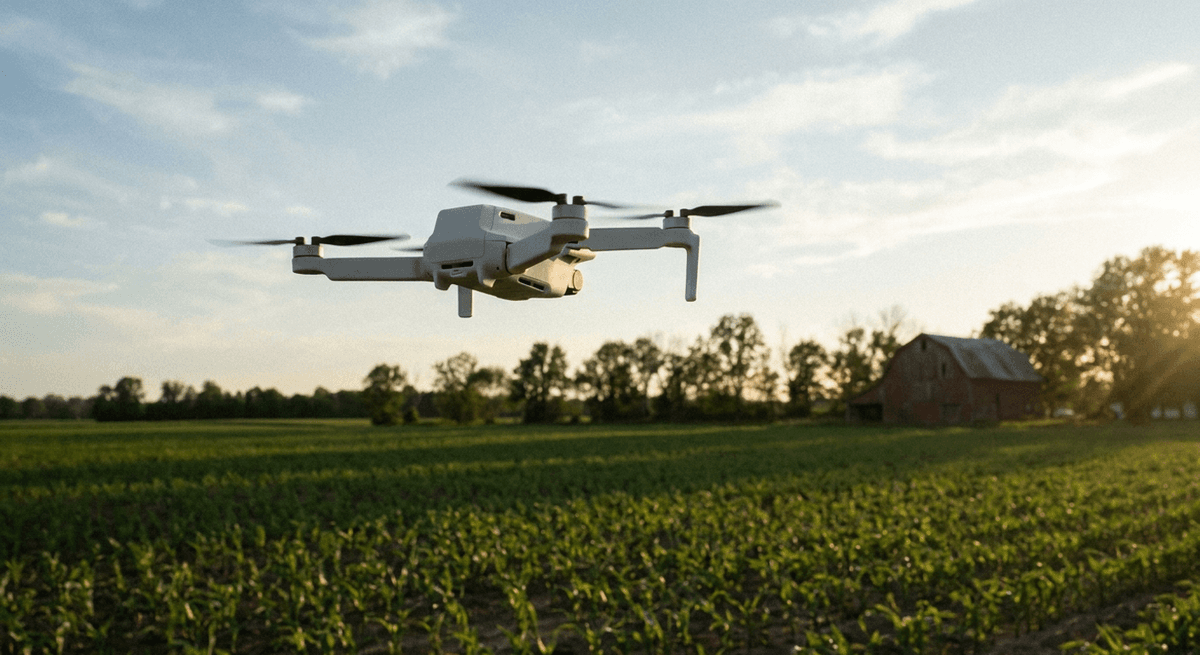
Before each flight you must carry proof of competency, obtain updated geographical zone information, check for obstacles and uninvolved persons, and verify that direct remote identification is working. You must not fly where you could hazard another aircraft, near moving aircraft or in an aerodrome traffic circuit, or where your capacity is affected by alcohol consumption or illness.
Where you cannot fly
Article 15 of Regulation 2019/947 allows Member States to define UAS geographical zones, and Ireland does. The IAA publishes them in the common unique digital format as a downloadable data file alongside an on-screen map.
How the IAA frames that map matters: it warns that the map is for reference only and not to be used for navigation, and instructs operators to consult the published temporary reserved areas, NOTAMs and the zones data file before each flight, noting that zones may overlap. Aerodromes have an additional power over drones flying where they should not be. An aerodrome operator certified in accordance with the EASA Regulations may, subject to the approval of the IAA, deploy a Counter-UAS System within the aerodrome, meaning a system for the detection, classification, monitoring or neutralisation of unauthorised unmanned aircraft. That power sits in Article 21A of the 2023 order, inserted by S.I. No. 103 of 2023.
Because the zones are a live data layer rather than a fixed list, the only safe approach is to check the IAA map and current NOTAMs before every flight, rather than any list of restricted places written into an article, including this one.
Drones, cameras and Irish data protection law
This is where Irish drone flying stops being purely an aviation question, and it is the part of the topic that gets the least attention.
S.I. No. 24 of 2023 builds data protection into the aviation instrument. Articles 8 and 9 require that personal data obtained during a drone operation be processed in accordance with data protection law, and that operators prepare a Data Protection Impact Assessment where one is required under the GDPR. Article 10 allows the IAA to set, by direction, minimum heights and conditions for the protection of privacy and personal data.
The Data Protection Commission's guidance on the use of drones sets the tone. It compares drones to body worn cameras, saying they can effectively turn into a mobile surveillance system and are highly likely to capture the personal data of passers by. The controller test is correspondingly broad: if you operate a drone camera at such height that you may identify someone, even with the assistance of other tools such as zooming, you are likely to be processing personal data and to qualify as a data controller. Professional or commercial use can never fall within the household or personal activity exemption.
Recreational flyers get a qualified reprieve. The DPC's example is a photography hobbyist trying a new drone in a public park, where the camera may accidentally record other people. That does not qualify as household activity, but the DPC says it does not amount to surveillance activity either, and may be qualified as purely personal activity if you do not publish your recordings to an unrestricted audience. Taking a photo in public is generally fine, and it is what you do with that photo that can become a data protection issue.
Flying over your own land is not an automatic exemption either. The DPC says that flying a drone for surveillance over a large garden may not be a household or personal activity if the camera can record images of surrounding private property or public space, and describes that as similar to CCTV installed in private premises.
Where the exemption does not apply, you must define your purposes, rely on a lawful basis, minimise what you capture and be transparent at the moment of recording. Consent is rarely workable, so operators usually rely on legitimate interests with safeguards such as automated blurring.
The DPC has also said it cannot progress a complaint unless the identity of the controller is provided and there is evidence the processing took place, and that where the operator is unknown you may refer the matter to your local Garda station. If you can identify them, our guide to making a complaint to the Data Protection Commission explains the process, and the Irish recording law page covers consent to record generally.
What happens if you break the rules
Section 74 of the Irish Aviation Authority Act 1993 is the enforcement backbone. Contravening an instrument to which the section applies is an offence, and section 74(9)(a) defines that to include an order or regulation made under the Act, which captures S.I. No. 24 of 2023. Section 74(1) also contains a trap for anyone who lends out a drone: where there is a contravention in relation to an aircraft, both the operator and the pilot in command are deemed to have contravened.
Section 74(3) was substituted on 4 April 2006 by section 2(c) of the Aviation Act 2006, so the penalties in the 1993 text as enacted are no longer the operative ones and the figures still quoted from that text are wrong. On summary conviction the section provides for a fine of up to €5,000, a class A fine, or imprisonment for a term not exceeding 6 months, or both. On conviction on indictment it provides for a fine of up to €500,000 or imprisonment for a term not exceeding 3 years, or both, with forfeiture of equipment on indictment.
Drones can also be taken out of your hands before any prosecution. Under the 2023 order a member of An Garda Siochana may detain a drone on a suspected breach, and the IAA may direct an operator to stop flying and take steps to detain the aircraft. Detention may last only as long as necessary, and where no prosecution follows the aircraft must be returned. For other everyday rules that catch people out, see the Ireland legal guides hub and our page on dog control laws.
This page is general information about drone rules in the Republic of Ireland and is not legal advice. Aviation requirements are set by the Irish Aviation Authority, while data protection questions fall to the Data Protection Commission. Check the IAA zones map and current NOTAMs before every flight, and speak to a solicitor if you face a prosecution or a data protection complaint.
Frequently Asked Questions
Do I have to register a drone under 250 g in Ireland?
Usually yes, if it has a camera. The trigger in Article 14(5) of Regulation 2019/947 is met either by a take-off mass of 250 g or more, or by the drone carrying a sensor able to capture personal data, unless it complies with the toy safety directive. A small camera drone therefore normally needs an operator registration despite being under the weight threshold.
Who is the drone regulator in Ireland?
The Irish Aviation Authority. The Commission for Aviation Regulation was dissolved and its aviation regulatory functions transferred to the IAA under the Air Navigation and Transport Act 2022. AirNav Ireland provides air navigation services and is not the drone regulator.
How high can I legally fly a drone in Ireland?
In the open category the limit is 120 metres from the closest point of the surface of the earth, so over sloping ground it follows the terrain rather than your launch point. A limited exception allows up to 15 metres above an artificial obstacle taller than 105 metres, within 50 metres of that obstacle and at the obstacle owner's request.
How long does drone registration last in Ireland?
Operator registration is valid for two years. Remote pilot competency, whether the A1 and A3 online proof of training or the A2 certificate of remote pilot competency, is valid for five years under UAS.OPEN.070. The two renew on different dates.
Can I fly a drone over my neighbour's garden?
Aviation law gives you no right to record it. If your camera captures identifiable people on neighbouring private property, the DPC's position is that the household or personal activity exemption is unlikely to apply and you would be processing personal data as a controller. Trespass and nuisance are separate issues that can also arise.
Is the old 2015 Irish drone order still in force?
No. Article 25 of S.I. No. 24 of 2023 revoked the Irish Aviation Authority (Small Unmanned Aircraft (Drones) and Rockets) Order 2015. Permissions, directions and exemptions in force immediately before commencement were saved, but the 2015 order no longer governs Irish drone flying.
Can An Garda Siochana seize my drone?
Under S.I. No. 24 of 2023 a member of An Garda Siochana may detain an unmanned aircraft where a breach is suspected, and the IAA or an authorised officer may direct you to stop operating and take steps to detain it. Detention is permitted only for as long as necessary, and if no prosecution is brought the aircraft must be returned.
Updates
Independently fact-checked against the cited primary sources
The EU transitional regime under Article 22 of Regulation 2019/947 ended. Only the Article 20 legacy allowance for aircraft placed on the market before 1 January 2024 survives.
S.I. No. 24 of 2023 was sealed by the IAA. Article 25 revoked the 2015 drones and rockets order, which is no longer the operative Irish instrument.
Sources and References
- Commission Implementing Regulation (EU) 2019/947 on the rules and procedures for the operation of unmanned aircraft(eur-lex.europa.eu).gov
- Commission Implementing Regulation (EU) 2022/425 (transition dates for UAS in the open category)(eur-lex.europa.eu).gov
- S.I. No. 24/2023, Irish Aviation Authority (Unmanned Aircraft Systems (Drones)) Order 2023(irishstatutebook.ie).gov
- S.I. No. 103/2023, Irish Aviation Authority (Unmanned Aircraft Systems (Drones)) (Amendment) (No. 2) Order 2023 (Article 21A, Counter-UAS Systems)(irishstatutebook.ie).gov
- Irish Aviation Authority Act 1993, s.74 (offences and penalties, as substituted by the Aviation Act 2006) - Revised Acts(revisedacts.lawreform.ie).gov
- Data Protection Commission, Guidance on the Use of Drones(dataprotection.ie).gov
- Irish Aviation Authority, drone operator registration (MySRS)(iaa.ie).gov
- Irish Aviation Authority, UAS Geographic Zones(iaa.ie).gov
- Citizens Information, Owning and operating a drone(citizensinformation.ie).gov