
Ireland
Dog Laws in Ireland: Licences, Restricted Breeds and Fines
Independently fact-checked against primary sources (last audited July 20, 2026). · 6 primary sources cited on this page. How we verify our legal content
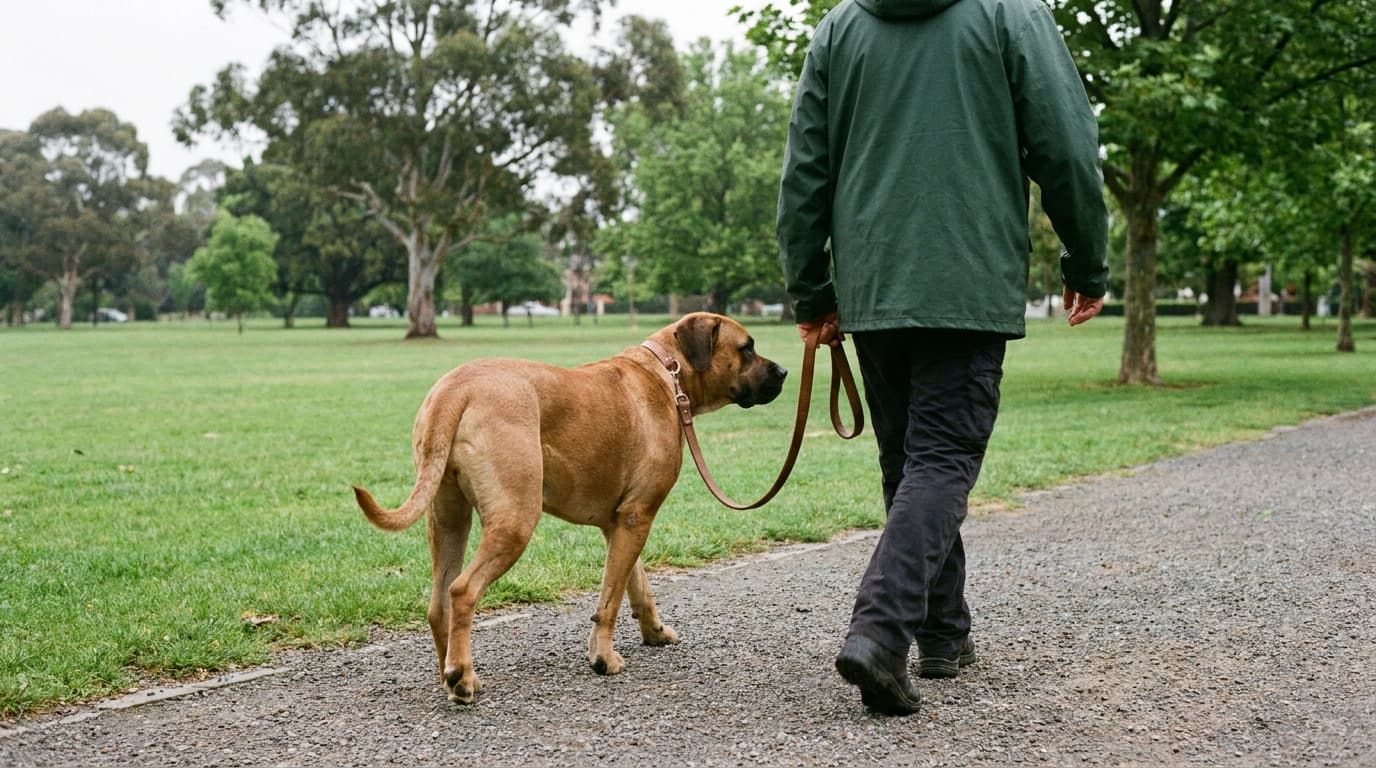
Dog ownership in the Republic of Ireland is governed by the Control of Dogs Acts 1986 to 2010 and by regulations made under them, most importantly the Control of Dogs Regulations 1998. Between them they set the licence you need, the restricted breeds that must be muzzled in public, the collar and microchip your dog must carry, the fines a dog warden can issue on the spot, and the strict liability that falls on you if your dog injures someone.
Enforcement sits with local authorities rather than with a national agency. Your county or city council appoints the dog wardens, runs the shelter, issues fixed payment notices, makes local bye-laws and brings prosecutions in the District Court.
Information last verified on 20 July 2026. This page is general legal information for the Republic of Ireland, not legal advice.
The legal framework
The Control of Dogs Act 1986 is the parent statute. It has been amended by the Control of Dogs (Amendment) Act 1992, by section 211 of the Local Government Act 2001, and by sections 24 and 25 of the Dog Breeding Establishments Act 2010. Together they are cited as the Control of Dogs Acts 1986 to 2010.
The main secondary legislation is the Control of Dogs Regulations 1998 (S.I. No. 442/1998), in operation since 1 February 1999 and amended several times since, most recently by S.I. No. 540/2023.
Do I need a dog licence in Ireland?
Yes, for any dog. Section 2(1) makes it unlawful to keep a dog unless a licence is in force, and there is no general age threshold. The age based exemption in section 5(e) is narrower than it is usually described: it covers a dog that is under 4 months old and is still kept with its dam or foster mother. Both conditions have to be met.
That distinction matters the moment a puppy changes hands. A 10 week old puppy you collect from a breeder or a rescue is no longer kept with its dam, so the exemption does not apply and it needs a licence immediately, not at 4 months.
The fees are set out in section 8(1) of the Act itself, as substituted by the Dog Breeding Establishments Act 2010 and in force since 1 January 2012. There is no separate fees regulation:
| Licence type | Fee | Covers |
|---|---|---|
| Individual dog licence | €20 | One dog, 12 months |
| Lifetime of dog licence | €140 | One dog, its lifetime |
| General dog licence | €400 | All dogs at one premises, 12 months |
Individual and lifetime licences can be bought online at licences.ie or at a post office. A general dog licence must be applied for directly to the local authority.
A licence cannot be issued to a person under 16, or to anyone disqualified from keeping a dog under section 18.
Section 5 exempts a number of dogs from the licence requirement altogether: dogs held by a local authority or the ISPCA, Garda dogs, guide dogs for blind people, a dog under 4 months that is still kept with its dam or foster mother, a dog imported for not more than 30 days, and a greyhound bought for export and exported within 30 days. The Regulations add Defence Forces dogs, Customs and Excise dogs and the Irish Prison Service Canine Unit.
Restricted breeds: the list did not change
This is the single most misreported point in Irish dog law. When the XL Bully was banned in 2024, the restricted breeds list was not updated to add it. Article 5(1) of S.I. No. 442/1998 is unamended and still names 11 types. The Department's own explanation is that an XL Bully is already caught as a cross of restricted breeds, so the existing controls applied to it without any change to the list.
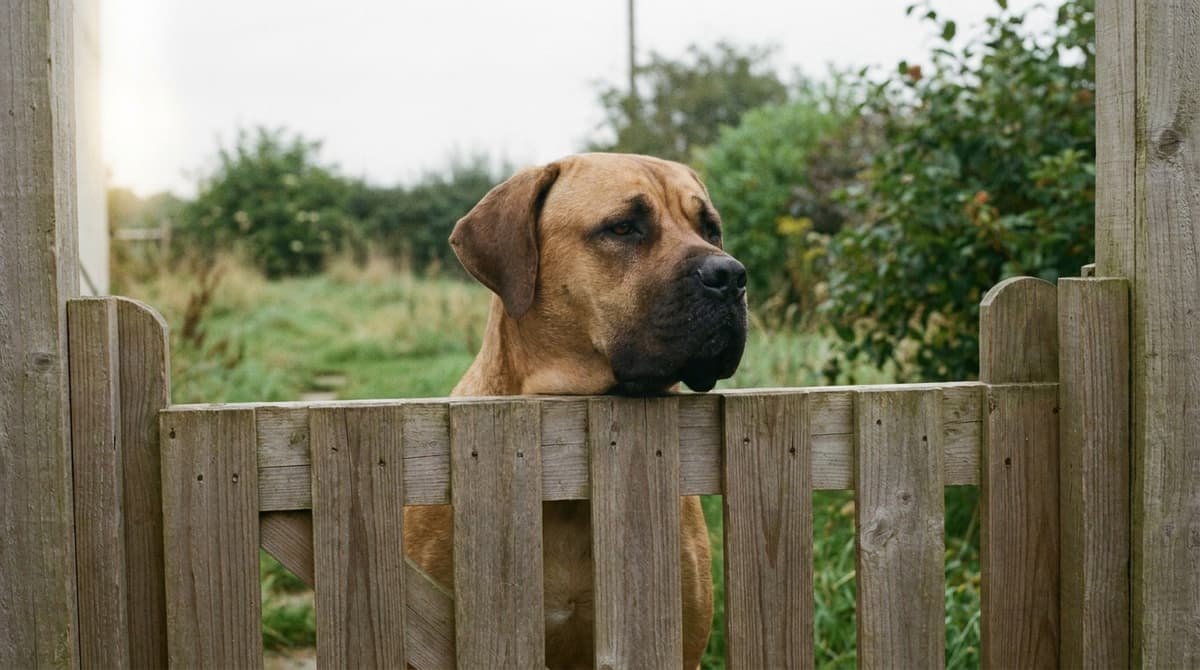
The restricted types, and every strain or cross of them, are:
- American Pit Bull Terrier
- Bull Mastiff
- Doberman Pinscher
- English Bull Terrier
- German Shepherd (Alsatian)
- Japanese Akita
- Japanese Tosa
- Rhodesian Ridgeback
- Rottweiler
- Staffordshire Bull Terrier
- Ban Dog (Bandog)
Restricted does not mean banned. These dogs may lawfully be owned. What article 5(2) requires is that in a public place the dog is securely muzzled, and led by a sufficiently strong chain or leash not exceeding 2 metres, by a person over the age of 16 who is capable of controlling it.
The XL Bully is in a different category again. It is the only breed banned outright, under S.I. No. 491/2024, and the detail is in our guide to the XL Bully ban in Ireland.
Article 7 exempts working dogs from the muzzle and collar rules while used in the execution of duty, including Garda, Defence Forces, harbour police, State airport police fire service, fisheries board, Customs and Excise and Irish Prison Service Canine Unit dogs, along with bona fide search and rescue dogs and guide dogs for blind people.
Collars, microchips and identification
Article 6(1) applies to every dog, not just restricted breeds. At all times a dog must wear a collar bearing the name and address of the owner, either inscribed on the collar or on a plate, badge or disc attached to it.
Microchipping is separate and comes from the Microchipping of Dogs Regulations 2015 (S.I. No. 63/2015), made under section 36 of the Animal Health and Welfare Act 2013. Dogs born after 1 June 2015 had to be chipped on reaching 12 weeks, dog breeding establishment dogs from 1 September 2015, and all dogs from 31 March 2016.
The chip must meet ISO 11784 and FDX-B, be readable by an ISO 11785 reader, carry an ICAR certified unique code and be registered on an approved dog identification database. Microchipping typically costs in the region of €25, though that is a market price rather than a statutory one.
Greyhounds
Greyhounds are not a restricted breed, but section 10 imposes its own rule. A greyhound in a public place must always be led by a sufficiently strong chain or leash, and no one person may lead more than 4 greyhounds at a time. Citizens Information notes that in practice this is applied to whippets and greyhound crosses as well.
Is there a leash law in Ireland?
There is no general nationwide leash requirement for ordinary dogs. Section 9(1) instead imposes an effectual control duty: the owner or the person in charge must not allow a dog to be anywhere other than their own premises, or another person's premises with that person's consent, unless they accompany it and keep it under effectual control.
Leash areas and times are set locally. Section 17 lets a local authority make bye-laws for its own area, which is why beaches, parks and amenity walks often have leash signage that has no national equivalent.
Section 9(2) creates a separate offence where a dog worries livestock, unless the dog was removing trespassing livestock and what was done was reasonable and necessary.
Dog wardens and their powers
Dog wardens are appointed by the local authority under section 15. A warden may demand the name and address of a person suspected of an offence, demand production of a dog licence, seize and detain any dog, and enter any premises other than a dwelling in order to do so.

Obstructing a warden, or refusing to give a name and address or giving a false one, is itself an offence.
Stray dogs may be seized by a warden or a member of An Garda Síochána under section 11. The owner is notified where known, and the dog may be rehomed or destroyed after 5 days.
On-the-spot fines
Section 28 allows a fixed payment notice instead of prosecution. The current amounts were set by S.I. No. 540/2023, signed on 9 November 2023 and in operation from 1 December 2023, which substituted Regulation 10 of the 1998 Regulations. That instrument also made a breach of the restricted breed muzzle and lead rule a fixed payment offence for the first time.
| Offence | Fixed payment |
|---|---|
| Keeping or transferring a dog without a licence | €150 |
| Failing to keep a dog under effectual control | €300 |
| Restricted breed not muzzled, not on a 2 metre lead, or handler under 16 | €300 |
| Greyhound leash breach or leading more than 4 greyhounds | €250 |
| No collar bearing the owner's name and address | €200 |
| Failure to comply with section 13 (dogs at large, guard dogs) | €150 |
| Failure to produce a licence when requested | €150 |
The notice gives 21 days to pay, and payment blocks prosecution. If the fixed payment is not made, the matter can be prosecuted under section 27, where the maximum on summary conviction is a class C fine of up to €2,500, or up to 3 months' imprisonment, or both.
One point to keep straight: dog fouling is not a Control of Dogs Act fine at all. It is a €150 litter fine under the Litter Pollution Act 1997, prosecutable up to €4,000 summarily. An increase to €250 has been signalled by Government but is not yet law.
Who pays when a dog bites someone?
Section 21(1) makes the owner liable in damages for damage caused in an attack on any person by the dog, and for injury done by it to livestock. Crucially, the injured person does not have to show a previous mischievous propensity in the dog, or the owner's knowledge of one, or that the injury was down to any neglect by the owner. Ireland has no one free bite rule.
Damage is defined in section 1 to include death or injury to a person, including disease or impairment of physical or mental condition, and injury to or destruction of property.
There are limits. Section 21(2) removes liability where livestock were injured after straying onto land where the dog belonged or was authorised to be, unless someone set the dog on them. Section 21(3) leaves injury to a trespasser to ordinary negligence rules. And section 21(4) treats the damage as a wrong under the Civil Liability Act 1961, so the ordinary 2 year personal injuries limitation period applies.
Dangerous dog orders and barking complaints
Section 22 allows any interested person to complain to the District Court that a dog is dangerous and not being kept under proper control. The court may order that the dog be kept under proper control or be destroyed, may direct that it be delivered to a dog warden or another suitable person for destruction, and may order the owner to pay the destruction costs as a simple contract debt. The same power arises on conviction for livestock worrying.

Section 22(5) is the provision that matters most in bite cases: a dog proved to have caused damage in an attack on a person, or to have injured livestock, may be dealt with as a dangerous dog not kept under proper control.
Excessive barking has its own route. Section 25 allows a District Court complaint for barking that is a nuisance. Separately, section 18 lets a court disqualify a person from keeping a dog, and a cruelty conviction under the Protection of Animals Acts can lead to the same result.
For related everyday offences, see our guide to knife law in Ireland, or browse all of our Irish guides on the Ireland law hub.
This page is general information about the law in the Republic of Ireland and is not legal advice. Dog licensing, wardens, seizures and fixed payment notices are administered by your local authority, and prosecutions and dangerous dog complaints are heard in the District Court. If you are facing a prosecution, a seizure or a claim arising from a dog bite, speak to a solicitor.
Frequently Asked Questions
How much is a dog licence in Ireland in 2026?
An individual dog licence costs €20 for 12 months, a lifetime of dog licence costs €140, and a general licence covering all dogs at one premises costs €400 for 12 months. These amounts are written into section 8 of the Control of Dogs Act 1986 and have applied since 1 January 2012.
Which dogs are restricted breeds in Ireland?
Eleven types, plus every strain or cross of them: American Pit Bull Terrier, Bull Mastiff, Doberman Pinscher, English Bull Terrier, German Shepherd, Japanese Akita, Japanese Tosa, Rhodesian Ridgeback, Rottweiler, Staffordshire Bull Terrier and Ban Dog. In a public place they must be muzzled and led on a strong lead of no more than 2 metres by a person over 16.
Was the XL Bully added to the restricted breeds list?
No. Article 5(1) of the Control of Dogs Regulations 1998 was not amended. The XL Bully is caught as a cross of restricted breeds, so the muzzle and lead controls already applied to it, and it was then banned outright by a separate instrument in 2024.
What is the fine for not having a dog licence?
A dog warden can issue an on-the-spot fine of €150. A licence is needed for any dog, since the only age based exemption in section 5(e) covers a dog under 4 months old that is still kept with its dam or foster mother, so a rehomed puppy is already caught. If that fine is not paid within 21 days, the matter can be prosecuted under section 27, where the maximum on summary conviction is a class C fine of up to €2,500, or up to 3 months' imprisonment, or both.
Does my dog have to be on a lead in public in Ireland?
Not as a general rule. Section 9(1) requires you to accompany the dog and keep it under effectual control rather than to lead it. Leads are compulsory for restricted breeds and greyhounds, and local authority bye-laws under section 17 impose lead rules in specific places such as beaches and parks.
Am I liable if my dog bites someone?
Yes, and on a strict liability basis. Section 21 makes the owner liable in damages for an attack on a person without the injured party having to prove any previous vicious behaviour, owner knowledge of it, or negligence. The ordinary 2 year personal injuries limitation period applies.
What is the fine for dog fouling in Ireland?
It is a €150 fine, but it comes from litter law rather than dog law. Dog fouling is an offence under the Litter Pollution Act 1997 and can be prosecuted up to €4,000 summarily. A proposed increase to €250 has been announced by Government but has not yet been brought into law.
Updates
Independently fact-checked against the cited primary sources
Sources and References
- Control of Dogs Act 1986 (Revised Acts, Law Reform Commission)(revisedacts.lawreform.ie).gov
- S.I. No. 442/1998 - Control of Dogs Regulations 1998(irishstatutebook.ie).gov
- S.I. No. 540/2023 - Control of Dogs (Amendment) Regulations 2023 (fixed payment notice amounts)(irishstatutebook.ie).gov
- S.I. No. 63/2015 - Microchipping of Dogs Regulations 2015(irishstatutebook.ie).gov
- Citizens Information - Dog licences and ownership(citizensinformation.ie).gov
- Control of Dogs Act 1986 (as enacted), Office of the Attorney General(irishstatutebook.ie).gov