
Ireland
Boundary Disputes in Ireland: Rights of Way, Party Structures and Adverse Possession
Independently fact-checked against primary sources (last audited July 20, 2026). · 9 primary sources cited on this page. How we verify our legal content
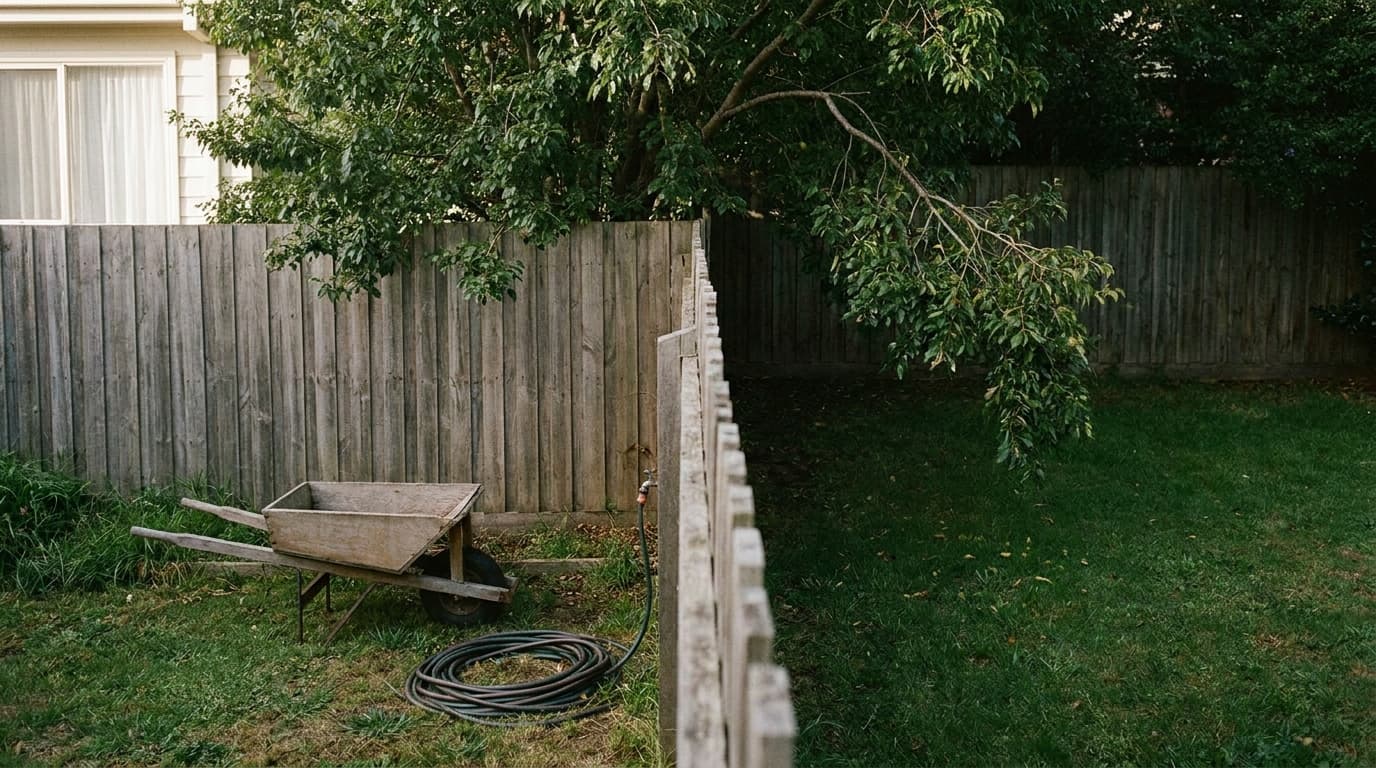
Boundary rows between neighbours are among the most expensive small disputes in Irish law, and much of the advice circulating about them is now wrong. The registration deadline for prescriptive rights of way was abolished before it ever took effect, and the Land Registry map most people treat as the answer is expressly not conclusive as to where a boundary runs.
This page explains who owns a boundary, what the folio map does and does not prove, how rights of way are acquired since the 2021 reform, the unusually broad Irish rules on party structures, and how these disputes are resolved.
Information last verified on 20 July 2026. This page is general legal information for the Republic of Ireland, not legal advice.
Who owns the boundary between two properties?
Citizens Information states the general rule: any boundary between your land and your neighbour's land is jointly owned by both of you. You may be able to prove outright ownership of a particular boundary structure, but even then your neighbour may have rights over it.
If you do not know where the precise boundary lies, the starting point is your title, meaning the deeds and related papers describing your land, rather than the folio map. Old conveyances often describe boundaries by reference to features on the ground, which a surveyor can map against what exists today.
Does the Land Registry map prove where my boundary is?
No, and this surprises most people. Section 85 of the Registration of Title Act 1964, as substituted by section 62 of the Registration of Deeds and Title Act 2006, provides that registered land is described and identified by reference to the registry maps, but that "except as provided by this Act, neither the description of land in a register nor its identification by reference to a registry map is conclusive as to its boundaries or extent."

That is the general-boundaries principle. A folio map shows the approximate extent of the land registered, not a surveyed legal line, so a dispute about a few feet of garden cannot be resolved by printing the folio. There are two statutory exceptions, and both are routinely overlooked.
Section 86 allows conclusive boundaries to be entered where they were already ascertained and defined by certain historic conveyances, including those of the Incumbered Estates Commissioners, the Landed Estates Court, the Land Judges, the Landlord and Tenant (Ireland) Act 1870, or a Land Commission conveyance or vesting order. Once entered after the prescribed notices, they are conclusive on all parties.
Section 87 is the cooperative route and is genuinely useful. On the application of the registered owners of adjoining lands, or of a registered owner and an adjoining unregistered owner, the authority may settle and enter the boundary on the register as conclusive. Section 87(2) limits the effect: the entry binds only the parties to the application and their successors, and does not confirm title. Two neighbours who agree where the line runs can therefore fix it permanently between themselves without litigation.
The statutory text still refers to the Property Registration Authority. Since 2023 those functions have been carried out by Tailte Éireann, which absorbed that body, the Valuation Office and Ordnance Survey Ireland under the Tailte Éireann Act 2022.
Is there still a deadline to register a right of way in Ireland?
There is not, and this is the single biggest correction to make to older Irish material.
The Land and Conveyancing Law Reform Act 2009 had introduced a statutory prescription regime with a 12 year user period and a registration requirement. The Land and Conveyancing Law Reform Act 2021, which came into operation on 30 November 2021, repealed sections 33 to 39 of the 2009 Act outright by section 6(1), and the revised text of the 2009 Act now shows each of those sections as repealed on that date.
Citizens Information puts the outcome plainly: there is no requirement to register a right of way, because the requirement was amended before the deadline for mandatory registration passed, so registration remained optional. Note that Citizens Information calls the reforming statute the "Land and Conveyancing Law Reform (Amendment) Act 2021"; there is no Act of that name, and the correct short title is the Land and Conveyancing Law Reform Act 2021 (No. 35 of 2021).
Section 2 of the 2021 Act sets out the replacement. Where the prescription period was completed before 1 December 2009, the old law applies; otherwise an easement or profit à prendre may be acquired in accordance with the doctrine of lost modern grant as it applies at common law. Section 4 confirms that the common law also governs extinguishment, and section 6(2) preserves proceedings and section 49A registration applications pending on 30 November 2021.
Lost modern grant is a judge-made presumption rather than a statutory period. Citizens Information describes a right of way as traditionally established by travelling over the land continuously for more than 20 years, but no statute states that figure, so treat it as the common-law period and expect the length and quality of use to be argued. The use must also be as of right, the established common-law test being use without force, without secrecy and without permission. Use the landowner permitted is not prescriptive use at all.
| Claim | Period | Source |
|---|---|---|
| Prescriptive easement over private land | more than 20 years of use (lost modern grant) | common law, per Citizens Information |
| Prescriptive easement against a State authority | 30 years | Land and Conveyancing Law Reform Act 2021, s.3 |
| Prescriptive easement where the land is foreshore | 60 years | Land and Conveyancing Law Reform Act 2021, s.3 |
| Adverse possession against a private owner | 12 years | Statute of Limitations 1957, s.13(2)(a) |
| Adverse possession against a State authority | 30 years, or 60 years for foreshore | Statute of Limitations 1957, s.13(1) |
Prescription is only one of three routes. A right of way can also arise by necessity or implication, as with a landlocked plot, or by express grant or reservation when land is transferred. Section 40 of the 2009 Act, which survived the 2021 repeals, abolished the rule in Wheeldon v Burrows: where an owner disposes of part of their land, the disposition implies any easement over the retained land that is necessary to the reasonable enjoyment of the part disposed of and that it was reasonable for the parties to assume was included. Section 40(3) preserves easements of necessity, common-intention easements and non-derogation from grant.
Registration, though optional, is still worth having. Citizens Information describes the process as swearing and submitting an affidavit to Tailte Éireann, which notifies the owner of the burdened land; if the claim is undisputed it is noted on the folio, and if it is disputed you must apply to the Circuit Court.
Finally, distinguish a public right of way, which anyone may use and which includes a public road, from a private right of way usable only by specified people for specified purposes. Many countryside walking routes are neither: they are permissive routes the landowner can withdraw.
Party structures: hedges and trees count in Ireland
Ireland has no equivalent of the English Party Wall etc. Act 1996. Instead, sections 43 to 47 of the Land and Conveyancing Law Reform Act 2009 govern works to party structures, and the Irish definition is dramatically wider than the English Act.
Section 43 defines a party structure as any arch, ceiling, ditch, fence, floor, hedge, partition, shrub, tree, wall or other structure which divides adjoining and separately owned buildings, or which sits at, on or so close to the boundary line that works cannot reasonably be carried out without access to the adjoining building or unbuilt-on land. It covers a structure sitting entirely on one side as well as one straddling the line, so a boundary hedge or tree is a party structure in Irish law.
Works are defined equally broadly, expressly including cutting, treating or replacing a hedge, tree or shrub, clearing or filling in ditches, and tracing or repairing cables, drains, pipes and wires, as well as demolition, repair, renewal and maintenance.
Section 44(1) sets out when works may be carried out: to comply with a statutory provision, notice or order; for exempted development, development with planning permission, or a planning condition; to preserve the party structure or the building or land it forms part of; or for other works that will not cause substantial damage or inconvenience to the adjoining owner, or that it is nevertheless reasonable to carry out.
Section 44(2) is the part neighbours argue about. The building owner must make good all damage or reimburse the reasonable cost of doing so, and must also pay the adjoining owner's reasonable costs of professional advice on the likely consequences of the works, plus reasonable compensation for inconvenience. Section 44(3) allows a contribution reflecting the adjoining owner's proportionate use of the structure, and section 44(4) lets the adjoining owner apply to court if damage is not made good, with unpaid amounts recoverable as a simple contract debt.
Where the neighbours cannot agree, section 45 allows the building owner to apply for a works order authorising specified works. Under section 46 that order may authorise entry onto the adjoining owner's land and may require an indemnity or security for damage, costs and expenses. Section 46(3) is an important limit: a works order shall not authorise any permanent interference with, or loss of, an easement of light or other easement relating to the party structure. Section 47 lets any affected person apply to discharge or modify the order.
Crucially, "the court" in section 43 means the District Court, not the Circuit Court. The procedure is Order 93A of the District Court Rules, you must notify your neighbour of your intention to apply, and forms are available from the District Court clerk.
Citizens Information advises getting your neighbour's consent before carrying out works to a party structure at all, because works done without permission can attract a claim for trespass and nuisance.
Overhanging branches, hedges and utility companies
A tree or hedge on a boundary is generally the property of both landowners, and you may not cut it down without your neighbour's permission. Overhanging branches or roots encroaching on your land can be cut back without permission, but only as far as the boundary line, and you should check whether the local authority has made a tree preservation order.

Electricity and telecommunications companies have their own rights to cut or lop trees obstructing wires. Citizens Information describes those rights as arising under the Electricity (Supply) Act 1927, with seven days' notice to the landowner, an option for the landowner to do the work instead, and the cost falling on the utility.
Adverse possession in outline
Adverse possession is a separate doctrine and is covered in full in our guide to trespass and squatters' rights in Ireland, so this is only the outline.
Under section 13(2)(a) of the Statute of Limitations 1957, an action to recover land by a person other than a State authority may not be brought after twelve years from the date the right of action accrued, with thirty years for a State authority and sixty for foreshore under section 13(1). Section 24 goes further: at the expiry of the period the title of the dispossessed owner is extinguished. Under section 49 of the Registration of Title Act 1964, a person claiming title by possession may apply to be registered as owner of registered land.
A strip of ground occupied and enclosed for well over twelve years is therefore a possessory claim, not merely a defence, which is why boundary disputes are so often really adverse-possession disputes.
How boundary disputes are resolved
Mediation is not optional as a matter of process. Under section 14 of the Mediation Act 2017, a practising solicitor must, before issuing proceedings, advise the client to consider mediation, provide information about mediation services and their advantages, and explain that mediation is voluntary. Section 14(2) requires the originating document to be accompanied by a solicitor's statutory declaration evidencing compliance, and section 14(3) provides that if it is not, the court shall adjourn the proceedings until it is. The family-law exemptions in section 14(4) do not cover boundary disputes.
Which court hears the case depends on what is being claimed. Party structure works orders go to the District Court under Order 93A. A disputed registration of a right of way goes to the Circuit Court. General civil claims follow the ordinary thresholds: District Court under €15,000, Circuit Court from €15,000 to €75,000 and the High Court above that.
Disputes about title to land are decided on a market value test. The Courts Service describes the Circuit Court as hearing actions involving real property with a market value of less than €3 million, and that figure has a statutory footing. Section 45 of the Civil Liability and Courts Act 2004 was commenced on 11 January 2017 by S.I. No. 2 of 2017, inserting a market value definition into the Courts (Supplemental Provisions) Act 1961 and substituting a market value test and a €3,000,000 threshold for the old rateable valuation test in the Third Schedule to that Act.
Cost is the practical reality. Boundary litigation regularly costs more than the strip of land in dispute is worth, so an agreed section 87 conclusive boundary, a jointly instructed surveyor, or mediation will usually serve you better than a hearing. If cost is the barrier, see our guide to legal aid in Ireland. For other neighbour issues, see dog control laws, and a full index of our Irish guides is at the Ireland law hub.

This page is general information about the law of the Republic of Ireland and is not legal advice. Boundary and easement disputes turn on title documents, the history of use on the ground and survey evidence, so consult a solicitor and, where the line itself is in issue, a chartered surveyor. Registration queries go to Tailte Éireann, and court procedure is published by the Courts Service.
Frequently Asked Questions
Is there a deadline to register a right of way in Ireland?
No. Sections 33 to 39 of the Land and Conveyancing Law Reform Act 2009, which would have imposed a registration requirement, were repealed on 30 November 2021 by section 6(1) of the Land and Conveyancing Law Reform Act 2021. Citizens Information confirms there is no requirement to register a right of way and that registration remained optional. Any article still warning about a looming deadline is out of date.
How many years does it take to establish a right of way in Ireland?
Since the 2021 repeal, prescriptive easements are acquired under the common-law doctrine of lost modern grant rather than a statutory period. Citizens Information describes the traditional position as continuous use for more than 20 years. Against a State authority the period is 30 years under section 3 of the 2021 Act, or 60 years where the land is foreshore.
Does the Land Registry map show my exact boundary?
No. Section 85 of the Registration of Title Act 1964, as substituted by section 62 of the Registration of Deeds and Title Act 2006, states that neither the description of land in a register nor its identification by reference to a registry map is conclusive as to its boundaries or extent. Sections 86 and 87 allow conclusive boundaries in limited cases, including where adjoining owners apply jointly to have the boundary settled and entered as conclusive between them.
Can I cut my neighbour's hedge or overhanging branches?
You can cut back overhanging branches or encroaching roots as far as the boundary line without permission, but a tree or hedge on the boundary is generally jointly owned and cannot be cut down without your neighbour's agreement. Check first whether a tree preservation order applies. A boundary hedge or tree is also a party structure under section 43 of the 2009 Act, so works to it fall within the party structure rules.
Does Ireland have a Party Wall Act?
No. Ireland has no equivalent of the English Party Wall etc. Act 1996. Party structures are dealt with under sections 43 to 47 of the Land and Conveyancing Law Reform Act 2009, and the Irish definition is broader because it includes ditches, fences, hedges, shrubs and trees as well as walls. Applications for a works order are made to the District Court under Order 93A of the District Court Rules.
Do I have to try mediation before suing my neighbour?
You do not have to mediate, because mediation is voluntary, but your solicitor must advise you to consider it. Section 14 of the Mediation Act 2017 requires the originating document to be accompanied by a solicitor's statutory declaration confirming that advice was given, and section 14(3) says the court shall adjourn proceedings issued without it.
Which court hears a boundary dispute in Ireland?
It depends on the claim. A works order about a party structure is a District Court application under Order 93A, while a disputed registration of a right of way goes to the Circuit Court. For claims about title to land, the Circuit Court hears actions where the land's market value is under €3 million, a threshold put on a statutory footing by section 45 of the Civil Liability and Courts Act 2004, which was commenced on 11 January 2017 by S.I. No. 2 of 2017.
Updates
Independently fact-checked against the cited primary sources
The Land and Conveyancing Law Reform Act 2021 came into operation and section 6(1) repealed sections 33 to 39 of the 2009 Act, abolishing the statutory prescription regime and its registration deadline and restoring the common-law doctrine of lost modern grant.
Sources and References
- Registration of Title Act 1964, s.85 (as substituted 2006), ss.86-87 - registry maps not conclusive as to boundaries - Revised Acts(revisedacts.lawreform.ie).gov
- Land and Conveyancing Law Reform Act 2021 (No. 35 of 2021) - repeal of ss.33-39 of the 2009 Act and restoration of lost modern grant(irishstatutebook.ie).gov
- Land and Conveyancing Law Reform Act 2009, ss.40 and 43-47 (implied grant; party structures) - Revised Acts(revisedacts.lawreform.ie).gov
- Citizens Information - Boundary disputes between neighbours(citizensinformation.ie).gov
- Citizens Information - Rights of way(citizensinformation.ie).gov
- Statute of Limitations 1957, ss.13 and 24 (twelve-year period; extinction of title) - Revised Acts(revisedacts.lawreform.ie).gov
- Mediation Act 2017, s.14 (solicitor's duty to advise on mediation) - Revised Acts(revisedacts.lawreform.ie).gov
- Courts Service of Ireland - Circuit Court civil cases(courts.ie).gov
- Civil Liability and Courts Act 2004 - Legislation Directory (s.45 commenced 11 January 2017 by S.I. No. 2 of 2017)(irishstatutebook.ie).gov