
Ireland
Drink Driving Limits in Ireland (2026): Levels, Fines and Bans
Independently fact-checked against primary sources (last audited July 20, 2026). · 6 primary sources cited on this page. How we verify our legal content
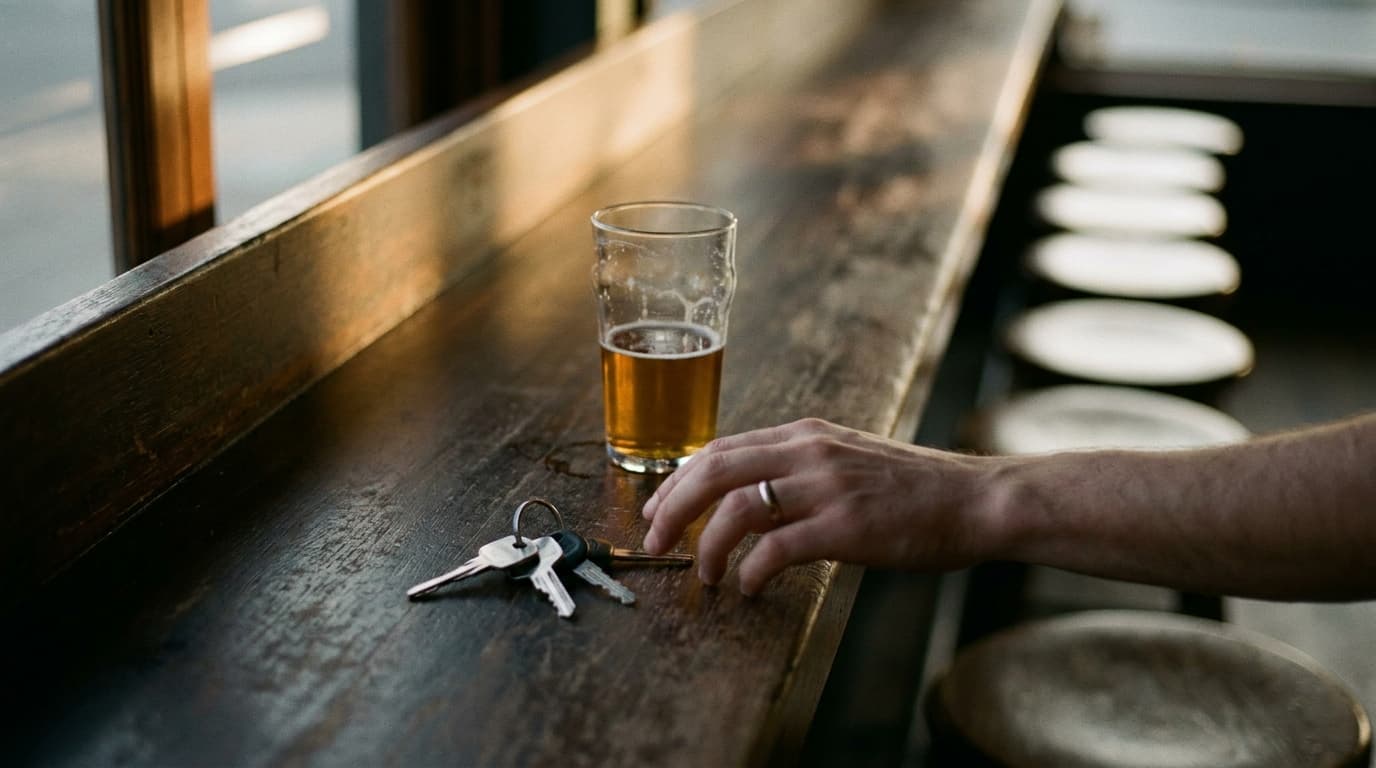
Ireland does not have one drink driving limit. It has two. Most drivers are measured against 50 milligrams of alcohol per 100 millilitres of blood, while a statutorily defined group called specified persons is held to 20 milligrams, a level low enough that a single drink can breach it.
The offences sit in sections 4 and 5 of the Road Traffic Act 2010: section 4 covers driving or attempting to drive, and section 5 covers being in charge of a vehicle with intent to drive. Both sections are framed by reference to the concentration present in the body within three hours after driving, rather than only at the wheel, so leaving the car and going home does not put the matter beyond reach. This page sets out both sets of limits, both fixed penalty bands, the minimum disqualifications a court must impose, and the far heavier penalty for refusing to give a sample at all.
Information last verified on 20 July 2026. This page is general legal information for the Republic of Ireland, not legal advice.
What is the drink driving limit in Ireland?
The limits are set by concentration of alcohol in blood, urine or breath, and any one of the three is enough to found a charge.
| Sample | Standard driver | Specified person |
|---|---|---|
| Blood | 50mg per 100ml | 20mg per 100ml |
| Urine | 67mg per 100ml | 27mg per 100ml |
| Breath | 22 micrograms per 100ml | 9 micrograms per 100ml |
There is no reliable way to translate those figures into a number of drinks. Body mass, food, the strength of the drink and the time elapsed all move the result, and because the offence is framed by reference to the concentration in the body within three hours after driving, alcohol taken shortly before driving may still be rising when the sample is given.
Who is a specified person?
This is where most summaries go wrong by describing the lower limit as applying to learners and professional drivers. Section 3(1) of the Road Traffic Act 2010, as amended, defines a specified person as someone who at the time of the offence:
- holds a learner permit;
- holds a first driving licence, within two years of its issue;
- holds a licence for category C, C1, D, D1, EB, EC, EC1, ED, ED1 or W and is driving such a vehicle;
- holds a small public service vehicle licence, that is a taxi, hackney or limousine licence, and is working or purporting to act as such; or
- holds no licence at all for the category of vehicle concerned.
The last limb matters. Anyone driving a vehicle they are not licensed for is automatically measured against the 20mg limit, not the 50mg one, in addition to whatever separate offence the lack of a licence creates.
The fixed penalty notice route
Section 29 of the Road Traffic Act 2010, as amended by the Road Traffic (Amendment) Act 2018 with effect from 26 October 2018, allows lower readings to be dealt with administratively rather than in court. This is the route that replaced the old three penalty point outcome with a straight disqualification.
| Driver | Concentration | Fine | Disqualification |
|---|---|---|---|
| Standard | Over 50 up to 80mg blood, over 67 up to 107mg urine, over 22 up to 35 micrograms breath | €200 | 3 months |
| Standard | Over 80 up to 100mg blood, over 107 up to 135mg urine, over 35 up to 44 micrograms breath | €400 | 6 months |
| Specified person | Up to 80mg blood, 107mg urine or 35 micrograms breath | €200 | 3 months |
The second standard band is the one people miss. A reading of 90mg is still a fixed penalty matter rather than a court matter, but it costs €400 and six months off the road rather than €200 and three months.
Two points about how this works are worth being precise on. The €200 is a fine, not a penalty point fixed charge, so nothing about the penalty points system applies to it. And the disqualification takes effect automatically on payment. It is not a court order, there is no hearing, and there is no discretion to shorten it.
When the fixed penalty route is not available
Section 29 sets gates on eligibility, and failing any of them means the case proceeds to court instead.
- It is not available if you did not hold a licence in force at the time of the offence, or were disqualified at the time.
- It is not available twice inside three years. A further notice cannot be served within three years from the date the previous disqualification commenced following payment.
- Payment must be made within 28 days beginning on the day stated on the notice.
- Paying, or attempting to pay, the fixed charge when you knew or should reasonably have known you were ineligible to be served with the notice at all is itself an offence under section 29(12), carrying a fine of up to €5,000, up to one month in prison, or both.
That last point is easy to walk into. If your licence had lapsed on the date of the offence, or you were already disqualified, or you had a notice inside the previous three years, then paying the €200 does not quietly resolve the matter. It is a fresh summary offence in its own right, on top of the drink driving charge that still has to be answered in court. If there is any doubt about whether you held a licence in force at the time, check before you pay rather than after.
Paying in accordance with the notice, where you were eligible for it, means no prosecution is brought for the offence.
Court penalties and minimum disqualifications
Where the case goes to court, section 65 of the Road Traffic Act 2010 substituted section 26 of the Road Traffic Act 1961 and set out a table of minimum consequential disqualifications. The judge must impose at least these periods.
| Concentration | First offence | Second or subsequent |
|---|---|---|
| Up to 80mg blood, 107mg urine, 35 micrograms breath | 6 months | 1 year |
| Over 80 up to 100mg blood, 107 to 135mg urine, 35 to 44 micrograms breath | 1 year | 2 years |
| Over 100 up to 150mg blood, 135 to 200mg urine, 44 to 66 micrograms breath | 2 years | 4 years |
| Over 150mg blood, 200mg urine, 66 micrograms breath | 3 years | 6 years |
Separately, the offence of driving while incapable of having proper control of the vehicle, under section 4(1) or section 5(1), carries a minimum four year disqualification for a first offence and six years for a second or subsequent one. That offence turns on impairment rather than on a measured concentration.
The maximum penalty for drink driving is a fine of up to €5,000, up to six months in prison, or both. The disqualification figures above are floors, not ceilings, and a judge can go higher on any of them.
A conviction under section 4 counts as a prior conviction for section 5 purposes and vice versa. If four years or more have passed since the previous conviction without a disqualification, the court may choose to treat the later conviction as a first offence.
Refusing to provide a specimen
Under section 12 of the Road Traffic Act 2010 it is an offence to refuse or fail to comply with a requirement to provide two breath specimens, or to permit a blood specimen to be taken or to provide a urine specimen.
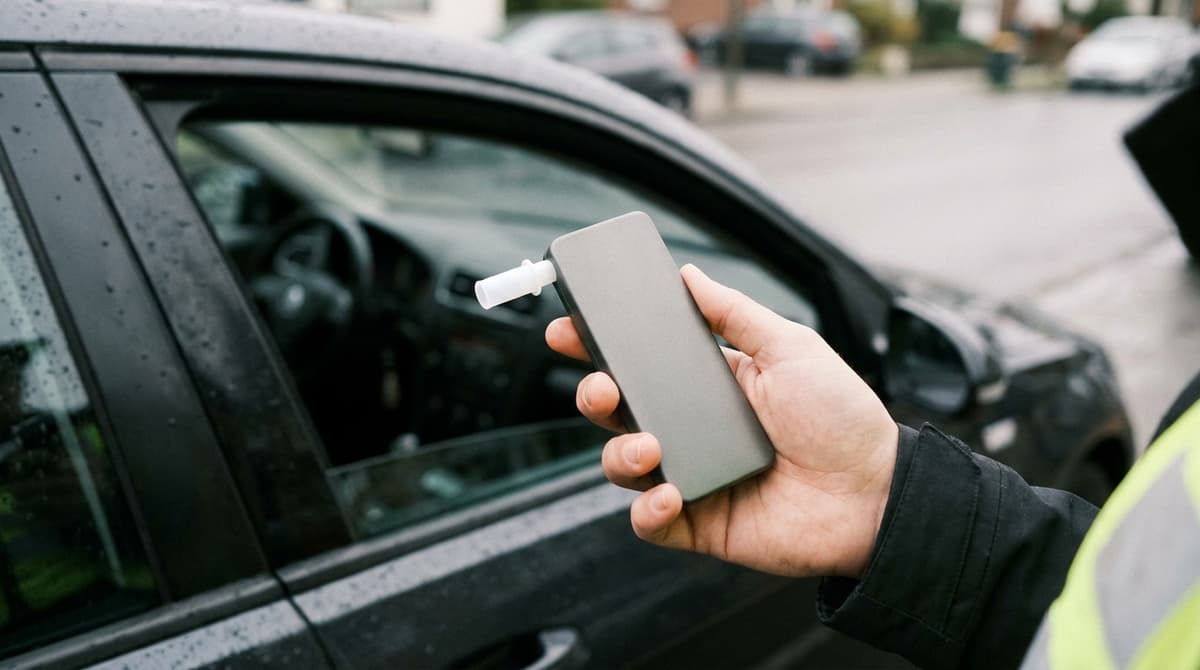
The fine is up to €5,000 and up to six months in prison, and the Probation Act does not apply, so a conviction cannot be dealt with without a recorded conviction. Those figures are not the real penalty, though.
The disqualification is. Refusal is listed in the substituted section 26 alongside the impairment offences, which means a minimum four year disqualification for a first offence and six years for a repeat. In other words, refusing the test is punished as severely as the very worst drink driving band, and considerably more severely than the reading a refusing driver was most likely trying to avoid.
Refusing to comply at a mandatory alcohol testing checkpoint is a separate offence under section 10, again carrying up to €5,000, up to six months in prison, or both, and a Garda may arrest without warrant.
How and when you can be tested
Random breath testing in Ireland is checkpoint based only, and the checkpoint itself must be authorised in writing by a Garda Inspector. A Garda cannot pull a car out of moving traffic purely at random in order to breathalyse the driver. Outside a checkpoint, there must be an opinion that an offence has been committed, a collision has occurred, or the driver is intoxicated.
Testing is mandatory after a serious collision. Alcohol testing has been mandatory in those circumstances for some time, and mandatory roadside drug testing was introduced by the Road Traffic Act 2024 with effect from 31 May 2024.
A blood or urine specimen is divided into two sealed containers in your presence and you are offered one of them, with the other going to the Medical Bureau of Road Safety. A breath test on an evidential machine produces two printed statements.
Drug driving
The impairment offence for drugs carries the same minimum four year disqualification for a first offence and six years for a repeat as the equivalent alcohol offence.
For cannabis, cocaine and heroin there are specified concentration limits, and no proof of impairment is needed once the concentration is exceeded. The minimum disqualification there is one year for a first offence and two years for a repeat. What counts towards the higher figure is narrower than it is often described. Under section 26(4)(ba) of the Road Traffic Act 1961 the two year minimum applies to a second or subsequent offence under the same section, or to a first offence under one drug concentration section where the driver has already been convicted under the other one, driving as against being in charge. A previous alcohol conviction does not feed into that limb.
Appealing a conviction
A District Court conviction can be appealed to the Circuit Court, and the appeal must be lodged within 14 days of the conviction. The appeal window is short, so anyone intending to appeal should take advice immediately rather than at the end of the 14 days.
This page is general information about road traffic law in the Republic of Ireland and is not legal advice. Drink driving charges turn closely on the reading obtained, the testing procedure followed and your record, and the consequences for your licence are automatic in most cases. If you have been charged or served with a notice, speak to a solicitor before the payment or appeal deadline passes. See also our pages on penalty points, speeding fines, fixed charge notices and the Ireland law hub.
Frequently Asked Questions
What is the legal drink driving limit in Ireland?
For most drivers it is 50 milligrams of alcohol per 100 millilitres of blood, 67 milligrams per 100 millilitres of urine, or 22 micrograms per 100 millilitres of breath. Specified persons, including learners, novice drivers, bus, truck and taxi drivers and anyone unlicensed for the vehicle, are held to 20mg blood, 27mg urine and 9 micrograms breath.
How many drinks can I have and stay under the Irish limit?
There is no safe number. The limit is a measured concentration, and how quickly you reach it depends on body mass, what you have eaten, the strength of the drink and how recently you drank it. For a specified person the 20mg limit is close to zero, so the only reliable approach is not to drink at all before driving.
Do you automatically lose your licence for drink driving in Ireland?
Yes, in every route. Even the lowest fixed penalty notice band carries an automatic three month disqualification that takes effect on payment without a court order. In court, the minimum disqualification starts at six months for a first offence at the lowest band and rises to three years above 150mg of blood alcohol.
What happens if you refuse a breath test in Ireland?
Refusing or failing to provide a specimen under section 12 of the Road Traffic Act 2010 carries a fine of up to €5,000 and up to six months in prison, and the Probation Act does not apply. The bigger consequence is a minimum four year disqualification for a first offence and six years for a repeat, the same as the most serious impairment offence.
Can Gardai stop me at random to breathalyse me?
Only at a mandatory alcohol testing checkpoint, which must be authorised in writing by a Garda Inspector. Away from a checkpoint a Garda needs to have formed an opinion that an offence has been committed, that there has been a collision, or that the driver is intoxicated.
How much is the drink driving fine in Ireland?
Under the fixed penalty notice route it is €200 up to 80mg of blood alcohol and €400 between 80mg and 100mg. Where the case goes to court the maximum penalty is a fine of up to €5,000, up to six months in prison, or both, in addition to the mandatory disqualification.
Is being drunk in a parked car an offence in Ireland?
It can be. Section 5 of the Road Traffic Act 2010 creates an offence of being in charge of a vehicle with intent to drive while over the limit, and it carries the same disqualification table as driving. The section is framed by reference to the concentration in the body within three hours after driving, not only at the moment of being in charge.
Updates
Independently fact-checked against the cited primary sources
Mandatory roadside drug testing after a serious collision came into effect under the Road Traffic Act 2024, alongside the alcohol testing that was already mandatory in those circumstances.
Sources and References
- Road Traffic Act 2010 (Revised), sections 4, 5, 12 and 29: the limits, refusal to provide a specimen and the fixed penalty notice(revisedacts.lawreform.ie).gov
- Road Traffic Act 2010 section 65: consequential disqualification orders and the minimum disqualification table(revisedacts.lawreform.ie).gov
- Road Traffic Act 1961 (Revised), section 26: consequential disqualification orders, the minimum disqualification table and the drug concentration rule at section 26(4)(ba)(revisedacts.lawreform.ie).gov
- Citizens Information: drink driving offences in Ireland(citizensinformation.ie).gov
- Citizens Information: driving offences and penalties(citizensinformation.ie).gov
- Road Traffic Act 2002 (Revised): penalty points, endorsement and disqualification thresholds(revisedacts.lawreform.ie).gov