
Ireland
Speeding Fines in Ireland (2026): Amounts, Points and Limits
Independently fact-checked against primary sources (last audited July 20, 2026). · 7 primary sources cited on this page. How we verify our legal content
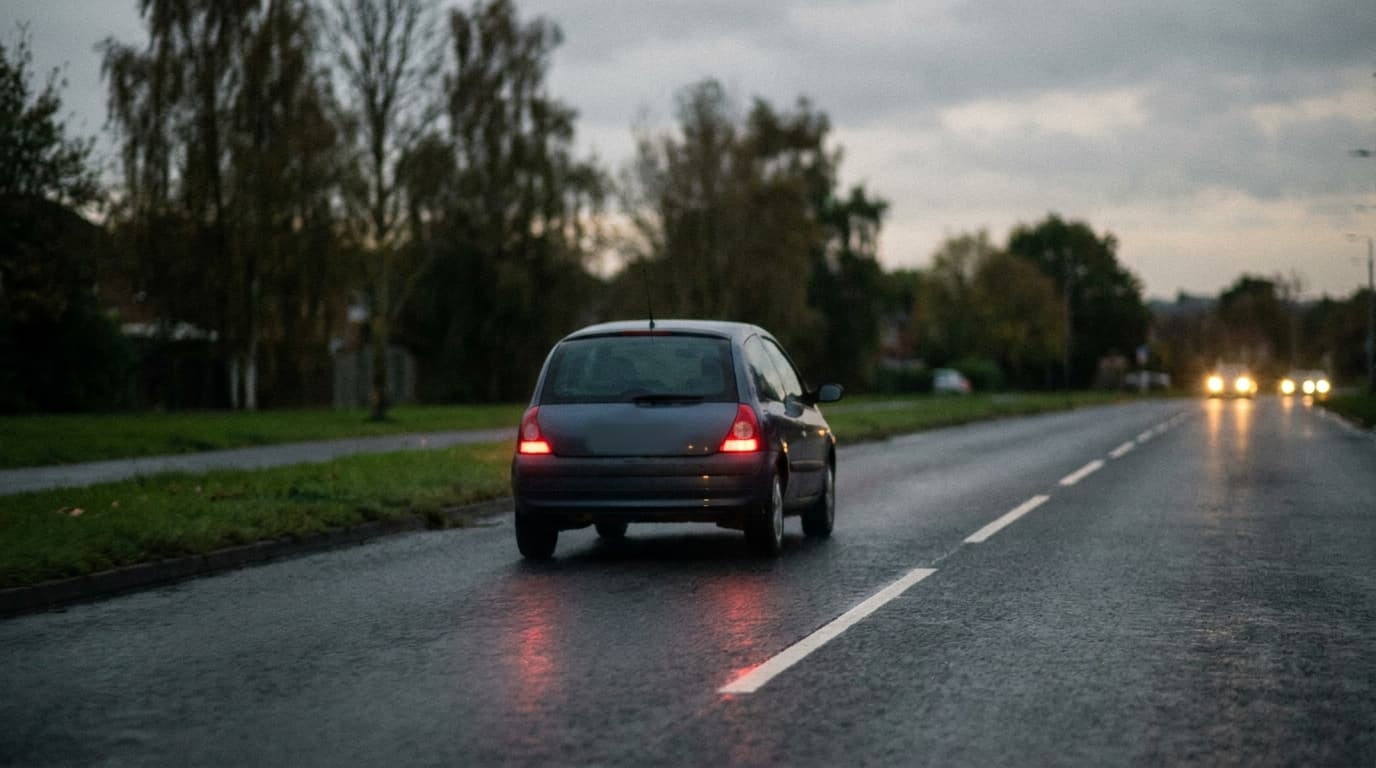
Exceeding a speed limit in the Republic of Ireland is a fixed charge offence under section 47 of the Road Traffic Act 1961. The charge is €160 if you pay within 28 days, and it carries three penalty points on payment. Leave it and both figures get worse: the amount rises twice and the points rise to five if a court convicts you.
The amount comes from Schedule 2 to S.I. No. 227 of 2024, and the escalation is set by sections 36 and 44 of the Road Traffic Act 2010. This page sets out what you actually pay at each stage, what happens if a summons issues, and the default speed limits that apply in 2026, including one change that took effect in February 2025 and two widely reported changes that have not happened.
Information last verified on 20 July 2026. This page is general legal information for the Republic of Ireland, not legal advice.
How much is a speeding fine in Ireland?
The fixed charge is €160, and it has been at that level since speeding, mobile phone, seatbelt and child restraint charges were doubled on 27 October 2022. S.I. No. 227 of 2024 carried the figure forward when it replaced the 2022 regulations.
What most drivers get wrong is treating €160 as the fine. It is the first rung of a three stage ladder, and every deadline runs from the date printed on the notice, not from the date of the offence.
| Stage | When | Amount | Outcome |
|---|---|---|---|
| First | Within 28 days of the date of the notice | €160 | Paid, 3 penalty points, no prosecution |
| Second | Days 29 to 56 | €240 | Paid, 3 penalty points, no prosecution |
| After 56 days | Payment cannot be accepted | Not applicable | A summons issues |
| Third payment option | Up to 7 days before the court date | €320 | Prosecution discontinued, 3 penalty points still apply |
The second amount is the original plus 50 per cent and the third is the original plus 100 per cent, which is why the ladder is best remembered as the charge, half again, and double.
The third payment option
Section 44 of the Road Traffic Act 2010 is genuinely useful and not widely known. Where a summons issues, a section 44 notice is served with it. You may pay an amount 100 per cent greater than the original charge, so €320 for speeding, not later than seven days before the court date, and the prosecution is discontinued.
Two conditions attach. The penalty points still apply, so this is a way of avoiding a court appearance and the higher conviction points, not a way of avoiding points altogether. And once you have been served with a summons and a section 44 notice, it is not a defence to say you never received the original fixed charge notice.
Missing the seven day cut off closes the option. After that the only route is the court hearing itself.
Penalty points for speeding
Speeding carries three penalty points if you pay the fixed charge at any of the three stages, and five penalty points if a court convicts you. The gap is the whole point of the design: contesting a speeding charge and losing is worth two extra points as well as a court fine.

Points are not endorsed immediately. They take effect 28 days after the date of a further notice sent to you, which means the entry usually appears on your record a month or so after you pay. The thresholds those points count towards, twelve for most drivers and seven for learners and novice drivers, are covered on our penalty points page.
A second speeding offence people forget
Exceeding the posted limit is not the only speed offence. Article 7 of the Road Traffic (Traffic and Parking) Regulations 1997 makes it an offence to drive at a speed that does not allow you to stop within the distance you can see to be clear, and it carries the same €160 charge, the same three points on payment and the same five on conviction.
That offence does not depend on the posted limit at all. In fog, heavy rain or on an unlit rural road, driving at the signed limit can still be an offence if the sightline is shorter than the stopping distance.
What happens in court
If the matter reaches a hearing, the court can impose up to five penalty points and a fine. Section 47 of the Road Traffic Act 1961 sets no penalty of its own for speeding, so the general penalty in section 102 of that Act applies: up to €1,000 for a first offence, up to €2,000 for a second offence, expressed as a class C fine of not more than €2,500 under the Fines Act 2010, and up to €2,000 or three months in prison, or both, for a third or subsequent offence under the same section committed within any period of twelve consecutive months. The commonly quoted €1,000 is the first offence figure only, so a driver with recent convictions is exposed to more than that. Serious or repeated speeding can also attract a disqualification, which is a matter for the judge rather than an automatic consequence.
There is no benefit to simply ignoring a speeding notice. The escalation is automatic, the points on conviction are higher, and a court fine is not capped at the third payment amount. Twelve penalty points in three years, or seven for a learner or novice driver, brings an automatic six month disqualification on top of anything the court does.
Speed camera detections
Camera detected speeding notices are posted to the registered owner of the vehicle. The notice states the recorded speed and the speed limit that applied at that location, and its reference number begins with S00.
A cropped photograph of the registration plate accompanies the notice. An enlarged photograph can be requested in writing from the Fixed Charge Processing Office, by post to Thurles or by fax to +353 504 59844. Requesting one does not pause the payment clock, which keeps running from the date of the notice.
If someone else was driving, the registered owner must nominate the driver within 28 days using the form on the notice. The process, the deadline and the consequences of missing it are set out on our fixed charge notices page.
What are the speed limits in Ireland in 2026?
Default limits are set nationally, and local authorities can set special speed limits by bye law for particular stretches such as school zones.
| Road type | Default limit |
|---|---|
| Motorway | 120km/h |
| National roads including dual carriageways | 100km/h |
| Regional roads | 80km/h |
| Rural local roads, L numbered or unnumbered | 60km/h |
| Built up and urban areas | 50km/h |
| Special speed limits, for example school zones | Generally 30km/h or 60km/h |
| Variable limits, for example on the M50 | 20km/h to 120km/h, electronically signed |
What changed in 2025, and what did not
One change has taken effect and two often reported changes have not. Getting this the right way round matters, because the fine is the same whether you misread the sign or ignored it.
The rural local road reduction is real. From Friday 7 February 2025, the default limit on rural local roads fell from 80km/h to 60km/h under the Road Traffic Act 2024. The rural speed limit sign, a white circle with five diagonal black lines and a Go Mall or Slow plate, now means 60km/h. Any older guidance treating that sign as 80km/h is out of date.
The urban reduction from 50km/h to 30km/h has not commenced nationally. From late 2025 local authorities began reviewing built up areas, housing estates and town centres, with public consultation, working towards having 30km/h limits in place by 31 March 2027. Until your own local authority makes the bye law for a given area, the default there remains 50km/h.
The proposed reduction on national secondary roads from 100km/h to 80km/h has not been introduced.
Lower limits for particular vehicles
Some vehicle classes are capped below the posted limit regardless of the sign, and the driver commits the offence by exceeding the vehicle limit even where the road limit is higher.
| Vehicle | Motorway or dual carriageway | Other roads |
|---|---|---|
| Buses carrying standing passengers | 65km/h | 65km/h |
| Coaches with seated passengers only | 100km/h | 80km/h |
| Goods vehicles over 3,500kg, category N2 or N3, with or without a trailer | 90km/h on a motorway only | 80km/h on every other public road |
| Any other vehicle drawing another vehicle | 80km/h | 80km/h |
The goods vehicle row is the one most often misreported. Regulation 4(a) of S.I. No. 546 of 2008, as substituted by S.I. No. 255 of 2022, applies the 90km/h motorway limit and the 80km/h limit on all other roads to a category N2 or N3 vehicle in its own right, and to that vehicle when drawing a category O3 or O4 trailer. A truck over 3,500kg is therefore capped at 90km/h on a motorway and 80km/h everywhere else whether or not it is towing anything, and the 90km/h figure does not extend to a dual carriageway that is not a motorway.
Regulation 4(b) then sets a flat 80km/h on all public roads for any other combination of a mechanically propelled vehicle drawing another vehicle, which is the limit that applies to a car towing a caravan or trailer.
E-scooters and speeding
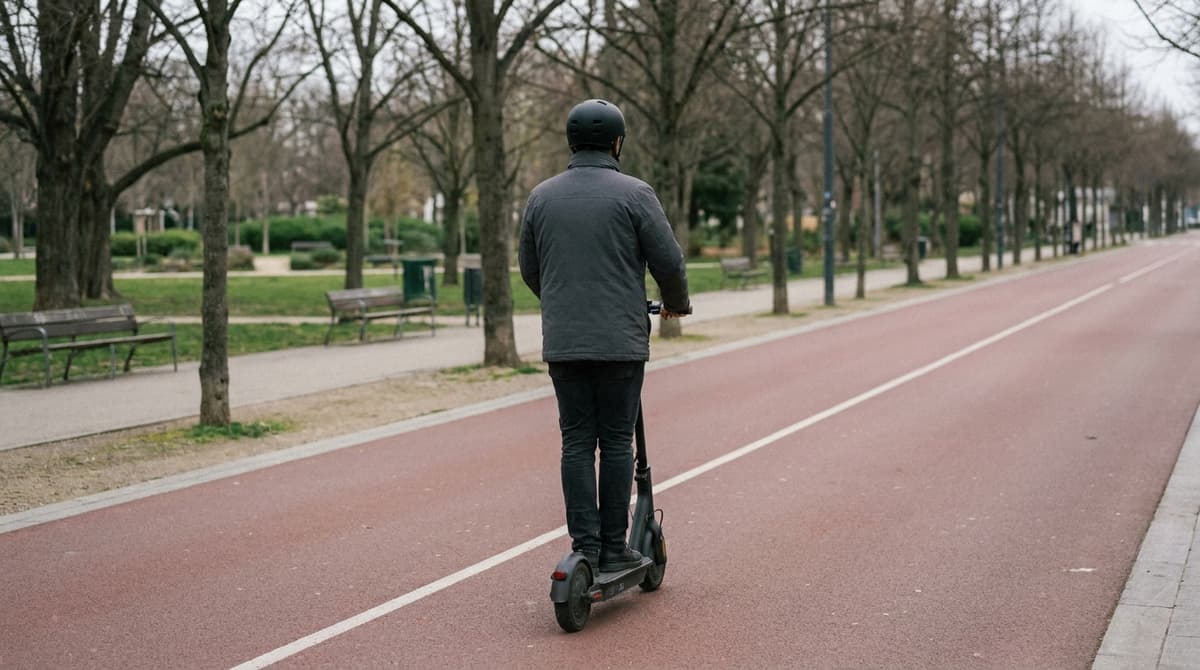
Speeding on an e-scooter is dealt with separately. It is a €50 fixed charge with no penalty points, under Schedule 7 to S.I. No. 227 of 2024. The full set of rules, including the 20km/h design speed cap, is on our e-scooter rules page.
This page is general information about road traffic law in the Republic of Ireland and is not legal advice. Speed limits vary by location and by local authority bye law, and the consequences of a charge depend on your existing licence record. Check the notice you were served for the exact dates that apply to you, and speak to a solicitor if you intend to contest a charge. See also penalty points, drink driving limits and the Ireland law hub.
Frequently Asked Questions
How much is a speeding fine in Ireland?
€160 if paid within 28 days of the date of the notice, or €240 if paid in the following 28 days. If a summons issues, a third payment option of €320 is available up to seven days before the court date and discontinues the prosecution.
How many penalty points do you get for speeding in Ireland?
Three penalty points if you pay the fixed charge, at any of the three payment stages, and five penalty points if you are convicted in court. The points are endorsed 28 days after the date of the notice telling you about them.
What happens if I do not pay a speeding fine in Ireland?
After 56 days from the date of the notice, payment cannot be accepted at all and a summons issues to the District Court. You can still pay €320 up to seven days before the court date to discontinue the prosecution, and the three penalty points still apply if you do.
What is the speed limit on rural local roads in Ireland?
60km/h since 7 February 2025, reduced from 80km/h under the Road Traffic Act 2024. The rural speed limit sign, a white circle with five diagonal black lines, now indicates 60km/h on L numbered and unnumbered roads.
Is the speed limit in Irish towns now 30km/h?
Not by default. The built up area default remains 50km/h. Local authorities began reviewing urban areas, housing estates and town centres from late 2025, with public consultation, aiming to have 30km/h limits in place by 31 March 2027, so the limit depends on whether the bye law has been made for that area.
Do speeding fines go to the driver or the registered owner?
Camera detected notices are posted to the registered owner. If someone else was driving, the registered owner must nominate that driver within 28 days of the date of the notice, using the statement of nomination on the notice itself.
Can you be disqualified for speeding in Ireland?
Not automatically for a single offence, but accumulating twelve penalty points in three years, or seven for a learner or novice driver, brings an automatic six month disqualification. A court can also disqualify for serious or repeated speeding on conviction.
Updates
Independently fact-checked against the cited primary sources
The default speed limit on rural local roads, meaning L numbered and unnumbered roads, was reduced from 80km/h to 60km/h under the Road Traffic Act 2024. The rural speed limit sign, a white circle with five diagonal black lines, now indicates 60km/h.
Sources and References
- Citizens Information: road traffic speed limits in Ireland(citizensinformation.ie).gov
- S.I. No. 227 of 2024: the €160 fixed charge for exceeding a speed limit, Schedule 2 and Regulation 8(b)(irishstatutebook.ie).gov
- Road Traffic Act 2010 (Revised) sections 36 and 44: the 28 day payment ladder and the third payment option(revisedacts.lawreform.ie).gov
- S.I. No. 255 of 2022: Regulation 2(b), substituting Regulation 4 of S.I. No. 546 of 2008 and setting the 90km/h and 80km/h limits for category N2 and N3 vehicles(irishstatutebook.ie).gov
- Road Traffic Act 1961 (Revised), sections 47 and 102: the speeding offence and the general penalty for a first, second and third offence(revisedacts.lawreform.ie).gov
- Citizens Information: driving offences, speeding penalties and court fines(citizensinformation.ie).gov
- An Garda Siochana: fixed charge notices(garda.ie).gov