France
Lifetime Gifts in France (Donation de Son Vivant): Allowances and the 15 Year Rule
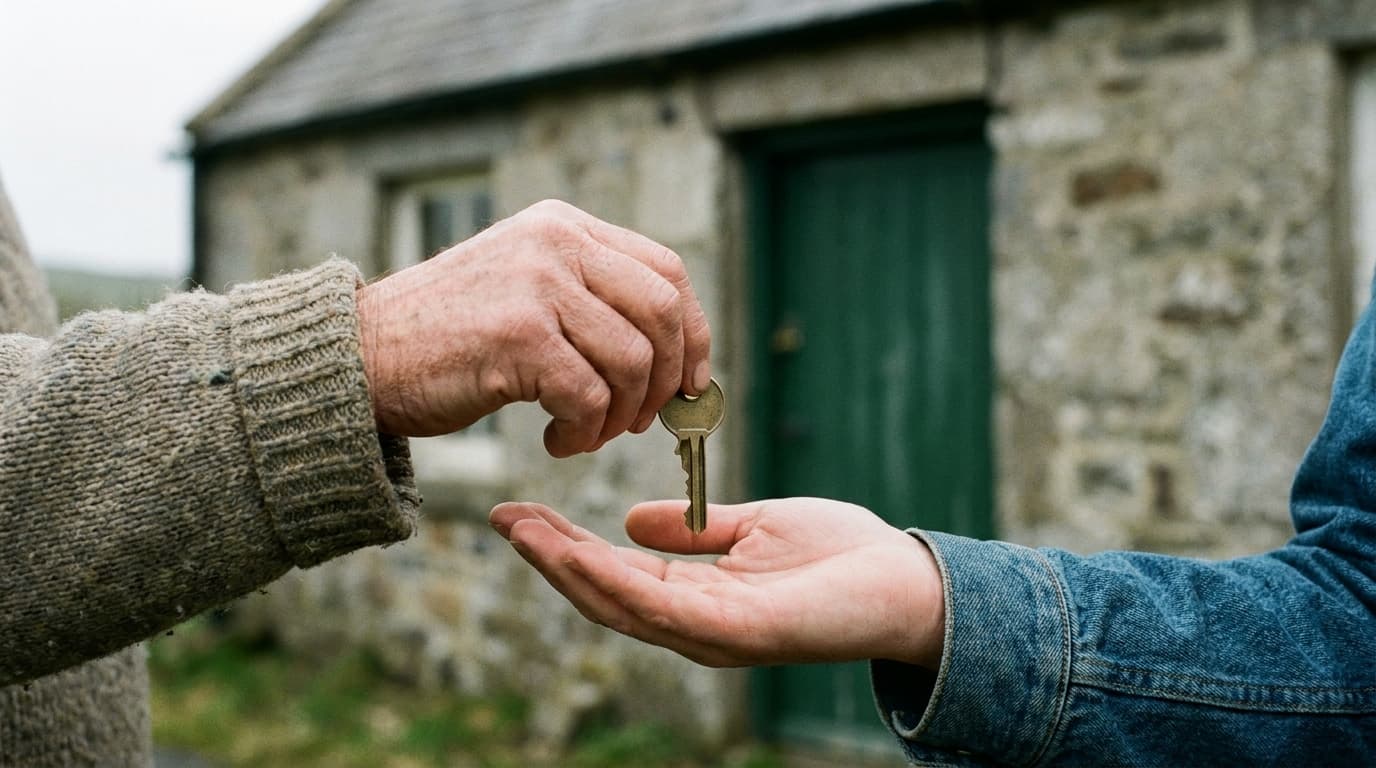
A donation de son vivant lets a person transfer money or property to family members while still alive, using many of the same tax allowances that apply at death. Because those allowances reset every 15 years, and can combine with gift-specific exemptions, giving during life can move more wealth tax free over time than a single transfer at death.
Information last verified on 19 July 2026. This article presents general legal information, not legal advice.
Jurisdiction scope: This article covers lifetime gifts (donations) under French national law only. It does not address the gift or transfer tax rules of any other country.
Donation de Son Vivant: Giving During Life Instead of at Death
A donation de son vivant is simply a gift made while the giver is alive, as opposed to a transfer that only takes effect at death. It can take the form of a don manuel, an informal handover of cash, securities, or movable property, or a notarial donation, required for gifts of real estate and for more structured arrangements such as a donation-partage, described further below.
The tax treatment of a lifetime gift generally mirrors the treatment of an inheritance from the same person: the same relationship-based allowances (abattements) described on our droits de succession page apply to gifts, and the same progressive scale applies to any amount above the allowance. What makes lifetime giving distinct is the 15 year look back rule described next, and a handful of gift-specific exemptions that exist alongside the general allowances.
The 15 Year Rappel Fiscal: Why Allowances Renew
Article 784 CGI sets a 15 year look back period, known as the rappel fiscal, that governs how prior gifts affect a later gift or an inheritance from the same person. Any gift made more than 15 years before the event being taxed, whether a further gift or the giver's death, drops out of the calculation entirely, and the allowance used against that earlier gift is fully restored.
This is the mechanism behind a fact that surprises many readers: the 100,000 EUR direct line allowance is not a once in a lifetime figure. A parent who gave a child 100,000 EUR in 2010 and then gives that same child another gift after 2025 has, for tax purposes, a fully restored 100,000 EUR allowance available again, because more than 15 years separate the two gifts. The same 15 year renewal applies to the sibling, nephew and niece, and other relationship based allowances described on the droits de succession page.
The Don Familial de Sommes d'Argent (Article 790 G): 31,865 EUR Every 15 Years
Separate from the general relationship based allowances, Article 790 G CGI provides an additional exemption specifically for cash gifts, known as the don familial de sommes d'argent, worth 31,865 EUR every 15 years. This exemption stacks on top of the ordinary allowance for the relationship involved.
Several conditions apply together. The person making the gift must be under 80 years old on the date of the gift. The person receiving the gift must be an adult, meaning 18 or older, or an emancipated minor. The gift itself must take the form of cash, a cheque, a wire transfer, or a card transfer, rather than real estate or other property. And the gift must be declared or registered by the recipient within one month of receiving it. The exemption is generally available for gifts to children, grandchildren, or great-grandchildren, or, where the giver has no descendants of that kind, to nephews, nieces, grandnephews, or grandnieces by representation.
These lifetime gift rules sit alongside, not instead of, the general succession rules described on our inheritance overview page, and alongside the separate regime for life insurance proceeds, covered on our life insurance and succession page. A family often uses more than one of these tools together over time, which is part of why understanding how the 15 year renewal works, described next, matters beyond any single gift.
Combining Allowances: A Worked Example
The general direct line allowance and the cash gift allowance can be used together, in the same year, for the same recipient, since they come from different articles of the tax code.
Consider a father, under 80, who gives his adult child 131,865 EUR in cash in 2026. Of that amount, 100,000 EUR is covered by the Article 779 direct line allowance, and the remaining 31,865 EUR is covered by the Article 790 G cash gift allowance. Both allowances can be used in the same year, for the same beneficiary, and both reset again after 15 years under Article 784. Tax due on this gift: 0 EUR.
This example is illustrative only, using round figures to show how the two allowances stack. It does not account for other gifts the same donor or recipient may have made or received within the same 15 year window, which would need to be netted against the same allowances.
Gifts for Buying or Renovating a Home: A Temporary Exemption
Beyond the ordinary allowances, French law currently offers two temporary, gift-specific exemptions for money given toward housing, both created within the same article of the tax code, Article 790 A bis CGI, but running on different timelines and covering different situations. These should not be treated as a single, continuous exemption, since their conditions and end dates differ.
New Build, Off Plan, or Energy Renovation Gifts: 15 February 2025 to 31 December 2026
The first exemption, created by loi n. 2025-127 of 14 February 2025, applies to cash gifts made from 15 February 2025 through 31 December 2026, capped at 100,000 EUR per donor and 300,000 EUR per beneficiary in total. The gifted funds must be used, within six months of the gift, to buy a new build home, a home purchased off plan (vente en l'etat futur d'achevement), or to pay for energy renovation work on the beneficiary's primary residence. The acquired or renovated property must then be held for five years.
This exemption is currently scheduled to end on 31 December 2026. Readers relying on this page after that date should confirm whether the exemption has been extended, since a page written before that date cannot know whether lawmakers renewed it.
A reported second window for existing homes, not confirmed
Several commentaries describe a second limb of the same article, said to extend comparable treatment to gifts used to buy an existing home rather than a new build, for a first time buyer, running into 2027. That second limb could not be confirmed against the codified text of Article 790 A bis or against the tax administration guidance as they stand in July 2026, and the Senate amendment matching the description was withdrawn during the budget process. It is therefore not described here as current law. Anyone told that such an exemption applies to a planned gift should ask their notaire to point to the enacting text before relying on it.
Donation Simple or Donation-Partage: What Is the Difference?
A donation-partage is a specific form of lifetime gift, made through a notary, in which a person divides some or all of their property among several heirs, typically their children, during their own lifetime. Under Articles 1075 to 1078 of the Code civil, the assets given through a genuine donation-partage are valued as of the date of the gift itself, rather than as of the date of death, for purposes of calculating the reserved share and the freely disposable share described on our forced heirship page.
That fixed valuation only applies where two conditions are met: every reserved heir has received and accepted a share (a lot) in the arrangement, and the arrangement is a genuine partage, an actual division of property, rather than a series of separate individual gifts. Where those conditions are satisfied, any appreciation in the gifted assets after the date of the gift belongs to the recipient alone and is not brought back into account when the giver later dies.
By contrast, in an ordinary donation simple, a straightforward gift to one or more people without a formal division among all reserved heirs, the value used for later calculations involving the reserved share is the value at the date of death, not the date of the gift. If the gifted assets have gained or lost significant value between the gift and the death, this can create outcomes among heirs that a donation-partage is specifically designed to avoid.
Disclaimer
This article provides general information about lifetime gifts and their tax treatment under French law as of the verification date above. It is not legal, tax, or financial advice, and it does not create an attorney-client or other professional relationship. Whether and how to make a lifetime gift depends on individual family and financial circumstances, and readers considering a gift should consult a notaire or a qualified tax adviser before proceeding.
Frequently Asked Questions
How often can I give money to my child tax free in France?
The main allowances renew every 15 years under the rappel fiscal rule in Article 784 CGI. Once 15 years have passed since a prior gift, the giver's allowance for that recipient is available again in full.
How much can be given to a child without paying tax?
100,000 EUR every 15 years under the direct line allowance in Article 779 CGI, combinable with a further 31,865 EUR every 15 years under the Article 790 G cash gift allowance if the giver is under 80, for a combined 131,865 EUR tax free.
What is the don familial de sommes d'argent?
A cash gift allowance of 31,865 EUR under Article 790 G CGI, available every 15 years, on top of the ordinary allowance for the relationship. The donor must be under 80 at the date of the gift, the recipient must be an adult or an emancipated minor, the gift must be cash, a cheque, or a transfer rather than property, and it must be declared within one month.
Does the housing gift exemption for new builds still apply after 2026?
As currently enacted, that particular exemption is scheduled to end on 31 December 2026. Readers checking this page after that date should confirm whether it has been extended before relying on it.
What is the difference between a donation simple and a donation-partage?
In a donation-partage, the gifted assets are valued as of the date of the gift for calculating the reserved share and the freely disposable share, so later appreciation belongs to the recipient alone. In a donation simple, the value used is instead the value at the date of death, which can create inequality among heirs if the gifted assets gained or lost value in the meantime.
Can grandparents use the same cash gift allowance as parents?
The Article 790 G cash gift allowance is generally available for gifts to children, grandchildren, or great-grandchildren, or, where the giver has no such descendants, to nephews, nieces, grandnephews, or grandnieces by representation.
Does the 15 year rule apply to all gifts, including real estate?
Yes. The 15 year rappel fiscal under Article 784 CGI applies to gifts generally, not only cash gifts, though specific exemptions such as the cash gift allowance or the temporary housing gift exemptions have their own separate conditions on top of the general rule.
Sources and References
- Code general des impots, Article 784 (15 year rappel fiscal)(legifrance.gouv.fr).gov
- Code general des impots, Article 790 G (don familial de sommes d'argent, 31,865 EUR every 15 years)(legifrance.gouv.fr).gov
- Journal officiel, loi n. 2025-127 du 14 fevrier 2025, article 71 (Article 790 A bis housing gift exemption)(legifrance.gouv.fr).gov
- Code civil, Articles 1075 to 1078 (donation-partage valuation)(legifrance.gouv.fr).gov
- Code general des impots, Article 779 (direct line allowance applied to gifts)(legifrance.gouv.fr).gov