
France
État des Lieux in France: Move-In Inventory Rules and Why It Decides Your Deposit
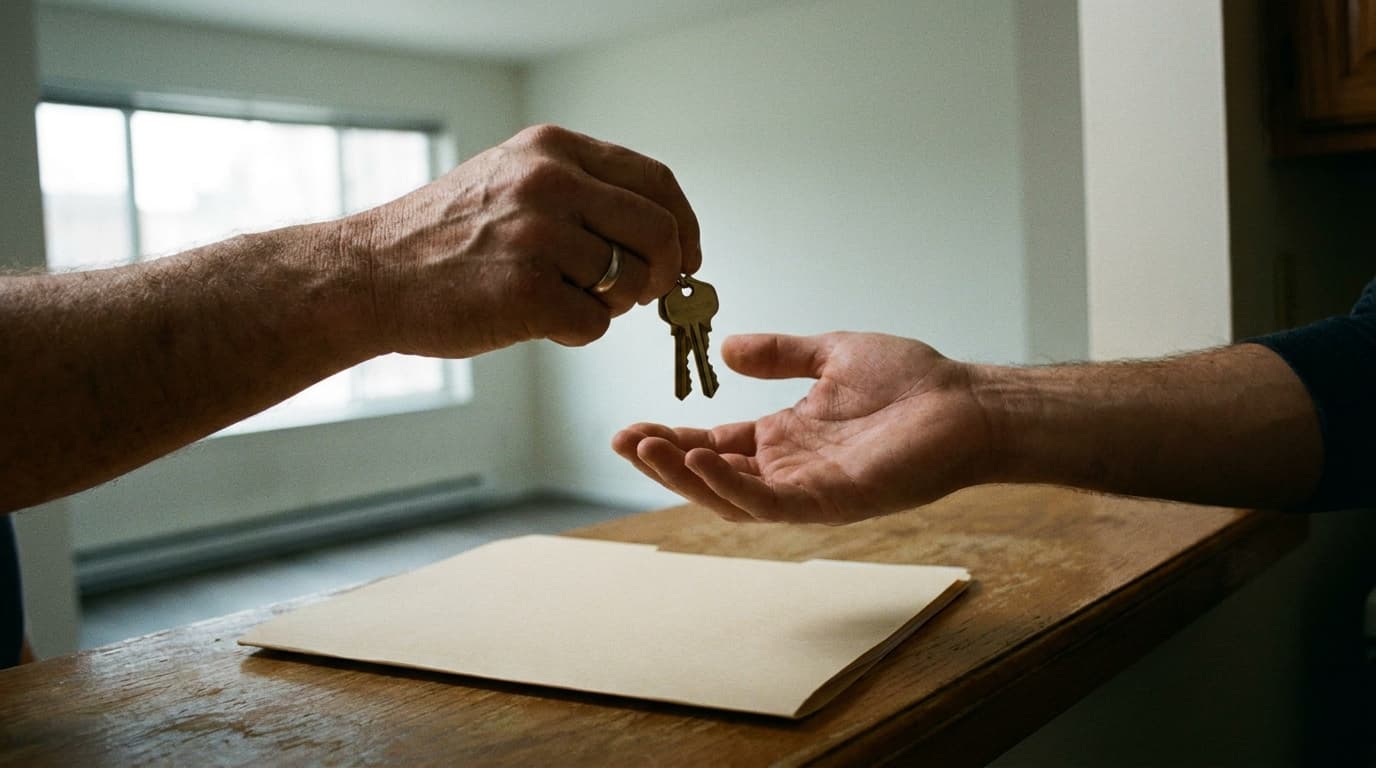
Nobody reads the état des lieux carefully on move-in day. You are standing in an empty flat holding a set of keys, an agent is waiting, and the report is three pages of abbreviations about the condition of skirting boards. Then you leave two years later and that document, and only that document, decides whether your deposit comes back.
The move-in report is the single most consequential piece of paper in a French tenancy, and it works in a way most tenants misunderstand. Its absence does not protect you. Under the Code civil the default assumption where there is no report is that you received the place in good condition, which is precisely the assumption you want on record only if it is true.
Information last verified on 21 July 2026. This page presents general legal information, not legal advice.
What the law actually requires
Article 3-2 of loi n 89-462 du 6 juillet 1989 requires an état des lieux when the keys are handed over and another when they are given back, drawn up in the same form and in as many copies as there are parties. The form and content are set by décret n 2016-382 du 30 mars 2016.
It has to be contradictoire, which in this context means both parties are physically present, or represented by someone they have mandated. It can be done amicably between landlord and tenant, or by the letting agency for the landlord. The dwelling has to contain the items listed in the lease, and the inspection has to happen in decent lighting, which sounds trivial until you are handed a report drawn up at dusk in an unlit corridor.
The document can be on paper or in electronic form. The two reports can sit on one sheet with an entry column and an exit column, or on two separate sheets laid out the same way. Whichever format is used, a copy is handed to each party at the moment of signature, in person or electronically.
Where one side refuses to attend, refuses to carry out the inspection, or refuses to sign, either party can instruct a commissaire de justice to draw up a constat locatif. The officer must notify both parties by recorded letter at least seven days before the appointment, and the regulated cost is split equally between landlord and tenant.
Article 1731 and who the silence hurts
Article 1731 of the Code civil is one sentence and it decides most exit disputes: where no état des lieux has been made, the tenant is presumed to have received the premises in good tenantable repair, and must return them in that state, subject to proof to the contrary.
Read that direction carefully, because a lot of guidance gets it backwards. The default presumption runs against the tenant. If there is no entry report and the landlord claims the kitchen was pristine on day one, the starting point in law is that it was, and the burden of showing otherwise sits with you. Dated photographs help, but a photograph is evidence you have to argue about, not a signed admission.
The counterweight sits in article 3-2 itself. Where there is no report, or no copy was handed to one of the parties, the article 1731 presumption cannot be invoked by the party that obstructed the report being drawn up or being delivered. This is the provision that turns the situation round.
In practice that means the outcome depends on why there is no report. Where the tenant refused to attend, or where both sides simply never got round to it, the tenant is treated as having received the dwelling in good tenantable repair. Where the landlord refused, and the tenant sent a formal mise en demeure asking for the inspection and the landlord still refused, the landlord will have to prove at the end of the lease that the dwelling was handed over in good condition before claiming for any damage.
That is why the mise en demeure matters so much. A recorded letter demanding the inspection, sent at the time, is what converts a landlord's inaction into a landlord's problem. Without it, an absent report is closer to a tenant's problem.
The ten-day window, and the heating exception
Signing does not close the file. The tenant can ask the landlord or their representative to amend the entry report within ten days of the date it was drawn up, for anything concerning the dwelling. Put the request in writing and keep proof of sending.
Heating gets its own timetable for the obvious reason that you cannot test a radiator in July. For the state of the heating elements, the tenant can make the same request at any point during the first month of the heating season. If the dwelling has individual heating or hot water, or collective supply with individual metering, the landlord also has to complete the entry report, and the exit report, with the index readings for each energy source.
If the landlord refuses to make an amendment, the free route is the commission départementale de conciliation for the département where the dwelling is. It is worth using before the end of the tenancy rather than saving the argument for the exit.
Who pays, and what cannot be charged
Where landlord and tenant carry out the inspection themselves, there is no fee. Where a letting agency does the entry inspection, part of the cost can be passed to the tenant, but subject to two ceilings applied together: the tenant's share cannot exceed half the invoiced amount, and it cannot exceed 3,03 euros per square metre of living area. The lower of the two figures is what the tenant owes.
The exit inspection is different. When it is carried out by the landlord or their agent with the tenant present, the tenant cannot be charged for it at all. Any clause in the lease imposing the cost of the exit état des lieux on the tenant is abusive and is treated as unwritten, which means it can simply be ignored rather than negotiated. A constat locatif by a commissaire de justice, ordered because one side would not cooperate, is the exception: its regulated cost is shared in half.
The grille de vétusté myth
A great deal of French tenant guidance states that a grille de vétusté is compulsory. It is not. Article 7 of loi n 89-462 and décret n 2016-382 du 30 mars 2016 permit the landlord and tenant to agree, at the time the lease is signed, to apply a grid drawn from a national standard or from a collective agreement in the sector. It is an option the parties take up, not an obligation.
Where no grid was agreed, vétusté is still deducted, it is just assessed under ordinary case law rather than by a table. The underlying rule does not change either way: normal ageing of the dwelling or its equipment can never justify a retention from the deposit. Only damage attributable to the tenant can, and the landlord has to evidence the amount with a quote or an invoice.
A grid mostly helps by removing the argument. If a ten-year-old carpet has a five-year notional life under the grid, its residual value is nil and no deduction survives. If you are offered a lease with a grid annexed, reading it is worth ten minutes.
Exit inspection, deposit and timing
The exit report is compared against the entry report, item by item, which is why the entry document is where the leverage sits. Where the two match, the deposit must be returned within a maximum of one month from the day the keys are handed back. Where they do not match, the landlord has two months, and any retention has to be justified with supporting documents.
Late return carries an automatic penalty of ten per cent of the monthly rent excluding charges for each month of delay commenced, so a part month counts as a whole one. The penalty does not apply where the delay is caused by the tenant failing to give a new address when handing back the keys. A claim for a deposit that was never returned must be brought before the juge des contentieux de la protection within three years of the date it was due.
Note also that where the landlord fails to appear and no exit report is made, the tenant is generally treated as having returned the dwelling in good condition. That works only for a tenant who did not obstruct the inspection: under article 3-2 the party who blocked the report cannot rely on it, so a tenant who skips the exit appointment gains nothing.
If you are still at the notice stage, the calendar for handing back the keys is set by the rules covered in our guide to the tenant notice period in France. More of our French legal guides are collected at France legal guides.
If you disagree with the report
Start with a recorded letter to the landlord or the agency setting out the disagreement as precisely as possible, with photographs, invoices and the relevant text attached. That letter is a prerequisite in practice and often ends the matter.
If it does not, the amicable stage comes next, through the commission départementale de conciliation or a conciliateur de justice, both of which are free. For disputes about the état des lieux and the deposit this stage is generally required before going to court. The competent court is the juge des contentieux de la protection at the tribunal covering the dwelling. The local ADIL offers free, independent housing law advice and is the sensible place to sanity check a claim before spending anything on it.
Frequently Asked Questions
Is an état des lieux compulsory in France?
Yes. Article 3-2 of loi n 89-462 requires one when the keys are handed over and again when they are returned, drawn up in the same form and in as many copies as there are parties. It must be done contradictoirement, meaning both sides present, either amicably or through an appointed representative. If one side refuses, either party can instruct a commissaire de justice to draw up a constat locatif at shared cost.
What happens if there was no move-in inventory?
Article 1731 of the Code civil presumes the tenant received the dwelling in good repair and must return it that way, subject to proof to the contrary. That presumption usually favours the landlord. The exception matters: article 3-2 provides that the presumption cannot be relied on by the party that obstructed the report or its delivery, so a landlord who blocked the inspection has to prove the handover condition instead.
Can I change the report after I have signed it?
You can ask the landlord or the agency to amend the entry report within ten days of the date it was drawn up, for anything concerning the dwelling. For the state of the heating equipment the window runs to the end of the first month of the heating season, which is why radiators that are cold in October can still be raised. If the request is refused, the departmental conciliation commission is the free next step.
Is a grille de vétusté mandatory?
No, and this is widely misreported. Article 7 of loi n 89-462 and décret n 2016-382 du 30 mars 2016 allow the parties to agree, when signing the lease, to apply a national or sector grid that fixes how much value each element loses over time. Absent that agreement, wear and tear is assessed under ordinary case law. What is not optional is the principle: normal vétusté can never justify a deduction from the deposit.
Who pays for the état des lieux?
If the landlord and tenant do it between themselves, nobody pays. If a letting agency carries out the entry inspection, part of the cost may be charged to the tenant, capped at both half the invoice and 3,03 euros per square metre of living area, whichever is lower. The exit inspection can never be charged to the tenant, and a lease clause imposing it is abusive and treated as unwritten. A constat locatif by a commissaire de justice is split in half.
Sources and References
- Loi n° 89-462 du 6 juillet 1989, article 3-2 (état des lieux d’entrée et de sortie)(legifrance.gouv.fr).gov
- Code civil, article 1731 (présomption de bon état de réparations locatives)(legifrance.gouv.fr).gov
- Décret n° 2016-382 du 30 mars 2016 sur l’établissement de l’état des lieux et la prise en compte de la vétusté(legifrance.gouv.fr).gov
- Service-Public.fr, État des lieux d’entrée dans un bail d’habitation(service-public.gouv.fr).gov
- Service-Public.fr, État des lieux de sortie pour un bail d’habitation(service-public.gouv.fr).gov
- Service-Public.fr, Peut-on faire payer les frais d’état des lieux au locataire ?(service-public.gouv.fr).gov
- Service-Public.fr, Dépôt de garantie dans un bail d’habitation(service-public.gouv.fr).gov
- Loi n° 89-462 du 6 juillet 1989, article 15 (congé et préavis du locataire)(legifrance.gouv.fr).gov
- ANIL, agence nationale pour l’information sur le logement (réseau des ADIL)(anil.org).gov