
Canada
Jury Duty in Canada: Eligibility, Pay, and Selection Rules
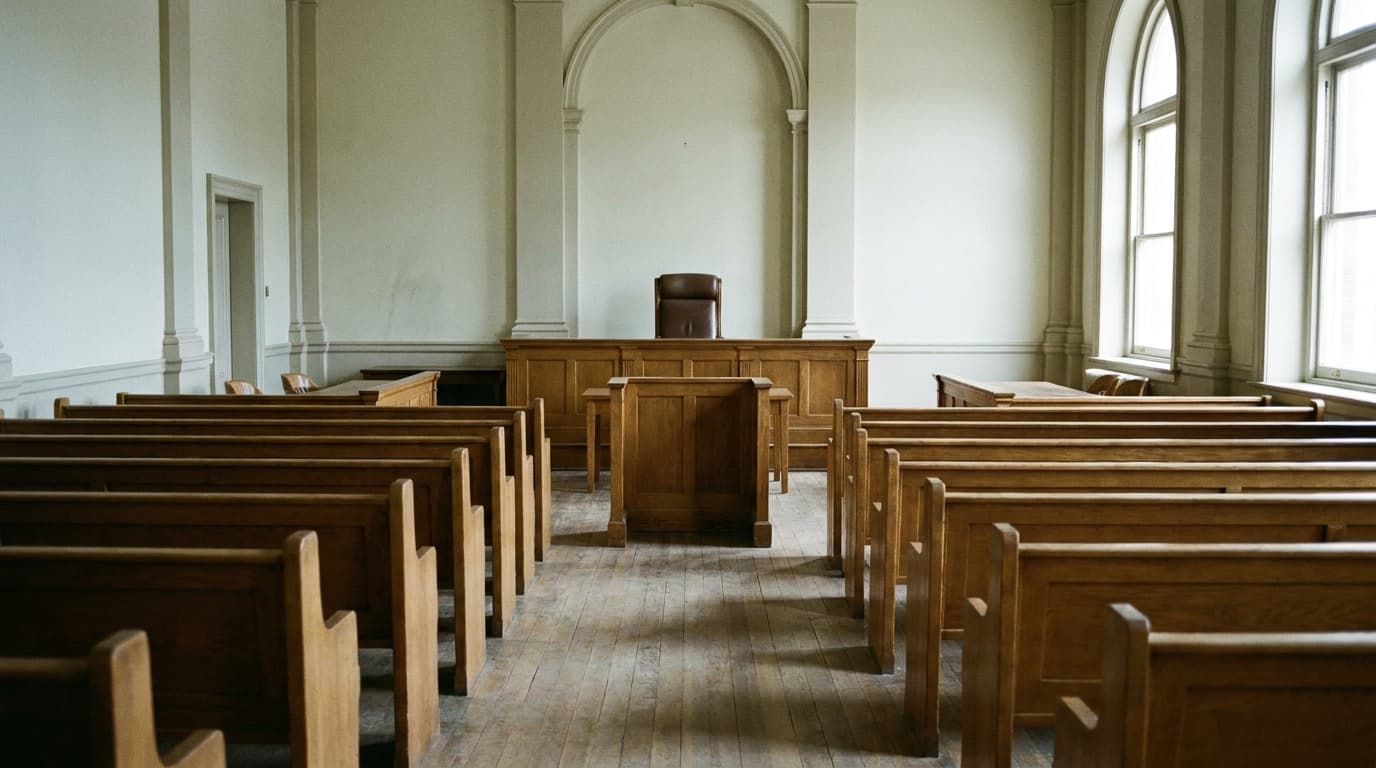
Jury duty in Canada is governed by provincial law, so who gets summoned, who can be excused, how selection works, and how much a juror is paid all depend on the province where the trial is held, not on a single national rule.
Jury Duty Is Provincial Law, Even for Criminal Trials
It surprises many Canadians that jury duty is not set out in one federal statute. The Criminal Code creates the right to a jury trial for serious offences and sets some baseline rules, such as jury size and the challenge process, but the mechanics of jury service itself, who is called, how they are chosen, what excuses a person, and what a juror is paid, come from each province's own Juries Act (or, in Quebec, the Jurors Act). That is true even when the trial is for a Criminal Code offence, because criminal courts are administered provincially.
Practically, this means a juror summoned for a murder trial in Alberta and one summoned for a murder trial in Nova Scotia are subject to two completely different statutes for everything except the trial procedure itself. Always check the specific province's court website or the instructions printed on the summons rather than assuming a rule from one province applies elsewhere.
How You Get Picked: Roll, Summons, Panel, and Empanelment
Jury selection moves through several distinct stages, and the terms are often used loosely but mean different things:
- Jury roll. Once a year, each judicial district compiles a jury roll by randomly drawing names from a source list, most commonly the province's health card registration records or, in some provinces, the voters list. Ontario, for example, draws its source list from OHIP registration data.
- Eligibility questionnaire and summons. People drawn for the roll typically receive a questionnaire asking about citizenship, residency, and any disqualifying convictions or occupations. Passing that screen puts a person on the roll for the year; being drawn from the roll for an actual trial triggers a formal summons ordering attendance at the courthouse on a specific date.
- Jury panel. Everyone who reports to court in response to a summons for a particular trial forms the jury panel, the pool from which the actual trial jury will be drawn. Being on the panel does not mean a person will serve; it means they are eligible to be called forward and questioned.
- Empanelment. From the panel, the judge, Crown, and defence work through the selection process (below) until 12 jurors (fewer for some proceedings) are chosen and sworn. Only at that point is a person empanelled and legally a juror for that trial. Panel members not chosen are usually released, though provincial rules vary on whether they can be called for another trial the same day.
Ignoring a Summons Has Real Consequences
A jury summons is a legal order, not an invitation. Failing to respond to a jury eligibility questionnaire or failing to attend after being summoned, without a lawful excuse, can be treated as contempt of court and, separately, as an offence under the applicable provincial Juries Act. Ontario's Juries Act, for instance, sets a fine of up to $5,000 and up to six months in jail for failing to return the jury eligibility questionnaire or for giving false information on it. Penalties for failing to attend after a summons are set separately, so check the current Act for your situation. The Criminal Code also makes it a contempt of court, punishable by a fine or up to 90 days in jail, to fail without lawful excuse to attend when legally required to do so. Anyone who genuinely cannot serve should request an exemption or deferral (below) rather than simply not responding.
Selection at Trial: Challenges for Cause, and the 2019 End of Peremptory Challenges
Once a panel reports for a specific trial, the Crown and defence question and can object to individual panel members before they are sworn. Until 2019, Canadian law allowed two kinds of objection:
- A challenge for cause, where a party argues a specific panel member cannot be impartial (for example, because of a stated bias) and a judge or triers decide the challenge.
- A peremptory challenge, which let the Crown or defence reject a panel member without giving any reason at all, up to a set number of times depending on the offence.
Peremptory challenges were abolished across Canada effective September 19, 2019, when the jury-selection amendments in Bill C-75 came into force. The change followed public concern, including in the high-profile Gerald Stanley trial, that peremptory challenges could be used to systematically exclude Indigenous and other panel members without any accountability. The Supreme Court of Canada upheld the abolition as constitutional in R v Chouhan. Since 2019, the only tools available to remove a panel member are a challenge for cause, decided by the trial judge, and the judge's power to direct a panel member to "stand aside" temporarily to protect public confidence in the jury. Bill C-75 also loosened one disqualification rule, raising the bar for automatic exclusion for a past sentence of imprisonment from over 12 months to over 2 years.
Who Is Eligible, and Who Is Disqualified
Every province requires a juror to be a Canadian citizen, resident in the province, and generally at least 18 years old (some provinces set a higher floor, such as 19). Beyond that baseline, disqualifications differ by province but commonly include:
- Certain criminal convictions. Most provinces disqualify anyone convicted of an offence that can be prosecuted by indictment, unless the person has since received a record suspension (the current legal term; see our guide to record suspensions and pardons in Canada). Ontario, for example, disqualifies a person convicted of an indictable or hybrid offence, generally regardless of a strict five-year window, unless a record suspension has been granted, and other provinces set their own thresholds and lookback periods. Anyone currently facing an outstanding criminal charge is typically excluded outright.
- Occupational exclusions. Lawyers, articling students, judges, police officers, and various justice-system employees are excluded in most provinces, on the reasoning that their professional role could compromise impartiality or create a conflict.
- Physical or mental incapacity that cannot be reasonably accommodated to allow the person to serve.
Because the categories and lookback periods vary, someone with a past conviction should not assume they are automatically excluded or automatically eligible; the safest step is to answer the eligibility questionnaire honestly and let the jury office make the determination, or to call the courthouse listed on the summons with specific questions. For how a criminal record shows up (or doesn't) outside the jury context, see our guide to criminal record checks in Canada.
What Jury Duty Pays, By Province
Juror pay is one of the most searched, and most criticized, parts of Canadian jury service. Every province pays a flat daily fee to jurors who are actually empanelled onto a jury; people who report for a panel but are not selected are generally not paid at all. Rates are set by regulation and are periodically increased, sometimes only after public pressure over how low they had become.
| Province | Daily Rate for Empanelled Jurors | Notes |
|---|---|---|
| Ontario | $120 per day from day one of service | Increased from a system that paid nothing for the first several days, effective October 1, 2025 |
| Quebec | $103 per day, rising to $160 per day from the 57th day | Additional allowance for evening hearings or deliberations; indexed annually |
| Saskatchewan | $110 per day, for both civil and criminal trials | Also covers child-care and dependant-care expenses up to set daily maximums |
| Manitoba | $80 per day from day one | Replaced a prior system that paid nothing for the first 10 days |
| British Columbia | $20 per day for days 1 to 10, $60 per day for days 11 to 49, $100 per day from day 50 | No fee for panel members not selected; separate mileage, parking, and child-care allowances apply |
| Alberta | $50 per day | Set out in the Jury Act Regulation; expense reimbursement handled separately |
| New Brunswick | $40 per full day (half-day rates apply for shorter sittings), rising after day 10 of a trial | Rate has drawn public criticism as low relative to other provinces |
| Nova Scotia | $40 per day, plus mileage and parking | Increases to jury pay have been proposed but readers should confirm the current rate with the courts before relying on it |
| Newfoundland and Labrador | Set by regulation | The one Canadian jurisdiction that separately requires an employer to continue paying an employee's regular wages during jury service, on top of any court-paid fee |
Prince Edward Island and the territories set their own comparably modest per diems; because rates change by regulation and are not always current online, confirm the exact figure with the specific court's jury office listed on the summons rather than relying on an old rate.
Employer Obligations: Job-Protected, Usually Unpaid
Every province gives employees job-protected leave for jury duty: an employer cannot discipline, demote, suspend, or dismiss someone for responding to a jury summons or serving on a jury, and the person must be returned to their job, or a comparable one, afterward. What most provinces do not require is that the employer keep paying wages during that leave; unless an employment contract, collective agreement, or company policy says otherwise, the leave is unpaid and the employee relies on the province's juror per diem instead. Newfoundland and Labrador is the exception, requiring employers to continue paying an employee's regular wages and benefits during jury service. Some employers voluntarily top up or fully cover the gap between a juror's regular pay and the provincial per diem; that is a matter of employer policy, not a legal requirement, outside Newfoundland and Labrador.
Requesting an Exemption or Deferral
A person who receives a summons but has a genuine reason they cannot serve on the assigned date can ask the court for a deferral (service postponed to a later date or sitting) or an excusal (service cancelled for that cycle). Courts generally expect the request in writing, as early as possible, with supporting documentation. Commonly accepted grounds include:
- A documented medical condition, supported by a doctor's note.
- Being the sole available caregiver for a child or dependant with no alternative care arrangement.
- Serious financial hardship, particularly for self-employed people with no income while not working.
- Significant pre-booked travel or a move out of the jurisdiction.
- Advanced age, which several provinces treat as an automatic ground for excusal on request.
A judge, or in some provinces the sheriff's or jury office, decides the request. Simply not showing up instead of requesting an exemption risks the contempt and provincial-offence consequences described above.
Quebec and Civil Juries
Quebec's Jurors Act governs jury service for criminal trials in the province, following the same general pattern of a roll, summons, panel, and empanelment described above, with its own eligibility rules and pay scale. Quebec has, however, abolished civil jury trials; civil disputes in Quebec are decided by a judge alone. That puts Quebec at one end of a spectrum: some provinces, Ontario most notably, still permit a jury in certain civil cases, such as some personal injury and defamation claims, while several others have narrowed or eliminated civil juries over time. Anyone summoned for a Quebec trial should assume it relates to a criminal matter, since a civil jury will not appear on a Quebec docket.
Disclaimer: This article provides general information about jury duty in Canada and is not legal advice. Eligibility rules, disqualifications, pay rates, and exemption procedures are set by each province and change periodically. Consult the specific court listed on a jury summons, the applicable provincial Juries Act, or a lawyer for advice on a specific situation.
Frequently Asked Questions
Is jury duty governed by federal or provincial law in Canada?
Provincial law. The Criminal Code creates the right to trial by jury for serious offences and sets some trial-level rules, but each province's own Juries Act or, in Quebec, Jurors Act governs who is called, how they are selected, what excuses a person, and how much a juror is paid. Rules differ significantly from province to province.
What happens if you ignore a jury summons in Canada?
Ignoring a jury summons or eligibility questionnaire without a lawful excuse can be treated as contempt of court under the Criminal Code, punishable by a fine or up to 90 days in jail, and separately as an offence under the applicable province's Juries Act. Ontario's Juries Act, for example, allows a fine of up to $5,000 and up to six months in jail for ignoring a questionnaire or summons without valid reason. Anyone unable to attend should request a deferral or excusal instead of not responding.
Does a criminal record disqualify someone from jury duty in Canada?
In most provinces, yes, if the conviction was for an offence that can be prosecuted by indictment, unless the person has since obtained a record suspension. Exact rules, lookback periods, and whether hybrid offences count vary by province, and anyone currently facing an outstanding charge is typically excluded outright. The eligibility questionnaire sent with a jury summons is where this gets assessed.
Are peremptory challenges still allowed in Canadian jury selection?
No. Peremptory challenges, which let the Crown or defence reject a prospective juror without stating a reason, were abolished across Canada effective September 19, 2019, under Bill C-75. The Supreme Court of Canada upheld the change as constitutional. Only challenges for cause, decided by the trial judge, and the judge's power to stand aside a panel member remain.
How much does jury duty pay in Canada?
It depends entirely on the province, and rates change periodically. As of the most recent figures available, Ontario pays $120 a day from day one, Quebec pays $103 a day rising to $160 after day 56, and other provinces range from roughly $20 to $110 a day depending on how long the trial runs. People on a jury panel who are not selected are generally not paid at all. Confirm the current rate with the specific court listed on the summons.
Does an employer have to pay an employee during jury duty in Canada?
Generally no. Every province gives job-protected leave for jury service, meaning an employer cannot discipline or dismiss an employee for attending, but only Newfoundland and Labrador legally requires the employer to keep paying regular wages during that leave. Elsewhere, the leave is unpaid unless the employer's own policy or a collective agreement says otherwise, and the juror relies on the province's per diem instead.
Updates
Ontario increased juror pay to $120 per day starting from the first day of service, replacing the prior system that paid unrepresented jurors nothing for roughly the first ten days of a trial.
Bill C-75 came into force, abolishing peremptory challenges in jury selection across Canada and raising the automatic disqualification threshold for a past prison sentence from over 12 months to over 2 years.
The Law Behind This Article
This article rests on the statutory provisions below, held in our own legal record and retrieved from the official source. Tap a section to read the operative text.
Criminal Code
s. 708ContemptIn forcecited in 2 of our articles
(1) A person who, being required by law to attend or remain in attendance for the purpose of giving evidence, fails, without lawful excuse, to attend or remain in attendance accordingly is guilty of contempt of court. (2) A court, judge, justice or provincial court judge may deal summarily with a person who is guilty of contempt of court under this section and that person is liable to a fine not exceeding one hundred dollars or to imprisonment for a term not exceeding ninety days or to both, and may be ordered to pay the costs that are incident to the service of any process under this Part and to his detention, if any. (3) A conviction under this section may be in Form 38 and a warrant of committal in respect of a conviction under this section may be in Form 25.
Official text (excerpt) · last checked 2026-08-12 · Read the full text in our law library · Verify at laws-lois.justice.gc.ca
Search our full record of Canadian federal law — every consolidated Act, in English and French →
Sources and References
- Criminal Code, s 708 - contempt of court(laws-lois.justice.gc.ca).gov
- Department of Justice Canada - Legislative Background, Bill C-75 (jury selection reforms)(justice.gc.ca).gov
- Ontario - Juries Act, RSO 1990, c J.3(ontario.ca).gov
- Ontario - Jury summons information(ontario.ca).gov
- British Columbia - Jury Act, RSBC 1996, c 242(bclaws.gov.bc.ca).gov
- Province of British Columbia - Compensation for missing work due to jury duty(gov.bc.ca).gov
- Alberta - Jury Act, RSA 2000, c J-3 (CanLII)(canlii.org)
- Alberta.ca - Jury duty(alberta.ca).gov
- Quebec - Jurors Act, CQLR c J-2(legisquebec.gouv.qc.ca).gov
- Quebec.ca - Jury duty(quebec.ca).gov
- Saskatchewan Courts - Jury information(sasklawcourts.ca).gov
- Manitoba - Jury Act, CCSM c J30(gov.mb.ca).gov
- Nova Scotia - Juries Act and Juries Regulations(novascotia.ca).gov