
Australia
Security Camera and CCTV Laws in Victoria
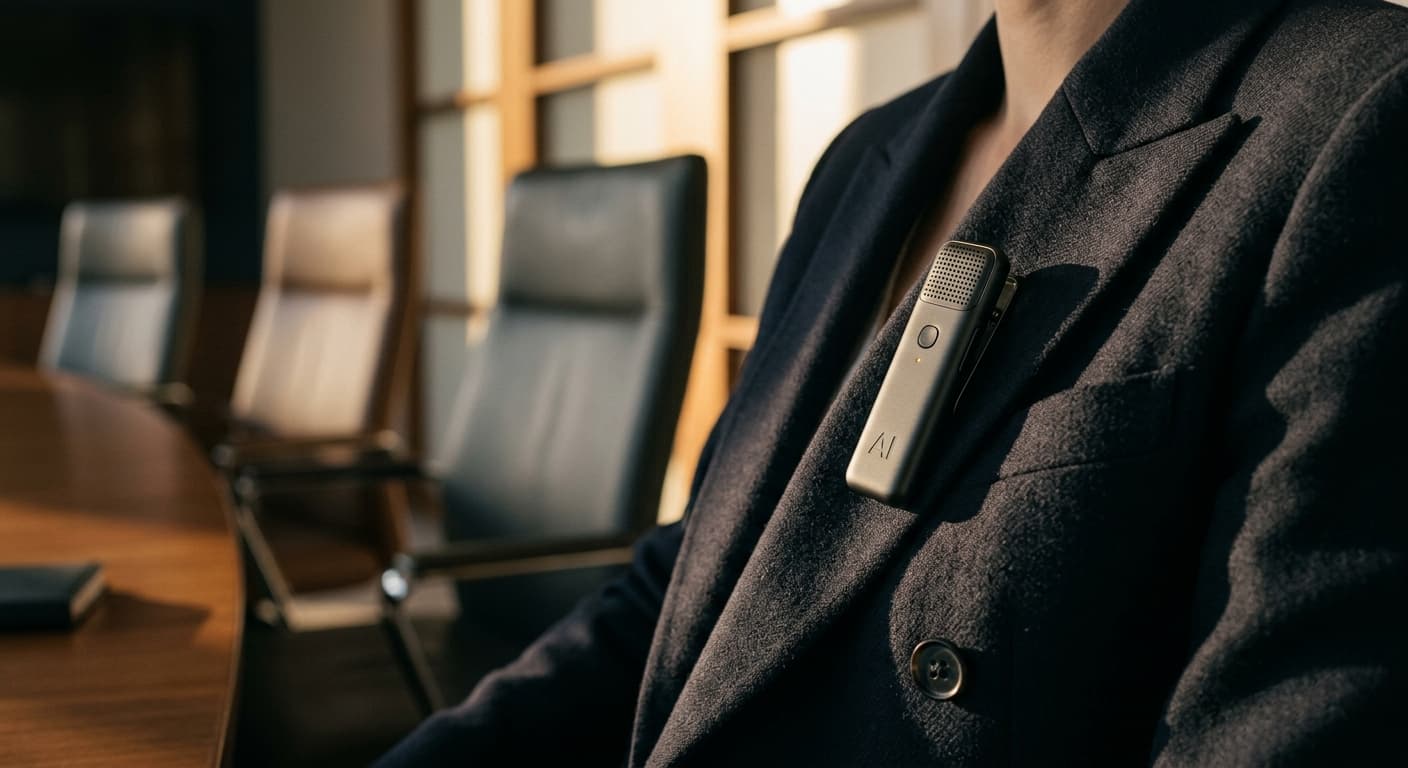
A Victorian home security camera answers to two separate offences at once. Its video is judged by whether it captures a "private activity," while its microphone is judged by the completely different "private conversation" test, and the two do not share exceptions.
Information last verified on 22 July 2026 against the consolidated Surveillance Devices Act 1999 (Vic) text. This article has not yet been reviewed by a licensed lawyer.
Jurisdiction scope: This article addresses home and small-business security cameras under the Surveillance Devices Act 1999 (Vic) and the federal Privacy Act 1988 (Cth). It does not address commercial or law-enforcement CCTV, or the security camera laws of other Australian states; for a national comparison, see CCTV and home security camera laws in Australia.
Two Different Laws for One Camera
A consumer security camera or video doorbell almost always combines a lens and a microphone. Victoria treats these as legally distinct. The video is assessed under s 7, the optical surveillance devices provision. The audio is assessed separately under s 6, the listening devices provision, using the "private conversation" test. Because the two provisions ask different questions with different exceptions, a camera can be lawful on one axis and not the other.
Does a Camera Pointed at a Neighbour's Yard Break the Law?
Section 7 is structurally identical to s 6: it prohibits using an optical surveillance device to record, observe or monitor a private activity to which the person is not a party, without consent. Ordinary outdoor footage of a yard, driveway or street generally falls outside the concept of a "private activity" unless the field of view captures something the law would recognise as inherently private, such as a view through a neighbour's bathroom or bedroom window. This is a different mechanism from New South Wales, which instead asks whether installing the camera required trespassing on someone else's land; in Victoria, what the camera actually captures is what matters, not how it was installed.
The Audio Trap: Why the Microphone Is the Real Risk
The "private activity" test in s 7 has no direct equivalent for audio. A camera's microphone is judged under s 6, which asks whether a private conversation was recorded, and ordinary outdoor footage that is lawful on video has no comparable carve-out for its soundtrack. A quiet conversation captured near a front gate or on a footpath can still be a private conversation under s 6, even where the same footage, assessed only as video under s 7, is entirely lawful because it does not depict a private activity. In practice, the always-on microphone is often the more exposed part of the device, not the camera lens.
Sharing or Posting Footage Online
Section 11 separately prohibits publishing or communicating a recording of a private activity or private conversation obtained in contravention of the Act, subject to exceptions including consent of each party, a legal or disciplinary proceeding, or a use no more than reasonably necessary in the public interest or to protect the recorder's lawful interests. Posting doorbell footage that captures a private conversation to social media can create separate exposure even where the underlying recording was itself lawful.
Does the Privacy Act Apply to My Home Camera?
Usually not directly. The Privacy Act 1988 (Cth) and its Australian Privacy Principles generally do not cover a security camera run by an individual in a private, non-business capacity. State law, discussed above, is the primary framework instead. The federal statutory tort for serious invasions of privacy, part of Schedule 2 to the Privacy Act 1988 (Cth) and in force since 10 June 2025, does apply to individuals and provides a civil remedy, without proof of damage, for a serious, intentional or reckless invasion of privacy where a reasonable person would have expected privacy.
What to Do About a Neighbour's Camera
Some Victorian councils have planning requirements that can be relevant to a security camera installation, so a council enquiry is a reasonable first step. Beyond that, a direct conversation with the neighbour is generally the recommended starting point before escalating a dispute.
This article provides general legal information about security camera and CCTV law in Victoria. It is not legal advice and does not take into account your specific circumstances. For advice about a particular camera installation or dispute, consult a legal practitioner admitted in the relevant Australian state or territory.
Frequently Asked Questions
Is it legal to point a security camera at my neighbour's yard in Victoria?
Victoria judges video by whether it captures a 'private activity' under s 7 of the Surveillance Devices Act 1999 (Vic). Ordinary yard or driveway footage usually falls outside that test, unless it captures something inherently private such as a bathroom or bedroom window. This is general information, not an assessment of any specific installation.
Does my doorbell camera break the law if its microphone records a conversation?
It can, even where the video is lawful. The microphone is assessed separately under s 6's private conversation test, which has no equivalent carve-out for ordinary outdoor footage.
Can I be sued over my home security camera in Victoria?
Potentially, under the new federal statutory tort for serious invasions of privacy (Privacy Act 1988 (Cth) sch 2), which applies to individuals and does not require proof of damage, separately from any question under the state Surveillance Devices Act.
Does the Privacy Act cover my home CCTV system in Victoria?
Generally not directly. The Privacy Act 1988 (Cth) Australian Privacy Principles generally do not apply to an individual operating a camera in a private, non-business capacity, though the new federal tort and state surveillance law can still apply.
Can I share my doorbell camera footage online in Victoria?
Sharing footage or audio obtained in contravention of the Surveillance Devices Act 1999 (Vic) is a separate offence under s 11, distinct from the rules governing whether making the recording itself was lawful.
What should I do if I think my neighbour's camera is filming into my home in Victoria?
A council enquiry about planning requirements and a direct conversation with the neighbour are the usual first steps before considering a formal complaint or legal action.
The Law Behind This Article
This article rests on the statutory provisions below, held in our own legal record and retrieved from the official source. Tap a section to read the operative text.
Surveillance Devices Act 1999 (Vic)
s 11Prohibition on communication or publication of private conversations or activitiesIn forcecited in 7 of our articles
(1) Subject to subsection (2), a person must not knowingly communicate or publish a record or report of a private conversation or private activity that has been made as a direct or indirect result of the use of a listening device, an optical surveillance device or a tracking device. In the case of a natural person, level 7 imprisonment (2 years maximum) or a level 7 fine (240 penalty units maximum) or both; In the case of a body corporate, 1200 penalty units. (2) Subsection (1) does not apply— (a) to a communication or publication made with the express or implied consent of each party to the private conversation or private activity; or (b) to a communication or publication that is no more than is reasonably necessary— (i) in the public interest; or (ii) for the protection of the lawful interests of the person making it; or (c) to a communication or publication in the course of legal proceedings or disciplinary proceedings; or (ca) to a communication or publication of protected information; or (d) to a communication or publication made by a law enforcement officer— (i) to a person authorised by the chief officer of the law enforcement agency and for the purpose of investiga
Official text (excerpt) · last checked 2026-09-28 · Read the full text in our law library · Verify at legislation.vic.gov.au
Also relied on in: Dash Cam Laws in Australia: What's Legal to Record, Recording Phone Calls in Victoria, Can You Record a Phone Call in Australia? State-by-State Rules
s 6Regulation of installation, use and maintenance of listening devicesIn forcecited in 11 of our articles
(1) Subject to subsection (2), a person must not knowingly install, use or maintain a listening device to overhear, record, monitor or listen to a private conversation to which the person is not a party, without the express or implied consent of each party to the conversation. In the case of a natural person, level 7 imprisonment (2 years maximum) or a level 7 fine (240 penalty units maximum) or both; In the case of a body corporate, 1200 penalty units. (2) Subsection (1) does not apply to— (a) the installation, use or maintenance of a listening device in accordance with a warrant, emergency authorisation, corresponding warrant or corresponding emergency authorisation; or (b) the installation, use or maintenance of a listening device in accordance with a law of the Commonwealth; or (c) the use of a listening device by a law enforcement officer to monitor or record a private conversation to which he or she is not a party if— (i) at least one party to the conversation consents to the monitoring or recording; and (ii) the law enforcement officer is acting in the course of his or her duty; and (iii) the law enforcement officer reasonably believes that it is necessary to monitor
Official text (excerpt) · last checked 2026-09-28 · Read the full text in our law library · Verify at legislation.vic.gov.au
Also relied on in: Is It Illegal to Record Someone Without Consent in Australia?, Workplace Surveillance and Monitoring in Australia, Recording the Police in Australia: What the Law Actually Says
s 7Regulation of installation, use and maintenance of optical surveillance devicesIn forcecited in 6 of our articles
(1) Subject to subsection (2), a person must not knowingly install, use or maintain an optical surveillance device to record visually or observe a private activity to which the person is not a party, without the express or implied consent of each party to the activity. In the case of a natural person, level 7 imprisonment (2 years maximum) or a level 7 fine (240 penalty units maximum) or both; In the case of a body corporate, 1200 penalty units. (2) Subsection (1) does not apply to— (a) the installation, use or maintenance of an optical surveillance device in accordance with a warrant, emergency authorisation, corresponding warrant or corresponding emergency authorisation; or (b) the installation, use or maintenance of an optical surveillance device in accordance with a law of the Commonwealth; or (c) the installation, use or maintenance of an optical surveillance device by a law enforcement officer in the performance of his or her duty on premises if— (i) an occupier of the premises authorises that installation, use or maintenance; and (ii) the installation, use or maintenance is reasonably necessary for the protection of any person's lawful interests; or (d) the overt use
Official text (excerpt) · last checked 2026-09-28 · Read the full text in our law library · Verify at legislation.vic.gov.au
Also relied on in: CCTV and Home Security Camera Laws in Australia (2026), Doorbell Camera and Neighbour Privacy Laws in Australia, Drone Privacy Laws in Australia: What CASA Doesn't Cover
Search our full record of US law — 2.1 million sections, every state + federal →
Sources and References
- Surveillance Devices Act 1999 (Vic) s 7, optical surveillance devices(austlii.edu.au)
- Surveillance Devices Act 1999 (Vic) s 6, listening devices offence and participant scope(austlii.edu.au)
- Surveillance Devices Act 1999 (Vic) s 11, publication offence(austlii.edu.au)
- Your Privacy Rights, Office of the Victorian Information Commissioner(ovic.vic.gov.au).gov
- OAIC: security cameras, the private-capacity exemption from the Privacy Act(oaic.gov.au).gov
- OAIC: statutory tort for serious invasions of privacy, Privacy Act 1988 (Cth) sch 2(oaic.gov.au).gov