
Washington
Washington E-Scooter Laws: Sidewalk, Helmet & Age Rules (2026)
Independently fact-checked against primary sources (last audited July 23, 2026). · Law checked current as of August 8, 2026. · 5 primary sources cited on this page. How we verify our legal content
This article is general information about Washington e-scooter law and is not legal advice. If you were cited for a violation or injured while riding, talk to a Washington traffic or personal injury attorney, or review the statute directly through the Washington State Legislature website. Information last verified on 7 September 2026.
Are e-scooters legal in Washington?
Yes. "Motorized foot scooter" is a defined vehicle class, with its definition at RCW 46.04.336 and its road-use rules gathered into RCW 46.61.710 alongside mopeds, electric personal assistive mobility devices (EPAMDs), personal delivery devices, and electric-assisted bicycles.
The structural point worth stating up front is that RCW 46.61.710 is not the whole of Washington's scooter law. That section governs where a scooter may be ridden. The rider rules people actually ask about, minimum age, how fast you may go, whether you need a license, and what you need on the scooter after dark, sit in a different chapter at RCW 46.20.500(5). Helmets are handled in a third place again, RCW 46.37.530. Reading only RCW 46.61.710 and concluding that Washington sets no age or speed rule is a common mistake, and both rules exist.
What counts as an e-scooter in Washington
RCW 46.04.336 defines a motorized foot scooter as a device with two or three wheels that has handlebars, a floorboard that can be stood upon while riding, and is powered by an internal combustion engine or electric motor with a maximum speed of no greater than 20 mph on level ground. Motor-driven cycles, mopeds, electric-assisted bicycles, and motorcycles are excluded from this category and regulated separately.
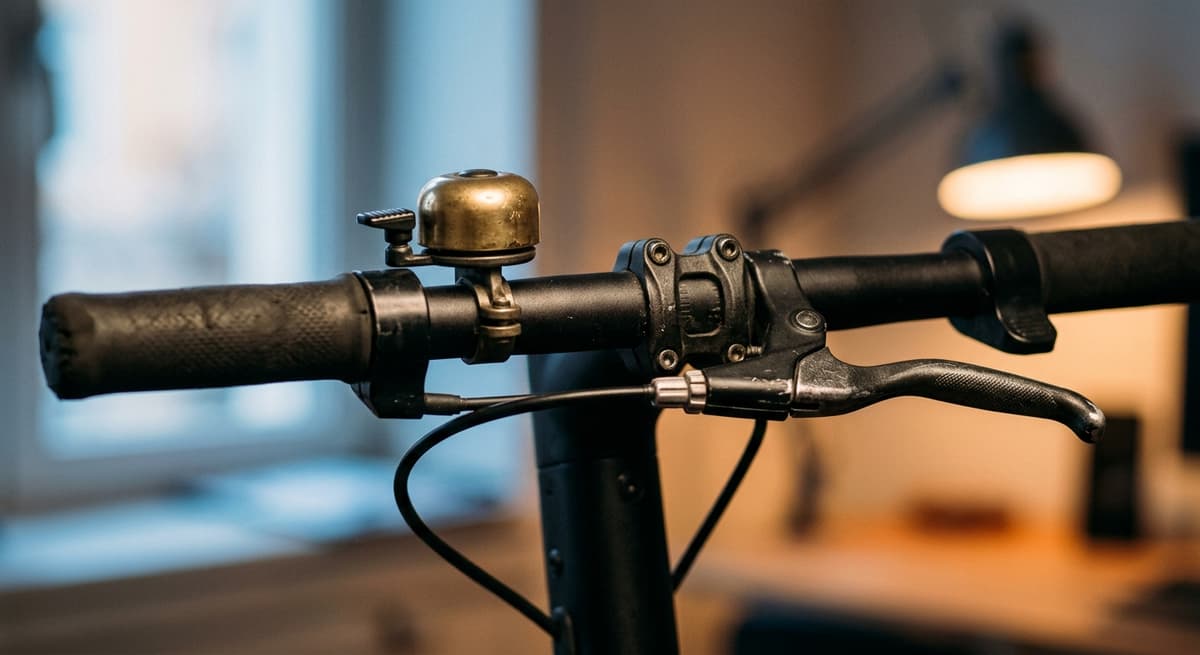
Washington law carries two different speed numbers, and they answer different questions. The 20 mph figure in RCW 46.04.336 describes the machine: a device capable of going faster than that is not a motorized foot scooter at all and falls into a different, more heavily regulated vehicle class. The 15 mph figure in RCW 46.20.500(5) describes the ride, meaning how fast you are actually allowed to travel on a roadway or bicycle lane. A scooter can be legal as a device and still be ridden illegally fast.
Where you can ride
RCW 46.61.710(3) makes operating a motorized foot scooter on a fully controlled limited access highway unlawful. The same subsection makes sidewalk riding unlawful too, but with a narrower exception than California's or Oregon's "entering or leaving adjacent property" carve-out: Washington allows sidewalk riding only where there is no reasonable alternative, or where a local ordinance specifically authorizes it.
Subsections (6) and (7) give motorized foot scooters the same access to highways and shared-use paths that bicycles get, but they also let local jurisdictions further restrict or regulate scooter access to shared-use paths and facilities under their own control. In practice, the baseline where-you-can-ride rule is set by the state, but a given trail, path, or sidewalk-adjacent facility can be more restrictive locally.
RCW 46.20.500(5) attaches a condition to any local sidewalk permission. A jurisdiction that authorizes scooter operation on a sidewalk or on pedestrian or bicycle trails must also specify the maximum speed for that sidewalk operation. A city cannot simply open its sidewalks to scooters without setting a speed for them.
Rider rules
The rules in this section come from RCW 46.20.500(5), not from RCW 46.61.710. That placement is why they are so often reported as missing from Washington law.
Age. The statute provides that "Persons under sixteen years of age may not operate a motorized foot scooter unless provided otherwise by a local jurisdiction." That is a default statewide 16-and-older minimum, and a local jurisdiction can provide otherwise for its own area. If you are checking the rule for a specific city, check the state floor first and then the local ordinance that may modify it.
Speed. A motorized foot scooter "may be operated at a speed of up to fifteen miles per hour on a roadway or bicycle lane." Sidewalk and trail speeds, where a local jurisdiction has authorized that riding at all, are set by that jurisdiction.
License. No driver's license is required to operate a motorized foot scooter.
Lights and reflectors. Motorized foot scooters may not be operated at any time from a half hour after sunset to a half hour before sunrise without reflectors of a type approved by the state patrol. This is the one piece of required equipment state law names for scooters.
Helmets. No Washington statute writes a helmet rule specifically for motorized foot scooters. RCW 46.37.530(1)(c) bridges to the bicycle rules instead: persons operating electric-assisted bicycles and motorized foot scooters "shall comply with all laws and regulations related to the use of bicycle helmets." The practical effect is that whatever bicycle-helmet ordinance is in force where you are riding applies to you on a scooter, so the helmet answer is set locally rather than statewide.
Subsection (12) of RCW 46.61.710, which addresses local speed and ban authority for EPAMDs specifically (Segway-type devices, not motorized foot scooters), lets municipalities restrict EPAMDs on higher-speed roads and in high-pedestrian areas. That subsection is written for EPAMDs, not scooters, and should not be read as a scooter rule.
RCW 46.61.715 separately gives a local authority power to regulate motorized foot scooters and shared-scooter programs directly, including whether shared scooters may operate in its jurisdiction at all, staging locations that comply with ADA sidewalk-access requirements, and reasonable fees. Scooter-share contractors must be given a written disclosure that their own personal auto, homeowners, condominium, or renters insurance might not cover them while relocating or servicing scooters. Programs must carry commercial general liability coverage of at least $1 million per occurrence and $5 million in aggregate, with potentially higher coverage required if a program authorizes riders under 16. That last detail is notable: it is the statutory route by which a shared-scooter program can go below the default 16-and-older floor, by carrying more insurance rather than by ignoring the rule.
Penalties
RCW 46.61.710 itself, read in full, does not spell out a specific statewide fine schedule for violations of its operating rules. Seattle's shared-scooter program documents its own local consequence structure instead: repeated sidewalk-riding violations on a permitted shared scooter can trigger a fine of up to $50 or suspension from the program, based on in-app and audible warnings recorded by the operator's reckless-riding detection technology.
Enforcement in practice
Washington's statute itself does not include enforcement statistics. Seattle's transportation department documents its shared-scooter safety program directly, including reckless-riding detection technology required on operator permits and a citywide helmet giveaway that distributed more than 5,000 helmets in 2025.
Enforcement patterns in one city do not establish what applies everywhere else in Washington. The statewide floor travels with you: the 16-and-older default, the 15 mph roadway and bicycle-lane cap, the no-license rule, and the night reflector requirement apply across the state. The questions state law leaves to local government, most notably helmets and whether sidewalk riding is permitted at all, are answered by the ordinance of the city or county you are actually riding in, so check that separately.
Seattle e-scooter rules
Seattle's shared-scooter program, documented on the city's transportation department blog, requires reckless-riding detection technology on permitted scooters, with deployment planned across the full fleet by the end of 2026. Riding on the sidewalk triggers audible and in-app warnings, and repeated violations can lead to a fine of up to $50 or suspension.
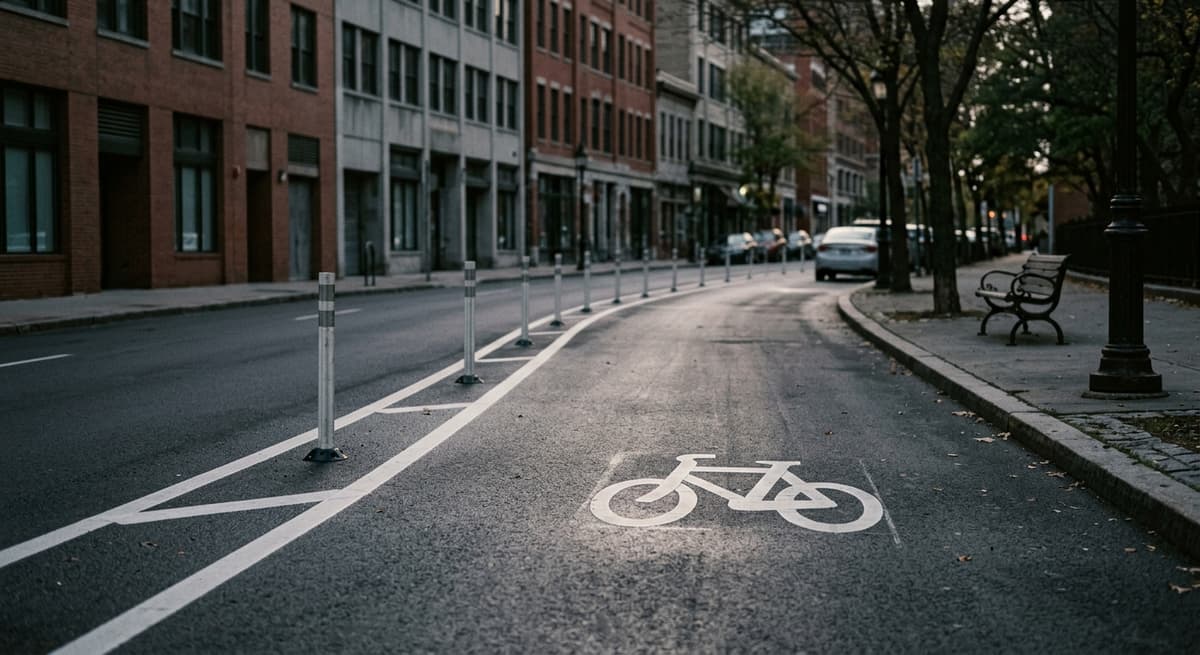
Speed on a shared scooter is capped at 8 mph on a rider's first trip and 15 mph after that, with additional 8 mph slow zones in specific areas. The two 8 mph caps are stricter than anything state law requires. The 15 mph figure is not: it matches the 15 mph roadway and bicycle-lane limit that RCW 46.20.500(5) already sets statewide.
On helmets, the city requires bike and scooter share companies to give away free helmets to riders, and reports distributing more than 5,000 helmets in 2025 and over 15,000 since 2022. This article could not independently confirm the text of a Seattle municipal code section imposing a helmet mandate on scooter riders, so treat the local helmet question as one to check against current city rules rather than as settled here. RCW 46.37.530(1)(c) is what makes any bicycle-helmet rule that is in force locally apply to you on a scooter.
For how Washington's rules compare with other states, see RecordingLaw's e-scooter laws by state guide. Because DUI statutes are typically written around operating a vehicle rather than only a car, an e-scooter stop involving alcohol or drugs may fall under Washington's DUI laws. If you were injured in a crash involving an e-scooter, Washington's car accident laws cover how an injury claim generally works.
Frequently Asked Questions
Can I ride an e-scooter on the sidewalk in Washington?
Generally no. RCW 46.61.710(3) makes sidewalk riding unlawful by default statewide, allowed only where there is no reasonable alternative or where a local ordinance specifically permits it. If a city does authorize sidewalk riding, RCW 46.20.500(5) requires that city to specify the maximum sidewalk speed, so check the local ordinance for both the permission and the speed.
Do I need a helmet to ride an e-scooter in Washington?
There is no helmet rule written specifically for motorized foot scooters in state law, but you are not outside the helmet rules either. RCW 46.37.530(1)(c) provides that persons operating electric-assisted bicycles and motorized foot scooters shall comply with all laws and regulations related to the use of bicycle helmets. So whatever bicycle-helmet ordinance applies in the city or county where you are riding applies to you on a scooter. Check your local rule.
Is it true that Washington requires riders to be 16 or older?
Yes, by default. RCW 46.20.500(5) provides that persons under sixteen years of age may not operate a motorized foot scooter unless provided otherwise by a local jurisdiction. The rule is easy to miss because it sits in the driver-licensing chapter rather than in RCW 46.61.710, which is where most scooter rules are collected. A local jurisdiction can provide otherwise for its own area, so the statewide 16 minimum is a floor that local law can change.
Do I need a license to ride an e-scooter in Washington?
No. RCW 46.20.500(5) states directly that no driver's license is required to operate a motorized foot scooter.
How fast can an e-scooter go in Washington?
Two limits apply and they are different things. The device itself must be incapable of exceeding 20 mph on level ground to qualify as a motorized foot scooter under RCW 46.04.336. Separately, RCW 46.20.500(5) caps how fast you may actually ride at 15 mph on a roadway or bicycle lane. Sidewalk and trail speeds, where a local jurisdiction allows that riding, are set by that jurisdiction.
Do I need lights or reflectors to ride an e-scooter at night in Washington?
Reflectors, yes. RCW 46.20.500(5) provides that motorized foot scooters may not be operated at any time from a half hour after sunset to a half hour before sunrise without reflectors of a type approved by the state patrol.
Can a child ride an e-scooter in Washington?
Not under 16 by default. RCW 46.20.500(5) bars persons under sixteen years of age from operating a motorized foot scooter unless a local jurisdiction provides otherwise, so the answer for a specific city depends on whether that city has adopted a different rule.
What's the fine for illegal e-scooter riding in Washington?
RCW 46.61.710 itself does not set a specific statewide fine schedule. Seattle's shared-scooter program documents a fine of up to $50 or suspension from the program for repeated sidewalk-riding violations.
Is Seattle's e-scooter law different from Washington state law?
In some respects. Seattle's shared-scooter program adds an 8 mph cap on a rider's first trip and inside designated slow zones, which is stricter than the state's 15 mph roadway limit, along with reckless-riding detection technology and mandatory free helmet giveaways by the operators. Its 15 mph cap after the first trip is not stricter, since it matches the statewide 15 mph limit in RCW 46.20.500(5).
Updates
Corrected the rider rules after re-reading RCW 46.20.500(5): Washington does set a default statewide minimum age of 16, a 15 mph roadway and bicycle-lane speed cap, a no-driver's-license rule and a night reflector requirement, all of which this page had previously reported as absent, and added the RCW 46.37.530(1)(c) provision that applies local bicycle-helmet rules to scooter riders.
Governing law re-checked for recent changes
Independently fact-checked against the cited primary sources
The Law Behind This Article
This article rests on the statutory provisions below, held in our own legal record and retrieved from the official source. Tap a section to read the operative text.
Revised Code of Washington
§ 46.61.710Mopeds, EPAMDs, motorized foot scooters, personal delivery devices, electric-assisted bicycles, class 1 electric-assisted bicycles, class 2 electric-assisted bicycles, class 3 electric-assisted bicycles—General requirements and operation.In force
(1) No person shall operate a moped upon the highways of this state unless the moped has been assigned a moped registration number and displays a moped permit in accordance with RCW 46.16A.405(2). (2) Notwithstanding any other provision of law, a moped may not be operated on a bicycle path or trail, bikeway, equestrian trail, or hiking or recreational trail. (3) Operation of a moped, electric personal assistive mobility device, or motorized foot scooter on a fully controlled limited access highway is unlawful. Operation of a personal delivery device on any part of a highway other than a sidewalk or crosswalk is unlawful, except as provided in RCW 46.61.240(2) and 46.61.250(2). Operation of a moped on a sidewalk is unlawful. Operation of a motorized foot scooter or class 3 electric-assisted bicycle on a sidewalk is unlawful, unless there is no alternative for a motorized foot scooter or a class 3 electric-assisted bicycle to travel over a sidewalk as part of a bicycle or pedestrian path, or if authorized by local ordinance, as provided in RCW 46.61.715. (4) Removal of any muffling device or pollution control device from a moped is unlawful.
Official text (excerpt) · last checked 2026-09-07 · Read the full text in our law library · Verify at app.leg.wa.gov
§ 46.04.336Motorized foot scooter.In force
"Motorized foot scooter" means a device with two or three wheels that has handlebars, a floorboard that can be stood upon while riding, and is powered by an internal combustion engine or electric motor that has a maximum speed of no greater than twenty miles per hour on level ground. For purposes of this section, a motor-driven cycle, a moped, an electric-assisted bicycle, or a motorcycle is not a motorized foot scooter.
Official text (excerpt) · last checked 2026-07-29 · Read the full text in our law library · Verify at app.leg.wa.gov
§ 46.61.715Motorized foot scooters and shared scooters—Local authority may regulate—Contracts offered by scooter share programs to scooter share contractors—Written disclosure.In force
(1) A local authority may regulate the operation of motorized foot scooters and shared scooters within its jurisdiction which may include, but is not limited to, the following: (a) Determining if shared scooters may be operated within the local authority's jurisdiction, and if allowed, where they may be operated; (b) Requiring scooter share programs to pay reasonable fees and taxes; (c) Requiring that shared scooters be staged in a manner compliant with the Americans with disabilities act, to ensure clear passage of pedestrian traffic on sidewalks; and (d) Adopting and assessing penalties for moving or parking violations involving shared scooters to the person responsible for such violation. (2) A contract offered by a scooter share program to a prospective scooter share contractor must make the following written disclosures to a prospective scooter share contractor: WHILE YOU ARE LOCATING AND RETURNING SCOOTERS, PROVIDING TRANSPORT, BATTERY CHARGE, OR REPAIR SERVICES, YOU MAY BE ENGAGED IN COMMERCIAL ACTIVITY. YOUR PRIVATE PASSENGER AUTOMOBILE, HOMEOWNERS, CONDOMINIUM, OR RENTERS INSURANCE POLICIES MIGHT NOT PROVIDE COVERAGE FOR YOU, DEPENDING ON THE TERMS OF YOUR POLICY.
Official text (excerpt) · last checked 2026-07-29 · Read the full text in our law library · Verify at app.leg.wa.gov
§ 46.20.500Special endorsement—Penalties—Exceptions.In force
(1) No person may drive either a two-wheeled or a three-wheeled motorcycle, or a motor-driven cycle unless such person has a valid driver's license specially endorsed by the director to enable the holder to drive such vehicles. A person who violates this section commits a traffic infraction and is subject to: (a) The base penalty provided under RCW 46.63.110; and (b) an additional monetary penalty of two hundred fifty dollars, which must be deposited in the motorcycle safety education account under RCW 46.68.065. (2) However, a person sixteen years of age or older, holding a valid driver's license of any class issued by the state of the person's residence, may operate a moped without taking any special examination for the operation of a moped. (3) No driver's license is required for operation of an electric-assisted bicycle. Persons under sixteen years of age may not operate a class 3 electric-assisted bicycle. (4) No driver's license is required to operate an electric personal assistive mobility device or a power wheelchair. (5) No driver's license is required to operate a motorized foot scooter.
Official text (excerpt) · last checked 2026-07-29 · Read the full text in our law library · Verify at app.leg.wa.gov
Cited in 3 court opinions in our collectionLatest citing opinion in our collection: 2009
Opinions citing this section in our collection:
- Kappelman v. Lutz (Washington Supreme Court 2009, 167 Wash. 2d 1)“…have a motorcycle endorsement on his license as required by RCW 46.20.500(1), amended by Laws op 2009, ch. 275,…”
- State v. LaTourette (Court of Appeals of Washington 1987, 49 Wash. App. 119)“…rcycle endorsement for his driver's license in violation of RCW 46.20.500 and for having expired vehicle license…”
- Holz v. Burlington Northern Railroad (Court of Appeals of Washington 1990, 58 Wash. App. 704)“…instruction permit, as opposed to a motorcycle endorsement, RCW 46.20.500, 1 or motorcyclist's instr…”
Identified automatically from the court opinions citing this section — not a ranking of which case controls.
§ 46.37.530Motorcycles, motor-driven cycles, mopeds, electric-assisted bicycles—Helmets, other equipment—Children—Rules.In forcecited in 2 of our articles
(1) It is unlawful: (a) For any person to operate a motorcycle, moped, or motor-driven cycle not equipped with mirrors on the left and right sides which shall be so located as to give the driver a complete view of the highway for a distance of at least two hundred feet to the rear of the motorcycle, moped, or motor-driven cycle: PROVIDED, That mirrors shall not be required on any motorcycle or motor-driven cycle over twenty-five years old originally manufactured without mirrors and which has been restored to its original condition and which is being ridden to or from or otherwise in conjunction with an antique or classic motorcycle contest, show, or other such assemblage: PROVIDED FURTHER, That no mirror is required on any motorcycle manufactured prior to January 1, 1931; (b) For any person to operate a motorcycle, moped, or motor-driven cycle which does not have a windshield unless wearing glasses, goggles, or a face shield of a type conforming to rules adopted by the state patrol; (c) For any person to operate or ride upon a motorcycle, motor-driven cycle, or moped on a state highway, county road, or city street unless wearing upon his or her head a motorcycle helmet except…
Official text (excerpt) · last checked 2026-07-29 · Read the full text in our law library · Verify at app.leg.wa.gov
Cited in 8 court opinions in our collectionLatest citing opinion in our collection: 2010
Opinions citing this section in our collection:
- State v. Laitinen (Washington Supreme Court 1969, 77 Wash. 2d 130)“…ion on equipment. Laws of 1967, ch. 232, § 4(3), p. 1117; RCW 46.37.530(3). The commission on equipment, esta…”
- City of Bremerton v. Spears (Washington Supreme Court 1998, 134 Wash. 2d 141)“…eration of a motorcycle without wearing an approved helmet. RCW 46.37.530. Each of the notices of infraction list…”
- State v. Zektzer (Court of Appeals of Washington 1975, 13 Wash. App. 24)“…On appeal to us, Zektzer’s principal contention is that RCW 46.37.530 (1) (c), which mandates the wearing of…”
Identified automatically from the court opinions citing this section — not a ranking of which case controls.
Also relied on in: Washington Motorcycle Accident Laws (2026): Deadlines & Helmets
Search our full record of US law — 2.1 million sections, every state + federal →
Sources and References
- RCW 46.61.710 (mopeds, EPAMDs, motorized foot scooters, electric-assisted bicycles: general requirements and operation)(app.leg.wa.gov).gov
- RCW 46.04.336 (motorized foot scooter definition)(app.leg.wa.gov).gov
- SDOT Blog, SDOT's updated approach to bike and scooter share safety(sdotblog.seattle.gov).gov
- Washington State Patrol, Motorized Foot Scooter Resource Sheet(wsp.wa.gov).gov
- RCW 46.61.715 (local authority regulation of shared scooters, insurance and disclosure requirements)(app.leg.wa.gov).gov
- RCW 46.20.500(5) (motorized foot scooters: no driver's license required, night reflectors, under-16 operation prohibited absent local provision, 15 mph roadway and bicycle-lane cap, local sidewalk speed)(app.leg.wa.gov)
- RCW 46.37.530(1)(c) (persons operating electric-assisted bicycles and motorized foot scooters shall comply with all laws and regulations related to the use of bicycle helmets)(app.leg.wa.gov)
Paid attorney referral. RecordingLaw may receive compensation when you use an attorney-help link. RecordingLaw is not a law firm. Submitting a request does not guarantee that an attorney will accept your case and does not create an attorney-client relationship.