
New Hampshire
New Hampshire DWI Laws: Penalties, BAC & License (2026)
Independently fact-checked against primary sources (last audited August 18, 2026). · Reviewed by the RecordingLaw editorial team. · Law checked current as of August 18, 2026. · 8 primary sources cited on this page. How we verify our legal content
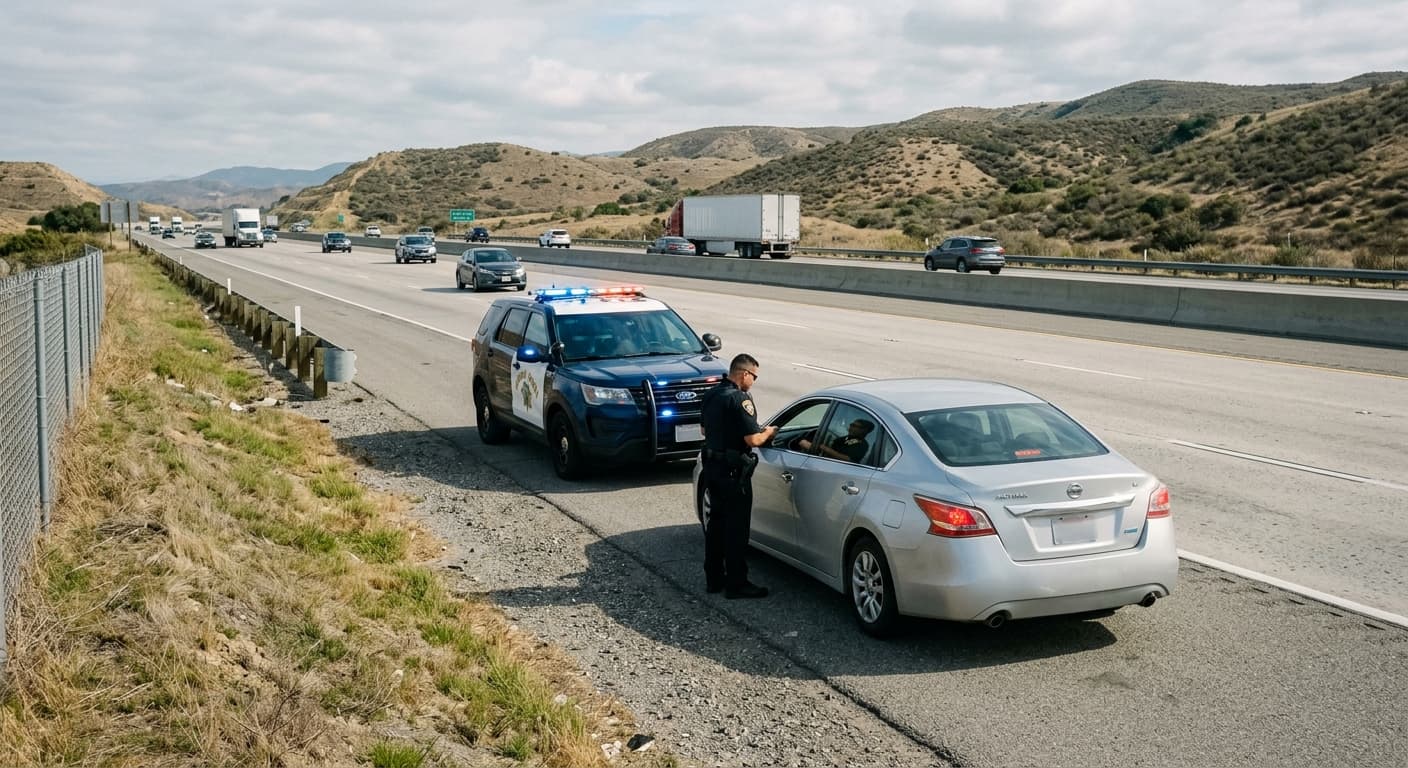
In New Hampshire the offense is called driving while intoxicated (DWI), and under RSA 265-A:2 it is unlawful to drive with a blood alcohol concentration (BAC) of 0.08 percent or more, or while impaired by alcohol or drugs. A first DWI is a class B misdemeanor carrying a fine of at least $500 and a license revocation of 9 months to 2 years under RSA 265-A:18.
This guide is part of our DUI Laws by State series.
What counts as a DWI in New Hampshire
New Hampshire's core impaired-driving statute, RSA 265-A:2, creates two ways to charge a DWI. The first covers driving while under the influence of alcohol or any controlled drug, and the second is the per se rule: it is unlawful to drive with a BAC of 0.08 percent or more. A driver below 0.08 can still be convicted if the State proves actual impairment. Drivers under 21 fall under a 0.02 percent zero-tolerance limit, and commercial drivers are held to 0.04 percent under RSA 263:94. A BAC of 0.16 percent or more raises the charge to aggravated DWI under RSA 265-A:3. The 0.08 figure is the federal benchmark adopted by every state except Utah, which uses 0.05 percent, as the National Highway Traffic Safety Administration describes.
First-offense DWI penalties in New Hampshire (fines, programs, license)
A first DWI is a class B misdemeanor under RSA 265-A:18, which means it carries no jail time for a simple first offense but does impose a fine of not less than $500 plus a penalty assessment. The statute requires the driver to be referred to an Impaired Driver Care Management Program (IDCMP), to complete alcohol and drug screening within 14 days of conviction, to finish a state-approved impaired driver education program, and to complete a victim impact panel before the license is restored. The license revocation runs from 9 months to 2 years, though the court may suspend up to 6 months of the minimum if the driver completes the screening and complies with the IDCMP service plan. Mandatory jail attaches only to aggravated DWI and repeat offenses, not to a simple first offense.

| First-offense item | New Hampshire rule (statute) |
|---|---|
| Offense level | Class B misdemeanor (RSA 265-A:18) |
| Jail | None for a simple first offense |
| Fine | At least $500 plus assessment (RSA 265-A:18) |
| License revocation | 9 months to 2 years; up to 6 months suspendable (RSA 265-A:18) |
| Required programs | IDCMP screening, impaired driver education, victim impact panel |
| Aggravated DWI (0.16%+) | Class A misdemeanor, mandatory jail, IID (RSA 265-A:3 / :18) |
| IID (first offense) | Not mandatory unless aggravated or repeat (RSA 265-A:36) |
| Look-back period | 10 years (RSA 265-A:18) |
Watch out: The administrative license suspension and the criminal case are two separate proceedings. You can resolve the criminal charge and still lose your license through the administrative suspension, and you generally must request a hearing within 30 days of the notice to contest it.
Ignition interlock requirements in New Hampshire
New Hampshire does not require an ignition interlock device on every first DWI, which sets it apart from states that mandate the device for all offenders. Under RSA 265-A:36, an interlock is mandatory for an aggravated DWI and for any second or subsequent DWI. On a simple first offense the court may order an interlock in its discretion, but it is not automatic. When the device is required, it must be installed for not less than 12 months and not more than 2 years, and it runs after the period of revocation ends rather than during it. For drivers under 21, the device stays in place until age 21 or for at least 12 months, whichever is longer. The interlock requires a breath sample before the engine starts and at random intervals while driving, and it logs every reading.
License suspension and the administrative (ALS) process in New Hampshire
New Hampshire runs two suspension tracks at once. The administrative license suspension (ALS) is a Division of Motor Vehicles action against the driving privilege based on the arrest, independent of the criminal court outcome. Under RSA 265-A:30, a driver 21 or older who fails the chemical test with no priors faces a 6-month administrative suspension, while a driver with a prior DWI, prior refusal, or prior ALS faces a 2-year suspension. The arresting officer serves a notice that also acts as a temporary permit, and the suspension takes effect 30 days after the date of service. A driver may request an administrative hearing under RSA 265-A:31, but the request must reach the department within 30 days of the date the notice is issued or it is denied as untimely, and filing the request does not stay the suspension. A separate court revocation of 9 months to 2 years follows a conviction under RSA 265-A:18. After a DWI, New Hampshire also requires the driver to file proof of financial responsibility, an SR-22 certificate, for at least 3 years, per the New Hampshire DMV.
Repeat offenses and the New Hampshire look-back period
New Hampshire counts prior DWIs within a 10-year look-back window under RSA 265-A:18, so penalties escalate sharply for offenses inside that period. A second DWI within 10 years carries mandatory jail and a 3-year revocation, and a third offense carries enhanced jail and an indefinite revocation with a 5-year minimum before the driver may petition for restoration. The felony threshold by offense count is the fourth offense, which is a felony under RSA 265-A:18. Separately, an aggravated DWI that causes serious bodily injury under RSA 265-A:3 is a class B felony regardless of offense number, so even a first DWI can be a felony if it injures someone. A negligent homicide committed while driving intoxicated is a felony under RSA 630:3.

Watch out: Refusing a chemical test does not protect your license and usually makes it worse. A first refusal triggers a 180-day administrative suspension that runs consecutively to any other penalty, and a refusal with a prior DWI or prior refusal results in a 2-year suspension.
Refusing a breath or blood test in New Hampshire
New Hampshire's implied consent law means that by driving in the state you have agreed to submit to a chemical test of blood, breath, or urine if lawfully arrested for DWI. Under RSA 265-A:14, a first refusal with no prior DWI conviction results in a 180-day license suspension, and a refusal by a driver with a prior DWI conviction or a prior refusal results in a 2-year suspension. These refusal suspensions run consecutively, meaning they are added on top of any other suspension rather than served at the same time. Because the refusal suspension is longer than the 6-month administrative suspension for failing the test, refusing rarely helps and often hurts. The refusal can also be raised in the criminal case.
Can you expunge or seal a DWI in New Hampshire
New Hampshire uses the term annulment for clearing a criminal record, and a DWI conviction can be annulled, but only after a long wait. The general annulment statute, RSA 651:5, expressly carves out DWI and routes it to RSA 265-A:21, which provides that no court may order an annulment of a DWI conviction until 10 years after the date of conviction. Even after annulment, the record is kept in a permanent file and can be opened for sentencing if the person is later charged with an aggravated DWI, so the prior still functions as a prior for enhancement. The waiting period runs from the date of conviction, not from the completion of the sentence. Drivers seeking annulment must also have satisfied all conditions of the original sentence.
What to do after a DWI arrest in New Hampshire
A New Hampshire DWI generates two matters at once: a criminal case in the circuit court and an administrative license case at the DMV. The deadlines are short, so a common first step is to request a DMV administrative hearing within 30 days of the notice of suspension, because a request filed after that window is denied as untimely and the suspension goes unchallenged. Filing the request does not pause the suspension, which takes effect 30 days after service either way. The criminal case proceeds on its own schedule from arraignment through resolution. General information cannot tell you how your case will come out, since the outcome depends on the specific facts, the evidence, and your record. Many people consult a licensed New Hampshire DWI attorney to understand the charge, the hearing deadline, and the options for both the criminal case and the license case. Keep the arrest paperwork, the notice of suspension, and any test results in a safe place.
More New Hampshire Laws
Frequently Asked Questions
What is the BAC limit in New Hampshire?
The per se limit is 0.08 percent BAC for drivers 21 and older under RSA 265-A:2. Commercial drivers are limited to 0.04 percent, drivers under 21 face a 0.02 percent zero-tolerance limit, and a BAC of 0.16 percent or more is charged as aggravated DWI.
How long do you lose your license for a first DWI in New Hampshire?
A first DWI carries a license revocation of 9 months to 2 years under RSA 265-A:18. The court may suspend up to 6 months of the minimum if you complete the required screening, education, and program requirements.
Is a first DWI a felony in New Hampshire?
No. A simple first DWI is a class B misdemeanor. It becomes a class B felony if it is an aggravated DWI that causes serious bodily injury, and by offense count the fourth DWI is a felony under RSA 265-A:18.
Do you need an interlock for a first DWI in New Hampshire?
Not for a simple first offense. An ignition interlock is mandatory only for aggravated DWI and repeat offenses under RSA 265-A:36, for 12 months to 2 years after the revocation ends, though a court may order one on a first offense at its discretion.
What happens if you refuse a breathalyzer in New Hampshire?
Under implied consent, refusing the chemical test triggers a 180-day administrative license suspension on a first refusal under RSA 265-A:14, or a 2-year suspension if you have a prior DWI or prior refusal. The refusal suspension runs consecutively to any other penalty.
What is aggravated DWI in New Hampshire?
Aggravated DWI under RSA 265-A:3 covers driving at a BAC of 0.16 percent or more, or DWI combined with an aggravator such as a serious-injury crash, driving more than 30 mph over the limit, eluding police, or carrying a passenger under 16. It carries mandatory jail and an interlock.
How long does a DWI stay on your record in New Hampshire?
A DWI counts as a prior for 10 years under the look-back period in RSA 265-A:18. The conviction stays on the record until it is annulled, which RSA 265-A:21 does not allow until 10 years after the date of conviction.
Can you get a DWI annulled in New Hampshire?
Yes, but only 10 years after the date of conviction under RSA 265-A:21, and only if all sentence conditions are met. Even after annulment, the record is kept in a permanent file and can be reopened for sentencing on a future aggravated DWI.
Facing a warrant, DUI, or criminal charge in New Hampshire? Get a free case review
An active warrant or a criminal charge like DUI puts your freedom, license, and record at risk, and deadlines to act, like challenging a license suspension or resolving a warrant before an arrest, can be just days away. Get a free, confidential review from a New Hampshire criminal defense attorney. Acting quickly protects your options.
Updates
Corrected the administrative license suspension section: requesting a DMV hearing does not stay the suspension, which takes effect 30 days after service, and corrected the aggravated DWI speed aggravator to more than 30 mph over the limit.
Independently fact-checked against the cited primary sources; governing law re-checked for recent changes
Governing law re-checked for recent changes
Reviewed and approved by an editor
The Law Behind This Article
This article rests on the statutory provisions below, held in our own legal record and retrieved from the official source. Tap a section to read the operative text.
New Hampshire Revised Statutes Annotated, TITLE XXI MOTOR VEHICLES, CHAPTER 265-A ALCOHOL OR DRUG IMPAIRMENT
§ 265-A:2Driving or Operating Under Influence of Drugs or Liquor; Driving or Operating With Excess Alcohol Concentration.In force
I. No person shall drive or attempt to drive a vehicle upon any way or operate or attempt to operate an OHRV: (a) While such person is under the influence of intoxicating liquor or any controlled drug, prescription drug, over-the-counter drug, or any other chemical substance, natural or synthetic, which impairs a person's ability to drive or any combination of intoxicating liquor and controlled drugs, prescription drugs, over-the-counter drugs, or any other chemical substances, natural or synthetic, which impair a person's ability to drive; or (b) While such person has an alcohol concentration of 0.08 or more or in the case of a person under the age of 21, 0.02 or more. II.
Official text (excerpt) · last checked 2026-09-04 · Read the full text in our law library · Verify at gc.nh.gov
Cited in 69 court opinions in our collectionLatest citing opinion in our collection: 2025
In the courts (editorial summary, independently checked):New Hampshire courts read RSA 265-A:2 as setting two DUI variants. State v. Remi Gross-Santos (2017) applied variant I(a), noting impairment to any degree suffices, and upheld probable cause to arrest; State v. Gallagher (2008) held convictions under the repealed predecessor, which barred the same conduct, count as prior offenses.
Opinions citing this section in our collection:
- State v. Gallagher (Supreme Court of New Hampshire 2008, 157 N.H. 421)✓Two drivers pled guilty to a second DWI under RSA 265-A:2 and argued priors under the repealed RSA 265:82 could not enhance their sentences; ruling only on 265:82, the court held those priors do count, since it barred the same conduct and the recodification was a consolidation.
- State v. Remi Gross-Santos (Supreme Court of New Hampshire 2017, 169 N.H. 593)✓A driver who struck two pedestrians after an all-night party was arrested for DUI; the court held the officer had probable cause under RSA 265-A:2, I, citing a slight odor of alcohol, glassy eyes, a witness who saw the car cross lanes, and his admission of two beers.
- State v. Thompson (Supreme Court of New Hampshire 2012, 164 N.H. 447)✓A driver convicted under RSA 265-A:2 was sentenced as a third offender on proof of priors offered only at sentencing; the court held prior convictions are sentencing factors, not elements of the DWI charge, so the State need not prove them in its case-in-chief.
Identified automatically from the court opinions citing this section — not a ranking of which case controls.
§ 265-A:18Penalties for Intoxication or Under Influence of Drugs Offenses.In force
I. Except as otherwise provided in this section: (a) Any person who is convicted of any offense under RSA 265-A:2, I shall be: (1) Guilty of a class B misdemeanor; (2) Fined not less than $500; (3) Referred by the court to an IDCMP and, if a first-time offender, required to submit to an alcohol and drug abuse screening within 14 days of conviction, and, if testing demonstrates the likelihood of a substance use disorder, to submit further to a full substance use disorder evaluation within 30 days of conviction, to be administered by a service provider indicated by the IDCMP, and thereafter to follow the service plan developed from that substance use disorder evaluation by the IDCMP; (4) Required to complete a department of health and human services approved impaired driver education program prior to the restoration of the person's driver's license or privilege to drive; (4-a) Required to complete a qualified online victim impact panel program, as defined in RSA 265-A:1, VII, unless the court determines that exceptional circumstances exist.
Official text (excerpt) · last checked 2026-07-29 · Read the full text in our law library · Verify at gc.nh.gov
Cited in 10 court opinions in our collectionLatest citing opinion in our collection: 2018
Opinions citing this section in our collection:
- State v. Thompson (Supreme Court of New Hampshire 2012, 164 N.H. 447)“…sentenced to enhanced penalties for a third offense. See RSA 265-A:18, IV(b) (Supp. 2012) (amended 2012). On…”
- In Re Mooney (Supreme Court of New Hampshire 2010, 160 N.H. 607)“…ding that further treatment was necessary. See RSA 265-A:18, VII(c) (Supp. 2009); N.H. ADMIN. RULES…”
- State v. Gardner (Supreme Court of New Hampshire 2011, 162 N.H. 652)“…als. We affirm. On appeal, the defendant argues that RSA 265-A:18,1(a)(4) (Supp. 2010), which allows cour…”
Identified automatically from the court opinions citing this section — not a ranking of which case controls.
§ 265-A:3Aggravated Driving While Intoxicated.In force
A person shall be guilty of aggravated driving while intoxicated if the person drives, operates, or attempts to operate an OHRV, or if the person drives or attempts to drive a vehicle upon any way, or if the person operates or attempts to operate a boat: I. While under the influence of intoxicating liquor or any controlled drug, prescription drug, over-the-counter drug, or any other chemical substance, natural or synthetic, which impairs a person's ability to drive or any combination of intoxicating liquor and controlled drug or drugs, prescription drug or drugs, over-the-counter drug or drugs, or any other chemical substance or substances, natural or synthetic, which impair a person's ability to drive and, at the time alleged: (a) Drives or operates at a speed more than 30 miles per hour in excess of the prima facie limit; (b) Causes a motor vehicle, boating, or OHRV collision resulting in serious bodily injury, as defined in RSA 625:11, VI, to the person or another; (c) Attempts to elude pursuit by a law enforcement officer by increasing speed, extinguishing headlamps or, in the case of a boat, navigational lamps while still in motion, or abandoning a vehicle, boat, or OHRV…
Official text (excerpt) · last checked 2026-07-29 · Read the full text in our law library · Verify at gc.nh.gov
Cited in 19 court opinions in our collectionLatest citing opinion in our collection: 2024
Opinions citing this section in our collection:
- State v. James Fogg (Supreme Court of New Hampshire 2017, 168 A.3d 1145)“…ving while intoxicated (DWI) of which he was convicted. See RSA 265-A:3 (2014). On appeal, the defendant assert…”
- State v. Keller (Supreme Court of New Hampshire 2024, 324 A.3d 973)“…causing a collision resulting in serious bodily injury. See RSA 265-A:3, I(b) (2024). The defendant argues that…”
- Dianna Rudder v. Director, New Hampshire Division of Motor Vehicles (Supreme Court of New Hampshire 2022)“…es of RSA 265:71, IV, RSA 265:79, RSA 265-A:2, I, and RSA 265-A:3, any public highway, street, avenue, ro…”
Identified automatically from the court opinions citing this section — not a ranking of which case controls.
§ 265-A:36Alcohol Ignition Interlock Program Established.In force
I. Any person whose license or permission to drive has been revoked or suspended for an aggravated DWI offense under RSA 265-A:18, I(b) or I(c), or a subsequent DWI offense under RSA 265-A:18, IV shall be required by the court after the period of revocation or suspension to install an ignition interlock device as defined in RSA 259:43-a in any vehicle registered to that person or used by that person, for not less than 12 months nor more than 2 years. Installation and monitoring costs shall be paid by the offender. A certificate proving installation of the device shall be provided to the division of motor vehicles as a condition precedent to reinstatement of the individual's license to drive, and the division may mark the person's license and the person's number plate by use of a striping sticker accordingly. I-a. Any person who is convicted of driving while under suspension or revocation resulting from a DWI offense shall be required by the court to install an ignition interlock device in any vehicle registered to that person or used by that person, for the remaining period of suspension or revocation plus an additional period not less than 12 months nor more than 2 years.
Official text (excerpt) · last checked 2026-07-29 · Read the full text in our law library · Verify at gc.nh.gov
§ 265-A:30Administrative License Suspension.In force
I. If any person refuses a test as provided in RSA 265-A:14 or submits to a test described in RSA 265-A:4 which discloses an alcohol concentration of 0.08 or more or, in the case of a person under the age of 21 at the time of the violation, 0.02 or more, the law enforcement officer shall submit a sworn report to the department. In the report the officer shall certify that the test was requested pursuant to RSA 265-A:4 and that the person refused to submit to testing or submitted to a test which disclosed an alcohol concentration of 0.08 or more, or, in the case of a person under the age of 21, 0.02 or more. II. Upon receipt of the sworn report of a law enforcement officer submitted under paragraph I, the department shall suspend the person's driver's license or privilege to drive as follows: (a) In the case of a refusal to take a test described in RSA 265-A:4, the suspension shall be for the period specified in RSA 265-A:14.
Official text (excerpt) · last checked 2026-07-29 · Read the full text in our law library · Verify at gc.nh.gov
Cited in 7 court opinions in our collectionLatest citing opinion in our collection: 2025
Opinions citing this section in our collection:
- Kerouac v. Director, N.H. Division of Motor Vehicles (Supreme Court of New Hampshire 2009, 158 N.H. 353)“…failed to sign section V of the ALS form. He contends that RSA 265-A:30 (Supp. 2008) requires receipt of a “swo…”
- Dianna Rudder v. Director, New Hampshire Division of Motor Vehicles (Supreme Court of New Hampshire 2022)“…by the New Hampshire Division of Motor Vehicles (DMV). See RSA 265-A:30, :34 (2014). The petitioner’s license w…”
- William Weaver & a. v. Randall Stewart & a. (Supreme Court of New Hampshire 2016, 169 N.H. 420)“…pension form that would serve as his temporary license, see RSA 265-A:30 (2014). Gioia charged Stewart with, amo…”
Identified automatically from the court opinions citing this section — not a ranking of which case controls.
§ 265-A:14Refusal of Consent.In force
I. If a person under arrest for any violation or misdemeanor under RSA 265 or RSA 215-A refuses upon the request of a law enforcement officer, authorized agent, or peace officer to submit to physical tests or to a test of blood, urine, or breath designated by the law enforcement officer, authorized agent, or peace officer to as provided in RSA 265-A:4, none shall be given, but: (a) If this is the first refusal with no prior driving or operating while intoxicated or aggravated driving or operating while intoxicated convictions: (1) The director shall suspend his or her license to drive or nonresident driving privilege for a period of 180 days; or (2) If the person is a resident without a license or permit to drive a motor vehicle in this state, the director shall deny to the person the privilege to drive and the issuance of a license for a period of 180 days after the date of the alleged violation.
Official text (excerpt) · last checked 2026-07-29 · Read the full text in our law library · Verify at gc.nh.gov
Cited in 3 court opinions in our collectionLatest citing opinion in our collection: 2019
Opinions citing this section in our collection:
- State v. Davis (Supreme Court of New Hampshire 2010, 161 N.H. 292)“…ath, the person’s license to drive will be suspended. See RSA 265-A:14 (Supp. 2010). We reject the defendan…”
- Kerouac v. Director, N.H. Division of Motor Vehicles (Supreme Court of New Hampshire 2009, 158 N.H. 353)“…part: I. If any person refuses a test as provided in RSA 265-A:14 or submits to a test described in RSA 2…”
- Edward Moriarty v. Director, New Hampshire Division of Motor Vehicles (Supreme Court of New Hampshire 2019)“…to an infrared molecular absorption test (breath test), see RSA 265-A:14, :30, II(a) (2014), following his arres…”
Identified automatically from the court opinions citing this section — not a ranking of which case controls.
§ 265-A:21Annulment; Plea Bargaining.In force
I. Notwithstanding the provisions of RSA 651:5, no court shall order an annulment of any record of conviction of driving or attempting to drive a vehicle upon any way or driving, operating, attempting to operate, or being in actual physical control of an OHRV or operating or attempting to operate a boat on the waters of this state while under the influence of intoxicating liquor or any controlled drug, prescription drug, over-the-counter drug, or any other chemical substance, natural or synthetic, which impairs a person's ability to drive or while having an alcohol concentration of 0.08 or more or of aggravated drunken driving until 10 years after the date of conviction. Any record thus annulled shall be retained in a permanent file, to be opened only for purposes of sentencing in the case of an offense under RSA 265-A:3. II.
Official text (excerpt) · last checked 2026-07-29 · Read the full text in our law library · Verify at gc.nh.gov
Cited in 2 court opinions in our collectionLatest citing opinion in our collection: 2020
Opinions citing this section in our collection:
- State v. Timothy Bobola (Supreme Court of New Hampshire 2016, 168 N.H. 771)“…RSA 651:5, III states: Except as provided in RSA 265-A:21 or in paragraphs V and VI, any pe…”
- State of New Hampshire v. Laura Williams (Supreme Court of New Hampshire 2020)“…subparagraph XI(b). III. Except as provided in RSA 265-A:21 or in paragraphs V and VI, any pe…”
Identified automatically from the court opinions citing this section — not a ranking of which case controls.
Search our full record of US law — 2.1 million sections, every state + federal →
Sources and References
- New Hampshire RSA 265-A:2, DWI offense and per se BAC limits (0.08% standard, 0.02% under-21)(gc.nh.gov).gov
- New Hampshire RSA 265-A:18, penalties for intoxication offenses (fine, 9-month to 2-year revocation, IDCMP, look-back, felony tiers)(gc.nh.gov).gov
- New Hampshire RSA 265-A:3, aggravated DWI (0.16% threshold and aggravators)(gc.nh.gov).gov
- New Hampshire RSA 265-A:14, refusal of consent (180-day first refusal, 2-year with prior)(gc.nh.gov).gov
- New Hampshire RSA 265-A:30, administrative license suspension for failing the test(gc.nh.gov).gov
- New Hampshire RSA 265-A:36, ignition interlock program (aggravated and repeat offenses, 12 months to 2 years)(gc.nh.gov).gov
- New Hampshire RSA 265-A:21, annulment of a DWI conviction (only 10 years after conviction)(gc.nh.gov).gov
- NHTSA, drunk driving and the 0.08% federal BAC standard(nhtsa.gov).gov
- New Hampshire RSA 265-A:31, administrative review or hearing (30-day filing deadline; filing does not stay the suspension)(gc.nh.gov)