
New Hampshire
New Hampshire Car Accident Laws: Fault, Insurance, and Your Claim
Independently fact-checked against primary sources (last audited August 17, 2026). · Reviewed by the RecordingLaw editorial team. · Law checked current as of August 17, 2026. · 6 primary sources cited on this page. How we verify our legal content

New Hampshire is an at-fault (tort) state that follows modified comparative negligence with a 51% bar, so the at-fault driver pays and your recovery is reduced by your share of fault but is barred entirely if you are found more than 50% responsible. Uniquely, New Hampshire does not require drivers to carry liability insurance.
Is New Hampshire a no-fault or at-fault state?
New Hampshire is a pure at-fault (tort) state. The driver who is legally responsible for a crash bears full liability for the resulting bodily injury and property damage. New Hampshire is not among the 12 states with mandatory no-fault or PIP systems (Florida, Michigan, Minnesota, New York, North Dakota, Hawaii, Kansas, Kentucky, Massachusetts, New Jersey, Pennsylvania, and Utah). There is no personal injury protection statute and no no-fault threshold that an injured person must clear before bringing a tort claim.
Because New Hampshire is an at-fault state, an injured accident victim files a claim directly against the at-fault driver and that driver's liability insurer. There is no verbal or monetary injury threshold to overcome before suing for pain and suffering. Any injured party may bring a negligence claim, subject to New Hampshire's modified comparative fault rule and the 3-year statute of limitations under RSA 508:4. While New Hampshire does require medical payments (MedPay) coverage in any private passenger policy that is issued (RSA 264:16), MedPay is not a no-fault system and does not bar a tort claim against the at-fault driver.
How fault is shared: New Hampshire's negligence rule
New Hampshire follows modified comparative fault with a 51% bar under RSA 507:7-d. Under this rule, an injured party's damages are reduced in proportion to their own share of fault. However, if the claimant is found to bear more than 50% of the fault for the collision, recovery is completely barred.
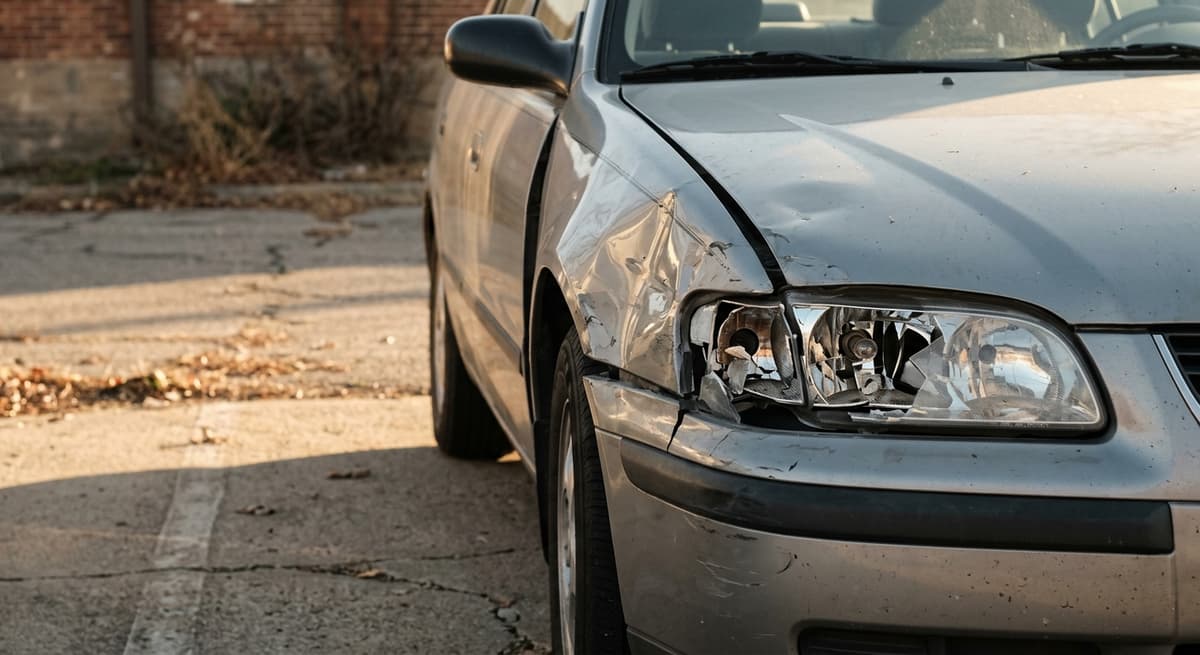
For example, if a jury awards $100,000 in damages but finds you 35% at fault, your net recovery is reduced to $65,000. If the jury finds you 51% or more at fault, you recover nothing. The 51% bar means that as long as you are not more than equally at fault (50% or less), you may still recover a proportionally reduced award. This rule applies in all negligence actions, including multi-vehicle crashes where the fault of every party is compared and apportioned. Because New Hampshire does not require insurance, partial-fault scenarios can raise real collection concerns if the at-fault driver is uninsured, making UM/UIM coverage especially valuable.
Minimum car insurance in New Hampshire
New Hampshire stands apart from every other state by not mandating that drivers carry liability auto insurance as a condition of registering or operating a vehicle. Instead, RSA chapter 264 imposes a post-accident financial-responsibility framework: any driver involved in an accident, conviction, or other triggering event must demonstrate the ability to "respond in damages" at the statutory minimum limits or face suspension of driving privileges and registration.
When a policy is carried or when a driver is ordered to file proof of financial responsibility (including an SR-22), the minimum limits are 25/50/25 under RSA 264:20: $25,000 bodily injury per person, $50,000 bodily injury per accident, and $25,000 property damage. These figures describe the minimum that must be shown once coverage is required or purchased; they are not a universal carry mandate.
Every auto policy that IS issued in New Hampshire must include two additional protections. Under RSA 264:15, no policy may be delivered without uninsured/underinsured motorist (UM/UIM) coverage at limits at least equal to the policy's bodily-injury liability limits (minimum 25/50). On the primary policy that coverage is automatic and cannot be rejected at any level: when an insured buys liability limits above the RSA 259:61 minimum, RSA 264:15 makes the uninsured motorist limits automatically equal the liability limits elected. The written-rejection option in that section reaches only umbrella or excess policies, so a named insured may decline uninsured motorist coverage on an excess layer but not on the underlying policy. Under RSA 264:16, any private passenger policy issued in New Hampshire must also include at least $1,000 in medical payments (MedPay) coverage per person. The statute contains no rejection or waiver provision, so MedPay is not something an insured can decline on a private passenger policy. What paragraph IV lets the insured choose is only which coverage to bill, MedPay or health insurance, with no duplicate payment for the same expense. Paragraph V carves out commercial policies insuring more than 4 automobiles and policies covering a garage, sales agency, repair shop, service station, public parking operation, or trucking operation. Because insurance is optional and a significant share of NH drivers choose to go without, these UM/UIM and MedPay protections are particularly important for anyone who does choose to carry a policy.
How long you have to file: the statute of limitations
New Hampshire gives car accident victims 3 years to file a personal-injury or property-damage lawsuit from the date of the crash. This deadline is set by RSA 508:4, which establishes a 3-year limitations period for all personal actions, including negligence claims arising from auto accidents. There is no shorter special limitation period for motor-vehicle tort claims; the same 3-year window applies to both bodily injury and property damage.

A discovery-rule exception can toll the clock in some cases, delaying the start of the limitations period until the plaintiff discovers, or reasonably should have discovered, both the injury and its causal connection to the defendant's conduct. This exception is most relevant in cases involving latent injuries that are not immediately apparent after the collision. Regardless of whether the discovery rule applies, waiting to consult an attorney increases the risk of losing evidence, missing witnesses, and running out of time.
For more on New Hampshire's limitation rules, see our New Hampshire statute of limitations page.
What a New Hampshire car accident claim is worth
The value of a New Hampshire car accident claim depends on your economic damages, your non-economic damages, and any reduction from the fault assigned to you under the modified comparative negligence rule. Economic damages include all verifiable monetary losses: emergency medical care, surgery, rehabilitation, future medical costs, lost wages, lost earning capacity, and vehicle repair or replacement. Non-economic damages cover pain and suffering, emotional distress, loss of enjoyment of life, and permanent scarring or disability.
Because New Hampshire does not mandate insurance, the practical value of a claim is directly tied to the at-fault driver's financial position. A driver who chose to go uninsured remains personally liable, but collecting a judgment against an uninsured individual is often difficult. Your own UM/UIM coverage (mandatory in any policy you carry) is frequently the most reliable source of recovery when the at-fault driver is uninsured or underinsured. For insured defendants, the 25/50/25 statutory minimums are relatively modest; serious injuries can quickly exceed those caps, again placing the burden on your own UM/UIM and MedPay policies.
Use our New Hampshire car accident settlement calculator to model potential damages ranges based on injury severity, your share of fault, and available insurance coverage.
What to do after a car accident in New Hampshire
The steps you take immediately after a New Hampshire car accident can directly affect the strength of your claim.

Stay safe and call for help. Move to a safe location if you can do so without aggravating injuries. Call 911 if anyone is hurt, if property damage is significant, or if a driver appears impaired. New Hampshire law requires drivers to stop, render aid, and exchange information after any collision involving injury or damage.
Document the scene. Photograph all vehicles from multiple angles, road and weather conditions, traffic controls, skid marks, debris fields, and any visible injuries. Collect the name, contact information, driver's license number, and any insurance information (if they have it) from every driver involved. Get contact information from witnesses before they leave.
Identify whether the other driver carries insurance. Because New Hampshire does not require insurance, confirming whether the at-fault driver has a policy is critical. If they are uninsured, your own UM/UIM coverage may be your primary recovery source.
Seek medical attention promptly. See a doctor as soon as possible even if you feel fine initially. Concussions, whiplash, and soft-tissue injuries often present symptoms hours or days after impact. A timely medical record is essential for connecting your injuries to the crash and for calculating your damages.
Preserve evidence and notify your insurer. Report the accident to your own insurer promptly and accurately. Keep all medical bills, repair estimates, and records of time missed from work. Photograph injuries over time to document their progression.
Consult an attorney before accepting any settlement. Insurance adjusters serve the insurer's interests, not yours. Since the adjuster works for the insurer, have a New Hampshire personal-injury attorney value your damages in a free claim review and handle the negotiation (attorney advertising). Many work on a contingency-fee basis, so there is no upfront cost.
For related New Hampshire driving laws, see our New Hampshire hit-and-run laws page.
This article is general legal information, not legal advice. Car accident law varies by state and changes, and settlement values depend on the specific facts. For advice about a specific crash, consult a licensed attorney in New Hampshire.
Related pages:
- New Hampshire Car Accident Settlement Calculator
- New Hampshire Hit-and-Run Laws
- Car Accident Laws by State: Hub
- New Hampshire Statute of Limitations
More New Hampshire Laws
- New Hampshire Dashcam Laws
- New Hampshire Hit and Run Laws
- New Hampshire Slip and Fall Laws
- New Hampshire Statute of Limitations
- New Hampshire Workers Compensation Laws
Frequently Asked Questions
Is New Hampshire a no-fault state?
No. New Hampshire is a pure at-fault (tort) state with no no-fault or PIP system. The at-fault driver is liable for the other party's injuries and property damage. There is no injury threshold to clear before suing for pain and suffering. New Hampshire is not one of the 12 states with mandatory PIP.
Is New Hampshire an at-fault state?
Yes. New Hampshire is an at-fault state. The driver who causes the crash bears liability for bodily injury and property damage. Injured victims file claims directly against the at-fault driver's liability insurer, or against their own UM/UIM policy if the at-fault driver has no insurance, which is common given that NH does not require drivers to carry liability coverage.
Does New Hampshire require car insurance?
No. New Hampshire is the only state that does not mandate liability auto insurance. Instead, RSA chapter 264 imposes a post-accident financial-responsibility obligation. An uninsured driver who causes an accident is personally liable for the full amount of the damages, and faces license and registration suspension unless he can show ability to respond in damages at 25/50/25. RSA 264:20 sets that 25/50/25 figure as the proof-of-financial-responsibility threshold, not as a ceiling on what an injured person can recover.
What is the statute of limitations for a car accident in New Hampshire?
Three years from the date of the crash under RSA 508:4. The same 3-year window applies to both personal-injury and property-damage claims. A limited discovery-rule exception can toll the clock if an injury is not immediately apparent, but waiting significantly reduces your ability to gather evidence and witness testimony.
Can I still recover if I was partly at fault in New Hampshire?
Yes, as long as your share of fault is 50% or less. New Hampshire follows modified comparative fault with a 51% bar under RSA 507:7-d. Your damages award is reduced by your percentage of fault. If you are found more than 50% at fault, you are completely barred from recovery.
What are the minimum insurance requirements in New Hampshire?
New Hampshire does not require drivers to carry insurance. However, when a policy is issued or proof of financial responsibility is required, the minimum limits are 25/50/25: $25,000 bodily injury per person, $50,000 per accident, and $25,000 property damage (RSA 264:20). Every issued policy must also include UM/UIM coverage at the liability limits (RSA 264:15) and, on a private passenger policy, at least $1,000 in medical payments coverage per person (RSA 264:16), which the statute does not permit the insured to reject.
How much is my New Hampshire car accident claim worth?
Your claim value depends on economic damages (medical bills, lost wages, property damage), non-economic damages (pain and suffering, disability), your percentage of fault under the 51% comparative-fault bar, and whether the at-fault driver is insured. Because NH does not mandate insurance, your own UM/UIM policy is often critical. Use our New Hampshire car accident settlement calculator for a personalized estimate.
Updates
Corrected the New Hampshire insurance section: the $1,000 medical payments coverage required by RSA 264:16 cannot be rejected in writing, uninsured motorist coverage can only be rejected on an umbrella or excess policy and never on the underlying one, and an uninsured at-fault driver is personally liable for the full damages rather than only the 25/50/25 financial-responsibility minimums.
Independently fact-checked against the cited primary sources; governing law re-checked for recent changes
Reviewed and approved by an editor
The Law Behind This Article
This article rests on the statutory provisions below, held in our own legal record and retrieved from the official source. Tap a section to read the operative text.
New Hampshire Revised Statutes Annotated, TITLE LII ACTIONS, PROCESS, AND SERVICE OF PROCESS, CHAPTER 507 ACTIONS
§ 507:7-dComparative Fault.In forcecited in 7 of our articles
Contributory fault shall not bar recovery in an action by any plaintiff or plaintiff's legal representative, to recover damages in tort for death, personal injury or property damage, if such fault was not greater than the fault of the defendant, or the defendants in the aggregate if recovery is allowed against more than one defendant, but the damages awarded shall be diminished in proportion to the amount of fault attributed to the plaintiff by general verdict. The burden of proof as to the existence or amount of fault attributable to a party shall rest upon the party making such allegation.
Official text (excerpt) · last checked 2026-09-14 · Read the full text in our law library · Verify at gc.nh.gov
Cited in 24 court opinions in our collectionLatest citing opinion in our collection: 2019
Opinions citing this section in our collection:
- Jaswell Drill Corp. v. General Motors Corp. (Supreme Court of New Hampshire 1987, 129 N.H. 341)“…tion Among Tortfeasors Act construed in Coniaris. Compare RSA 507:7-d to -i with Colo. Rev. Stat. § 13-50.…”
- Allen v. Dover Co-Recreational Softball League (Supreme Court of New Hampshire 2002, 148 N.H. 407)“…he legislature enacted the comparative fault statute. See RSA 507:7-d (1997). “The standard of review in co…”
- Hickingbotham v. Burke (Supreme Court of New Hampshire 1995, 140 N.H. 28)“…ility should be governed by the rules of comparative fault. RSA 507:7-d (Supp. 1994); Batten By Batten v. Bobo…”
Identified automatically from the court opinions citing this section — not a ranking of which case controls.
Also relied on in: Truck Accident Laws in New Hampshire (2026): Deadlines & Liability, Motorcycle Accident Laws in New Hampshire (2026): Deadlines, New Hampshire Slip and Fall Laws: Proving Premises Liability
New Hampshire Revised Statutes Annotated, TITLE XXI MOTOR VEHICLES, CHAPTER 264 ACCIDENTS AND FINANCIAL RESPONSIBILITY
§ 264:20Amount of Proof of Financial Responsibility.In force
Proof of financial responsibility shall mean proof of ability to respond in damages for any liability thereafter incurred, as a result of accidents which occur in New Hampshire, arising out of the ownership, maintenance, control, or use of a motor vehicle, trailer, or semi-trailer in the amount of $25,000 because of bodily injury or death to any one person; and subject to said limit respecting one person, in the amount of $50,000 because of bodily injury to or death to 2 or more persons in any one accident, and in the amount of $25,000 because of injury to and destruction of property in any one accident. Whenever required under this chapter such proof in such amounts shall be furnished for each motor vehicle, trailer or semi-trailer registered by such person.
Official text (excerpt) · last checked 2026-07-29 · Read the full text in our law library · Verify at gc.nh.gov
Cited in 3 court opinions in our collectionLatest citing opinion in our collection: 2006
Opinions citing this section in our collection:
- Progressive Northern Insurance v. Enterprise Rent-A-Car Co. of Boston, Inc. (Supreme Court of New Hampshire 2003, 149 N.H. 489)“…to two or more persons, and $25,000 due to property damage. RSA 264:20 (1993). As RSA 264:20 states, proof of…”
- Cannon v. Maine Bonding & Casualty Co. (Supreme Court of New Hampshire 1994, 138 N.H. 365)“…sing out of the use of this car. See RSA 259:61,1 (1993); RSA 264:20 (1993). Under the Maine Bonding insuran…”
- Warner v. Clarendon Insurance (Supreme Court of New Hampshire 2006, 154 N.H. 331)“…inancial responsibility limit in New Hampshire was $25,000. RSA 264:20 (2004). Warner argues that STAR-…”
Identified automatically from the court opinions citing this section — not a ranking of which case controls.
§ 264:15Uninsured or Hit-and-Run Motor Vehicle Coverage.In force
I. Except as provided in paragraph I-a, no policy shall be issued under the provisions of RSA 264:14, with respect to a vehicle registered or principally garaged in this state, unless coverage is provided therein or supplemental thereto at least in amounts and limits prescribed for bodily injury or death for a liability policy under this chapter, for the protection of persons insured thereunder who are legally entitled to recover damages from owners or drivers of uninsured motor vehicles, and hit-and-run vehicles because of bodily injury, sickness, or disease, including death resulting therefrom. When an insured elects to purchase liability insurance in an amount greater than the minimum coverage required by RSA 259:61, the insured's uninsured motorist coverage shall automatically be equal in amounts and limits to the liability coverage elected. For the purposes of this paragraph umbrella or excess policies that provide excess limits to policies described in RSA 259:61 shall also provide uninsured motorist coverage equal to the limits of liability purchased, unless the named insured rejects such coverage in writing.
Official text (excerpt) · last checked 2026-07-29 · Read the full text in our law library · Verify at gc.nh.gov
Cited in 47 court opinions in our collectionLatest citing opinion in our collection: 2024
Opinions citing this section in our collection:
- Ellis v. Royal Insurance (Supreme Court of New Hampshire 1987, 129 N.H. 326)“…and involves issues of choice of law, the applicability of RSA 264:15,1, to an insurance policy neither issue…”
- United Services Automobile Ass'n v. Wilkinson (Supreme Court of New Hampshire 1989, 132 N.H. 439)“…e purpose of the uninsured motorist coverage requirement of RSA 264:15, I dissent. A plain reading of RSA 259:…”
- Matarese v. New Hampshire Municipal Ass'n Property-Liability Insurance Trust, Inc. (Supreme Court of New Hampshire 2002, 147 N.H. 396)“…amages from owners or drivers of uninsured motor vehicles.” RSA 264:15 (1993). The question on appeal is whe…”
Identified automatically from the court opinions citing this section — not a ranking of which case controls.
§ 264:16Medical Payments.In force
I. Any motor vehicle liability policy, as defined in RSA 259:61, covering a private passenger automobile and issued with respect to any motor vehicle registered or principally garaged in this state, shall provide medical payments coverage therein or supplemental thereto in an amount equal to or greater than $1,000 per person for reasonable medical costs incurred as a result of injuries sustained in an accident involving the insured vehicle by the driver and passengers in said vehicle. Such coverage shall apply only to medical costs incurred during 3 years following the date the injuries are sustained and the injured driver or passenger shall not be responsible for medical costs that have been determined by the motor vehicle liability insurer to not be reasonable. II. A health carrier, as defined in RSA 420-G:2, VIII, shall not coordinate benefits against medical payments coverage. III. Medical payments coverage shall not be assignable to any health care provider. IV.
Official text (excerpt) · last checked 2026-07-29 · Read the full text in our law library · Verify at gc.nh.gov
Cited in 3 court opinions in our collectionLatest citing opinion in our collection: 2018
Opinions citing this section in our collection:
- Brian Langevin & a. v. Travco Insurance Company (Supreme Court of New Hampshire 2018, 184 A.3d 80)“…tute a “duplicate payment” contrary to the language of both RSA 264:16, IV (2014) and the plaintiffs’ automobi…”
- Fadden v. Metropolitan Property & Casualty Insurance (Supreme Court of New Hampshire 1994, 138 N.H. 654)“…pensation benefits were “equivalent medical coverage” under RSA 264:16, 11(b) (1993); and (2) that Jolicoeur…”
- Murley v. Hanover Insurance (Supreme Court of New Hampshire 2007, 155 N.H. 540)“…ured, medical costs under coverage provided for pursuant to RSA 264:16.” In Bertolami , had the mother’s…”
Identified automatically from the court opinions citing this section — not a ranking of which case controls.
New Hampshire Revised Statutes Annotated, TITLE LII ACTIONS, PROCESS, AND SERVICE OF PROCESS, CHAPTER 508 LIMITATION OF ACTIONS
§ 508:4Personal Actions.In forcecited in 12 of our articles
I. Except as otherwise provided by law, all personal actions, except actions for slander or libel, may be brought only within 3 years of the act or omission complained of, except that when the injury and its causal relationship to the act or omission were not discovered and could not reasonably have been discovered at the time of the act or omission, the action shall be commenced within 3 years of the time the plaintiff discovers, or in the exercise of reasonable diligence should have discovered, the injury and its causal relationship to the act or omission complained of. II. Personal actions for slander or libel, unless otherwise provided by law, may be brought only within 3 years of the time the cause of action accrued.
Official text (excerpt) · last checked 2026-09-08 · Read the full text in our law library · Verify at gc.nh.gov
Cited in 304 court opinions in our collectionLatest citing opinion in our collection: 2025
Opinions citing this section in our collection:
- Kelleher v. Marvin Lumber & Cedar Co. (Supreme Court of New Hampshire 2005, 152 N.H. 813)“…96, and, therefore, even if the discovery rule exception to RSA 508:4, I (1997) applied, the plaintiff still…”
- Beane v. Dana S. Beane & Co., P.C. (Supreme Court of New Hampshire 2010, 160 N.H. 708)“…ver, because in that case we interpreted a prior version of RSA 508:4 (Supp. 1973), which did not expressly s…”
- Keeton v. Hustler Magazine, Inc. (Supreme Court of New Hampshire 1988, 131 N.H. 6)“…utes of limitations for many causes of action, see, e.g., RSA 508:4 (Supp. 1987), and our liberal discovery…”
Identified automatically from the court opinions citing this section — not a ranking of which case controls.
Also relied on in: Medical Malpractice Laws in New Hampshire (2026): Deadlines & Caps, New Hampshire Statute of Limitations: Filing Deadlines by Case Type, New Hampshire Wrongful Death Laws (2026): Deadlines
New Hampshire Revised Statutes Annotated, TITLE XXI MOTOR VEHICLES, CHAPTER 259 WORDS AND PHRASES DEFINED
§ 259:61Motor Vehicle Liability Policy.In force
"Motor vehicle liability policy" shall mean a policy of liability insurance which provides: I. Indemnity for or protection to the insured and any person responsible to the insured for the operation of the insured's motor vehicle, trailer, or semi-trailer who has obtained possession or control thereof with the insured's express or implied consent, against loss by reason of the liability to pay damages to others for damage to property, except property of others in charge of the insured or his or her employees, or bodily injuries, including death at any time resulting therefrom, accidentally sustained during the term of said policy by any person other than the insured, or employees of the insured actually operating the motor vehicle or such other persons who are entitled to payments or benefits under the provisions of any workers' compensation act arising out of the ownership, operation, maintenance, control, or use within the limits of the United States of America, its territories or possessions, and the Dominion of Canada of such motor vehicle, trailer, or semi-trailer, to the amount or limit of at least $25,000 on account of injury to or death of any one person, and subject to…
Official text (excerpt) · last checked 2026-07-29 · Read the full text in our law library · Verify at gc.nh.gov
Cited in 32 court opinions in our collectionLatest citing opinion in our collection: 2020
Opinions citing this section in our collection:
- United Services Automobile Ass'n v. Wilkinson (Supreme Court of New Hampshire 1989, 132 N.H. 439)“…ge requirement of RSA 264:15, I dissent. A plain reading of RSA 259:61, as well as both the legislative intent…”
- Rivera v. Liberty Mutual Fire Insurance (Supreme Court of New Hampshire 2012, 163 N.H. 603)“…in an amount greater than the minimum coverage required by RSA 259:61, the insured’s uninsured motorist cover…”
- Dionne v. City of Manchester (Supreme Court of New Hampshire 1991, 134 N.H. 225)“…part: “No motor vehicle liability policy, as defined in RSA 259:61, shall be issued or delivered in the s…”
Identified automatically from the court opinions citing this section — not a ranking of which case controls.
Search our full record of US law — 2.1 million sections, every state + federal →
Sources and References
- RSA 264:15 — uninsured/underinsured motorist coverage required in any issued policy(gc.nh.gov).gov
- RSA 264:16 — medical payments coverage(gc.nh.gov).gov
- RSA 264:20 — amount of proof, 25/50/25 minimum limits(gc.nh.gov).gov
- RSA 259:61 — definition of proof of financial responsibility(gc.nh.gov).gov
- RSA 507:7-d — modified comparative fault (51% bar)(gc.nh.gov).gov
- RSA 508:4 — 3-year personal-injury statute of limitations(gc.nh.gov).gov
- RSA 264:16, Medical Payments (New Hampshire General Court): private passenger policies must carry at least $1,000 per person in medical payments coverage, with no rejection or waiver provision(gc.nh.gov)
- RSA 264:15, Uninsured or Hit-and-Run Motor Vehicle Coverage (New Hampshire General Court): uninsured motorist limits automatically match the liability limits elected; written rejection applies only to umbrella or excess policies(gc.nh.gov)
- RSA 264:20, Amount of Proof of Financial Responsibility (New Hampshire General Court): defines proof of ability to respond in damages at $25,000/$50,000/$25,000(gc.nh.gov)
- RSA 507:7-d, Comparative Fault (New Hampshire General Court): recovery barred if the claimant's fault is greater than the combined fault of the defendants, otherwise damages reduced in proportion to fault(gc.nh.gov)
Paid attorney referral. RecordingLaw may receive compensation when you use an attorney-help link. RecordingLaw is not a law firm. Submitting a request does not guarantee that an attorney will accept your case and does not create an attorney-client relationship.