
Spain
Recording Laws in Spain: When You Can Record a Conversation (2026)
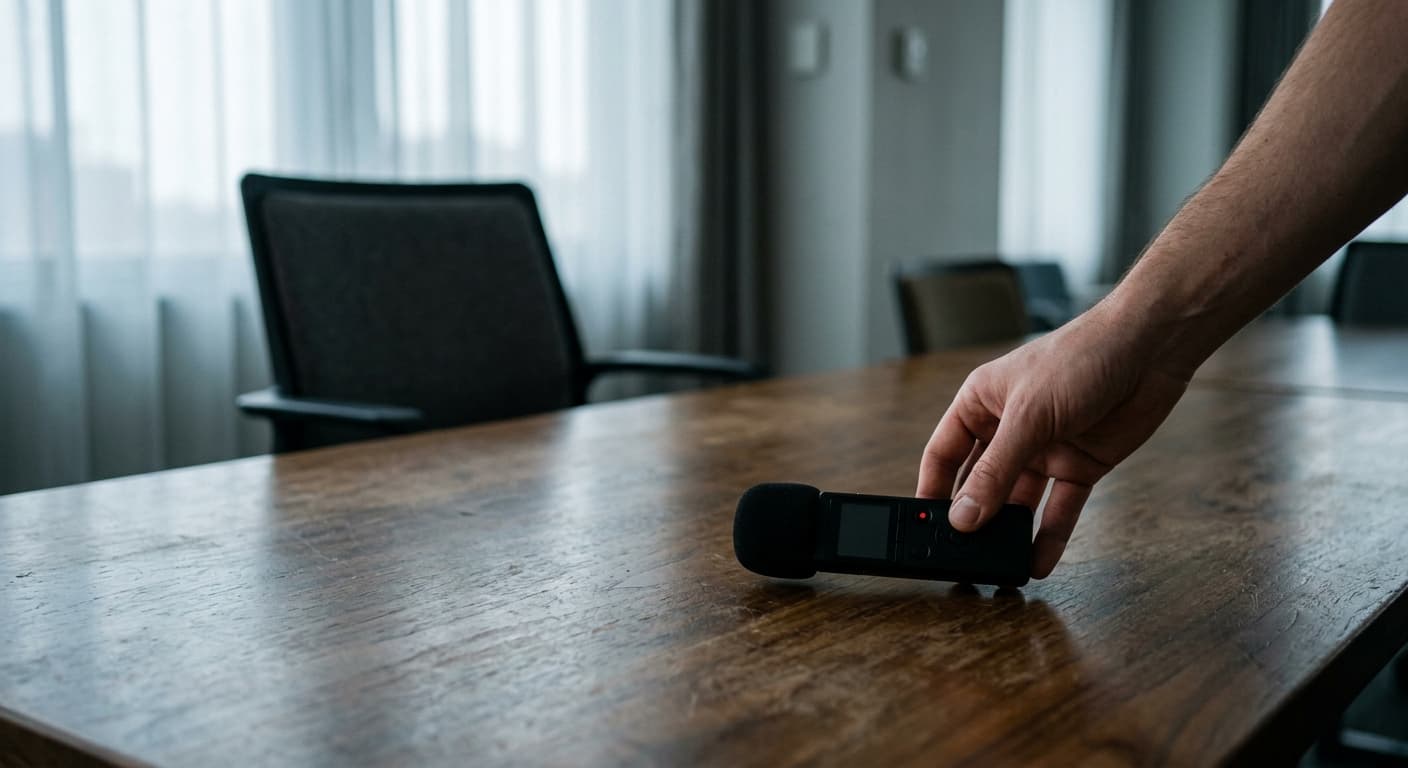
Recording is the topic this site was built on, and Spain has one of the clearest rules anywhere, once you separate the two situations people constantly blur. Recording a conversation you are part of is lawful. Recording other people's private conversation, that you are not part of, is a crime. Almost every real question is an application of that line.
Information last verified on 23 July 2026. This page provides general legal information about Spanish law and does not constitute legal advice in an individual case.
The one line that decides everything: participant or third party
The whole subject turns on whether you are IN the conversation or listening to someone else's.
- If you are a participant (interlocutor), you may record it. The Tribunal Constitucional held in STC 114/1984 that recording a conversation you take part in does not breach the secreto de las comunicaciones in art. 18.3 of the Constitution, because there is no "secret" as against the person the message is addressed to. This is settled doctrine, not a grey area.
- If you are a third party capturing a private conversation between others, that is exactly what art. 18.3 protects against, and doing it with technical means is a crime.
That single distinction, participante versus tercero, is the map for the whole cluster.
Recording others: the art. 197 crime
Art. 197.1 of the Código Penal punishes whoever, to discover the secrets or violate the privacy of another and without their consent, intercepts their communications or uses listening or recording devices, with prisión de 1 a 4 años y multa de 12 a 24 meses. If the recording is then spread or revealed, art. 197.3 raises the penalty to 2 a 5 años.
Two features matter. First, it is a delito doloso with a specific intent: the aim of discovering secrets or violating privacy. Second, that intent is why merely capturing people incidentally in a public space, such as passers-by in the background of a street video, is generally not this crime. The recording-conversations page works through exactly where the line falls.
Using a recording as evidence
Because a participant's recording is lawfully obtained, it is generally admissible as prueba in court, and Spanish tribunals routinely accept it in civil, labour, criminal, administrative and family matters. That is what makes recording a boss, a landlord or a counterparty so useful in a dispute. There are limits, mainly that the recording must be authentic and not obtained through coercion or a trick that vitiates it, and the recordings-as-evidence page sets them out.
The limit even a lawful recording has
Making a recording lawfully is not the same as being free to do anything with it. Revealing or publishing a private conversation, even one you lawfully recorded, can itself breach art. 197 or the civil protection of honor, privacy and image in Ley Orgánica 1/1982. So the safe mental model is two separate questions: may I record this (participant, yes), and may I publish it (often a separate, stricter answer).
This cluster is the Spain-deep version of the existing Spain recording laws overview; start there for the country summary, and use these pages for the detail.
This page is general legal information about Spanish recording and privacy law and does not constitute legal advice in an individual case. The controlling texts are the current versions in the BOE and the resolutions of the Tribunal Constitucional.
Frequently Asked Questions
Is it legal to record a conversation in Spain?
Yes, if you are one of the people in the conversation. The Tribunal Constitucional held in STC 114/1984 that recording a conversation you take part in does not breach the secreto de las comunicaciones, because there is no secret as against the person the message is addressed to. Recording a private conversation between other people, that you are not part of, is a different matter and can be a crime.
What happens if I record other people's private conversation?
That can be a crime under art. 197 of the Código Penal (descubrimiento y revelación de secretos), punishable with 1 to 4 years in prison plus a fine, and more if the recording is then spread. The offence requires the intent to discover secrets or violate privacy, which is why incidentally capturing people in a public place is usually not this crime, though publishing such footage can breach their civil rights.
Can I use a recording as evidence in court in Spain?
Generally yes, if you made it as a participant in the conversation, because it was lawfully obtained. Spanish courts accept participant recordings as evidence in civil, labour, criminal and family cases, provided the recording is authentic and was not obtained through coercion or a trick that vitiates it.
Can I publish a recording I lawfully made?
Not always. Making a recording lawfully as a participant is a separate question from publishing it. Revealing or publishing a private conversation can itself breach art. 197 or the civil protection of honor, privacy and image under Ley Orgánica 1/1982, so publication is judged by a stricter standard than recording.
Sources and References
- Constitución Española, art. 18 (derecho al honor, a la intimidad, a la propia imagen y al secreto de las comunicaciones)(boe.es).gov
- Código Penal (LO 10/1995), art. 197 (descubrimiento y revelación de secretos)(boe.es).gov
- Tribunal Constitucional, STC 114/1984 (grabación por un interlocutor y secreto de las comunicaciones)(tribunalconstitucional.es).gov
- Ley Orgánica 1/1982, de protección civil del derecho al honor, a la intimidad personal y familiar y a la propia imagen(boe.es).gov