
South Africa
Trespassing Law in South Africa: The Offence and the PIE Boundary (2026)
Independently fact-checked against primary sources (last audited July 23, 2026). · 2 primary sources cited on this page. How we verify our legal content
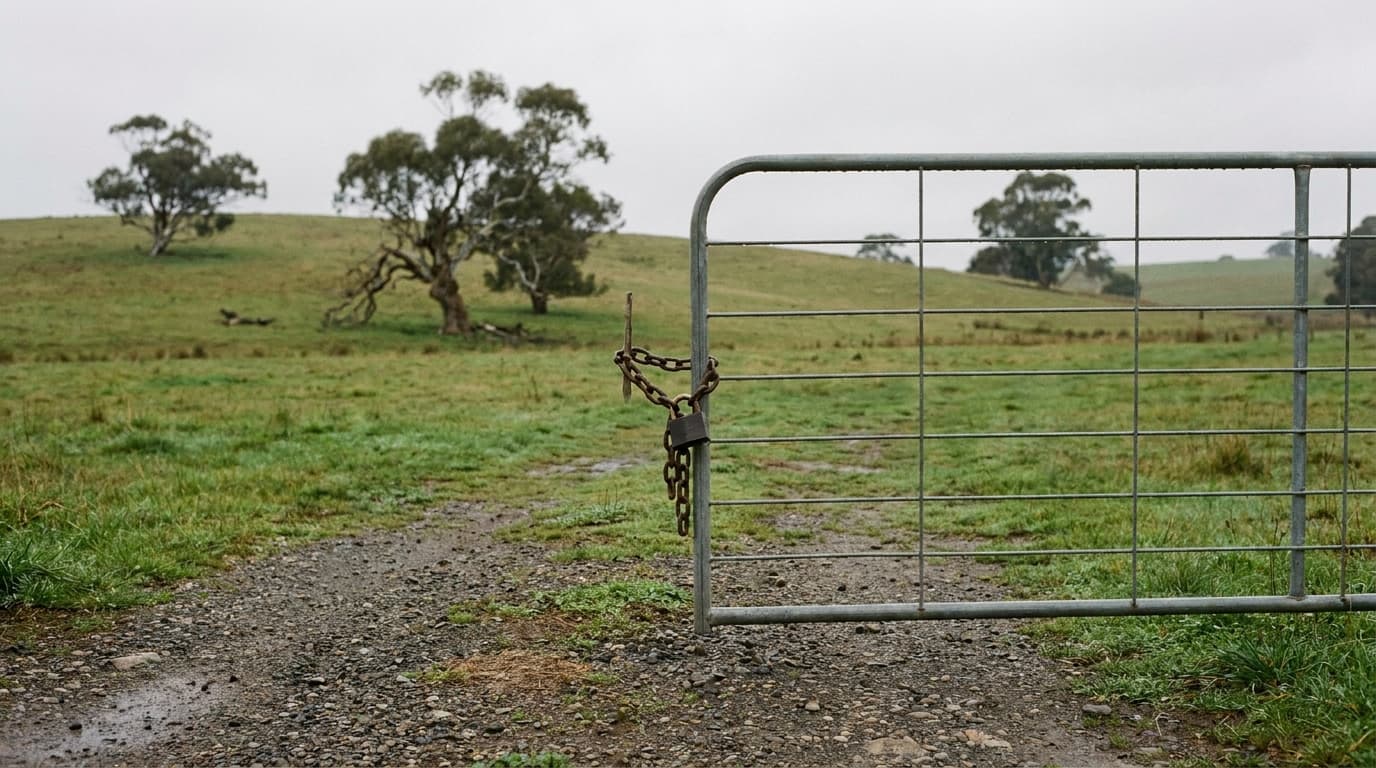
Trespassing is a criminal offence in South Africa, but the law draws a hard line the moment someone has actually moved into a home on the land: from that point on, it is no longer a trespass matter, it becomes an eviction matter governed by a completely different Act.
Information last verified on 23 July 2026. This page provides general legal information about South African law and does not constitute legal advice in an individual case.
The Offence Under the Trespass Act
Section 1(1) of the Trespass Act 6 of 1959 defines the offence:
"Any person who without the permission (a) of the lawful occupier of any land or any building or part of a building; or (b) of the owner or person in charge of any land or any building or part of a building that is not lawfully occupied by any person, enters or is upon such land or enters or is in such building or part of a building, shall be guilty of an offence unless he has lawful reason to enter or be upon such land or enter or be in such building or part of a building."
The offence has three moving parts: entering or being on the land or in the building, the absence of permission from whoever controls it, and the absence of a lawful reason to be there. All three need to be present.
Intention Is Required
A trespass conviction is not automatic just because someone was found on land without permission. In Mosele v S (A351/2014) [2015] ZAGPPHC 240, the High Court quoted the earlier authority R v Venter for the point that "a charge of trespass under the Act cannot succeed unless there is mens rea. The form of culpability required for the crime is intention." The Mosele conviction was overturned on appeal because the trial court had wrongly shifted the burden onto the accused to disprove a lawful reason for being there, a reverse onus the Constitutional Court has held unconstitutional in other contexts. The practical point: a bare claim that someone was on your land without permission is not automatically a conviction if that person has a reasonably possible innocent explanation.
The Current Penalty
The Trespass Act as originally enacted in 1959 fixed the penalty at a fine not exceeding twenty five pounds or imprisonment not exceeding three months. That figure is historical and is not the current law.
Two independent sources confirm the current penalty is stated as a fine of up to R2,000, imprisonment of up to two years, or both. A real 2015 Magistrates' Court sentence recorded in Mosele v S imposed "a fine of R2000.00 (Two Thousand Rand) or two years imprisonment, R1000.00 (One Thousand Rand) thereof was suspended for a period of three years." Separately, a Department of Tourism compliance guidance document states plainly that trespassing "will [make a person] guilty of a criminal offence and liable to a fine of up to R2 000 and/or imprisonment for a period for up to 2 years." The exact Act that amended the original 1959 penalty to this current figure could not be independently traced, so this page presents the R2,000 and two year figures as currently stated in these two sources, rather than tying them to a specific amending provision.
The PIE Boundary: When It Is Not Trespassing
This is the single most important distinction on this page. The Trespass Act covers bare entry onto land or into a building. It does not cover removing someone who has already erected a structure and moved into it as a home. Once that has happened, that person becomes an "unlawful occupier" for the purposes of the Prevention of Illegal Eviction from and Unlawful Occupation of Land Act 19 of 1998 (PIE), which defines an unlawful occupier as a person who occupies land without the consent of the owner or person in charge, or without any other right in law to occupy it. PIE requires a court order, with prescribed notice and a hearing that weighs the occupier's circumstances, before any eviction can happen. There is no provision in PIE for simply arresting or removing an unlawful occupier the way a trespasser can be arrested.
Guidance associated with the South African Police Service draws the same line in practice: a person still in the process of erecting a structure and not yet living in it has not yet become a resident, so a trespass charge may still be appropriate, but once a structure has been erected and is ready for occupation, the landowner must go to court for an eviction order rather than relying on the Trespass Act. This distinction protects a settled occupier from being wrongly treated as a trespasser to sidestep PIE's protections. For the full eviction process, including the notice requirements and the justice and equity test a court applies, see Eviction and the PIE Act.
Civil Remedies: Interdict and Damages
Separately from any criminal charge, a landowner has an ordinary civil remedy against a trespasser under the general law of property and delict: an interdict to stop repeated or continuing trespassing, and a claim for damages where the trespass has actually caused harm. This is standard, general doctrine rather than a rule tied to one specific case, and it can be pursued whether or not a criminal case is also opened.
Practical Scenarios
A visitor or former partner who will not leave when asked. Once permission to be on your property is withdrawn and the person has never actually lived there, remaining after being told to leave can fall within the Trespass Act's language, being on land or in a building without permission and without a lawful reason, subject always to the State proving intention. This is different from someone who has actually been living in the home; see the PIE boundary above.
A neighbour repeatedly cutting across your land. Entering land without the permission of the lawful occupier, and without a lawful reason, is the core conduct the Act targets. A landowner facing this can pursue both a criminal complaint and a civil interdict to stop it.
Hunting, fishing or foraging on private land without permission. Entering someone's property to hunt, fish or forage without the landowner's permission falls within the same "enters or is upon such land" language, separately from whatever wildlife, conservation or fishing-specific legislation may also apply to the activity itself.
Related Reading
Where someone has already been forcibly removed from possession rather than merely entering land, the mandament van spolie may be the applicable remedy; see Spoliation: the remedy for being locked out or cut off. For the eviction process that applies once someone has moved into a home on your land, see Eviction and the PIE Act. For the wider section, see Everyday Law in South Africa, and for the full site, South Africa Laws.
This guide is general legal information, not legal advice. For advice on your own situation, consult an attorney, or contact Legal Aid South Africa (0800 110 110) if you cannot afford one.
Frequently Asked Questions
What counts as trespassing under South African law?
Entering or being on someone's land or in their building without the permission of the lawful occupier, or the owner if it is unoccupied, and without a lawful reason to be there, is the offence set out in section 1(1) of the Trespass Act 6 of 1959.
Do I need to prove someone meant to trespass?
Yes. Trespassing requires intention. A court cannot convict simply because someone was on the land without permission if they raise a reasonably possible innocent explanation, as the overturned conviction in Mosele v S (2015) shows.
What is the penalty for trespassing in South Africa?
Sources currently state a fine of up to R2,000, imprisonment of up to two years, or both. The original 1959 penalty was different and has since been updated, though the exact amending Act could not be traced for this page.
Can a person living in a house be arrested for trespassing?
No. Once someone has erected a structure and moved into it as a home, they become an unlawful occupier under the PIE Act, and can only be removed through a court eviction order, not a trespass arrest.
Is entering someone's land to hunt or fish without permission trespassing?
Generally yes: entering land without the lawful occupier's permission and without a lawful reason falls within the Trespass Act, separately from any wildlife, conservation or fishing legislation that may also apply.
Can I sue a trespasser for damages instead of calling the police?
Yes. A landowner has a separate civil remedy: an interdict to stop repeated trespassing, or a damages claim where the trespass actually caused harm, independent of any criminal case.
Updates
Independently fact-checked against the cited primary sources
Sources and References
- Trespass Act 6 of 1959, section 1 (the offence) and section 2 (the original penalty, since updated)(gov.za).gov
- Mosele v S (A351/2014) [2015] ZAGPPHC 240 (29 April 2015) (intention required for a trespass conviction, and a real R2,000 or two year sentence)(saflii.org)
- Prevention of Illegal Eviction from and Unlawful Occupation of Land Act 19 of 1998, section 1 (definition of unlawful occupier) and section 4 (court order required for eviction)(dhs.gov.za).gov
- Eviction and the PIE Act: no court order, no eviction(recordinglaw.com)
- Spoliation: the remedy for being locked out or cut off(recordinglaw.com)