
Montana
Montana Laws on Recording Police: Your Rights and Legal Protections (2026)
Independently fact-checked against primary sources (last audited August 22, 2026). · Reviewed by the RecordingLaw editorial team. · Law checked current as of August 22, 2026. · 9 primary sources cited on this page. How we verify our legal content
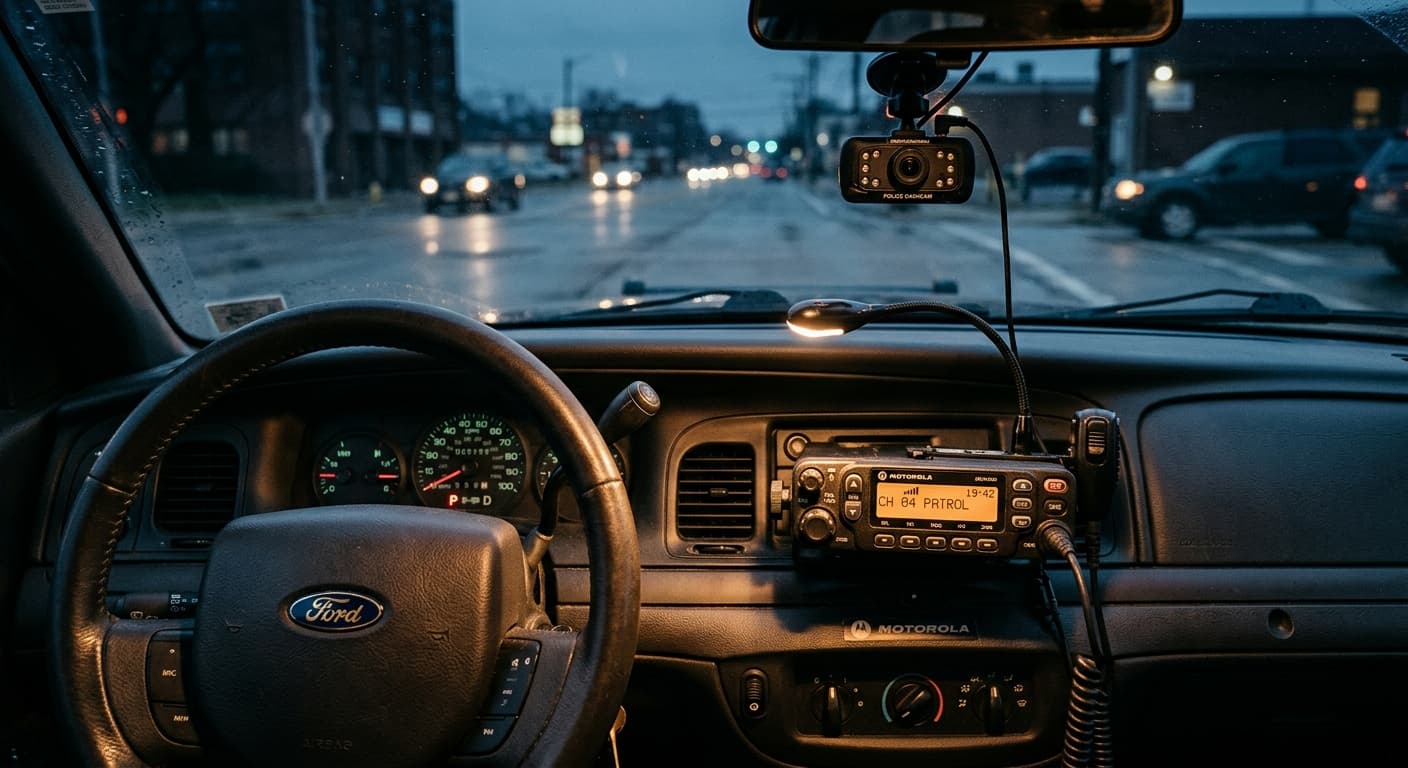
Montana law gives you the right to record on-duty police officers without consent or warning. Mont. Code Ann. 45-8-213(2)(a) explicitly exempts public officials and public employees performing official duties from the state's recording restrictions, and the Ninth Circuit has also recognized a First Amendment right to record law enforcement in public.
Montana provides some of the clearest statutory protections in the country for recording law enforcement officers. Unlike many states where the right to record police is established only through court decisions and constitutional interpretation, Montana has written this exception directly into its recording statute. Under MCA 45-8-213(2)(a), the prohibition on hidden recording does not apply to elected or appointed public officials or public employees performing their official duties.
This statutory exception, combined with First Amendment protections recognized by federal courts, gives Montana residents a strong legal foundation for recording police interactions.
The Statutory Exception: MCA 45-8-213(2)(a)
Montana's privacy in communications statute, MCA 45-8-213, generally prohibits recording conversations using hidden devices without all-party knowledge. However, subsection (2)(a) creates clear exceptions.
Who Is Covered by the Exception?
The exception applies to:
- Elected public officials: This includes the governor, state legislators, county commissioners, mayors, city council members, sheriffs, and other elected officeholders
- Appointed public officials: This includes appointed department heads, judges, and other officials serving in appointed positions
- Public employees: This includes police officers, state troopers, county deputies, firefighters, teachers, social workers, and any other government employees performing their official duties
What "Performing Official Duties" Means
The exception applies when the public official or employee is acting in their official capacity. For law enforcement, this includes:
- Conducting traffic stops
- Making arrests
- Responding to calls for service
- Conducting investigations
- Interacting with the public as part of patrol duties
- Testifying in court or at public hearings
- Operating at crime scenes
- Executing search warrants
The exception does not apply to off-duty officers engaged in personal activities. An off-duty officer at a social gathering is not performing official duties, and recording them in a private conversation would be subject to the standard consent requirements.
No Warning or Consent Required
This is an important distinction. Montana's general recording law allows recording after providing a warning under MCA 45-8-213(2)(a)(iii). But when recording public officials performing official duties, not even a warning is required. The public official exception is a separate, independent exemption that operates without any notice requirement.
You may record a police officer during a traffic stop without saying a word about the recording. You may record from a distance without approaching the officer. The recording is lawful under Montana state law as long as the officer is performing official duties.
First Amendment Right to Record Police

Beyond Montana's statutory protection, federal courts have recognized a constitutional right to record law enforcement.
Ninth Circuit Precedent
Montana falls within the jurisdiction of the Ninth Circuit Court of Appeals. The Ninth Circuit has recognized a clearly established First Amendment right to record police in two controlling decisions:
- Fordyce v. City of Seattle, 55 F.3d 436 (9th Cir. 1995): The court recognized that filming matters of public interest, including police activity, is protected by the First Amendment. This is the foundational Ninth Circuit decision on the right to record.
- Askins v. U.S. Dept. of Homeland Security, 899 F.3d 1035 (9th Cir. 2018): The court held that the First Amendment right to photograph and record matters of public concern is clearly established in the Ninth Circuit, making it actionable under 42 U.S.C. 1983 when officers unlawfully interfere.
Because the right is clearly established under these decisions, Montana residents whose recording is unlawfully suppressed by officers may have Section 1983 civil rights claims.
The constitutional right to record is grounded in the principle that the First Amendment protects the right to gather information about government officials performing their public duties. Recording police officers ensures government accountability and promotes the public interest in transparent law enforcement.
Scope of the Constitutional Right
The First Amendment right to record police generally applies when:
- You are in a public place or a location where you have a legal right to be
- You are recording officers performing official duties
- Your recording does not physically interfere with police operations
- You maintain a safe distance that does not impede the officers' ability to carry out their duties
What Officers Cannot Do

Ordering You to Stop Recording
Police officers in Montana generally cannot order you to stop recording when you are exercising your rights under MCA 45-8-213(2)(a) and the First Amendment. An officer who orders a citizen to stop recording official police activity acts without legal authority, as the Montana statute explicitly exempts such recording from the consent requirement.
However, officers can give lawful orders related to safety and scene management. An officer may direct you to move to a different location if your physical presence interferes with police operations. Complying with a lawful order to relocate is different from being ordered to stop recording.
Seizing or Destroying Recordings
The Fourth Amendment protects against unreasonable search and seizure. Officers may temporarily seize a phone or recording device, for example incident to an arrest, but they generally cannot:
- Search the phone's contents, view, or delete recordings without a warrant or your consent
- Order you to delete recordings as a condition of returning the device
- Retain the device longer than necessary to obtain a warrant when one is required for a search
The U.S. Supreme Court's decision in Riley v. California, 573 U.S. 373 (2014) established that police generally need a warrant to search a cell phone, even during an arrest. This protection extends to recordings stored on the device.
Retaliating Against You for Recording
Officers may not retaliate against individuals for exercising their right to record. Retaliation could take the form of:
- Arresting someone solely for recording
- Issuing citations in retaliation for recording
- Using force against someone who is lawfully recording
- Threatening criminal charges for the act of recording
Such retaliation may give rise to civil rights claims under 42 U.S.C. 1983, which allows individuals to sue government officials for violating their constitutional rights.
Recording vs. Interfering: Understanding the Line
Montana law distinguishes between lawful recording and unlawful interference with police operations.
What Constitutes Interference
Under MCA 45-7-302, a person commits the offense of obstructing a peace officer if they knowingly obstruct, impair, or hinder the enforcement of criminal law, prevention, or investigation of crime, or the execution of a legal process.
Actions that may constitute interference include:
- Physically blocking an officer's path or movement
- Entering a secured perimeter established by law enforcement
- Touching or grabbing an officer or their equipment
- Providing false information to interfere with an investigation
- Inciting a crowd against officers
What Does Not Constitute Interference
The following actions are generally not interference:
- Recording from a safe distance with a phone or camera
- Verbally identifying yourself as someone who is recording
- Asking questions of officers (though officers are not always required to answer)
- Refusing to stop recording when ordered to do so without legal basis
- Standing on a public sidewalk or other public area while recording
- Livestreaming police activity
The act of recording, by itself, is not interference. An officer who claims that the mere act of recording constitutes obstruction is misapplying the law.
Recording During Specific Police Encounters
Traffic Stops
You have the right to record a traffic stop in Montana:
- Begin recording before the officer approaches your vehicle, if possible
- You do not need to inform the officer that you are recording (no warning required under MCA 45-8-213(2)(a))
- Keep your hands visible and avoid movements that could be perceived as threatening
- If asked about a recording device, you may truthfully state that you are recording, but you are not legally required to volunteer this information
- Do not reach for your phone in a way that could be mistaken for reaching for a weapon
Arrests
Recording an arrest is protected activity:
- If you are witnessing an arrest, maintain a safe distance and record
- If you are the person being arrested, you may continue recording until physically unable to do so
- Officers may not delete your recordings during the arrest process
- If your phone is seized incident to arrest, officers still need a warrant to search its contents under Riley v. California
Protests and Demonstrations
Recording police at protests is strongly protected:
- The First Amendment protects both the right to protest and the right to record
- Officers may not single out individuals who are recording for arrest or dispersal
- If a dispersal order is given, you must comply with the order but may continue recording while doing so
- Press credentials are not required to record; the right extends to all citizens
Body Camera Laws in Montana
Montana has no standalone statute specifically governing law enforcement body cameras. Individual agency policies control body camera deployment and retention, and there is no single statewide mandate requiring all agencies to use them. Body camera footage held by an agency is a public record subject to Montana's general public-records law under MCA Title 2, Chapter 6, with exemptions for ongoing investigations and privacy concerns.
Key Considerations
- Some Montana agencies have voluntarily adopted body camera programs; others have not
- Body camera footage is subject to public records requests under Montana open records laws (MCA Title 2, Chapter 6), with exemptions for ongoing investigations and privacy concerns
- When body cameras are used, retention and access policies are set by individual agency policy, since no Montana statute specifically governs body-camera deployment, retention, or disclosure
SB 282: Government Data Broker Warrant Requirement (Oct. 1, 2025)
Montana Senate Bill 282, enacted as Chapter 382, Laws of 2025, effective October 1, 2025, prohibits government entities (including law enforcement agencies) from purchasing electronic communications, geolocation data, or other sensitive personal data from commercial data brokers without first obtaining a judicial warrant or subpoena. Montana is the first state to close this law enforcement data-broker loophole.
SB 282 does not restrict what citizens may record of police activity. It restricts what government agencies may purchase about citizens. Combined with MCA 45-8-213(2)(a)'s explicit permission for citizens to record officials, SB 282 creates an asymmetric framework: citizens retain broad recording rights over government; government faces new warrant requirements before purchasing citizen data.
Recording at Public Meetings
Montana's recording statute separately exempts the recording of persons speaking at public meetings (MCA 45-8-213(2)(a)). This aligns with Montana's Open Meetings laws under MCA Title 2, Chapter 3, Part 2.
Under MCA 2-3-212, audio recordings may serve as the official record of open meetings. Citizens have the right to record any public meeting of a government body, including:
- City council and county commission meetings
- School board meetings
- State legislative hearings
- Public hearings on zoning, permitting, and regulatory matters
- Any meeting of a public body that is required to be open under Montana's Open Meetings Act
Filing a Complaint for Recording Rights Violations
If a Montana law enforcement officer violates your right to record, you have several options:
Internal Complaints
- File a complaint with the officer's department or agency
- Request a copy of the department's policy on citizen recording
- Document the date, time, location, and details of the incident
Civil Rights Claims
Under 42 U.S.C. 1983, you can file a federal civil rights lawsuit against an officer who violates your constitutional right to record. Potential remedies include:
- Compensatory damages for injuries, property damage, or emotional distress
- Punitive damages in cases of egregious conduct
- Attorney's fees and court costs
- Injunctive relief requiring policy changes
ACLU and Legal Organizations
The ACLU of Montana and other civil liberties organizations can provide legal guidance and may take on cases involving recording rights violations. These organizations have been active in advocating for recording rights across the Ninth Circuit.
More Montana Recording Laws
Audio Recording | Video Recording | Voyeurism & Hidden Cameras | Workplace Recording | Recording Police | Phone Call Recording | Security Cameras | Recording in Public | Landlord-Tenant | Dashcam Laws | Schools | Medical Recording
Back to Montana Recording Laws
More Montana Recording Topics
More Montana Laws
Frequently Asked Questions
Do I need to tell a police officer I am recording them in Montana?
No. Montana law explicitly exempts recording of public officials and public employees performing official duties from the consent and warning requirements of MCA 45-8-213. You may record a police officer during a traffic stop, arrest, or other official interaction without informing them. While you are not legally required to disclose the recording, some people choose to do so as a matter of transparency.
Can a police officer take my phone for recording them in Montana?
Generally, no. The Fourth Amendment protects against unreasonable search and seizure, and the U.S. Supreme Court's Riley v. California decision requires officers to obtain a warrant before searching a cell phone. An officer cannot seize your phone solely because you are recording them, and they cannot order you to delete recordings. If your phone is seized, officers still need a warrant to access its contents.
Can I be arrested for recording police in Montana?
Recording police is not a crime in Montana. MCA 45-8-213(2)(a) explicitly exempts recording of public officials performing official duties. An arrest solely for recording would lack legal basis and could give rise to a civil rights claim under 42 U.S.C. 1983. However, if your conduct goes beyond recording and physically interferes with police operations, you could be charged with obstruction under MCA 45-7-302.
Can I record police from inside my car during a traffic stop?
Yes. You may record a traffic stop from inside your vehicle. Montana's public official exception to the recording law applies to traffic stops, and you do not need to inform the officer that you are recording. Keep the recording device in a position where it does not interfere with the officer's ability to see your hands and interact with you safely.
Does Montana require police to wear body cameras?
Montana does not have a statewide body camera mandate as of 2026. Individual law enforcement agencies set their own policies regarding body-worn cameras. Some Montana departments have voluntarily adopted body camera programs. Body camera footage is generally subject to public records requests under Montana's open records laws, though certain exemptions may apply.
Updates
Removed two wrong statute citations that misattributed body-camera rules, and corrected an overstated claim that officers can never seize a recording device without a warrant (Riley v. California actually requires a warrant to search the device, not to seize it temporarily).
Independently fact-checked against the cited primary sources; governing law re-checked for recent changes
Corrected the Montana warning-exception pinpoint citation from the nonexistent MCA 45-8-213(2)(c) to the correct MCA 45-8-213(2)(a)(iii).
Governing law re-checked for recent changes
Reviewed and approved by an editor
The Law Behind This Article
This article rests on the statutory provisions below, held in our own legal record and retrieved from the official source. Tap a section to read the operative text.
Montana Code Annotated, Title 45
§ 45-8-213Privacy In CommunicationsIn forcecited in 23 of our articles
45-8-213. Privacy in communications. (1) Except as provided in 69-6-104, a person commits the offense of violating privacy in communications if the person knowingly or purposely: (a) with the purpose to terrify, intimidate, threaten, harass, or injure, communicates with a person by electronic communication and threatens to inflict injury or physical harm to the person or property of the person or makes repeated use of obscene, lewd, or profane language or repeated lewd or lascivious suggestions; (b) uses an electronic communication to attempt to extort money or any other thing of value from a person or to disturb by repeated communications the peace, quiet, or right of privacy of a person at the place where the communications are received; (c) records or causes to be recorded a conversation by use of a hidden electronic or mechanical device that reproduces a human conversation without the knowledge of all parties to the conversation; (d) with the purpose to terrify, intimidate, threaten, harass, or injure or to obtain money or other valuable consideration, publishes, distributes, or discloses real or digitally fabricated printed or electronic photographs, pictures, images, or…
Official text (excerpt) · last checked 2026-08-31 · Read the full text in our law library · Verify at mca.legmt.gov
Cited in 23 court opinions in our collectionLatest citing opinion in our collection: 2025
In the courts (editorial summary, independently checked):State v. Dugan (2013) struck the statute's prima facie intent clause as overbroad. State v. Brown (1988) noted the statute still bars recording without all participants' permission and rejected an overbreadth attack on its public-official exception. State v. DuBray (2003) found no violation where the defendant knew of the recording.
Opinions citing this section in our collection:
- State v. Smith (Montana Supreme Court 2004, 322 Mont. 206)✓A man who phoned threats to kill his estranged wife's boyfriend argued he should have been charged under section 45-8-213(1)(a) instead of assault with a weapon. The court held the two statutes punish different conduct, so the charge was within prosecutorial discretion.
- State v. Dugan (Montana Supreme Court 2013, 369 Mont. 39)“…rbroad, the Court today strikes the prima facie language in § 45-8-213, MCA. However, a narrow application would be…”
- In re C.S. (Montana Supreme Court 1984, 210 Mont. 144)“…n of privacy in communication, a misdemeanor as provided in Section 45-8-213, MCA. The facts underlying the offense were…”
Identified automatically from the court opinions citing this section — not a ranking of which case controls.
Also relied on in: Montana Recording Laws (2026): Announcement Exception and Penalties, Montana Landlord-Tenant Recording Laws: Camera Rules, Privacy Rights, and Disputes (2026), Montana Security Camera Laws: Home, Business, and Surveillance Rules (2026)
§ 45-7-302Obstructing Peace Officer Or Other Public ServantIn force
45-7-302. Obstructing peace officer or other public servant. (1) A person commits the offense of obstructing a peace officer or public servant if the person knowingly obstructs, impairs, or hinders the enforcement of the criminal law, the preservation of the peace, or the performance of a governmental function, including service of process. (2) It is no defense to a prosecution under this section that the peace officer was acting in an illegal manner, provided that the peace officer was acting under the peace officer's official authority. (3) A person convicted of the offense of obstructing a peace officer or other public servant, including a person serving process, shall be fined not to exceed $500 or be imprisoned in the county jail for a term not to exceed 6 months, or both.
Official text (excerpt) · last checked 2026-07-29 · Read the full text in our law library · Verify at mca.legmt.gov
Cited in 51 court opinions in our collectionLatest citing opinion in our collection: 2026
Opinions citing this section in our collection:
- City of Kalispell v. Cameron (Montana Supreme Court 2002, 309 Mont. 248)“…s charged with obstructing a peace officer in violation of § 45-7-302, MCA. ¶6 While this was happen…”
- City of Kalispell v. S. Doman (Montana Supreme Court 2026, 2026 MT 15)“…ited Doman for obstructing a peace officer in violation of § 45-7-302, MCA. A Kalispell Municipal Court jury foun…”
- State v. Hall (Montana Supreme Court 1999, 297 Mont. 111)“…45-5-201, MCA; obstructing a peace officer in violation of § 45-7-302, MCA; and unlawful possession of an intoxica…”
Identified automatically from the court opinions citing this section — not a ranking of which case controls.
United States Code Title 42
§ 1983Civil action for deprivation of rightsIn forcecited in 50 of our articles
Every person who, under color of any statute, ordinance, regulation, custom, or usage, of any State or Territory or the District of Columbia, subjects, or causes to be subjected, any citizen of the United States or other person within the jurisdiction thereof to the deprivation of any rights, privileges, or immunities secured by the Constitution and laws, shall be liable to the party injured in an action at law, suit in equity, or other proper proceeding for redress, except that in any action brought against a judicial officer for an act or omission taken in such officer’s judicial capacity, injunctive relief shall not be granted unless a declaratory decree was violated or declaratory relief was unavailable. For the purposes of this section, any Act of Congress applicable exclusively to the District of Columbia shall be considered to be a statute of the District of Columbia.
Official text (excerpt) · last checked 2026-09-16 · Read the full text in our law library · Verify at uscode.house.gov
Cited in 282,365 court opinions in our collectionLatest citing opinion in our collection: 2026
Opinions citing this section in our collection:
- Ashcroft v. Iqbal (Supreme Court of the United States 2009, 556 U.S. 662)“…its brought against state officials under Rev. Stat. §1979, 42 U. S. C. §1983.” Hartman, 547 U. S., at 254, n. 2. Cf.…”
- Celotex Corp. v. Catrett, Administratrix of the Estate of Catrett (Supreme Court of the United States 1986, 477 U.S. 317)“…policeman as she left. Petitioner brought an action under 42 U. S. C. § 1983 claiming that the refusal of service a…”
- Monell v. New York City Dept. of Social Servs. (Supreme Court of the United States 1978, 436 U.S. 658)“…decided less than two decades ago. Focusing new light on 42 U. S. C. § 1983 , that decision widened access to the f…”
Identified automatically from the court opinions citing this section — not a ranking of which case controls.
Also relied on in: Alabama Laws on Recording Police: Your Rights and Limits, Alaska Laws on Recording Police: Your Rights and Limits (2026), Arkansas Laws on Recording Police: Your Rights and Limits (2026)
Search our full record of US law — 2.1 million sections, every state + federal →
Sources and References
- Montana Code Annotated 45-8-213 - Privacy in Communications(leg.mt.gov).gov
- Montana Code Annotated 45-7-302 - Obstructing a Peace Officer(leg.mt.gov).gov
- Montana Open Meetings Law - Title 2, Chapter 3, Part 2(leg.mt.gov).gov
- Montana Constitution Article II, Section 10 - Right of Privacy(leg.mt.gov).gov
- Riley v. California, 573 U.S. 373 (2014)(supremecourt.gov).gov
- 42 U.S.C. 1983 - Civil Action for Deprivation of Rights(law.cornell.edu)
- Montana Code Annotated 45-8-213 - Privacy in Communications(mca.legmt.gov).gov
- Montana Code Annotated 45-7-302 - Obstructing a Peace Officer(mca.legmt.gov).gov
- Montana Open Meetings Law - Title 2, Chapter 3, Part 2(mca.legmt.gov).gov
- Montana Constitution Article II, Section 10 - Right of Privacy(mca.legmt.gov).gov